Hello, we are S Leader Dental Hospital, a Songjeong-dong dental clinic that celebrated its 22nd anniversary this year.
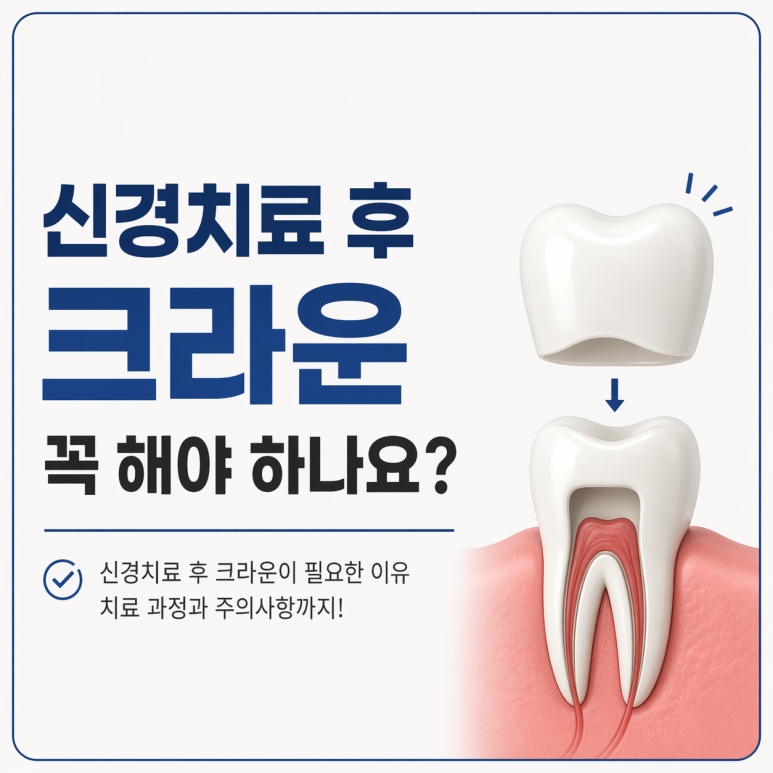
Sometimes, dental treatment takes longer than expected. In particular, if a cavity is deep enough to require root canal treatment, you may already have felt some burden in terms of time and cost after several visits.
So when you hear that the root canal treatment is finished, it is natural to think, “Finally, it’s over.”
However, when you are then told that you also need to proceed with a crown, it can feel like an unexpected additional treatment, leaving you confused or questioning it. In fact, many people ask, “Do I really have to do it?” or “Can’t I just skip it?” at this stage, and in some cases, they even delay treatment for a while to think it over.
But root canal treatment is not simply the end of the process of treating a painful tooth; it is closer to an “intermediate step” that helps keep the tooth usable. Depending on how this process is completed, the future of that tooth can change—whether it can be used for a long time or whether problems will return.
Today, at S Leader Dental Hospital in Songjeong-dong, we will take a closer look at why root canal treatment is needed, how the tooth changes afterward, and why crown treatment is also recommended from a more practical perspective.
 Why do you need root canal treatment?
Most cases that require root canal treatment involve cavities that have progressed significantly.
Why do you need root canal treatment?
Most cases that require root canal treatment involve cavities that have progressed significantly.
At first, it may start as simple sensitivity or mild discomfort, but if treatment is delayed, the cavity deepens and begins to affect the inside of the tooth. Eventually, the infection spreads to the tooth’s nerve. At this stage, simple cavity treatment is not enough, and the pain often becomes more severe.
In particular, if you have throbbing pain at night or a persistent ache even when you are doing nothing, there is a high chance that inflammation has reached the nerve. If left untreated, the inflammation can spread to the tip of the tooth root and affect the gums as well.
In severe cases, the tooth may not be salvageable and extraction may be necessary.
The treatment needed in this situation is root canal treatment. It removes the infected tissue and cleans the inside of the tooth to prevent the inflammation from spreading any further.
In other words, root canal treatment is not simply a procedure that removes pain; it is a treatment that helps prevent the tooth from worsening and preserves the natural tooth as much as possible.
 What kind of treatment is root canal treatment?
Root canal treatment is performed when the nerve and blood vessel tissue inside the tooth become infected.
Think of it as a relatively delicate procedure that deals not with the visible outer part of the tooth, but with the inside of the tooth.
What kind of treatment is root canal treatment?
Root canal treatment is performed when the nerve and blood vessel tissue inside the tooth become infected.
Think of it as a relatively delicate procedure that deals not with the visible outer part of the tooth, but with the inside of the tooth.
The infected nerve tissue is removed, the inside of the tooth is thoroughly disinfected, and then it is tightly sealed so that bacteria cannot enter again.
This treatment is often not completed in a single visit, but carried out over several sessions.
That is because carefully cleaning out the inside of the tooth is so important.
Also, the canals inside the tooth vary in shape and structure from person to person, so the experience of the dental team and accurate treatment have a major impact on the outcome.
There is one important point here.
A tooth that has completed root canal treatment is no longer in a state with nerves and blood vessels.
The pain disappears, but at the same time, the tooth’s response to external stimuli and its ability to recover on its own become weaker.
Simply put, it changes from a “living tooth” into a tooth that only maintains its shape.
This change becomes an important standard for deciding the next treatment direction and management method.
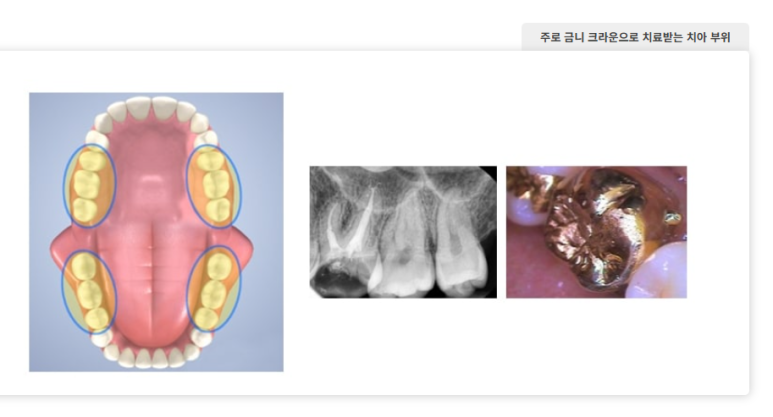 Then why is a crown needed afterward?
A tooth that has completed root canal treatment may not appear to have a major problem from the outside, but in reality, its internal structure has become much weaker. Since part of the tooth has already been damaged by decay and the internal tissue is removed during root canal treatment, the overall strength of the tooth inevitably decreases.
Then why is a crown needed afterward?
A tooth that has completed root canal treatment may not appear to have a major problem from the outside, but in reality, its internal structure has become much weaker. Since part of the tooth has already been damaged by decay and the internal tissue is removed during root canal treatment, the overall strength of the tooth inevitably decreases.
If you keep using the tooth in this state, even ordinary meals can place stress on it. In particular, when you chew hard foods or force is concentrated on one side, the tooth may crack or break. The problem is that once a tooth fractures like this, it is difficult to recover.
That is why crown treatment is needed. A crown covers the entire tooth, protecting it from external impact and distributing chewing force evenly. It is not just a covering for the outside; it is a structural treatment that reinforces a weakened tooth.
3 problems that can occur if you do not get a crown?
If you use a tooth after root canal treatment without getting a crown, various problems can arise over time.
The first is tooth fracture. A tooth that has undergone root canal treatment gradually becomes drier as moisture decreases, making it more likely to break. In particular, in areas that receive a lot of chewing force, such as the molars, there is a high risk of cracking or breaking even from a small impact. In such cases, retreatment is difficult, and extraction is often the likely outcome.
The second is reinfection. Even if the inside was thoroughly cleaned through root canal treatment, inflammation can recur if bacteria enter again from the outside. Since a crown helps seal the tooth, it plays an important role in reducing the risk of reinfection.
The third is shortened tooth lifespan. Teeth used without protective restoration become weaker over time and eventually cannot be used for long. Even if things seem fine at first, problems often grow over time, so long-term management is important.
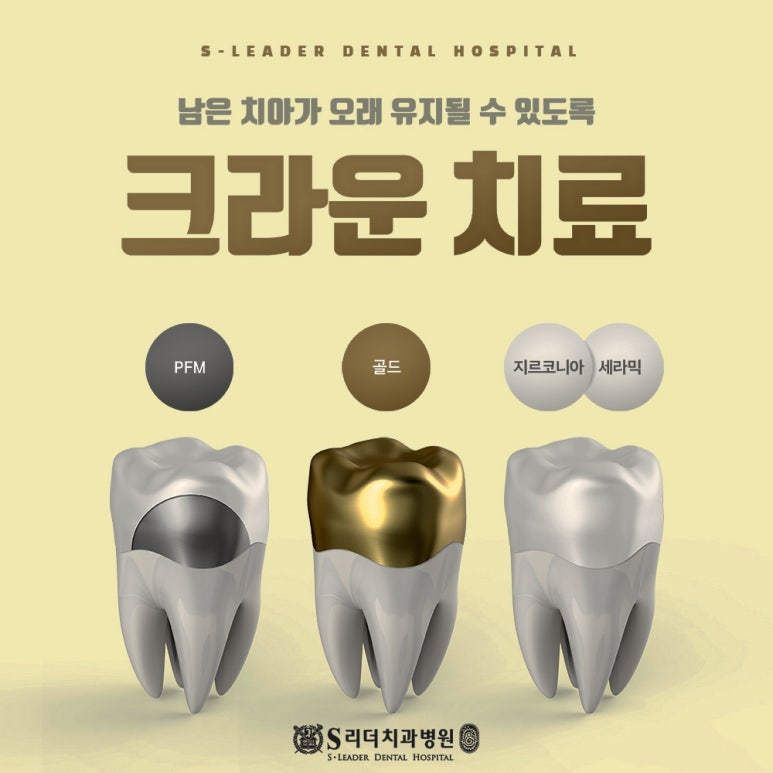
When is a crown definitely needed after root canal treatment?
Not every tooth needs a crown after root canal treatment, but in actual clinical practice, crown treatment is recommended in most cases. In particular, if the tooth is a molar where strong chewing force is applied, or if the tooth was significantly damaged by decay, crown treatment is almost essential.
Also, if the tooth wall has become thin or there are signs that it has already cracked, protection is necessary because the risk of fracture is high. On the other hand, if the tooth is a front tooth where comparatively less force is applied and the damage is not severe, other options may be considered depending on the situation.
In the end, whether a crown is needed should not be determined only by the treatment method, but by considering the current condition of the tooth and the environment in which it will be used in the future.
 S Leader Dental Hospital in Songjeong-dong
Direction for care after root canal treatment
Root canal treatment is not just a procedure to eliminate pain; it is a process that helps preserve an already damaged tooth as much as possible so it can be used for a long time. And the crown treatment that follows is an important step to protect the weakened tooth and maintain its function stably.
S Leader Dental Hospital in Songjeong-dong
Direction for care after root canal treatment
Root canal treatment is not just a procedure to eliminate pain; it is a process that helps preserve an already damaged tooth as much as possible so it can be used for a long time. And the crown treatment that follows is an important step to protect the weakened tooth and maintain its function stably.
Rather than cutting back on treatment because of immediate inconvenience or burden, it may be a better choice to focus on how to maintain the tooth from a long-term perspective. Since a tooth that has been damaged once cannot be restored to its original state, it is important to consider what comes after from the very beginning when planning treatment.
At S Leader Dental Hospital in Songjeong-dong, we carefully analyze each patient’s dental condition, including the stages after root canal treatment, and provide care in a way that reduces unnecessary treatment while not missing what is needed.
Because our goal is not simply to finish treatment, but to help patients use their teeth stably even after treatment, if you are considering root canal treatment and crown treatment, we recommend getting an accurate consultation to check your current condition and the most appropriate
treatment direction.




 Songjeong-dong Dental Clinic: S (S) Leader Dental Hospital