Hello, this is S Leader Dental Hospital, a Sanggye-dong dental clinic that is celebrating its 22nd anniversary this year.
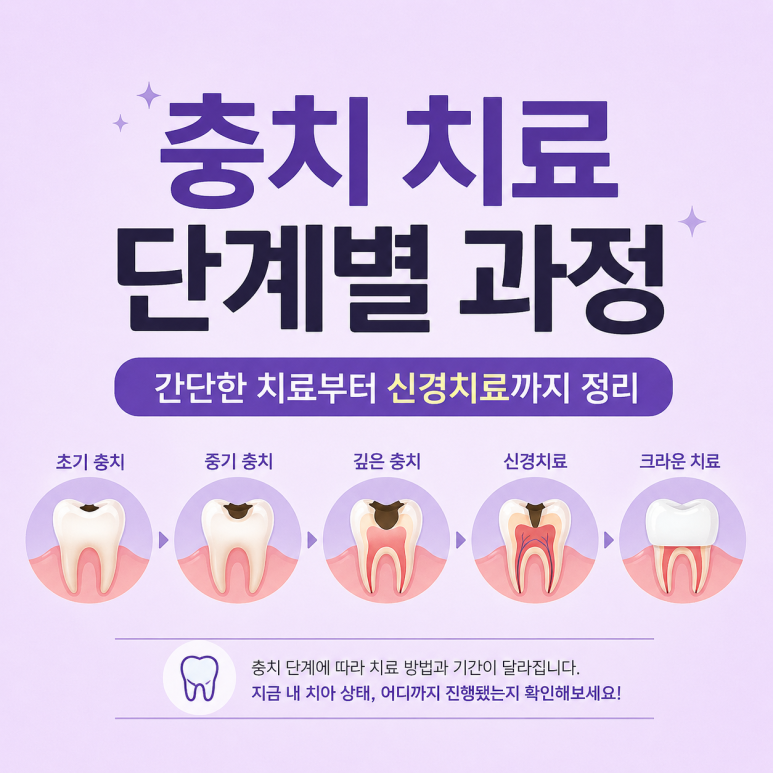
One of the most common reasons people visit a dental clinic is cavities. But when it comes time to receive treatment, many people feel confused because the explanations they hear can be slightly different from person to person. Some people are told, “We can simply fill it,” while in other cases, they are told, “You need root canal treatment.” Why is the treatment method so different for the same cavity?
In fact, among the patients who visit us, we often hear questions such as, “My friend was done in one visit, so why do I have to come several times?” and “Why do I have to get a crown?”
As such, cavity treatment is not simply a matter of “there is a cavity → treat it.” It is important to understand that the treatment method changes completely depending on how far the cavity has progressed.
Today, at S Leader Dental Hospital, a Sanggye-dong dental clinic, we will take a step-by-step look at how cavities progress and what treatments are performed at each stage.
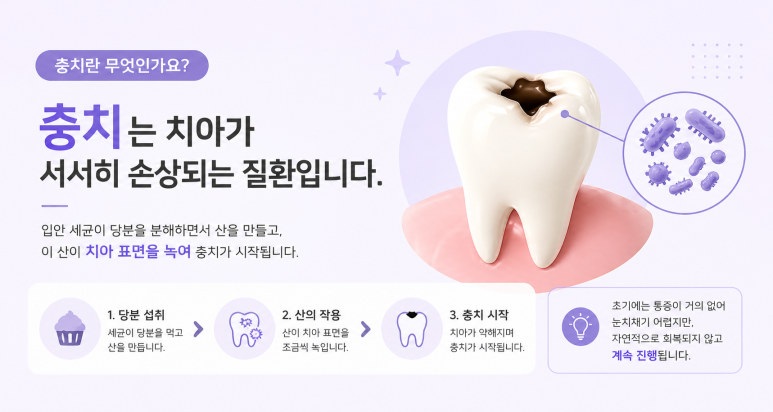 What is a cavity?
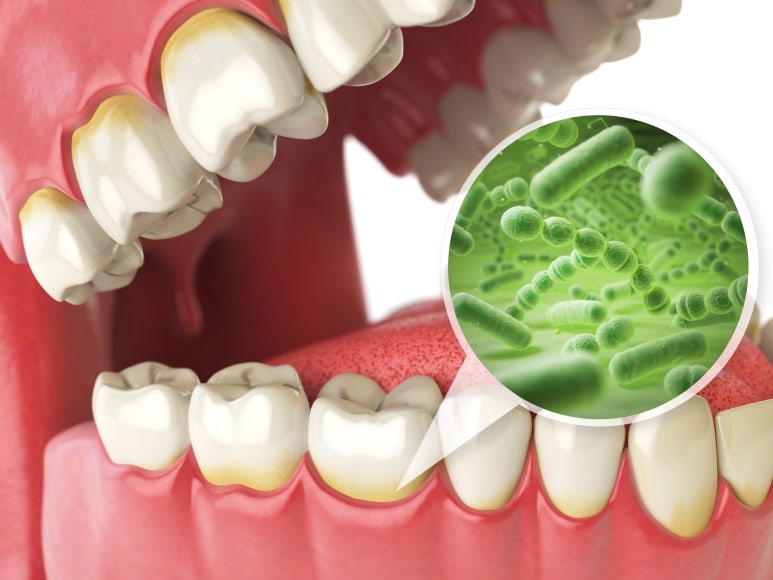
It is easy to think of a cavity as simply “a hole in the tooth,” but in reality, it is a progressive disease in which the tooth is slowly damaged. There are various bacteria in the mouth, and these bacteria consume the sugars in food and produce acid.
What is a cavity?
It is easy to think of a cavity as simply “a hole in the tooth,” but in reality, it is a progressive disease in which the tooth is slowly damaged. There are various bacteria in the mouth, and these bacteria consume the sugars in food and produce acid.
This acid gradually dissolves the surface of the tooth, and that is how a cavity begins.
At first, it starts with very small changes that are not easily visible. It often appears as a white spot on the tooth surface or slight discoloration, so it is often overlooked in daily life. At this stage, there is almost no pain, so it is easy to think, “It should be fine,” and move on without realizing there is a problem.
However, as time passes, the tooth is gradually weakened by the acid, and the damage progresses from the outside inward. In particular, once a cavity starts, it has the characteristic of continuing to progress and not recovering naturally. Even if it looks fine on the outside and does not hurt, it may still be progressing inside.
 Why does cavity treatment differ by stage?
The reason cavity treatment feels different from person to person is that a tooth is made up of several layers. From the outside inward, the tooth consists of a hard outer layer (enamel), the inner layer (dentin), and the innermost part, where the nerve is located.
Why does cavity treatment differ by stage?
The reason cavity treatment feels different from person to person is that a tooth is made up of several layers. From the outside inward, the tooth consists of a hard outer layer (enamel), the inner layer (dentin), and the innermost part, where the nerve is located.
A cavity becomes deeper as it passes through these layers one by one. That is why the treatment method has to change depending on how far it has progressed. For example, if only the outer layer is slightly damaged, treatment may end with a simple filling.
But if it has progressed deeply into the inner layers, more complex treatment such as root canal therapy becomes necessary.
The location of the cavity is also important. Even at the same depth, if the affected area is wide or if it is in a hard-to-reach place such as between teeth, the treatment process can become somewhat more difficult. That is why it is not possible to determine the treatment method simply by knowing that “there is a cavity.”
In this way, cavity treatment is not performed in the same way no matter what; it is a process of accurately checking the current condition and then choosing the appropriate method. That is why treatment is divided by stage, and once you understand this part, it becomes easier to accept why the treatment methods differ.
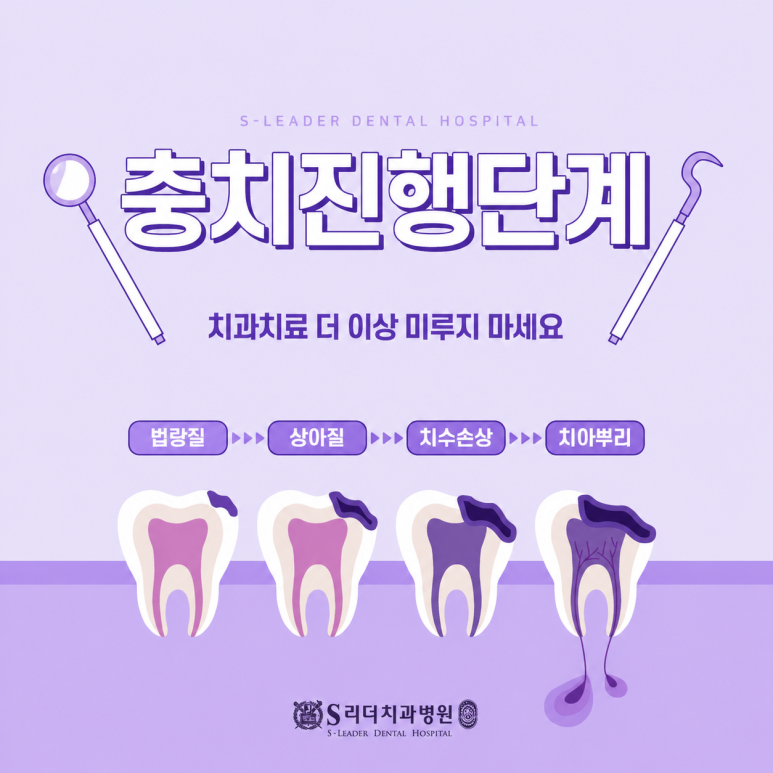 Step-by-step process of cavity treatment
1st stage: Early cavity (enamel stage)
At this stage, only the enamel, the outermost layer of the tooth, is damaged. On the surface, it may appear as a white spot or slight discoloration, and there is usually no pain.
Step-by-step process of cavity treatment
1st stage: Early cavity (enamel stage)
At this stage, only the enamel, the outermost layer of the tooth, is damaged. On the surface, it may appear as a white spot or slight discoloration, and there is usually no pain.
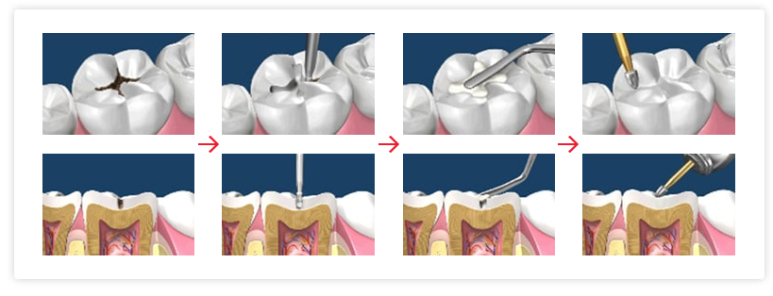
Because of this, it is easy to miss this stage, but in fact it is the easiest stage to treat. After removing only the affected area as minimally as possible, the treatment can be quickly completed by filling it with resin.
Because only a small amount of tooth structure is removed, the natural tooth can be preserved as much as possible, and the treatment time is short, so it places very little burden on the patient. It is often discovered during regular checkups.
2nd stage: Intermediate cavity (dentin stage)
When the cavity progresses to the dentin, it begins to respond to external stimuli. You may feel sensitivity to cold or sweet foods, and discomfort often appears in certain situations.
At this stage, the treatment method changes depending on the extent of the cavity. If the area is small, it can be treated with resin, but if it is larger, inlay treatment may be necessary. An inlay is a method in which a custom-made restoration is attached to fit the shape of the tooth, allowing for more stable restoration.
From this point on, the treatment area begins to grow larger, so it is important to treat it before it gets any later.
3rd stage: Deep cavity (near the nerve)
When the cavity progresses close to the nerve, the pain becomes more noticeable. There may be discomfort when chewing, and the tooth may react not only to cold foods but also to hot foods.
At this stage, the nerve may already be starting to be affected, so the likelihood of needing root canal treatment increases. However, if the nerve has not been completely damaged yet, conservative treatment may still be possible.
From the patient’s perspective, many people feel that “I think I can endure this,” but in reality, this is an important stage where it is easy to miss the right time for treatment.
4th stage: When it has progressed to the nerve
At this stage, pain continues even without external stimuli. It often throbs even when resting, and the pain often becomes worse at night.
Painkillers may provide temporary relief, but they do not solve the underlying problem. In this case, root canal treatment is needed to remove the infected nerve and disinfect the inside of the tooth.
Afterward, crown treatment is performed to protect the weakened tooth. Because the treatment process becomes longer and the number of visits increases, this is a stage that places a greater burden on the patient.
5th stage: Severe progression
If the cavity is very deep and most of the tooth structure has been damaged, it becomes difficult to save the tooth. In this case, extraction may need to be considered, and implant or bridge treatment may be necessary afterward.
Once it has progressed to this stage, not only the treatment period but also the financial burden increases significantly. Ultimately, this is the stage where the importance of early treatment is felt most strongly.
 How long does cavity treatment take by stage?
The treatment period for cavities varies greatly depending on the stage. In the case of an early cavity, treatment is often completed in a single visit. Because it can be finished with a simple resin filling, it places very little time burden.
How long does cavity treatment take by stage?
The treatment period for cavities varies greatly depending on the stage. In the case of an early cavity, treatment is often completed in a single visit. Because it can be finished with a simple resin filling, it places very little time burden.
However, if the cavity has progressed and inlay treatment is needed, more than two visits are required. This is because time is needed to remove the cavity and create a restoration that fits the shape of the tooth.
If it progresses to the stage where root canal treatment is needed, the treatment period becomes even longer. Since the process of removing and disinfecting the internal inflammation must be repeated several times, at least several visits are required, and if crown treatment is also performed afterward, the overall treatment period can become even longer.
As such, even the same cavity can involve a very different treatment period depending on when treatment begins. That is why the earlier the treatment, the less time burden it places on you.
 ✔ What happens if you miss the right time for treatment?
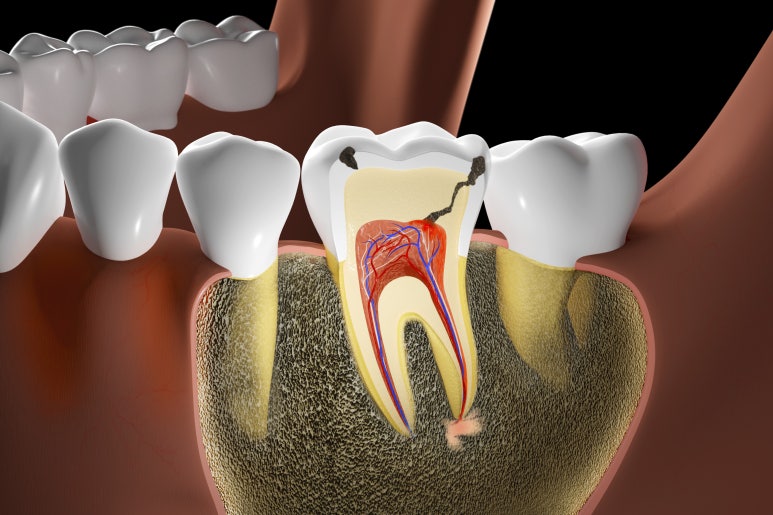
Because cavities do not heal naturally, they gradually deepen over time. In the early stages, they may pass without pain or with only mild sensitivity, but if left untreated, they can affect the nerve and cause severe pain.
✔ What happens if you miss the right time for treatment?
Because cavities do not heal naturally, they gradually deepen over time. In the early stages, they may pass without pain or with only mild sensitivity, but if left untreated, they can affect the nerve and cause severe pain.
In particular, many people delay treatment because “it hurt and then got better,” but this may not mean the condition has improved; it may also mean that the nerve has been damaged. In this case, internal inflammation continues to progress and can lead to bigger problems.
Also, as the cavity becomes deeper, the treatment area becomes larger, and it may lead to a situation where it becomes difficult to preserve the natural tooth.
In the end, a problem that could have been easily resolved may end up requiring root canal treatment, extraction, or even implants, so it is important not to miss the right time for treatment.
Post-treatment care for cavities
Cavity treatment does not end with just one visit; ongoing care afterward is very important. Even after treatment, cavities can still recur, so lifestyle habits must also be managed.
The most basic habit is proper brushing. In addition to brushing carefully after meals, using floss or other auxiliary tools is helpful. In particular, the spaces between teeth are often difficult to manage with a toothbrush alone, so additional care is needed.
Also, frequent consumption of foods or snacks high in sugar can cause cavities, so caution is necessary.
After eating, it is important to rinse the mouth or brush so that no residue remains.
Above all, regular dental checkups are important. Because early cavities that are not visible can be detected and treated in advance, this helps prevent them from developing into more extensive treatment.
 Sanggye-dong Dental Clinic, S Leader Dental Hospital
Accurate treatment according to the stage of the cavity is important.
Cavities are a common condition that can happen to anyone, but the outcome can vary greatly depending on when they are found and how they are treated. Rather than assuming that the absence of pain means everything is fine, early evaluation is the most important way to reduce the burden of treatment.
Sanggye-dong Dental Clinic, S Leader Dental Hospital
Accurate treatment according to the stage of the cavity is important.
Cavities are a common condition that can happen to anyone, but the outcome can vary greatly depending on when they are found and how they are treated. Rather than assuming that the absence of pain means everything is fine, early evaluation is the most important way to reduce the burden of treatment.
In particular, because treatment methods differ depending on the stage of the cavity, it is most important to accurately understand the current condition. If you miss the stage when a simple treatment would have been enough, the scope and duration of treatment can increase together.
At S Leader Dental Hospital, we carefully diagnose the condition of the teeth and provide treatment focused on what is truly necessary, aiming to preserve the natural tooth as much as possible. In addition, we provide sufficient explanations about the treatment process and establish a plan suited to each patient’s condition, helping to reduce the burden while achieving stable results.
We also provide systematic guidance for post-treatment care to help prevent recurrence and maintain a healthy condition for a long time.
Even if you do not feel any discomfort in your teeth, it is a good idea to have them checked at least once. A small check can be the start of preventing a bigger treatment.





 Sanggye-dong Dental Clinic :: S Leader Dental Hospital