�
Hello, we are S Leader Dental Hospital, a Sagajeong Station dental clinic celebrating its 22nd anniversary this year.
�
Have you ever felt a sudden sharp sensation in your teeth when drinking a cold beverage?
Have you ever felt that a specific tooth was especially sensitive when eating ice cream or drinking cold water, or that even a toothbrush brushing past it felt unusually sensitive when brushing your teeth? At first, it is easy to think it is just a brief moment of sensitivity, but if the symptoms repeat, it is worth checking whether there may be a problem related to tooth wear.
In particular, if you often eat hard foods, clench your teeth, or brush very vigorously, the tooth surface may gradually wear down and lead to sensitivity. Since teeth are difficult to recover naturally once wear begins,
it is important to identify the cause early.
In fact, many people say things like, “They say I don’t have cavities, so why do my teeth feel this sensitive?” or “I’m even afraid to eat cold food.”
This is because, even when there does not appear to be a major problem on the surface, tooth wear can expose internal tissue and cause sensitivity more often than people think.
Today, at S Leader Dental Hospital, a Sagajeong Station dental clinic, we will take a closer look at why tooth wear causes sensitivity, along with treatment and management methods.
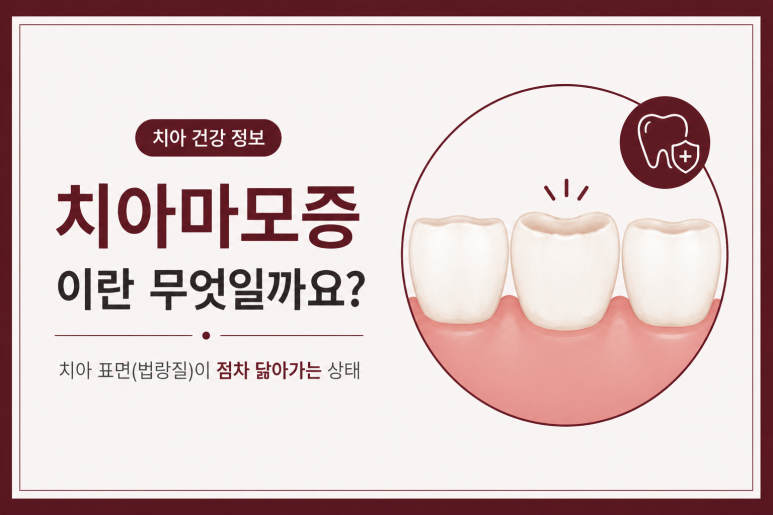 What is tooth wear?
Tooth wear refers to the gradual wearing down of the tooth surface. The outermost layer of the tooth has a hard protective layer called “enamel,” but due to various causes, this part can slowly wear away and expose the inner tissue.
What is tooth wear?
Tooth wear refers to the gradual wearing down of the tooth surface. The outermost layer of the tooth has a hard protective layer called “enamel,” but due to various causes, this part can slowly wear away and expose the inner tissue.
Enamel is one of the hardest tissues in the human body, but if repeated irritation continues, it can gradually become thinner. The problem is that there is tissue inside the enamel connected to the nerves, so the thinner the protective layer becomes, the more sensitive it reacts to external stimuli.
That is why, as tooth wear progresses, teeth become especially sensitive to cold or hot foods, and in severe cases, even a breeze can cause a sharp sensation. It can go beyond simple brief discomfort and affect ordinary meals in daily life.
Also, as the teeth gradually wear down, the original tooth shape can change, making them look shorter or causing the chewing surface to become flattened. In particular, if the tips of the front teeth become thin or look translucent, it is worth suspecting that wear may be progressing.
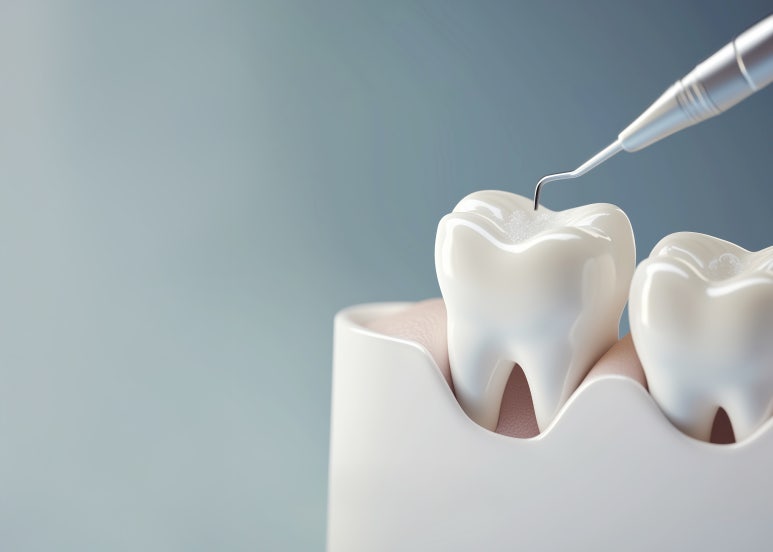 What causes teeth to wear down?
Tooth wear is often caused not by a single factor, but by a combination of daily habits.
What causes teeth to wear down?
Tooth wear is often caused not by a single factor, but by a combination of daily habits.
One of the most common causes is excessive force. If you have a habit of clenching your teeth or grinding them, the teeth can collide strongly with each other and wear down more quickly. In particular, when you unconsciously apply force during sleep, your teeth may be under continuous stress without you even realizing it.
Brushing too hard can also have an effect. If you brush with strong force because you believe “brushing harder means cleaner,” the area near the gum line can gradually wear down and lead to sensitivity. Especially when using a stiff toothbrush for a long time, both the teeth and gums are more likely to be irritated.
Eating acidic foods is another important cause. If foods with high acidity, such as carbonated drinks, energy drinks, or lemons, repeatedly come into contact with the tooth surface, the enamel may weaken. If strong brushing habits are added on top of that, the rate of wear may increase.
In addition, incorrect bite alignment, a condition where force is concentrated on only certain teeth, or problems with old prosthetic restorations can also affect tooth wear.
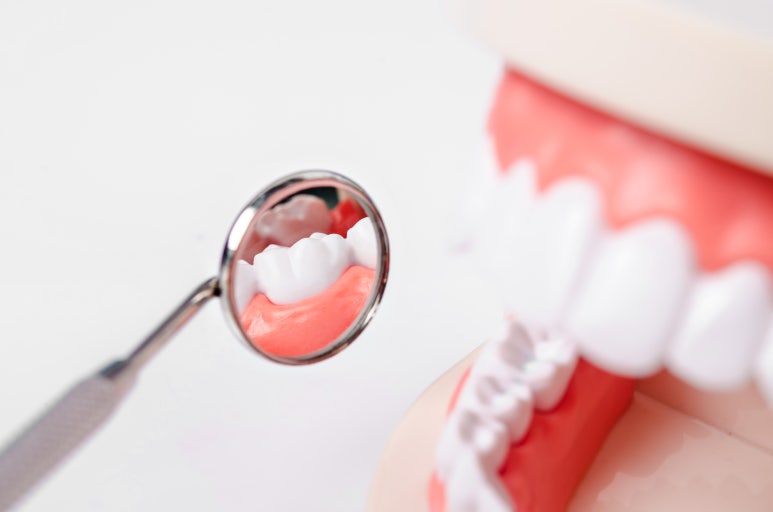 Why does sensitivity occur?
The main reason teeth become sensitive is that the enamel, which acts as a protective layer, wears away and exposes the inner tissue. Inside the tooth, there are tiny channels, and when cold or hot stimuli enter, the sensation is transmitted through these channels to the nerve, causing a sharp feeling.
Why does sensitivity occur?
The main reason teeth become sensitive is that the enamel, which acts as a protective layer, wears away and exposes the inner tissue. Inside the tooth, there are tiny channels, and when cold or hot stimuli enter, the sensation is transmitted through these channels to the nerve, causing a sharp feeling.
In particular, if the area where the tooth meets the gum is worn in a scooped-out shape, it is more likely to be sensitivity caused by wear.
This area is originally a relatively thin structure, and repeated irritation can make it even more sensitive.
At first, it may only feel briefly sensitive when eating cold food, but as it progresses, discomfort may be felt even when brushing or breathing in.
In severe cases, people may begin avoiding certain foods altogether, which can affect daily habits.
The important point is that not all sensitivity is caused by cavities. Even without cavities, tooth wear alone can cause enough sensitivity, so it is important to accurately check the current condition of the teeth.
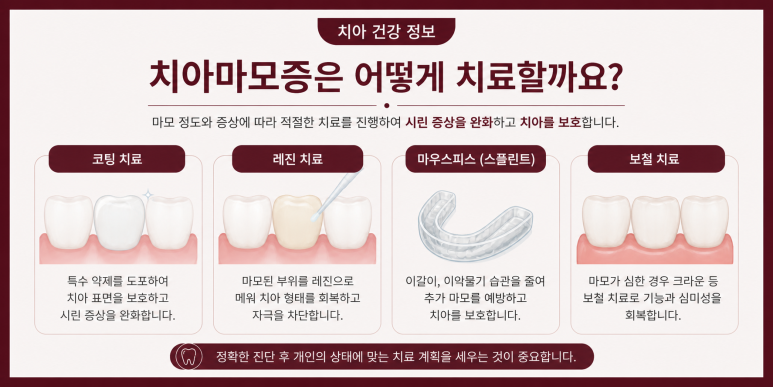 How is tooth wear treated?
The treatment method depends on the degree of wear and the symptoms. If it is relatively early, treatment that protects the sensitive area and reduces sensitivity is often performed first.
How is tooth wear treated?
The treatment method depends on the degree of wear and the symptoms. If it is relatively early, treatment that protects the sensitive area and reduces sensitivity is often performed first.
Commonly, coating treatment or resin treatment may be used to cover the sensitive area. This helps protect the exposed area so that external stimuli are not directly transmitted. If the symptoms are not severe, these treatments alone can often reduce discomfort.
If tooth wear has progressed significantly and there are major changes in shape or functional problems, more precise treatment may be necessary. This is because the cause of the strong chewing force may also need to be adjusted.
It is also very important to manage the underlying cause at the same time. If only the sensitive area is treated but lifestyle habits remain the same, the symptoms are likely to recur. Habits such as clenching the teeth, improper brushing, and acidic food intake patterns need to be checked together.
In particular, if teeth grinding or clenching is severe, a mouth guard may be helpful. It can reduce the force of teeth colliding during sleep and help slow the progression of wear.
Managing daily habits is also important
For tooth wear, management is just as important as treatment. Even small changes in daily habits can help reduce stress on the teeth.
First, it is best to avoid brushing too hard. Using a soft toothbrush and brushing gently along the gum direction rather than scrubbing the teeth side to side with strong force can be helpful.
It is also important to be careful not to brush immediately after consuming acidic foods or carbonated drinks. Right after acidic exposure, the tooth surface is temporarily weakened, so brushing hard right away can worsen wear. Rinsing lightly with water and waiting before brushing may be helpful.
It is also a good idea to check whether you habitually clench your teeth. Since people often unknowingly tense their jaw, reducing tension in the jaw and shoulders can also help.
Above all, if symptoms keep repeating, it is important not to leave them untreated. If you keep putting up with it as if it were just simple sensitivity, the area of tooth wear can become larger.
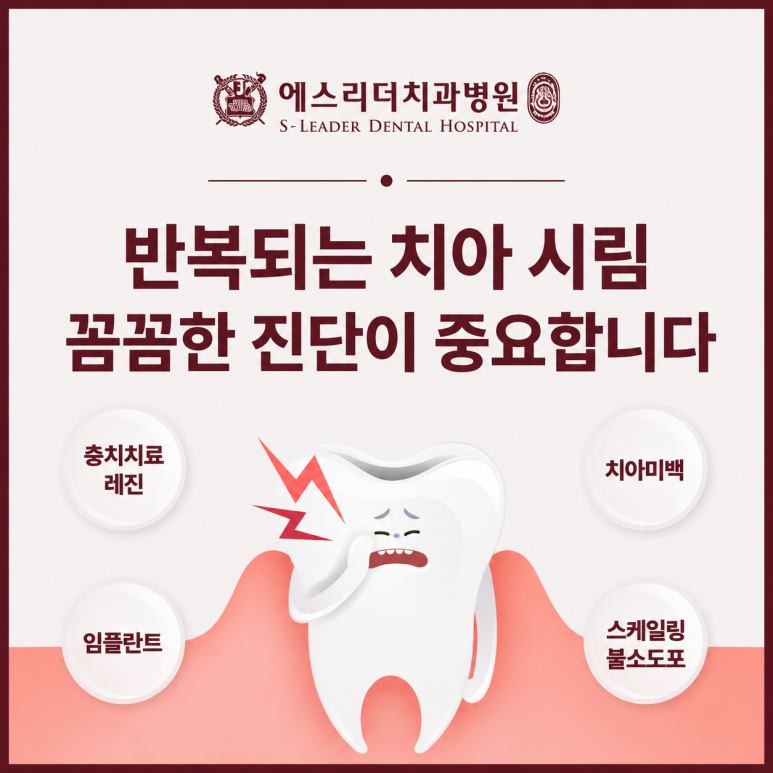 Sagajeong Station dental clinic, S Leader Dental Hospital
Careful diagnosis is important for repeated tooth sensitivity.
Tooth sensitivity can sometimes end as a simple temporary discomfort, but if it occurs repeatedly, it is worth carefully checking the current condition of the teeth. In particular, tooth wear is often influenced by multiple factors such as lifestyle habits and bite alignment, so it is important not only to look at the symptom itself but also to identify the underlying cause.
Sagajeong Station dental clinic, S Leader Dental Hospital
Careful diagnosis is important for repeated tooth sensitivity.
Tooth sensitivity can sometimes end as a simple temporary discomfort, but if it occurs repeatedly, it is worth carefully checking the current condition of the teeth. In particular, tooth wear is often influenced by multiple factors such as lifestyle habits and bite alignment, so it is important not only to look at the symptom itself but also to identify the underlying cause.
At S Leader Dental Hospital, a Sagajeong Station dental clinic, we do not determine the cause of sensitivity based only on whether there is a cavity. Instead, after comprehensively checking the degree of tooth wear, bite condition, and lifestyle habits, we guide patients toward a treatment plan suited to their condition. Rather than simply covering the uncomfortable area temporarily, we place importance on a direction that considers the causes of repeated irritation as well, so it can be managed more stably.
In addition, we carefully plan the necessary treatment according to changes in tooth shape and the degree of wear, and after treatment, we also provide guidance on proper brushing habits and management methods to help support long-term dental health.
Tooth sensitivity is a symptom experienced by many people, but if it keeps recurring, it is important not to dismiss it as mere sensitivity and instead check the current condition of the teeth. S Leader Dental Hospital carefully examines each patient’s dental condition and helps provide a systematic approach from the cause of sensitivity to treatment and management.
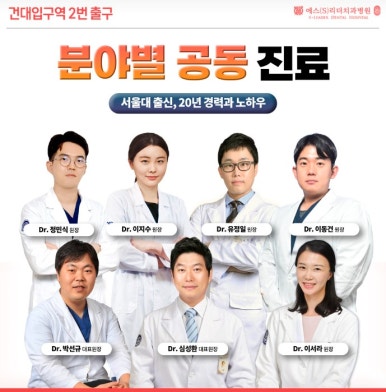


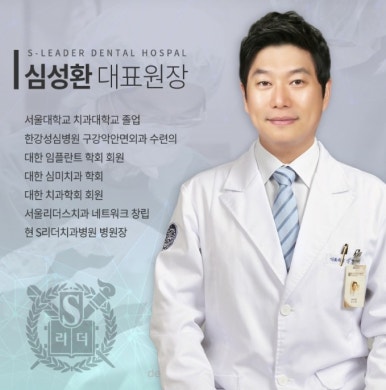
�
 Sagajeong Station Dental Clinic :: S (S) Leader Dental Hospital