Hello, we are S Leader Dental Hospital, Seoul Famous Dental Clinic, which is celebrating its 22nd anniversary this year.
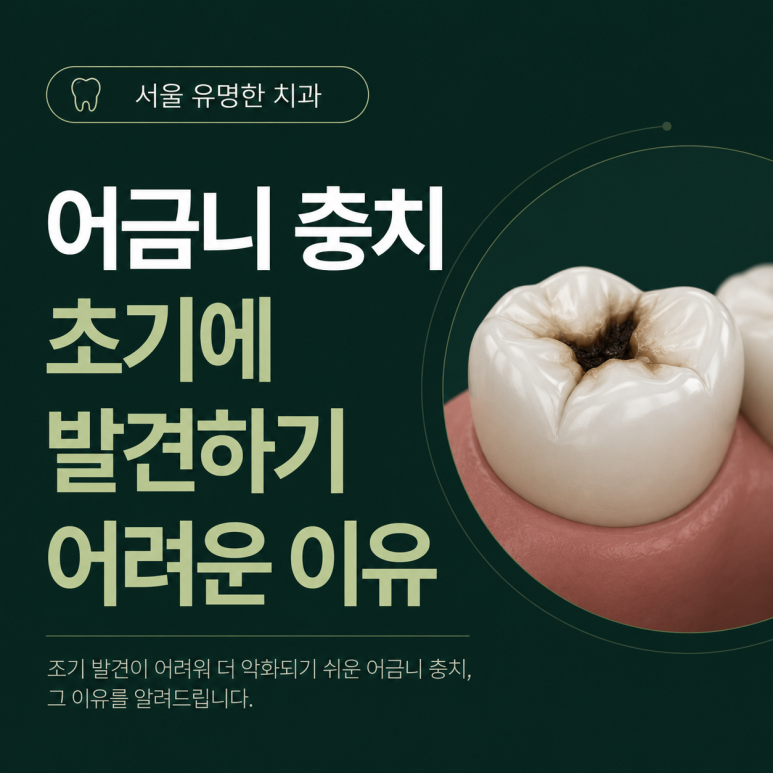
Have you ever felt a slight discomfort in your molars every time you chewed, or felt a brief sharp twinge when eating something cold? But when you looked in the mirror, there was no particular dark spot, and the pain was not severe, so many people tend to think, “It’ll be fine” and move on.
In fact, many people think cavities form in places that are easy to see, like the front teeth, but molar cavities are actually more often discovered late.
In particular, molars are located deep inside the mouth, making them difficult to check directly, and they have a structure that easily traps food. In addition, because they often progress without noticeable symptoms in the early stages, it is not easy to notice the problem on your own. Then, at some point, the pain becomes severe enough to visit the clinic, and in many cases the cavity has already spread enough to require root canal treatment.

Among the patients who visit us, many say things like, “I definitely brushed diligently, but I still got a cavity,” “I had no idea until it was found during a checkup,” or “It only felt a little sensitive, but then it suddenly started hurting.” In particular, molar cavities often progress quietly from the inside even when the surface looks fine, so extra caution is needed.
Because molars are the teeth that do most of the chewing, any problem can lead to greater discomfort in daily life.
Today, at Seoul Famous Dental Clinic, S Leader Dental Hospital, let’s take a closer look at why molar cavities are discovered late, what symptoms they appear with, and what treatment and management methods are available.
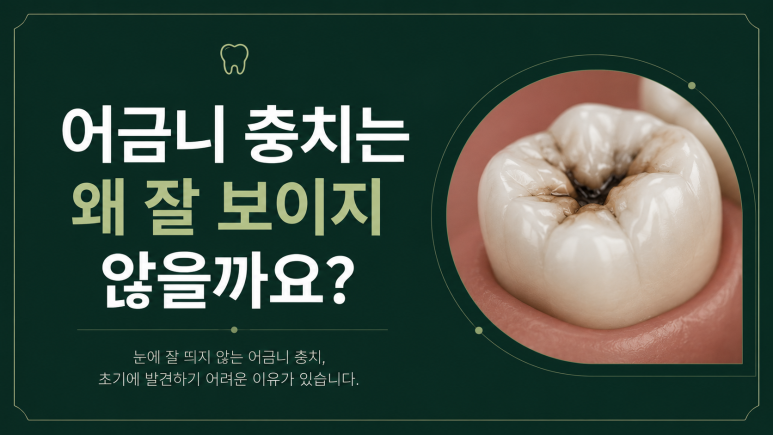 Why are molar cavities hard to see?
Because molars are located at the very back of the mouth, it is not easy to check them yourself. While you can compare the condition of front teeth relatively easily just by looking in a mirror, it is often difficult to see the corners and back areas of molars in detail, even with your mouth opened wide.
The surface of molars also has uneven grooves. This shape helps with chewing food, but it also creates an environment where food particles and bacteria can get trapped easily. In particular, if bacteria remain in deep grooves, cavities can gradually progress even if you brush carefully.
The problem is that early cavities often do not stand out much on the surface. They may look like simple staining, or progress in very small gaps, so they are generally difficult to detect. Cavities between teeth are also often hard to confirm with the naked eye alone, which is why many are found during regular checkups.
That is why molar cavities may be progressing more than you think, even if you do not feel any particular pain.
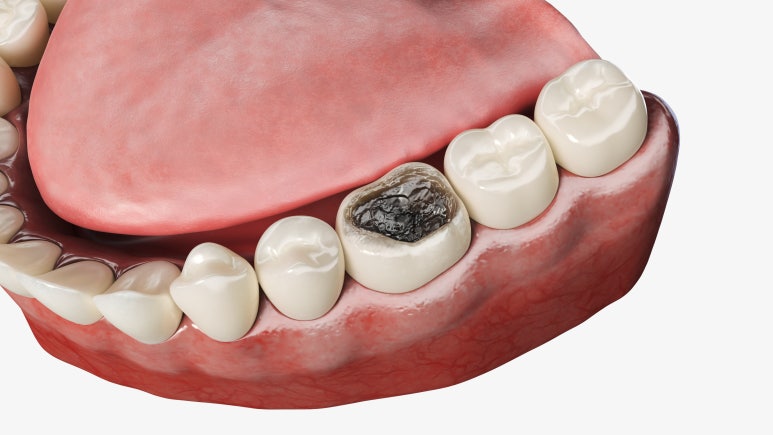 Why is there almost no pain in the early stage?
Many people think cavities can only be discovered if they hurt. But in reality, early cavities often progress without any noticeable pain.
Cavities often begin in the outermost enamel of the tooth, and because this area does not have nerves distributed directly through it, you may feel little or no pain at the small-cavity stage. So patients may easily think, “It doesn’t hurt, so maybe it’s okay.”
The problem is that as time passes and the cavity gets deeper into the tooth, the situation can change. As it gets closer to the inner tissue, you may feel sensitivity to cold foods or discomfort after eating sweets. In severe cases, it can even develop into throbbing pain while you are doing nothing at all.
In particular, molars are areas where chewing force is concentrated, so if they continue being used while a cavity is progressing, there is also a possibility that cracks or additional damage may occur. That is why the onset of pain often means the problem has already advanced to some degree.
Why do molar cavities develop more easily?
Molars are among the teeth used most throughout the day. Because they play a central role in chewing, they are exposed to more food contact, and it is easier for bacteria to remain there.
In particular, if food remains in deep grooves or between the teeth after meals, the risk of cavities can increase. If brushing is not done properly or flossing is insufficient, bacteria may continue to remain and the cavity may progress more quickly.
Also, there may be areas of the molars where the effect of saliva is relatively limited, which can make it easier for a bacterial environment to form. Frequently consuming carbonated drinks or sweet foods can also be a cause of increased cavity risk.
Previously treated molars also require caution. This is because bacteria can penetrate the margins around resin or inlay restorations, and recurrent cavities can develop more often than you might think. Even if the outside looks fine, cavities can progress again inside, so regular checkups are important.
 What symptoms do molar cavities show?
There may be no special symptoms at the beginning, but as they progress, various signs can appear.
One of the most common symptoms is the feeling that food keeps getting stuck. If a certain area that used to be fine now constantly traps food, or if floss feels like it catches there, it is worth checking for the possibility of a cavity.
You may also feel a brief sharp sensitivity when eating cold foods or sweets. As the cavity progresses further, pain may appear when chewing, or the teeth may become sensitive even to hot foods.
In severe cases, it can develop into throbbing pain at night or pain that continues even when you are resting. At this stage, the cavity has often already progressed close to the nerve, so instead of simple cavity treatment, root canal treatment may need to be considered.
In particular, the location of the pain in molars can feel unclear. So it is not uncommon for people to have difficulty figuring out exactly which tooth is causing the problem on their own.
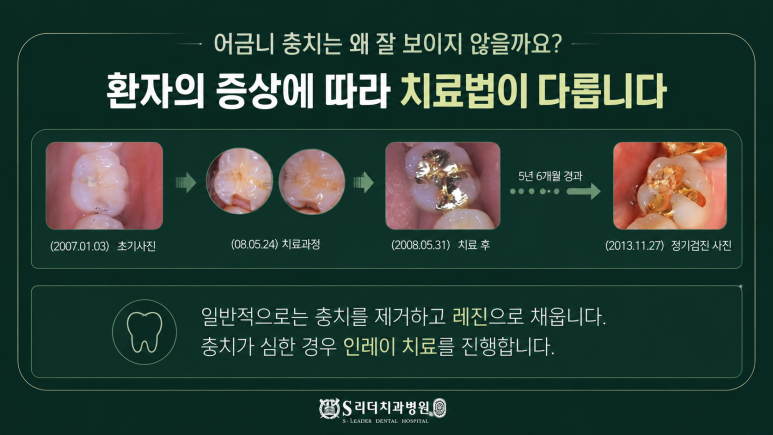 What treatment is needed when a cavity becomes deep?
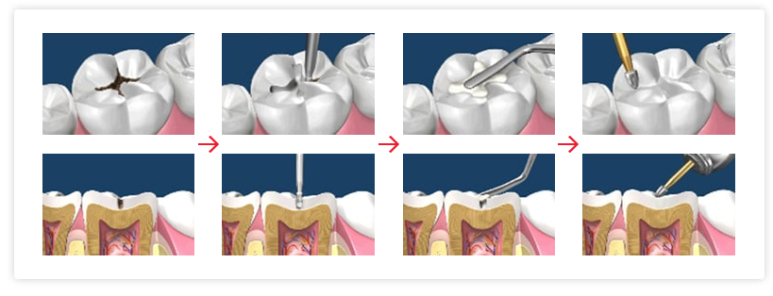
Cavity treatment varies depending on how far it has progressed. If it is relatively early, treatment is often completed with resin filling alone.
After removing the cavity, the empty space is filled with a tooth-colored material.
However, if the cavity is extensive or if it is in a molar that receives a lot of chewing force, inlay or crown treatment may be necessary. Simply filling the area may not provide enough strength.
If the cavity has progressed close to the nerve, root canal treatment may also be needed. In that case, the infected tissue inside the tooth is removed and disinfected, and then the tooth is protected with a crown.
That is why the later the cavity is treated, the more extensive the procedure can become. Since early detection often makes it possible to reduce the scope of treatment, regular checkups are important for that reason.
 Why regular checkups matter
Because molar cavities are often difficult to discover on your own, the role of regular checkups is very important. In particular, cavities between teeth or those progressing on the inside are often detected through X-ray examinations.
Just because there is no pain does not mean you can automatically assume the teeth are healthy. In fact, there are many cases where a deeper cavity than expected is found during a checkup.
Also, if the condition is checked regularly, treatment is often possible at the small-cavity stage. On the other hand, if left untreated for a long time, the scope of treatment can become larger, and the possibility of saving the tooth itself may decrease.
Above all, because molars are important teeth directly connected to eating, problems with them can significantly affect daily life. That is why it is important to check for problems before they become serious, rather than waiting until pain appears and then seeking treatment.
 Seoul Famous Dental Clinic, S Leader Dental Hospital
Careful attention all the way to the back of the molars
Seoul Famous Dental Clinic, S Leader Dental Hospital
Careful attention all the way to the back of the molars
Because molar cavities are often not easy to see from the outside and early symptoms are not always obvious, it is important to carefully check the current condition of the teeth rather than judging only by whether there is pain. In particular, because the treatment direction and even the possibility of preserving the tooth can change depending on the degree of cavity progression, early detection is especially important.
At Seoul Famous Dental Clinic, S Leader Dental Hospital, we do not simply check cavities that are visible to the eye. We carefully examine the spaces between teeth and the condition inside the molars, then guide patients toward a treatment plan suited to their condition. From early-stage cavities to cases requiring root canal treatment, we carefully diagnose the current state and place importance on preserving as much of the natural tooth as possible for as long as we can.
In addition, after treatment, S Leader Dental Hospital also provides guidance on proper brushing habits and management methods to help reduce the possibility of cavity recurrence and maintain long-term dental health.




 Seoul Famous Dental Clinic :: S (Leader) Dental Hospital