Hello, we are S Leader Dental Hospital, a Junggok-dong dental clinic that is celebrating its 22nd anniversary this year.
While brushing your teeth and looking in the mirror, have you ever felt that the tips of your teeth look shorter than before, or that the edges of your front teeth seem worn down and flat? Or perhaps you have experienced stronger sensitivity to cold water than before, or a strangely uncomfortable feeling when chewing hard foods. However, many people tend to dismiss these changes lightly, thinking, “Maybe that happens as I get older,” or “Don’t teeth naturally wear down to some extent?”
In reality, because teeth are structures used for a lifetime, some natural wear can occur over time. But the problem is when they wear down faster than the normal range. In particular, if the outer surface of the teeth continues to wear away, it can lead not only to changes in appearance but also to sensitivity, chewing discomfort, and in severe cases, tooth cracks.
Also, because tooth wear usually progresses very slowly, many people do not notice it at first.
At the beginning, you may simply feel that “my teeth seem a little shorter,” but over time it can affect tooth function and the overall balance of your bite. That is why, rather than thinking of worn teeth as something completely natural, it is important to check the current condition accurately.
Today, at S Leader Dental Hospital, a Junggok-dong dental clinic, we will take a detailed look at what tooth wear is, what causes it, and why it should not be left untreated.
 What Is Tooth Wear?
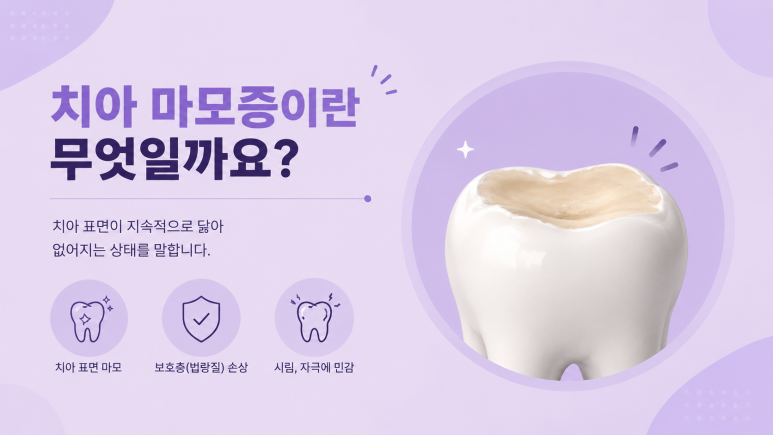
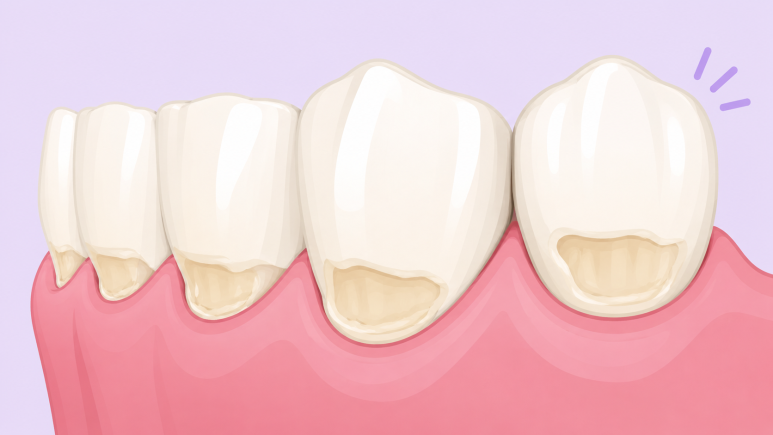
Tooth wear refers to a condition in which the surface of the teeth is continuously worn away. The outer layer of the teeth has a strong protective layer called “enamel,” and due to various causes, this part gradually becomes thinner, making the teeth look worn.
Although enamel is a very hard tissue, it can be damaged little by little if strong pressure or repeated stimulation continues. In particular, because worn enamel does not naturally recover, the protective function of the teeth can weaken as wear progresses.
In the early stages, it often progresses without much pain, so it may simply be felt as the teeth looking a little shorter or the tips of the front teeth appearing flat. But if the wear continues, the glossy surface of the teeth may disappear, or sensitivity may appear.
It can also react sensitively to cold or hot foods.
As the height of the teeth gradually decreases, it can also affect chewing balance, and because force becomes concentrated on certain teeth, there is also the possibility that it can lead to additional damage. That is why tooth wear should not be seen simply as a problem of teeth wearing down a little; it is important to accurately check the current condition.
 What Are the Main Causes of Tooth Wear?
Tooth wear is often not something that appears suddenly, but rather something that progresses gradually as everyday habits are repeated. In particular, there are many cases where ordinary actions done without much thought become the cause.
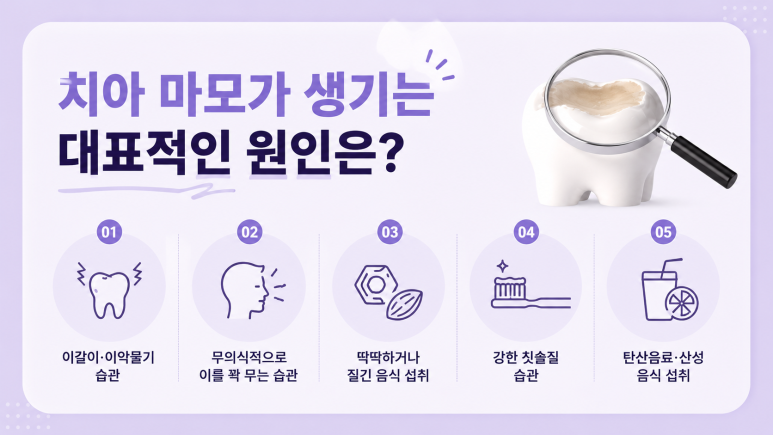
- Teeth grinding and clenching
This is one of the 대표적인 causes of tooth wear. In particular, the habit of grinding your teeth while sleeping is hard to notice yourself, so it is often discovered later. As the teeth rub against each other strongly, the surface gradually wears down, and in severe cases, the tips of the teeth can become flat or even lead to cracks.
- Habit of clenching the teeth unconsciously
Many people also unconsciously clench their teeth when stressed or concentrating. The habit of constantly putting tension in the jaw during work or study places continuous pressure on the teeth. If this habit is repeated, force can become concentrated on certain teeth, which may speed up the wear process.
- Eating hard or chewy foods
Frequently biting into ice or chewing hard and chewy foods such as nuts or dried squid can also cause tooth wear. At first, it may not seem like a big problem, but if repeated over a long period, it can place continuous stress on the tooth surface.
- Strong brushing habits
Sometimes people brush too aggressively because they want to clean their teeth thoroughly. In particular, using a stiff toothbrush or scrubbing hard in a horizontal motion can gradually wear down the tooth surface and the area where the gums meet the teeth.
- Consuming carbonated drinks and acidic foods
Frequent consumption of carbonated drinks, energy drinks, and foods with strong acidic components such as lemons can weaken the tooth surface.
Weakened teeth are more easily worn down by external stimulation, so the rate of wear can also increase. Recently, such eating habits have also been mentioned as one of the reasons tooth wear is increasing even among younger age groups.
 What Problems Can Occur If Tooth Wear Is Left Untreated?
Many people think that a little wear on the teeth is fine, but the problem is that wear continues to progress. Because worn-away teeth do not naturally regenerate, it is important to manage them early.
One of the first symptoms to appear when wear becomes severe is sensitivity. This is because as the enamel becomes thinner, the internal tissue responds more sensitively to stimulation. At first, sensitivity may appear only with cold water, but as it progresses, some people may feel discomfort even when brushing or when a cold breeze passes by.
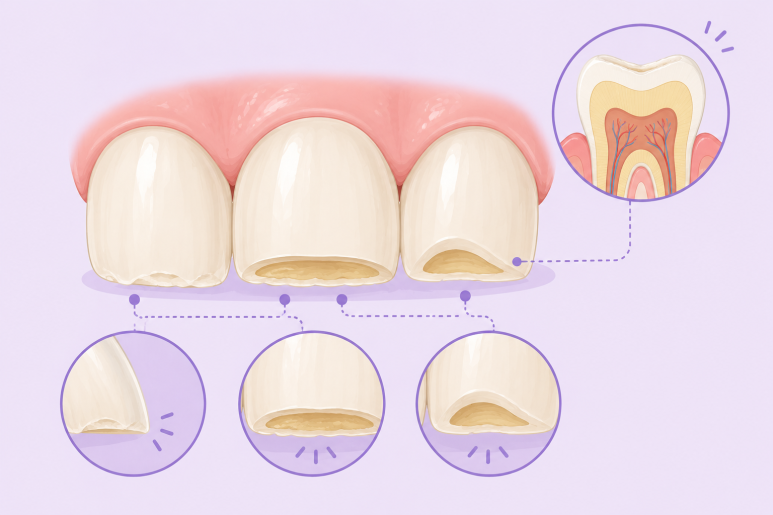
Also, as the tips of the teeth gradually become thinner, the risk of chipping or cracking can increase. In fact, there are cases where people visit the clinic because a tooth breaks while chewing food after having longstanding tooth wear left untreated. In particular, teeth that have already become weakened can be easily damaged even by small impacts.
It can also affect chewing function. If the height of the teeth continues to decrease, the original bite balance may change, and force may become concentrated in certain areas, which can also lead to strain on the jaw joint. Some people also feel headaches or jaw fatigue together with this.
Aesthetic changes can also occur. In particular, if front-tooth wear becomes severe, the teeth may look shorter when smiling, or the teeth may appear generally flattened. Even if it seems like a small change, it can affect your overall appearance, so many people feel stressed by it.
If wear is severe, the risk of cavities and cracks can also increase. This is because the weakened protective layer is more easily affected by external stimulation. So rather than dismissing it as simply “my teeth are a little worn,” it is important to check how far it has progressed.
 How Is Tooth Wear Treated?
The direction of treatment for tooth wear can vary depending on how far it has progressed. If it is relatively early, reducing the causes of wear and adjusting daily habits may help slow the progression.
For example, changing a strong brushing habit, or considering the use of a mouthguard if teeth grinding is severe. Reducing acidic drink intake and adjusting habits that place stress on the teeth are also important.
If sensitivity is already severe, treatment to protect the teeth may be necessary. The worn area may be reinforced with resin, or prosthetic treatment may be performed depending on the condition. In particular, if the risk of tooth cracks is high or chewing function is affected, more active treatment may be needed.
Also, it is important not only to fill in the worn area, but also to check the current bite condition together. If chewing force is concentrated on only certain teeth, the same areas may continue to wear down even after treatment.
If teeth grinding or clenching is severe, the use of a night guard may also be considered. In many cases, what is more important than treatment is “making sure the teeth no longer wear down excessively.”
What matters is not simply reducing the symptoms, but also checking why this wear happened in the first place. If the cause is not addressed, the same problem may recur even after treatment.
 Junggok-dong Dental Clinic, S Leader Dental Hospital
It is important to accurately check the current condition of tooth wear as well.
Tooth wear does not simply end as a small amount of wear on the teeth. The current tooth condition, bite balance, and daily habits must all be checked together in order to determine a more stable management and treatment plan.
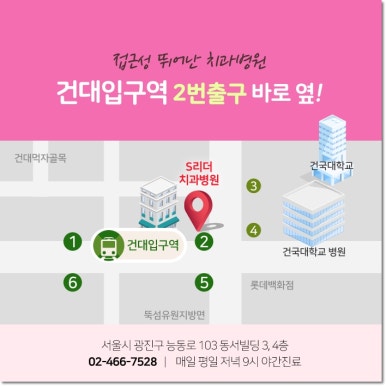
At S Leader Dental Hospital, a Junggok-dong dental clinic near Konkuk University Entrance in Seoul, we carefully check the causes of tooth wear and provide management directions and treatment plans suited to each patient’s condition. Rather than simply reducing sensitivity, we comprehensively assess the current condition so that the teeth do not continue to wear down excessively.
In particular, because tooth wear often goes untreated in the early stages due to the lack of significant pain, regular checkups are important. Even if it appears outwardly as if the teeth have simply become a little shorter, in reality changes in bite balance or the risk of cracks may also be progressing at the same time.
Recently, even among younger age groups, there have been many cases where tooth wear progresses quickly due to stress and changes in lifestyle habits. If your teeth look shorter than before, sensitivity keeps recurring, or certain teeth seem especially worn down, it is better not to just endure it but to check the current condition accurately.
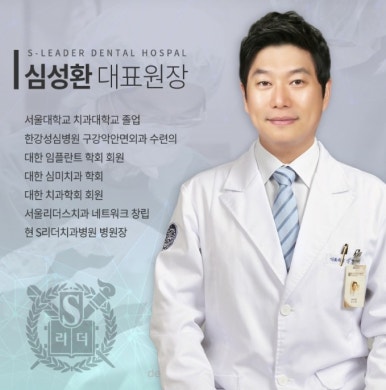


Junggok-dong Dental Clinic :: S (Leader) Dental Hospital