Hello, this is S Leader Dental Hospital, a Dongdaemun-gu dental clinic celebrating its 22nd anniversary this year.
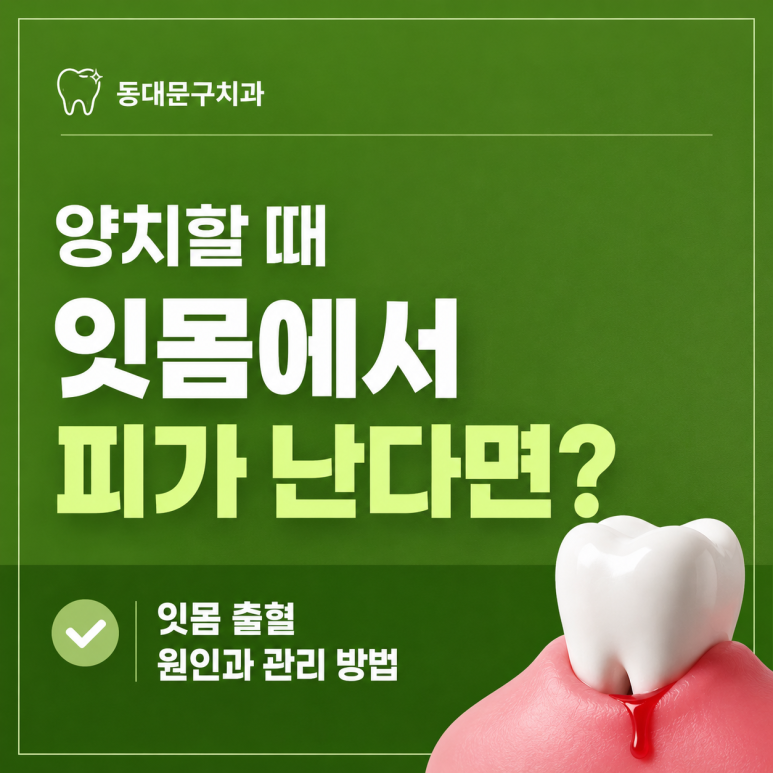
Have you ever had the experience of seeing blood from your gums every time you brush, or being startled when red blood appeared after biting into an apple? At first, many people brush it off lightly, thinking, “Maybe I’m just tired,” or “Maybe I brushed too hard,” but if this symptom keeps happening, it may mean that it is not just a temporary irritation, but a sign that something is wrong with your gum health.
In particular, gum bleeding is one of the symptoms many people experience. However, because it often does not hurt very much even when there is bleeding, many people miss the right time for treatment. Many people ask questions such as, “Is it okay if my gums bleed only when I brush?”, “Won’t scaling make them weaker?”, or “Are my gums just naturally weak, so there is nothing I can do?”
In fact, because the gums are an important tissue that supports the teeth, it may be important not to dismiss bleeding as something minor, but to check your current gum condition accurately. Gum disease often does not cause major symptoms in the early stages, so it is easy to leave untreated; however, as time passes, it can lead to swollen gums or even loose teeth.
Today, at S Leader Dental Hospital in Dongdaemun-gu, we will take a detailed look at the causes of gum bleeding, what symptoms you should watch for,
and how to manage your gums for better oral health.
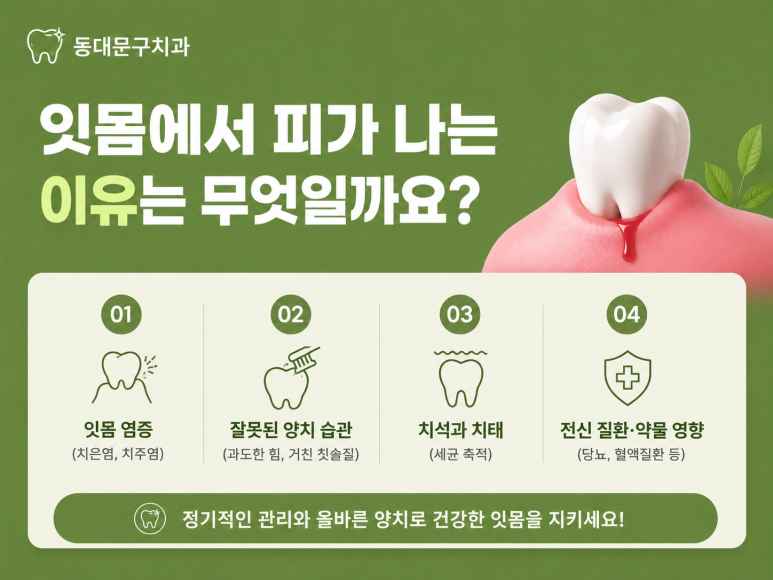 What causes gums to bleed? (Causes)
One of the most common causes of gum bleeding is plaque and tartar. When food debris and bacteria build up on the tooth surface and along the gumline, inflammation develops in the gums, and this condition is commonly called gingivitis.
What causes gums to bleed? (Causes)
One of the most common causes of gum bleeding is plaque and tartar. When food debris and bacteria build up on the tooth surface and along the gumline, inflammation develops in the gums, and this condition is commonly called gingivitis.
In the early stage, it often starts with just a small amount of bleeding when brushing. However, if the inflammation continues, the gums may swell and weaken, making them bleed easily even from minor irritation. In particular, if your gums bleed just from brushing, or if bleeding happens repeatedly when using dental floss, it is worth suspecting gum inflammation.
Many people think, “If my gums are bleeding, I should brush more gently.” But if you do not brush properly because your gums are bleeding, bacteria and plaque can build up even more, creating a vicious cycle that can worsen the inflammation.
Smoking can also have a major impact on gum health. Harmful substances in cigarettes can interfere with blood flow in the gums and make it harder for inflammation to heal, which can also speed up the progression of gum disease. In particular, smokers may also experience delayed onset of early symptoms, so it is not uncommon for the condition to be found only after it has worsened.
Stress and accumulated fatigue can also have an effect. When the body is tired or the immune system is weakened, the gums may swell easily and bleed. In particular, repeated lack of sleep or irregular eating habits often make the gums more sensitive.
Gum bleeding may also occur during orthodontic treatment. Around orthodontic appliances, food tends to get stuck easily and there are areas that are difficult to reach with a toothbrush, so if care is insufficient, the risk of gum inflammation may increase.
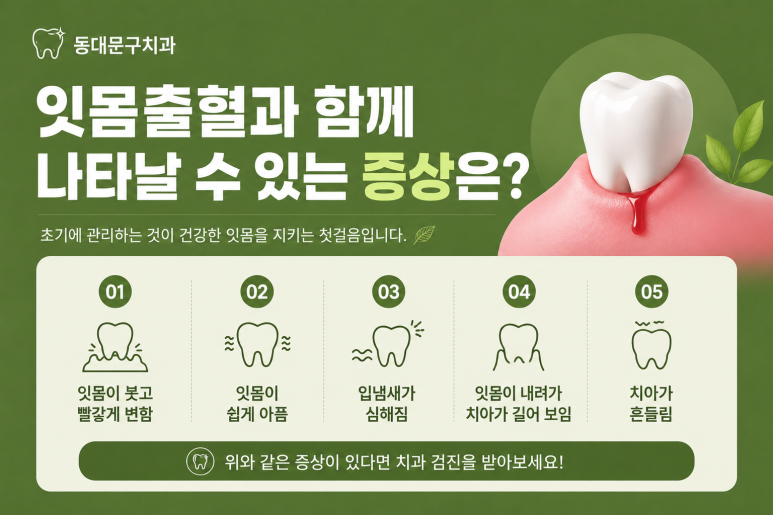 What symptoms can appear along with gum bleeding?
Gum disease often does not end with bleeding alone. In the early stages, there is often no major pain, which is why it is sometimes discovered late.
What symptoms can appear along with gum bleeding?
Gum disease often does not end with bleeding alone. In the early stages, there is often no major pain, which is why it is sometimes discovered late.
Typical signs include swollen and reddened gums. Healthy gums are often light pink, but when inflammation occurs, they may turn red and appear easily swollen.
Bad breath can also become worse. If you feel like your breath still smells even after brushing, gum inflammation or tartar may be the cause. In particular, when inflammation is severe in the gum area between teeth, bacterial activity can become more active and the odor can worsen.
You may also feel as if your gums are receding. If your teeth look longer over time or sensitivity to cold water becomes stronger, gum recession may also be progressing.
There may also be a feeling that the teeth are loose or discomfort when chewing. This is because when gum disease becomes severe, it can affect not only the gums but also the bone that supports the teeth. That is why it may be important not to dismiss it as simple bleeding, but to check your current gum condition accurately.

What happens if gum bleeding is left untreated?
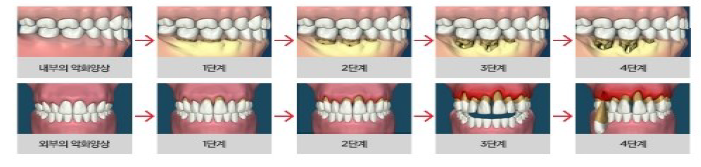
Many people tend to think, “It’s just a little blood, so it should be fine,” but gum inflammation can gradually progress into deeper areas over time. It may start with just a little bleeding when brushing, but if it is not managed properly, the inflamed area inside the gums can gradually expand.
In the early gingivitis stage, recovery is often possible through proper care and treatment. However, if the inflammation progresses deep below the gums, it may lead to periodontitis. Periodontitis is not just a problem of swollen gums; it is a disease that can also affect the alveolar bone that supports the teeth.
At this stage, in addition to frequent swelling and bleeding of the gums, symptoms such as worse bad breath or pus coming from the gums may appear. You may also feel that the teeth are floating or uncomfortable when chewing, and in severe cases, the teeth may begin to loosen.
The problem with gum disease, in particular, is that it often progresses slowly without noticeable pain. Since severe pain like that from cavities does not appear right away in many cases, it is not uncommon for people to miss the right time for treatment by thinking, “It still feels tolerable, so it must be okay.”
 I’m curious about how to manage gum health.
The most important part of gum care is having the right brushing habits. It is not simply a matter of brushing hard; what matters is gently and thoroughly cleaning along the gumline.
I’m curious about how to manage gum health.
The most important part of gum care is having the right brushing habits. It is not simply a matter of brushing hard; what matters is gently and thoroughly cleaning along the gumline.
Instead of using too much force, it is better to move the toothbrush gently, as if giving it small vibrations. In particular, the area where the gums and teeth meet is one of the places where bacteria build up the most, so careful cleaning is necessary.
Using dental floss or interdental brushes can also help. A regular toothbrush often cannot fully remove food debris and plaque between teeth. In particular, if your teeth are crowded or you have orthodontic appliances, using auxiliary oral hygiene tools together may be helpful.
Regular scaling is also important. Once tartar hardens, it is difficult to remove with brushing alone, so regular professional care at a dental clinic may be necessary. Many people worry that “scaling wears down the teeth,” but leaving tartar untreated may actually be worse for gum health.
Reducing smoking and drinking can also help. In particular, smoking can interfere with blood flow in the gums and slow recovery, so it may have a negative effect on gum disease management.
Most importantly, if bleeding keeps happening, do not simply dismiss it as being due to fatigue. Gum bleeding may be the body’s signal that your gums need to be checked, so if the symptoms recur, it may be helpful to get an accurate diagnosis.
 Dongdaemun-gu Dental Clinic, S Leader Dental Hospital
Maintaining gum health also requires early care and consistent checkups
Gum bleeding may seem like just a small amount of blood, but in reality, it can be a sign that gum health is weakening. Because it often does not cause significant pain in the early stages and is easy to neglect, it is important to check your current condition accurately if even small symptoms keep recurring.
Gum health is not just a matter of the gums alone; it can also have an important impact on keeping your teeth for a long time. No matter how well you care for your teeth, if the gums and alveolar bone are not healthy, it can become difficult to maintain your teeth over the long term. That is why it is important to pay consistent attention to gum care just as much as cavity treatment.
At S Leader Dental Hospital, a Dongdaemun-gu dental clinic, we carefully check the current gum condition, the amount of tartar, and whether gum inflammation has progressed, and then guide each patient toward a personalized care plan. We do not simply look at visible symptoms; we also examine the condition deep within the gums and provide treatment with long-term oral health in mind.
If your gums bleed repeatedly when brushing, or if swelling, bad breath, or sensitivity are also present, it may be helpful not to worry alone, but to check your current condition accurately. Even small gum bleeding should not be left untreated; managing it early can be an important first step toward maintaining healthy teeth for a long time.





 Dongdaemun-gu Dental Clinic:: S (S) Leader Dental Hospital