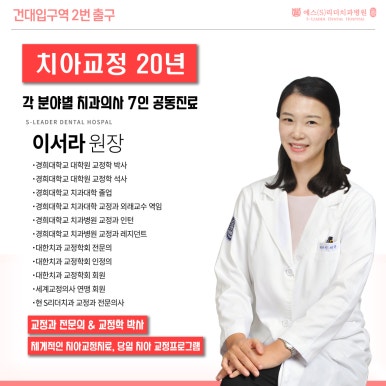
Hello, we are S Leader Dental Hospital, a well-known place for dental orthodontics in Seoul, celebrating our 22nd anniversary this year.
Many people feel satisfied as their teeth gradually become straighter after starting orthodontic treatment. In particular, when protruding teeth are aligned or the line of crooked front teeth changes, many people think, “I’m glad I got braces.” However, one of the concerns people hear more often than expected during orthodontic treatment is gum problems.
“After I started orthodontic treatment, my gums started bleeding when I brushed my teeth.”
“My gums keep feeling more swollen than before.”
“I think my breath has gotten worse.”
“I feel like my gums have receded while I’ve been wearing braces.”
In fact, during orthodontic treatment, your gums can become more sensitive and harder to manage than usual. Food can get trapped easily around the appliance, and brushing becomes less convenient, creating an environment where bacteria and plaque are more likely to remain. Especially in the early stages of orthodontic treatment, many people feel greater discomfort than before because the oral environment changes while they adapt to the appliance.
The problem is that many people leave these symptoms untreated, thinking, “I guess this is just how it is when you get braces.” But if a poor gum condition continues for a long time, it may not stop at simple bleeding and could lead to gingivitis or periodontal problems, so more careful management may be needed.
Today, at S Leader Dental Hospital, a place well known for dental orthodontics in Seoul, we’ll take a closer look at why gums can worsen during orthodontic treatment, what symptoms to watch for, and what kind of care is needed to continue treatment in a healthy way.
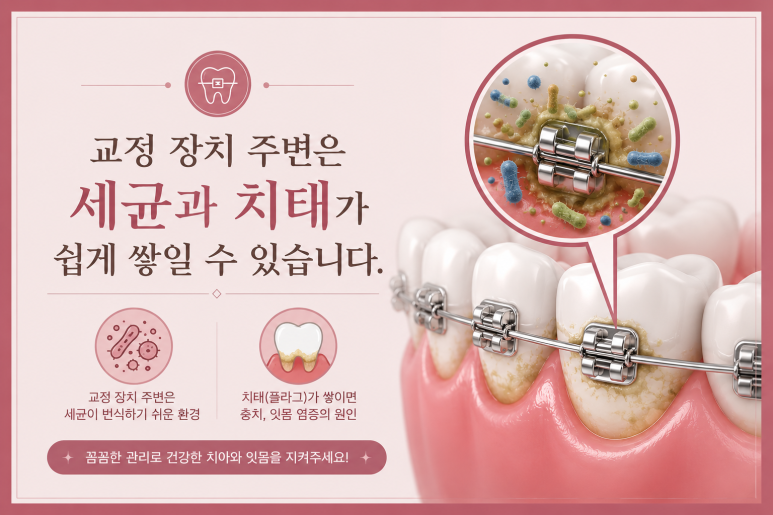 Brackets and wires can easily collect bacteria and plaque.
One of the biggest reasons gums can worsen during orthodontic treatment is the structure of the appliance.
In general, orthodontic appliances are made up of several components such as brackets, wires, and elastic bands. The problem is that the areas around these appliances are environments where food residue can remain very easily. Even areas that a toothbrush could normally reach can become structurally harder to clean once an orthodontic appliance is attached.
In particular, the areas around the brackets and under the wires are places where food gets trapped easily and bacteria tend to remain. If plaque is not sufficiently removed in this condition, bacteria can multiply and cause inflammatory reactions in the gums.
In fact, during orthodontic treatment, many people say, “Even though I brushed, my mouth doesn’t feel clean,” or “Food gets stuck much more than before braces.” This is not just a feeling; it is because the level of care required is actually higher.
Especially when people brush carelessly in a busy daily routine, or neglect oral care because the appliance feels uncomfortable, the gums can be affected quickly.
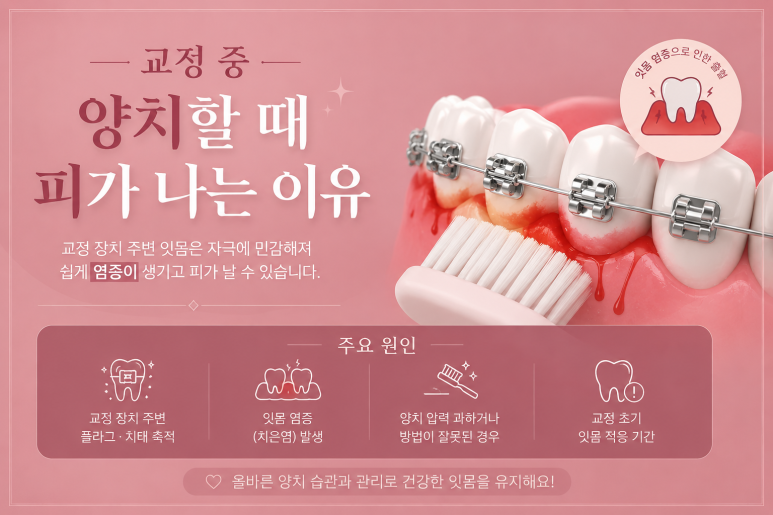 Reasons for bleeding when brushing during orthodontic treatment
One of the most common symptoms during orthodontic treatment is gum bleeding.
When blood appears while brushing, most people tend to think, “Did I brush too hard?” But if bleeding happens repeatedly, it is worth considering the possibility that it may be a sign of gum inflammation.
Gums are tissue that responds very sensitively to bacterial and plaque irritation. When plaque builds up around the appliance, the gums can swell, turn red, and become prone to bleeding easily. In particular, during orthodontic treatment, there are times when the surrounding tissues become more sensitive as the teeth move, making inflammatory reactions more likely.
An important point is that some people brush less because their gums bleed. In fact, some say, “It bleeds, so I’m scared and avoid brushing that area.” But if plaque is not properly removed, inflammation is more likely to worsen.
Of course, overly strong brushing should be avoided, but during orthodontic treatment, more thorough and gentle care is needed. In particular, developing the habit of carefully cleaning around the brackets and the gumline can be very important.
You may feel swelling or a covering sensation in the gums.
During orthodontic treatment, many people also experience gum swelling.
At first, it may seem like the gums are only slightly swollen, but if proper care is not provided, the gums around the brackets may puff up or appear as if they are covering part of the appliance. In particular, the spaces between the gums may also feel as though they are roundly swollen.
This is often due to irritation from bacteria and plaque left around the appliance. Gums swell as an inflammatory response to continuous irritation, and this condition may repeat more easily in an environment with orthodontic appliances.
Also, during orthodontic treatment, as the arrangement of the teeth changes, the gum line that was previously hidden may become more visible. That is why some people feel, “It seems like my gums have suddenly receded,” or “My teeth look longer.”
Of course, there are cases where actual gum recession has progressed, but sometimes it only appears that way because of changes in tooth position, so it is important to check the exact condition.
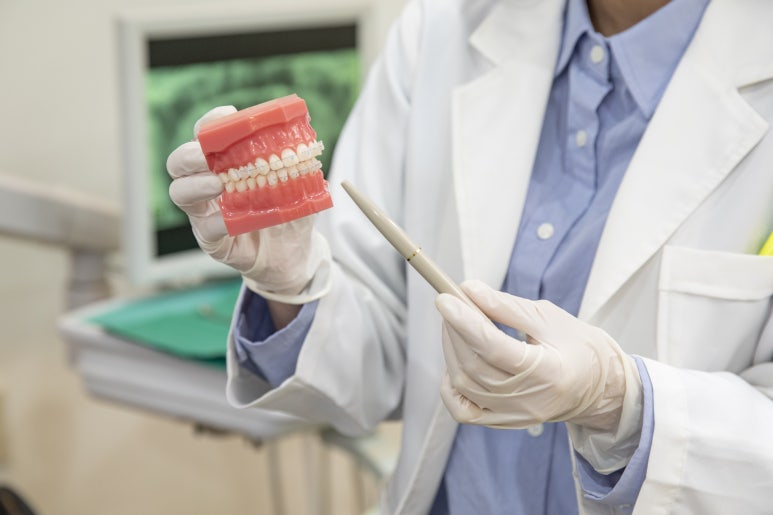 Why scaling and regular checkups are important during orthodontic treatment
During orthodontic treatment, many people ask, “Can I get scaling even though I have an appliance?” But in fact, regular care may be even more important during orthodontic treatment.
Around orthodontic appliances, there are areas that are difficult to fully clean with brushing alone, so tartar and plaque can build up quickly. Since tartar is difficult to remove with regular brushing alone, care at regular intervals may be necessary.
Also, during orthodontic treatment, it is necessary to check not only tooth movement but also gum condition. If the gums continue to swell or bleeding repeats, it may be necessary to determine whether it is simple irritation or whether actual inflammation is progressing.
By checking both the hygiene around the appliance and the gum condition during regular examinations, you can help continue orthodontic treatment in a healthier way.
How to protect gum health during orthodontic treatment
During orthodontic treatment, a little more careful oral care than usual is needed.
First, the most important thing is brushing technique. Rather than simply brushing quickly, it is important to develop the habit of thoroughly cleaning around the brackets and under the wires. If a regular toothbrush is not enough, using interdental brushes or a water flosser can also be helpful.
In particular, interdental brushes are often helpful for cleaning between brackets and under the appliance. A water flosser can also help remove food residue, but it is better to use it together with brushing rather than as a replacement for brushing.
Also, very hard or sticky foods can easily remain around the appliance or cause damage, so caution is needed. If you are in a situation where you cannot brush immediately after eating, it can help to at least rinse thoroughly with water.
Above all, the most important thing is not to ignore signs of gum changes. If bleeding, swelling, or pain repeats, it is better not to assume it is just part of the adjustment process and instead check your current condition accurately.
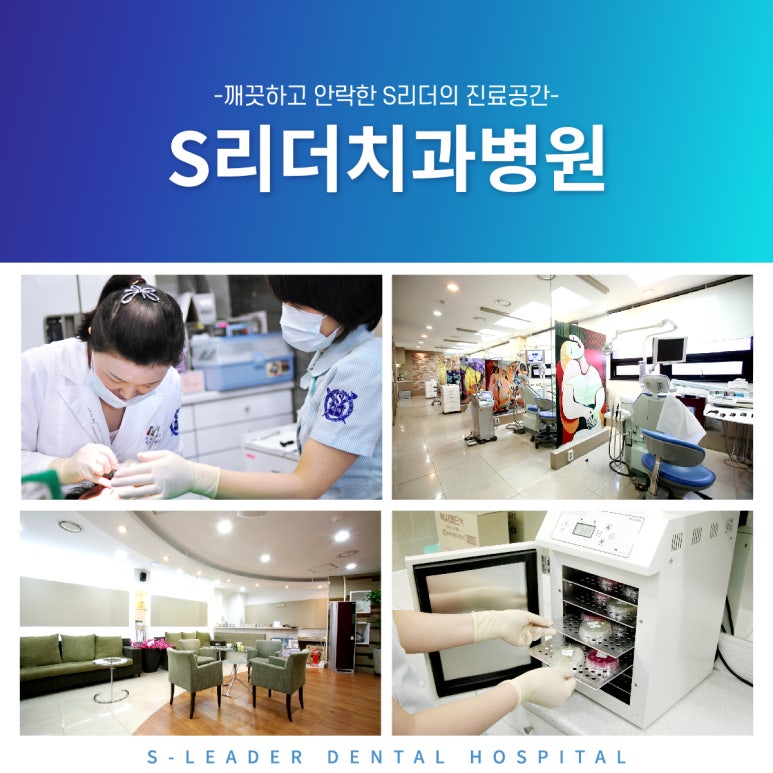
Best place for dental orthodontics in Seoul, S Leader Dental Hospital,
We provide systematic care for gum health during orthodontic treatment.
Orthodontic treatment is not just a process of straightening teeth; it is also a process of maintaining oral health in a stable way throughout a long treatment period. In particular, during orthodontic treatment, the area around the appliance becomes harder to clean, so the gums can become more sensitive easily, making careful care and regular checks important.
S Leader Dental Hospital, a well-known place for dental orthodontics in Seoul, does not simply check tooth movement during orthodontic treatment; we also carefully examine our patients’ gum condition and oral hygiene. We provide systematic guidance on how to care for the area around the orthodontic appliance, what care approach is appropriate for the current gum condition, and scaling and maintenance care, helping patients continue orthodontic treatment in a healthier way.
In particular, symptoms such as gum bleeding, swelling, bad breath, and pain during orthodontic treatment are not just minor discomforts; they can also be connected to treatment results, so careful management from the beginning is important. At S Leader Dental Hospital, we consider each patient’s tooth and gum condition together to think about a more stable and healthier direction for orthodontic treatment.
If you have been worried about gum problems during orthodontic treatment, or if you have been wondering whether your current care method is really right, it may be a good idea to check your exact oral condition rather than worrying alone. S Leader Dental Hospital will be with you so that you can maintain healthier teeth and gums throughout your long orthodontic treatment.



Best place for dental orthodontics in Seoul :: S (S) Leader Dental Hospital