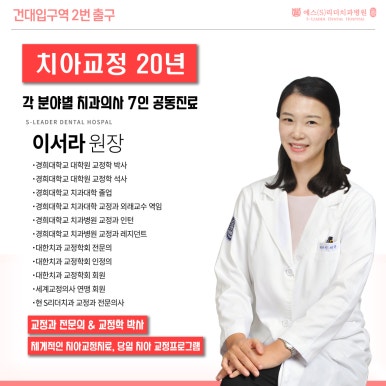
Hello, this is S Leader Dental Hospital, Konkuk Orthodontic Dental Clinic, celebrating its 22nd anniversary this year.
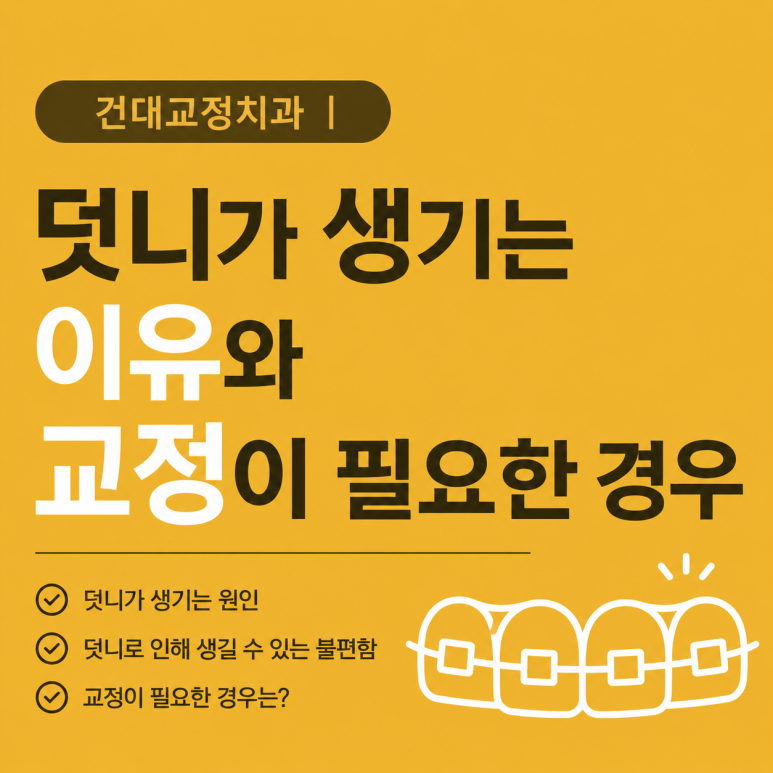
Crowded canines are often thought of as nothing more than teeth that are a little crooked, but over time they can become a source of stress—for example, teeth looking more protruded when smiling or covering the mouth when taking photos. In particular, after becoming an adult,
many people also consider orthodontic treatment because brushing becomes difficult, food gets stuck frequently, or there is discomfort from teeth repeatedly contacting each other.
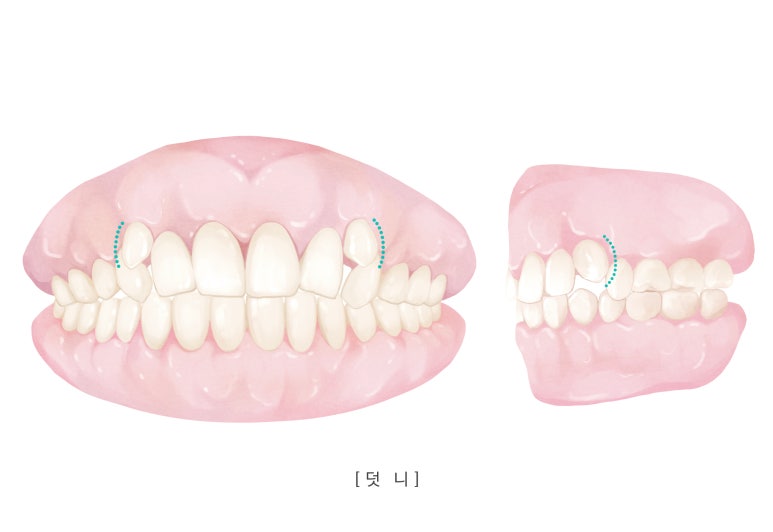
In dental consultations, we often receive questions such as, “Why do crowded canines happen?”, “Do they really need correction?”, and “Do they cause cavities more easily?” Crowded canines are not simply a condition where one tooth is crooked; they are one of the representative types of malocclusion that occur when there is not enough space for the teeth to align properly or when the balance between jaw size and tooth size does not match. Therefore, it is important to check not only aesthetics but also
the overall alignment and bite condition.
Today, at S Leader Dental Hospital, Konkuk Orthodontic Dental Clinic, we will look at why crowded canines develop, what causes people to consider orthodontic treatment, and what kinds of inconveniences they can actually lead to.
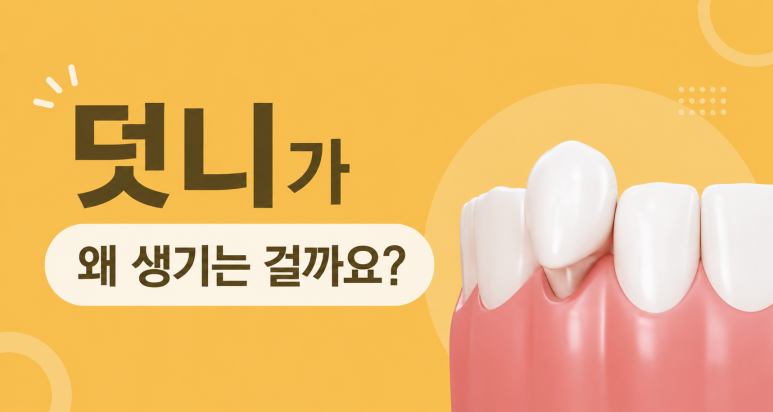
Why do crowded canines happen?
The most common reason crowded canines develop is a lack of space for the teeth to align. In simple terms, if the teeth are larger than the jaw size or there is not enough room for them to erupt, they cannot come in at the normal position and end up overlapping.
Canines, in particular, erupt relatively late, so if space is insufficient, they are often pushed outward and take on the so-called crowded canine shape. Cases where the upper canines look especially protruded when smiling are mostly of this
kind.
Genetics also play a significant role. If one of the parents has a small jaw or uneven teeth alignment, their child is also more likely to show a similar
dental pattern. In addition, habits such as thumb sucking, mouth breathing, and tongue thrusting in childhood can also affect tooth alignment.
If baby teeth fall out too early or, conversely, too late, the order and position in which the permanent teeth erupt can also change.
As a result, the balance of space can be disrupted, which may lead to crowded canine alignment.
Recently, because diets have become centered around soft foods, jaw use has decreased, and cases of insufficient tooth space are becoming more common. If jaw growth and the space for tooth alignment are not sufficient, the teeth can push against each other and crowded canines may become more severe.
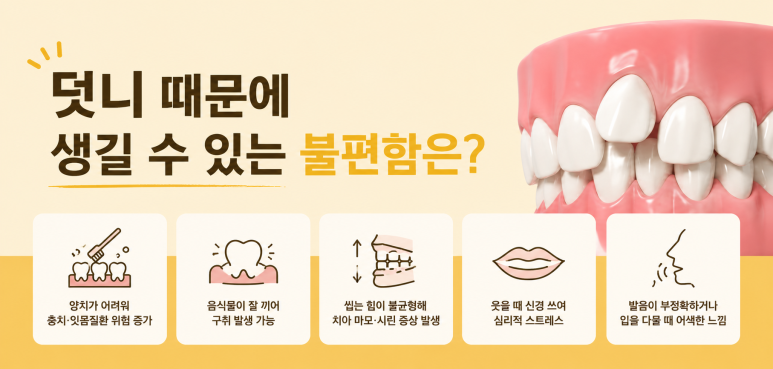
What inconveniences can crowded canines cause?
Crowded canines are not just a matter of tooth shape; they often lead to practical inconveniences in daily life. The most common
issue is difficulty with brushing.
Areas where teeth overlap are hard for a toothbrush to reach properly, making them an environment where food debris and plaque can remain. In particular, food often gets stuck around the canines or between teeth that are pushed inward, and if this continues, it can increase the likelihood of cavities or
gum inflammation.
In fact, among people who say, “I brush carefully, but cavities keep forming,” there are不少 cases where tooth alignment problems make care difficult. It is not simply a matter of brushing habits; the root cause can be the structurally difficult environment itself.
Also, when the teeth are not evenly aligned, chewing force may become concentrated on specific teeth. If only some teeth repeatedly receive strong force, it can lead to tooth wear, small cracks, or sensitivity.
Many people also feel stressed about their lip line or smile. In particular, if the canines look protruded or the front teeth are overlapped, some people become self-conscious about their teeth when smiling and end up covering their mouths. After becoming an adult, this can feel even more significant in social life, and many people consider orthodontic treatment because of it.
In some cases, speech may feel unclear or the mouth may feel awkward when closed. That is why, recently, more adults are considering orthodontic treatment not only for aesthetic reasons but also for dental health and easier care.
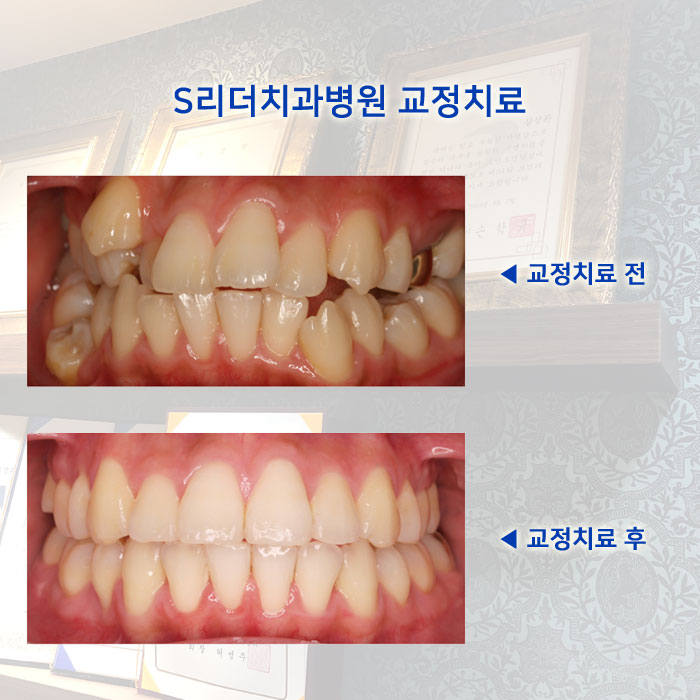
Crowded canine treatment and the need for orthodontics
Having crowded canines does not mean everyone must undergo orthodontic treatment. The need for treatment can vary depending on the tooth alignment, bite, and whether current care is manageable.
However, if crowded canines make brushing difficult or if cavities and gum inflammation recur, or if the bite imbalance is severe,
it may be worth considering orthodontic treatment. In particular, adults may also experience tooth wear or gum problems,
so it is important to check not only the appearance but also the functional aspects.
Orthodontic treatment is not simply the process of straightening crooked teeth. It can be viewed as treatment that proceeds while considering the overall tooth alignment, chewing
balance, and changes in the lip line.
Depending on the current dental condition, extraction-based orthodontic treatment may be necessary, or non-extraction treatment may be possible by securing space. In addition, as clear aligners and aesthetic appliances have become more common alongside traditional bracket orthodontics, the burden on adults has also tended to decrease compared with before.
What matters is not simply “fast treatment,” but a treatment plan that proceeds safely according to the current condition of the teeth.
This is because, rather than forcing tooth movement, it may be more important in the long term to also consider gum health and bite stability.
How should you care for your teeth after crowded canine orthodontic treatment?
Orthodontic treatment does not end once the appliance is attached. Ongoing care during treatment and regular follow-up visits must
be maintained for more stable results.
During orthodontic treatment, food is more likely to get caught around the appliance, so more careful brushing than usual is important. In particular, the spaces between teeth and around the appliance may be difficult to manage with a regular toothbrush alone, so using interdental brushes or a water flosser
together can be helpful.
Hard or chewy foods can lead to appliance detachment or tooth pain, so caution is needed. It is better to avoid foods that are too hard, such as ice or
nuts, and sticky foods should also be handled with care because they can cling to the appliance.
Also, after orthodontic treatment is finished, retainer care is important. Because teeth tend to return to their original positions,
if the retainer is not worn properly, the teeth may become crooked again. That is why it is important to manage the retention phase after treatment as well.
Regular checkups are also necessary. Even after orthodontic treatment is complete, periodically checking the tooth alignment and bite condition can help detect whether any problems are developing.
Konkuk Orthodontic Dental Clinic, S Leader Dental Hospital
Even for crowded canine treatment, diagnosis that fully
considers the current dental condition is important.
Crowded canines may seem like nothing more than a problem where one tooth is crooked, but in reality they are often connected to tooth alignment, bite, and even the brushing environment. Therefore, rather than aiming only for a neat-looking arrangement, a treatment plan that fully considers the current dental condition and overall balance can be important.
In particular, adult orthodontics may require a more detailed diagnostic process because existing bite conditions, gum health, and the degree of tooth wear must all be considered together. Even if they look like the same crowded canines, the treatment direction can differ depending on the degree of protrusion, jaw space structure, and tooth alignment, and the decision on whether extraction is needed or which appliance to use may also differ.
At S Leader Dental Hospital, Konkuk Orthodontic Dental Clinic, we comprehensively check the current tooth alignment, bite structure, gum condition, and more,
then work together to determine the orthodontic direction that suits each patient. Rather than simply straightening the teeth, we plan treatment while also considering ease of care after treatment, bite stability, and a natural change in the lip line.
If brushing is difficult because of crowded canines, if the alignment keeps bothering you, or if you are concerned about your lip line when smiling, it may be helpful not to worry alone but to check your current condition accurately. We hope you can confirm the direction that suits your current teeth through 충분한 consultation and diagnosis.


Konkuk Orthodontic Dental Clinic :: S (Leader) Dental Hospital