Hello, this is S Leader Dental Hospital, a Dongdaemun-gu dental clinic, now celebrating its 22nd anniversary since its establishment.
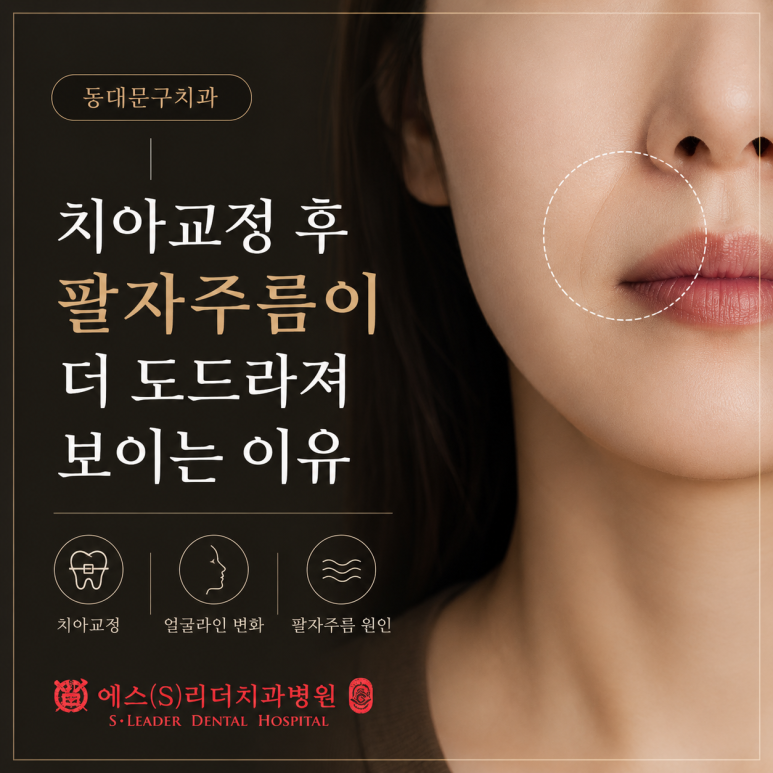
Have you ever looked in the mirror and thought, “Have I always had nasolabial folds like this?” In particular, many people feel that after starting orthodontic treatment, the area around the mouth looks flatter than before or that the nasolabial lines seem deeper when smiling.
In fact, during orthodontic consultations and treatment, it is more common than you might think for people to say things like, “I feel like my face has changed after orthodontics,” or “I feel like I look older for no reason.” Especially in cases of protrusion correction or extraction-based orthodontic treatment, changes in the shape of the mouth can make nasolabial folds seem more noticeable than before.
However, what is important here is understanding whether orthodontics really caused sudden aging, or whether it is simply being perceived that way during the process of facial structural change. In reality, rather than the skin itself aging rapidly, it is more often the change in volume around the mouth and the facial contour that makes the overall impression look different.
Orthodontic treatment is not just about aligning the teeth; it can also affect the mouth shape and the side profile of the face. That is why a diagnostic process that fully considers the current facial structure and degree of protrusion is important.
Today, at S Leader Dental Hospital, a Dongdaemun-gu dental clinic, we will take a detailed look at why people feel that nasolabial folds appear after orthodontic treatment, the real causes of facial changes, and what should be checked for a more natural orthodontic result.
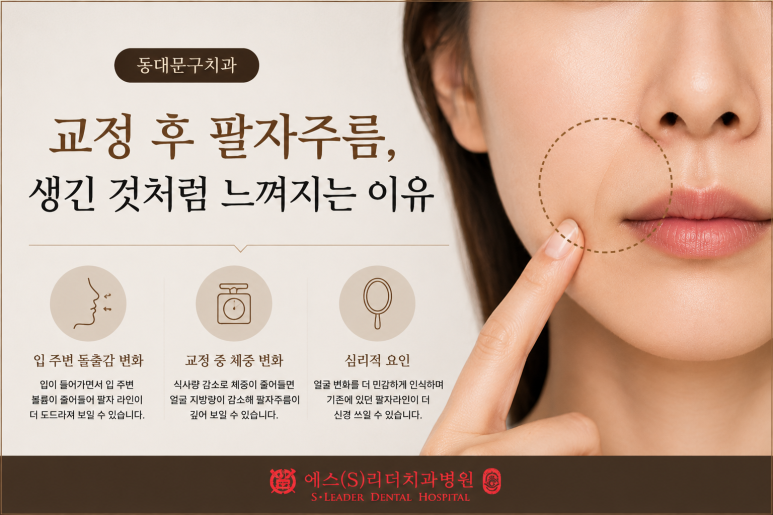
Why Nasolabial Folds Seem to Appear After Orthodontic Treatment
- Changes in the protrusion around the mouth
One of the biggest reasons people feel that nasolabial folds have become more pronounced after orthodontic treatment is changes in the protrusion around the mouth.
In particular, when undergoing protrusion correction or extraction-based orthodontic treatment, the front teeth may move backward, causing the lips to shift inward compared with before. For people whose lips originally protruded forward, the skin around the mouth often had relatively strong support before treatment. But once the mouth moves inward through orthodontics, the side profile becomes more refined, yet the reduction in volume around the mouth can make the nasolabial lines seem more visible.
- Weight changes during orthodontic treatment
Another reason is weight change during the orthodontic process.
When starting orthodontic treatment, many people eat less because of adjustment to the appliance or pain. Especially in the early stage after extraction or right after wire adjustments, some people naturally lose weight because they avoid hard foods. When facial fat decreases, the cheeks and the fat around the mouth can also decrease, and this often makes nasolabial folds seem deeper.
- Psychological effects that make facial changes feel more noticeable
Psychological changes during orthodontic treatment can also have an effect.
Once treatment begins, many people start paying closer attention to changes in their face than before. Lines that were already there can
suddenly feel as if they appeared after orthodontics. This is especially common when repeatedly comparing smartphone selfies or side-profile photos and becoming sensitive to even small changes.
In actual dental practice, among patients who say, “I didn’t notice it before orthodontics, but I can see my nasolabial folds after treatment,” many already had some degree of nasolabial lines before treatment. However, after orthodontic treatment changes the mouth shape and facial contour, they become more noticeable relative to the rest of the face.

Does Orthodontics Directly Cause Facial Aging?
To put it simply, ordinary orthodontic treatment itself is not generally considered to directly cause facial aging.
However, depending on a person’s skeletal structure, skin elasticity, and treatment plan, changes in facial impression can occur.
Especially in adults, skin elasticity is lower than in teenagers, so they may react more sensitively to changes in volume around the mouth.
For example, if someone whose mouth originally protruded significantly undergoes extraction-based orthodontic treatment and the mouth is moved inward a lot, the side profile may become more refined, but they may also feel that the area around the mouth looks hollow. On the other hand, for people with severe protrusion, orthodontic treatment can actually make it easier to close the lips comfortably and refine the jawline, making the overall impression look more polished and softer.
In other words, it is important to understand orthodontics not as a treatment that inevitably makes the face look older, but as a treatment whose direction of change can vary depending on the original facial structure.
Also, on the internet, you often see extreme claims such as “extraction orthodontics always causes nasolabial folds” or “the mouth becomes hollow,” but in reality, facial changes are not determined by extraction alone.
You have to consider various factors together, such as which teeth are moved and by how much, the original degree of protrusion, and the thickness of the alveolar bone and lips. That is why even with the same extraction-based treatment, some people experience a naturally refined facial line while others may feel a decrease in volume.
In particular, if treatment is carried out in a way that forces the mouth too far inward, the support around the mouth may be reduced, increasing the likelihood of a hollow-looking appearance. For this reason, recent orthodontic diagnosis has emphasized not only aligning the teeth but also considering facial balance and the side profile.
How Can You Minimize Facial Changes Before and After Orthodontic Treatment?
To reduce worries about facial changes after orthodontics, a precise diagnostic process before treatment is very important.
It is necessary to analyze not only tooth alignment but also the current face shape, degree of protrusion, lip position, jawline balance, and the mouth shape when smiling. Especially in adult orthodontics, not only functional factors but also aesthetic satisfaction are important, so it is a good idea to receive a full explanation of possible facial changes from the planning stage of treatment.
Avoiding extraction unconditionally does not necessarily lead to good results, and pushing the mouth inward as much as possible is not always the
right answer either. Balance that suits the individual face shape is important.
It can also help to prevent rapid weight loss during orthodontic treatment. If you reduce meals too much because of appliance pain, facial fat may decrease and the nasolabial lines may become more noticeable. It is important to try to maintain nutritional balance even with relatively soft foods.
During orthodontic treatment, many people also become stressed by comparing mirrors or photos too often. In reality, orthodontic treatment may include temporary phases that look awkward during the middle of the process. While teeth are moving, the mouth shape may briefly look unnatural or the cheeks may seem hollow, but in many cases the overall balance stabilizes again by the finishing stage.
Above all, the most important thing is not to decide the treatment direction based only on currently popular face shapes or online reviews.
Facial structure is different for everyone, so it is important to establish an orthodontic direction that fits you. Rather than approaching it with the single goal of “I want to pull the mouth in as much as possible,” a treatment plan that considers overall facial harmony can help increase satisfaction.
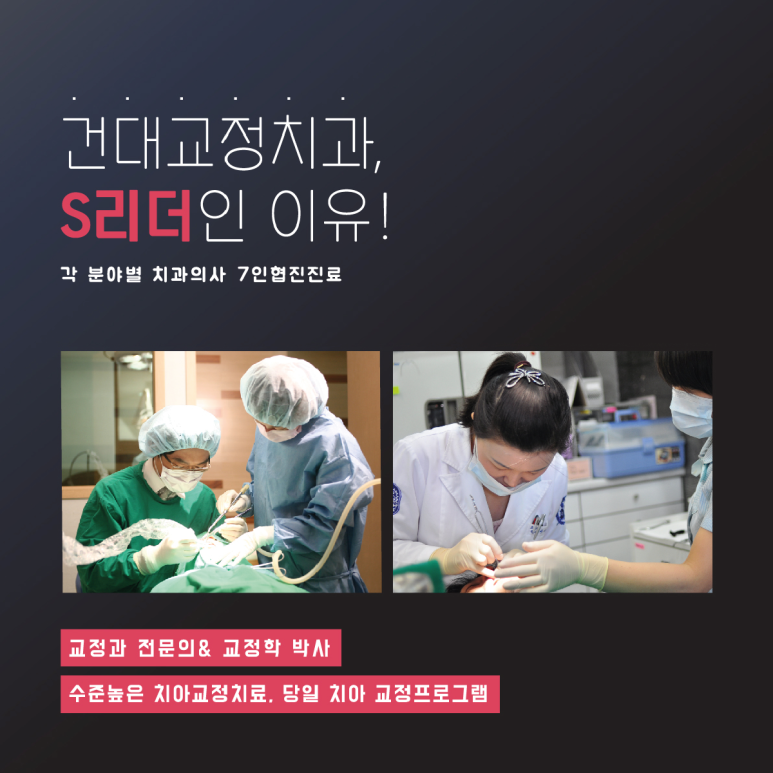
Dongdaemun-gu Dental Clinic | S Leader Dental Hospital
Orthodontic Treatment That Also Considers Facial Balance
Orthodontic treatment is not just about aligning the teeth; it can also affect the mouth shape and facial line, so a more careful diagnosis and treatment plan are important. Especially if you are worried about nasolabial folds or facial changes after orthodontic treatment, it is better not to judge only by “extraction vs. non-extraction.” Instead, you need a comprehensive evaluation of the current facial structure, degree of protrusion, lip thickness, and bite condition.
At S Leader Dental Hospital, a Dongdaemun-gu dental clinic, we place importance on orthodontic diagnosis that considers not only tooth alignment but also each patient’s facial proportions and mouth line. Through sufficient consultation and detailed examinations before treatment, we carefully analyze the current condition and strive to create a treatment plan that is more natural and harmonious rather than forcing excessive change.
In addition, during orthodontic treatment, we continuously check not only tooth movement but also gum health, bite balance, and changes in the facial line to help provide more stable care. If you have been hesitating to begin treatment because you are worried about facial changes after orthodontics, it may be a good idea to first find out which direction is right for your current condition through thorough consultation.



Dongdaemun-gu Dental Clinic :: S (S) Leader Dental Hospital