Hello, this is S Leader Dental Hospital, the Gunja Station dental clinic, celebrating its 22nd anniversary this year.
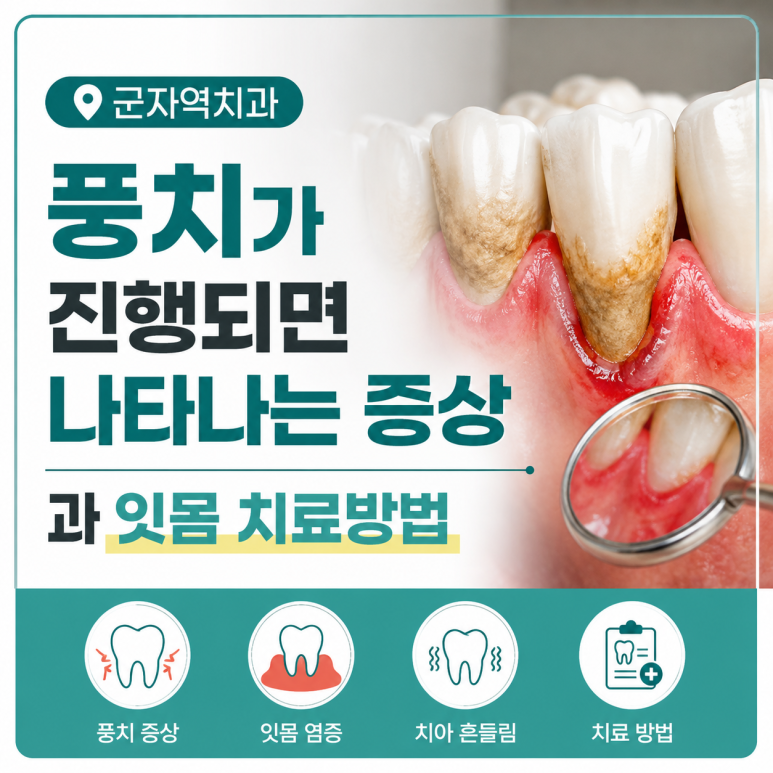
Have you ever brushed your teeth and noticed your gums bleeding, but brushed it off as just being tired? Or perhaps your gums often swell and feel tender, but because the pain is not severe, you tend to think it is nothing serious.
In actual dental consultations, there are many people who say things like, “It only bleeds a little when I brush,” or “I think I have bad breath, but it probably isn’t a big problem, right?” However, these symptoms may not be just temporary irritation; they can also be early signs of gum disease.

In particular, periodontal disease, commonly called “pyungchi” in Korean, is one of the conditions that can easily be overlooked because it often progresses without obvious pain in the early stages. It often starts with simple gum bleeding, but over time it can lead to damage to the jawbone supporting the gums and loosening of the teeth, so early management can be important.
Above all, gum health is not just a matter of the mouth; it can also affect eating, oral hygiene, and everyday comfort.
Today, at S Leader Dental Hospital, the Gunja Station dental clinic, we will take a detailed look at periodontal disease and pyungchi, including their causes, possible symptoms, treatment methods, and management tips.
 What is periodontal disease (pyungchi)?
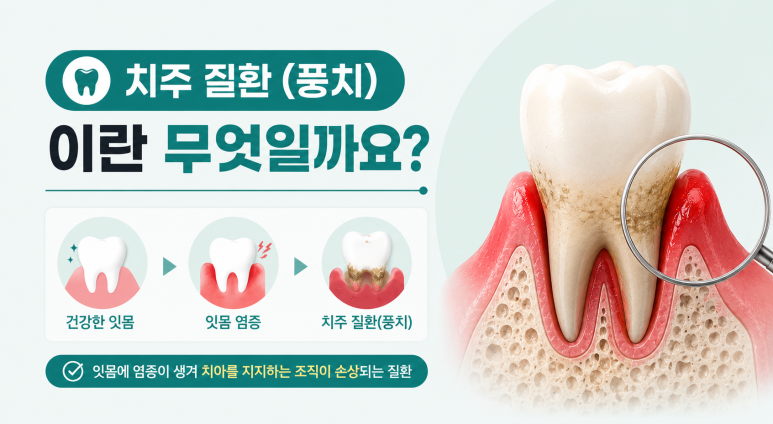
Periodontal disease refers to an inflammatory condition affecting the gums around the teeth and the tissues that support the teeth. Many people commonly refer to it as “pyungchi.”
In the early stage, it often appears as gingivitis, in which inflammation is limited to the gums. At this stage, it often begins with symptoms such as swollen gums or bleeding when brushing, so many people dismiss it as simple fatigue or temporary irritation.
However, if the inflammation continues, it can progress to periodontitis, which affects the alveolar bone beneath the gums. At this stage, not only bleeding but also gum recession and even loosening of the teeth may occur.
A notable feature of periodontal disease is that it often progresses without severe pain. For that reason, many people think there is no major problem on their own, only to find during a dental checkup that damage to the jawbone has already progressed.
Some people also think periodontal disease is simply something that comes with age, but in reality, it can occur even in relatively young adults depending on lifestyle habits and oral hygiene.
 What are the main causes of periodontal disease?
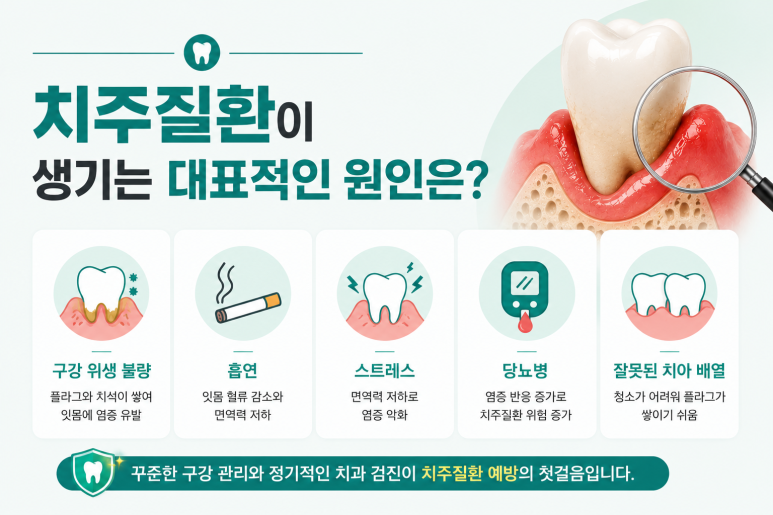
- Plaque and tartar
One of the most common causes is plaque and tartar buildup around the teeth.
Bacteria and food debris that are not properly removed after eating remain on the tooth surface, and over time they harden and turn into tartar. Because tartar is often difficult to remove with regular toothbrushing alone, it can create an environment where bacteria continue to accumulate.
- Blind spots in brushing and poor care
Even if you think you brush thoroughly, there are often areas that are difficult to reach, such as the back of the molars or between the teeth.
In particular, if floss or interdental brushes are not used enough, bacteria can remain between the gums, increasing the likelihood of inflammation. Habits such as going to bed right after late-night snacks or brushing carelessly because you are tired can also have an impact.
- Smoking and drinking habits
Smoking is known as one of the factors that can increase the risk of periodontal disease because it can affect blood circulation in the gums.
In particular, smokers may notice less bleeding even when gum inflammation is progressing, so the condition may be discovered later. Alcohol can also affect gum health by drying out the oral environment.
- Stress and weakened immunity
Recently, there has been more discussion about how stress and lack of sleep can also affect gum health.
When the body is tired or the immune system is weakened, the gums may swell more easily or show stronger inflammatory reactions. In particular, many people experience sudden gum swelling during exam periods or times of intense work stress.
- Effects of systemic disease
Systemic diseases such as diabetes can also be related to gum health.
When blood sugar control is not going well, it can affect inflammatory responses and the healing process, making gum disease management even more important.
 If you have these symptoms, they may be signs of gum disease.
- Bleeding when brushing
This is one of the most common early symptoms.
At first, many people dismiss it, thinking, “Maybe I brushed too hard,” but if bleeding happens repeatedly, it is worth considering the possibility of gum inflammation.
- Gums often swell and throb
Repeated swelling of the gums or discomfort when pressing on them can also be an early symptom of periodontal disease. In particular, if a specific area keeps swelling every time you are tired, it may need to be checked.
- Bad breath gets worse
If bad breath persists even after brushing, gum inflammation and bacterial problems inside the gums may be suspected. In fact, many periodontal disease patients report stress caused by bad breath.
- Teeth feel sensitive
If the gums recede and the roots of the teeth become exposed, sensitivity to cold food may occur. Some people simply think of it as tooth sensitivity and leave it untreated, but in some cases the gum condition needs to be checked.
- Teeth feel loose
As periodontal disease progresses, it can affect the jawbone that supports the teeth, so the teeth may begin to feel loose. At this stage, more active management may be needed.
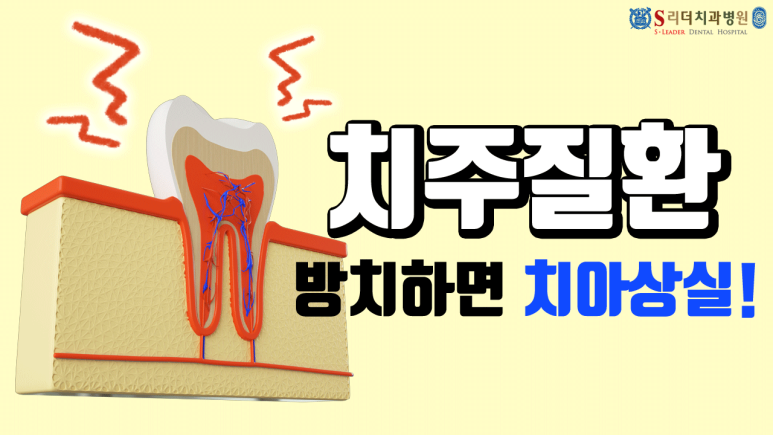
What can happen if pyungchi is left untreated
In the early stages, gum disease often improves with management and treatment. However, if inflammation is left untreated for a long time, it can lead to damage to the alveolar bone beneath the gums.
In particular, because bone loss in the gums may not recover naturally once it has progressed, early management can be important.
Also, once the teeth begin to loosen, chewing becomes uncomfortable, and people may start using only certain teeth, which can create additional strain. In severe cases, it may become difficult to preserve the natural teeth, leading to situations where extraction and implant treatment need to be considered.
That is why, rather than simply brushing off symptoms like minor bleeding or swelling, it is important to check your current condition if the symptoms keep recurring.
How is periodontal disease treated?
Treatment for periodontal disease can vary depending on how far the inflammation has progressed.
In the early gingivitis stage, scaling and oral hygiene management alone can often improve gum condition. Scaling can help reduce the bacterial environment by removing tartar from the tooth surface and around the gums.
However, if the inflammation has progressed deep below the gums, more careful periodontal treatment may be needed. Depending on the condition, treatment for inflammation inside the gums or additional procedures may also be performed.
Above all, maintenance after treatment is important. No matter how well treatment is done, if proper care is not continued afterward, inflammation can recur.

Gunja Station dental clinic, S Leader Dental Hospital
Early management is important for gum health.
At S Leader Dental Hospital, the Gunja Station dental clinic, we do not simply check the symptoms that are currently bothering the patient. We carefully examine the gum condition and the tissues around the teeth in order to provide a treatment plan suited to each patient’s condition.
In particular, since periodontal disease treatment may vary depending on the timing of early management and the degree of inflammation currently present, a more careful diagnostic process can be important. If you have been bothered by repeated gum bleeding, swelling, bad breath, or sensitivity, it may be helpful to check your current condition accurately rather than dismissing it as simple fatigue.
In addition, to help maintain more stable gum health after treatment, we also provide guidance on regular care and oral hygiene methods, and we strive to help patients keep their natural teeth healthy for as long as possible.
Because periodontal disease is not something that ends once it gets better, but rather a condition that requires ongoing management, it can be important to accurately check the current state of your gums and establish the care approach that is right for you. S Leader Dental Hospital, the Gunja Station dental clinic, works with each patient through customized treatment that takes into account their gum condition and lifestyle habits, so that treatment can be more comfortable and stable.




Gunja Station Dental Clinic :: S (S) Leader Dental Hospital