Hello, this is S Leader Dental Hospital, a Gwangjin-gu orthodontic clinic celebrating its 22nd anniversary this year.
Have you ever started orthodontic treatment and then felt uneasy because your face seemed to look different every time you looked in the mirror? Especially in the early or middle stages of treatment, some people worry that “my mouth looks more sunken,” “my cheeks seem to have thinned out,” “my cheekbones look more prominent,” or “my nasolabial folds seem deeper.”
These are also very common questions during dental consultations.
Orthodontic treatment is not simply a process of straightening crooked teeth. Because it also changes the position of the teeth, the bite, the structure supporting the lips, and even habits related to how the muscles around the jaw are used, it can have some effect on facial appearance. However, many people become overly worried after reading online reviews or watching videos, and there are also many who feel anxious without understanding the natural changes that can occur during treatment.
In particular, during orthodontic treatment, you keep seeing your own face every day, so even very small changes can feel much bigger.
Today, at S Leader Dental Hospital, a Gwangjin-gu orthodontic clinic, we will take a detailed look at why changes in face shape occur after orthodontic treatment, when they tend to settle naturally, and in what cases more careful checking is needed.
The main reason changes in face shape are felt after orthodontic treatment
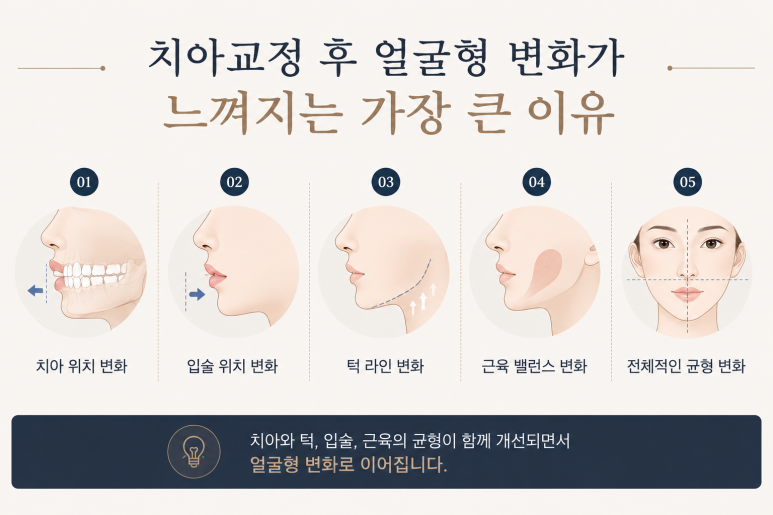
The reason changes in face shape are felt after orthodontic treatment is not simply because the teeth are moving. When the position of the teeth changes, the way the lips and jaw muscles are used, the structure that supported the mouth line, and the bite condition also change together, and many people feel that their facial impression has changed during this process.
In particular, when correcting protruding teeth or performing extraction treatment, the front teeth move backward and the lips may naturally appear to move inward. If protruding teeth had been supporting the lips before, then after orthodontic treatment that support is reorganized, and the mouth line can look different. During this process, some people feel that “my mouth looks too sunken” or “my side profile looks different.”
Also, during orthodontic treatment, many people change their chewing habits because of the adjustment period for the appliance. As they avoid hard or chewy foods, the amount of jaw muscle use can decrease, and in some cases the amount of food consumed itself also goes down. When these changes repeat, the cheeks may temporarily look thinner or the facial line may appear more refined.
Especially in the early stages of treatment, because only some teeth move first while the alignment is still not fully organized, the balance of the lips or the feeling when smiling may seem awkward. However, this is one of the common changes that can occur during tooth movement, and in many cases it gradually becomes more balanced over time.
Is the nasolabial fold also looking deeper because of orthodontics?
Many people also feel that their nasolabial folds have become more noticeable during orthodontic treatment. In particular, when extraction treatment is being done or protruding teeth are being improved, it may feel as though the volume around the mouth has decreased, making the nasolabial lines look deeper.
However, in reality, it is rare for the skin itself to suddenly age or for the structure of the facial bones to change significantly. In most cases, the changes in the mouth line and facial volume make the nasolabial folds seem more emphasized.
Also, if body weight changes because food intake decreases during treatment, the cheeks may become thinner and the nasolabial area may feel more distinct. This can be felt more strongly, especially by people who naturally have less facial fat or who have more prominent cheekbones.
However, as treatment moves into the later stages, the tooth alignment and bite become more stable, and the muscles around the mouth also become more natural in their use, so the initial awkward feeling often decreases. In fact, many people in the later stages of orthodontic treatment say things like, “My mouth line has become more organized, so my overall impression looks cleaner,” or “My smile looks more natural.”
Why the cheekbones may seem more prominent
Some people feel that their cheekbones stand out more during orthodontic treatment. However, in most cases, the cheekbones themselves are not actually becoming more prominent; rather, the change in the volume of the lower part of the face makes the cheekbones appear more emphasized by comparison.
For example, when protruding teeth are improved and the area around the mouth becomes more organized, the facial outline may look more defined than before. If this is combined with weight loss during treatment, the cheekbone line may feel more noticeable.
Also, in the early stages of treatment, it may feel awkward to close the lips naturally, or changes in jaw muscle use may create facial tension, which can also affect facial expression. But as the bite stabilizes and the muscles adapt, the face often gradually returns to a more natural feeling.
People who have a habit of clenching their teeth may especially feel larger changes in their facial line as the way their jaw muscles are used changes during treatment. In such cases, it can be helpful to check not only the tooth alignment but also the condition of the jaw muscle tension.
When do changes in face shape become natural?
One of the most common questions is, “When will it become natural?”
In general, the first 2 to 4 months of orthodontic treatment are among the periods when people feel the most awkwardness. This is because the teeth are still in the process of moving and the bite has not yet fully settled. In particular, during the process of closing extraction spaces, changes in the mouth line can feel especially noticeable for a while.
However, as time passes and the tooth alignment and bite gradually stabilize, the facial impression often becomes more natural as well. Toward the later stages of orthodontic treatment, the lip line and jawline may feel softer, and once the retainer stage begins, the overall balance often settles more stably.
Most importantly, it is important not to judge the final result based only on the middle stages of treatment. Orthodontic treatment continues to change over time, so it can be difficult to determine the final outcome from a single point in time.
Also, even after entering the retainer stage, the muscles around the mouth and the bite often continue adapting, so in many cases the face can feel much more natural a few months later than it did right after treatment ended.
Changes in face shape after orthodontic treatment do not appear the same for everyone
Online, it is easy to come across statements like “Orthodontics always makes your face longer,” “Your cheeks will thin out,” or “Your cheekbones will get bigger.” But in reality, the same changes do not appear in everyone.
The pattern of change can differ depending on the original skeletal structure, the degree of tooth protrusion, whether extractions are done, the condition of the temporomandibular joint, and muscle-use habits. Some people feel that their mouth line has become more refined and their impression much softer, while others are satisfied simply with improved tooth alignment without major facial changes.
In particular, modern orthodontic treatment often involves treatment planning that considers not only tooth movement but also facial balance and bite stability, making it even more important to establish a treatment direction that fits the patient’s current condition.
What should be checked during treatment?
If you are worried about changes in face shape during orthodontic treatment, it is important not to judge only by what you see in the mirror, but to check the current state of tooth movement and changes in the bite together.
In particular, excessive dieting or reduced food intake can make facial volume changes feel larger, so balanced meals and sufficient nutrition are also important. Also, since the way the muscles around the mouth are used changes during treatment, habits such as putting too much force into the lips or clenching the teeth may need attention as well.
Most importantly, it is important to understand that orthodontic treatment can temporarily feel awkward during the middle stages. It can be helpful to receive a full explanation of what changes are currently in progress and to review the treatment process together.
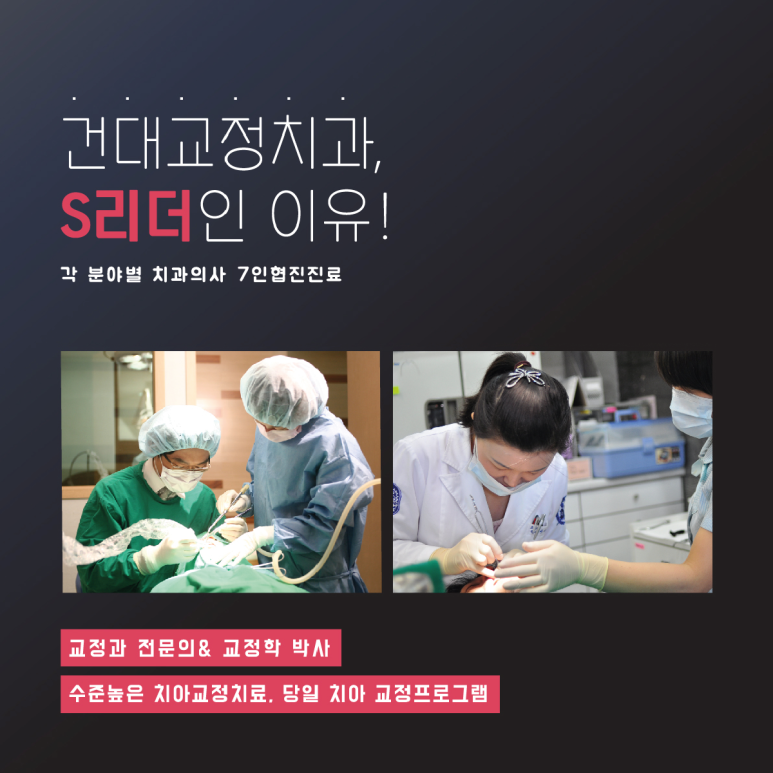
Orthodontic care at S Leader Dental Hospital, a Gwangjin-gu orthodontic clinic, with natural facial balance in mind
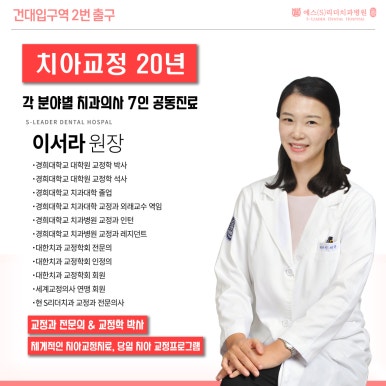
At S Leader Dental Hospital near Konkuk University Station in Seoul, we strive to provide orthodontic care that considers not only straightening the teeth, but also each patient’s facial balance, changes in the mouth line, and bite condition. In particular, concerns about facial shape changes or the mouth line that may appear during the treatment process are also addressed through sufficient consultation and guidance in a direction that fits the patient’s current condition.
Because orthodontic treatment takes a relatively long time, it is common to experience various changes and concerns during the process. At S Leader Dental Hospital, a Gwangjin-gu orthodontic clinic, we carefully check everything from pre-treatment detailed diagnosis to the tooth movement process and post-treatment retention management, working toward a more stable and natural result.
We also look not only at the aesthetic side, but also at functional bite stability and the health of the natural teeth, helping patients continue treatment more comfortably. If you are worried about changes in face shape after orthodontic treatment, it may be a good idea to accurately check your current condition and receive 충분한 상담.
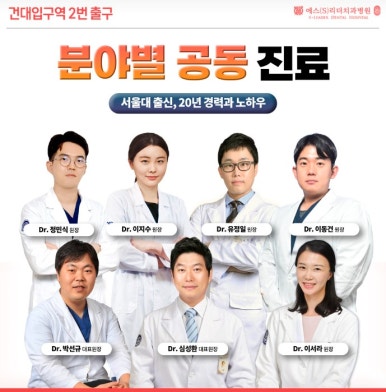



Gwangjin-gu Orthodontic Clinic :: S Leader Dental Hospital