Hello, this is S Leader Dental Hospital, celebrating its 22nd anniversary since establishment this year.
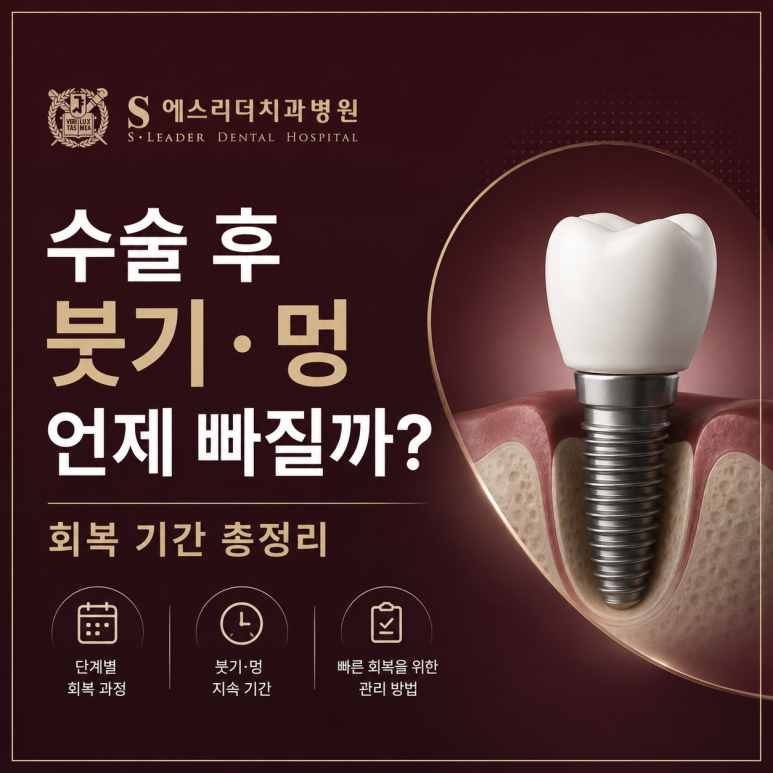
One of the things people preparing for surgery worry about most is swelling and bruising. This is especially true for procedures performed near the face or treatments connected to the mouth, such as gum procedures, wisdom tooth extractions, and dental implants. Patients often ask questions like, “How much will I swell?”, “When can I go back to work?”, and “When will the bruising go away?”
In fact, quite a few people hesitate to undergo treatment because of the recovery process afterward rather than the surgery itself. Those with important appointments, work obligations, or jobs that require frequent interaction with others may be especially concerned about how long swelling and bruising will last.
However, swelling and bruising are often natural reactions that can occur during the recovery process. Although there may be differences depending on the scope of surgery, individual constitution, and recovery rate, they generally tend to gradually improve over time.
That said, some symptoms during recovery may be relatively natural reactions, while other situations may require the current condition to be checked again. For this reason, it may be important to understand the basic course of recovery in advance.
Today, S Leader Dental Hospital will explain in detail why swelling and bruising occur after surgery, when they are usually at their worst, and how long recovery generally takes.
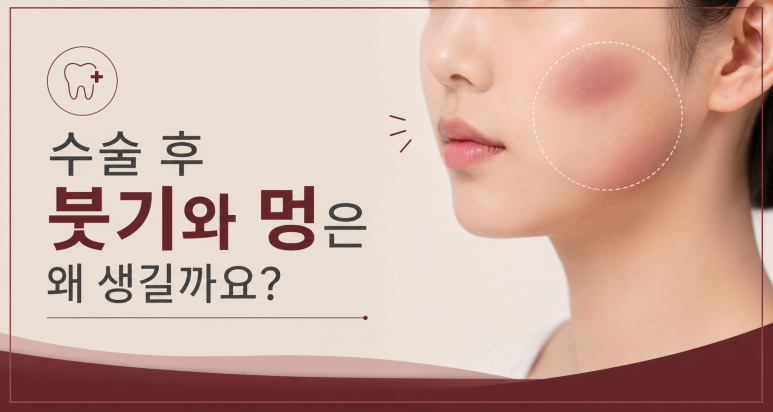
Why Do Swelling and Bruising Occur After Surgery?
Swelling and bruising after surgery are generally natural reactions that appear as the tissues recover.
During surgery, the gums, skin, or internal tissues may be exposed to a certain amount of irritation. As the blood vessels and surrounding tissues react during this process, swelling and bruising often develop. Put simply, they can be viewed as part of the normal inflammatory response that occurs as the body begins to recover.
The area around the face is rich in blood vessels, so swelling or bruising may be relatively noticeable even after minor irritation. Therefore, while some people may show almost no visible signs after receiving the same treatment, others may develop comparatively significant swelling and bruising.
In addition, treatments involving areas close to the bone, such as wisdom tooth extraction, dental implants, and gum surgery, may feel more swollen when the surgical area is larger. If the extraction was complicated or bone removal was also performed, swelling and bruising may sometimes last a little longer during recovery.
However, most swelling and bruising gradually improve over time, so there is often no need to become overly concerned based only on the initial reaction.
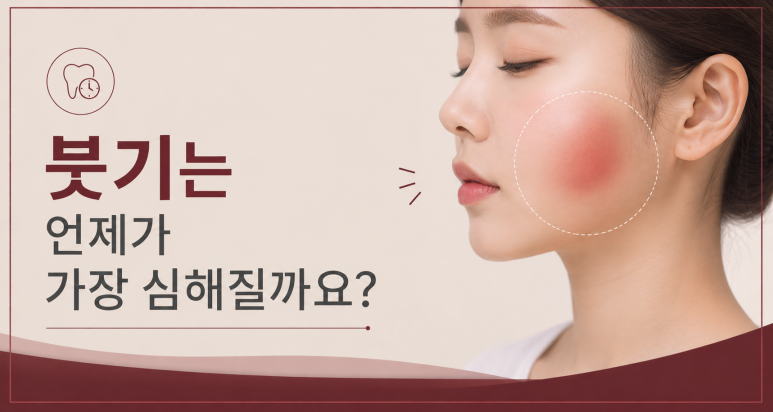
When Is Swelling Usually at Its Worst?
Many people think swelling is greatest immediately after surgery, but in reality, it often feels most severe between the day after surgery and the second or third day.
On the day of surgery, the effects of anesthesia may make some people feel better than expected. However, as the tissue response begins to appear over time, swelling often starts to increase from the following day.
Some people say, “I was more swollen on the second day than on the first,” or “I woke up in the morning and suddenly felt much more swollen.” This may be part of a relatively natural recovery process.
Swelling can also vary depending on how long you remain lying down and on your circulation. In particular, facial swelling may feel more severe immediately after waking up, then gradually improve as time passes.
In general, swelling often begins to slowly subside around the third or fourth day after surgery, followed by a gradual return to a more natural appearance over the next one to two weeks. However, differences may occur depending on the individual recovery rate and the scope of surgery.
When Does Bruising Appear, and How Long Does It Last?
Bruising may appear along with swelling, but it does not necessarily occur in everyone.
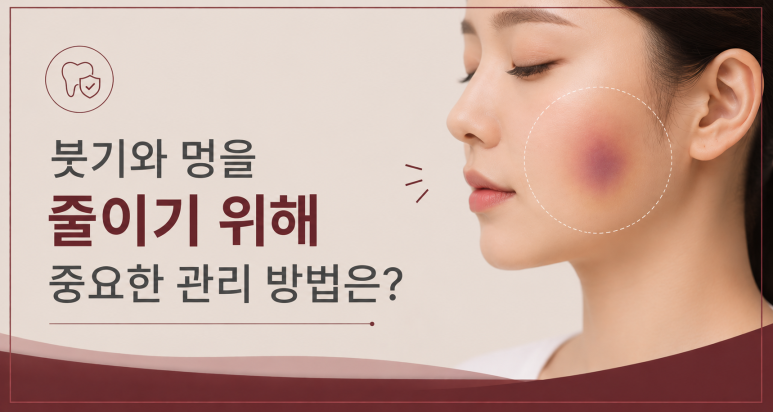
Depending on vascular reactions and individual constitution, some people may have almost no bruising, while others may experience color changes extending to the cheeks or below the jaw. Some people may be surprised when their skin takes on a yellowish or purplish discoloration, but in most cases, this changes naturally during the recovery process.
Bruising often becomes increasingly noticeable between two and four days after surgery, then gradually improves as the color fades. It may initially appear dark purple or bluish before changing to a yellowish color and disappearing over time.
In general, bruising tends to gradually improve over one to two weeks, but differences may occur depending on individual constitution, skin condition, and the scope of surgery. In particular, people with thin skin or a tendency to bruise easily may feel that the recovery period is somewhat longer.
What Care Methods Are Important for Reducing Swelling and Bruising?
- Initial Cold Compresses
Immediately after surgery, cold compresses may help manage swelling. In particular, for about one to two days after surgery, cold compresses are often used to help reduce the vascular response.
However, applying excessive pressure or placing ice directly on the skin for a long time may cause discomfort or strain, so it may be important to use cold compresses at appropriate intervals.
- Avoid Strenuous Exercise and Alcohol
Strenuous exercise or alcohol consumption immediately after surgery may excessively increase circulation, potentially worsening swelling and bleeding. Alcohol may also affect the recovery process, so caution may be needed for a certain period.
- Get Sufficient Rest
Sufficient rest may also be important while the body is recovering. If you do not sleep properly or continue to overwork yourself, recovery may take longer.
- Avoid Irritating Foods
Spicy and hot foods may irritate the surgical area, so during the early stage, it may be helpful to mainly eat relatively soft foods that cause little irritation.
[These Symptoms May Need to Be Checked Again]
General swelling and bruising often gradually improve over time. However, if swelling continues to worsen or pain becomes increasingly severe, it may be necessary to have your current condition checked again.
In particular, if you experience significant warmth, discharge resembling pus, or discomfort severe enough to make it difficult to open your mouth, it may not be simply part of the normal recovery process. In such cases, it may be important to have your current condition assessed by a dental clinic.
If bleeding continues for a long time or pain remains excessively severe even after taking medication, it is also advisable to have your condition checked rather than simply enduring it on your own.
Above all, recovery varies from person to person. Rather than simply comparing your condition with online reviews, it may be important to assess the course of recovery based on your own current condition.
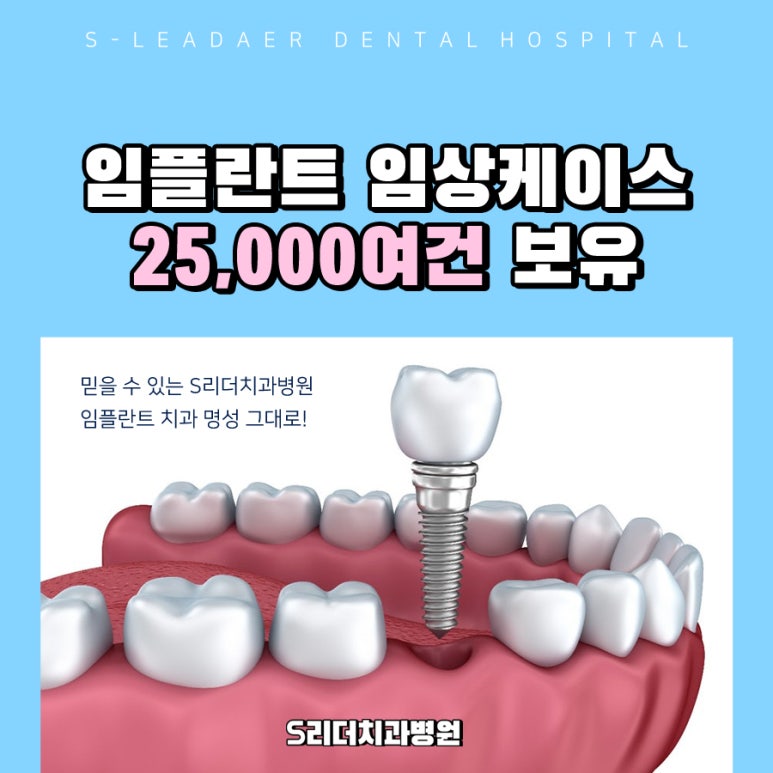
Gwangjin-gu Dental Implants, S Leader Dental Hospital
Care that Takes the Recovery Process into Account Is Important.
At S Leader Dental Hospital, we do not simply perform surgery and consider the process complete. We strive to provide treatment while also taking the subsequent recovery process into account and working toward reducing the burden as much as possible.
For treatments that often raise concerns about swelling and bruising, such as wisdom tooth extraction, dental implants, and gum surgery, we make an effort to explain the current condition, scope of surgery, and expected recovery process thoroughly so that patients can receive treatment with greater peace of mind.
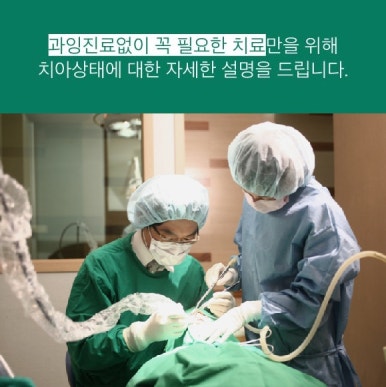
Even for the same treatment, the recovery pattern may vary depending on an individual’s gum condition, constitution, bone condition, and lifestyle. Therefore, rather than applying a uniform approach, an individualized treatment plan that takes each patient’s condition into account may be important. At S Leader Dental Hospital, we carefully assess the current condition through detailed examinations and provide guidance on care so that recovery after treatment can proceed as steadily as possible.
Above all, the recovery process after surgery may feel more psychologically burdensome than expected from the patient’s perspective. For this reason, S Leader Dental Hospital makes an effort to thoroughly explain not only the treatment process but also post-surgery precautions, care methods, and symptoms that may appear during recovery, so that patients can receive treatment with greater reassurance.
If you have been hesitating about treatment because of post-surgery swelling and bruising, rather than worrying alone, we recommend receiving a thorough consultation about your current condition and expected recovery process and confirming the treatment approach that is right for you.
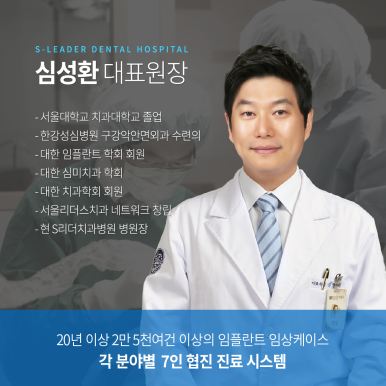


Gwangjin-gu Dental Implants :: S Leader Dental Hospital.