Hello, this is S Leader Dental Hospital, an Achasan Station dental clinic celebrating its 22nd anniversary this year.
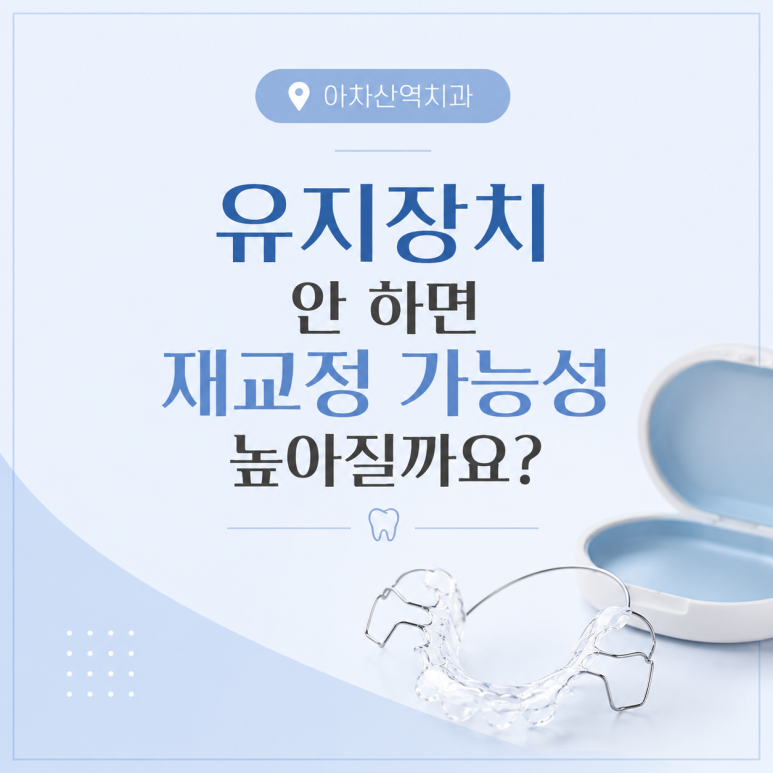
For many people, the moment they feel most relieved after completing orthodontic treatment is probably the day their brackets or orthodontic appliances are removed. There is a great sense of freedom when the orthodontic process, which may have lasted one to two years or longer, comes to an end, and many people are satisfied when they see their neatly aligned teeth. However, it is often said that the truly important phase of orthodontic treatment begins after the appliances are removed.
One of the things dentists commonly hear is, “I finished orthodontic treatment, but it feels like my teeth are moving again,” or “It feels like my front teeth are gradually becoming crooked.” Why do teeth move again after orthodontic treatment has ended? And if retainers are not used properly, can the likelihood of needing retreatment really increase?
Today, S Leader Dental Hospital, an Achasan Station dental clinic, will take an in-depth look at why retainers are important after orthodontic treatment, why teeth move again, and what kind of care is needed to reduce the possibility of retreatment.
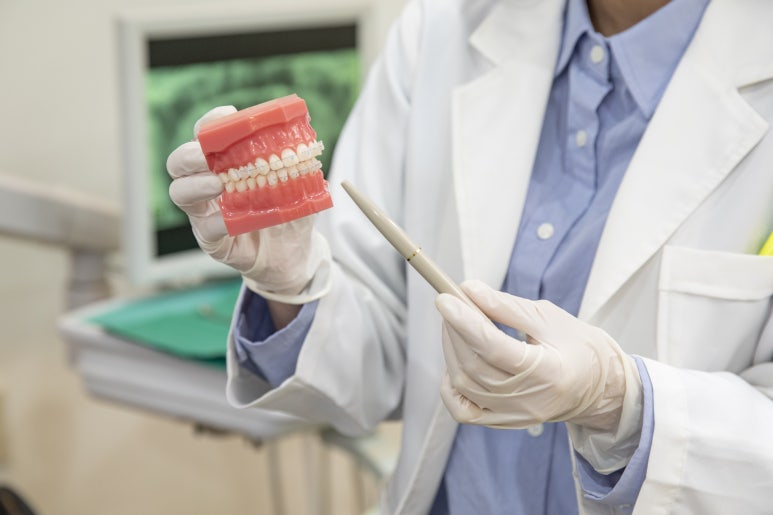
Finishing orthodontic treatment does not mean that the teeth become completely fixed in place.
One common misunderstanding is that teeth become fully established in their new positions once orthodontic treatment is complete. In reality, immediately after orthodontic appliances are removed, the teeth have not yet become completely stable.
Orthodontic treatment can be understood as a process of forcibly moving the teeth. During this process, the gum tissue and alveolar bone around the teeth also adapt, but removing the appliances does not mean that the surrounding tissues immediately become firmly stabilized.
In simple terms, teeth have a tendency to return to their original positions to some extent.
This tendency may be stronger in cases where the teeth were significantly crooked before treatment or where there was severe protrusion, crowding, or overlapping. Therefore, after orthodontic treatment, it is very important to use retainers for a certain period to stabilize the teeth in their current positions.
Why do teeth move again when retainers are not used?
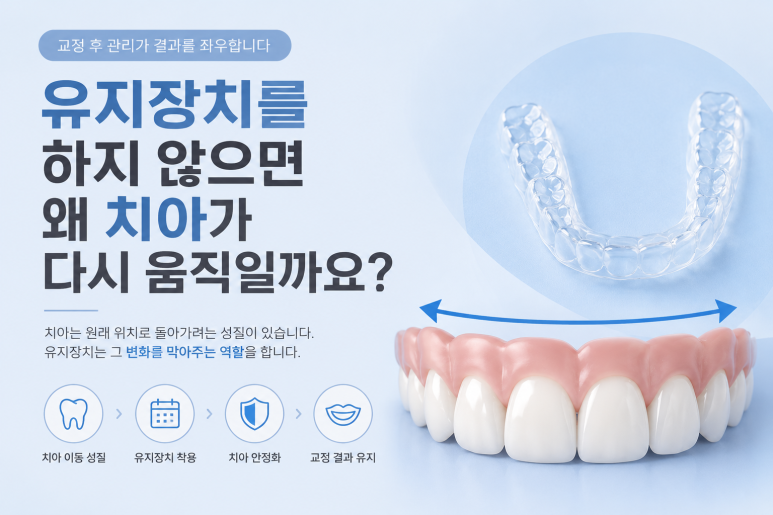
Teeth continue to move very subtly, more than many people realize. If retainers are not worn properly after orthodontic treatment,
the surrounding tissues may retain their original arrangement and attempt to move the teeth back. This is commonly referred to as “relapse.”
Because even small changes are easy to notice in the front teeth, people often notice changes there first when they neglect their retainers. In fact, quite a few people say, “My teeth have not completely returned to how they were before, but they feel slightly crooked.”
The influence of wisdom teeth, tongue habits, clenching, teeth grinding, and improper bite habits can also affect tooth movement. Simply failing to wear a retainer for a few days does not immediately cause a major problem, but if retainer use is discontinued
for a long period, the possibility of changes in tooth alignment may gradually increase.
The first one to two years after orthodontic treatment are often considered a particularly important period while the teeth are becoming stable. How consistently retainers are worn during this time can affect the long-term condition of the alignment.
How long should retainers be worn?
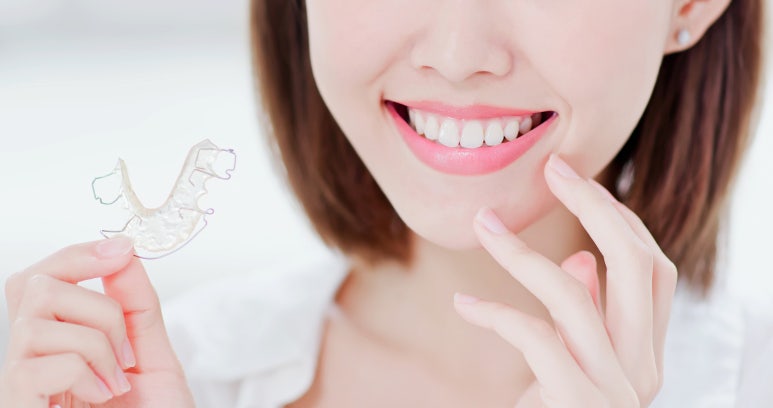
One of the questions orthodontic patients ask most often is, “Do I have to wear my retainer for the rest of my life?” In fact, the required retainer period may vary depending on the individual’s tooth alignment, orthodontic method, and likelihood of relapse.
In general, retainers are worn for most of the day for a certain period immediately after orthodontic treatment, after which use is gradually shifted toward nighttime wear. However, because teeth can continue to move little by little even as we age, long-term retention care is often recommended.
The importance of retainers may be even greater in cases where the original alignment was particularly complex, extraction-based orthodontic treatment was performed, or the front teeth were severely rotated.
Some people stop wearing their retainers for a long time, thinking, “This much should be fine.” However, teeth may move very subtly and then become noticeably different at some point. Therefore, it is important to have the condition of the alignment checked regularly even when there is no significant discomfort.
Could this lead to retreatment?
Not everyone who fails to use a retainer properly will need retreatment. However, if changes in tooth alignment continue or a bite problem develops, there may be situations in which partial or full retreatment is considered.
Many people feel considerable stress when the front teeth begin to overlap, spaces develop between the teeth, or changes in alignment become noticeable when smiling. This is because a very small change at first can gradually become more pronounced over time.
Retreatment may take less time than the original orthodontic treatment in some cases, but depending on the condition of the teeth, it may take longer than expected.
In addition, the financial burden and inconvenience in daily life may arise again, which is why retention care after the initial orthodontic treatment is extremely important.
Above all, retreatment may be related not only to cosmetic concerns but also to bite balance, so the current condition needs to be assessed accurately.
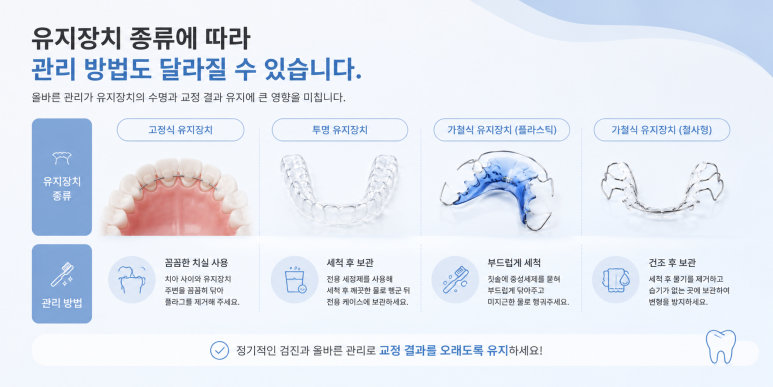
Care methods may also vary depending on the type of retainer.
Retainers are generally divided into removable and fixed types. Removable retainers can be put in and taken out by the wearer, while fixed retainers are used by attaching a thin wire to the inner surfaces of the teeth.
Removable retainers are relatively easy to keep clean, but they may be forgotten or removed too often. Fixed retainers, on the other hand, provide continuous retention, but plaque and oral hygiene management may become even more important.
Some people feel reassured simply because they have a fixed retainer. However, if the wire comes loose or becomes partially deformed, tooth movement may occur again, so it is important to check its condition through regular examinations.
Retainers may also become deformed or loose after prolonged use. If you notice anything unusual, it is best not to leave it unattended and to have it checked.
Care after orthodontic treatment is necessary to maintain stable results.
Orthodontic treatment is not a procedure that simply ends when the appliances are removed. Rather, long-term satisfaction may vary depending on how stably the teeth are maintained in their post-treatment positions.
Because retainers play an important role in reducing the likelihood of retreatment, it is important not to neglect the initial wearing period. It is also necessary to check for changes in alignment through regular examinations and to continue managing the condition of the retainers.
Above all, teeth can continue to be affected by daily habits and bite conditions, so continued attention remains important even after orthodontic treatment.
Understanding the importance of retention care after orthodontic treatment
with S Leader Dental Hospital, an Achasan Station dental clinic
Orthodontic treatment should not be viewed as being completely finished once the appliances are removed. Rather, maintaining the alignment as stably as possible afterward is also an important part of the process. In particular, retainers play an important role in reducing the movement of teeth after orthodontic treatment and maintaining a neat alignment for a long time, so consistent wear and regular care are necessary.
Because teeth may gradually move over time in response to daily habits or changes in the bite, arbitrarily stopping retainer use or missing regular checkups may increase the possibility of changes in tooth alignment. Therefore, after orthodontic treatment, it is important to regularly check the current condition of the alignment and inspect the retainers as well.
At S Leader Dental Hospital, an Achasan Station dental clinic, we carefully monitor changes in patients’ tooth alignment and the condition of their retainers even after orthodontic treatment, helping them continue with more stable retention care. If you are concerned about changes in tooth alignment after orthodontic treatment or are unsure how to manage your retainers, we recommend checking your current condition through a thorough consultation and regular examinations.
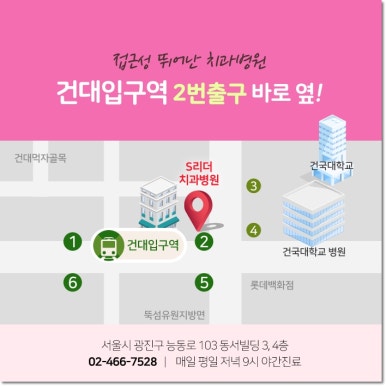


Achasan Station Dental Clinic :: S Leader Dental Hospital