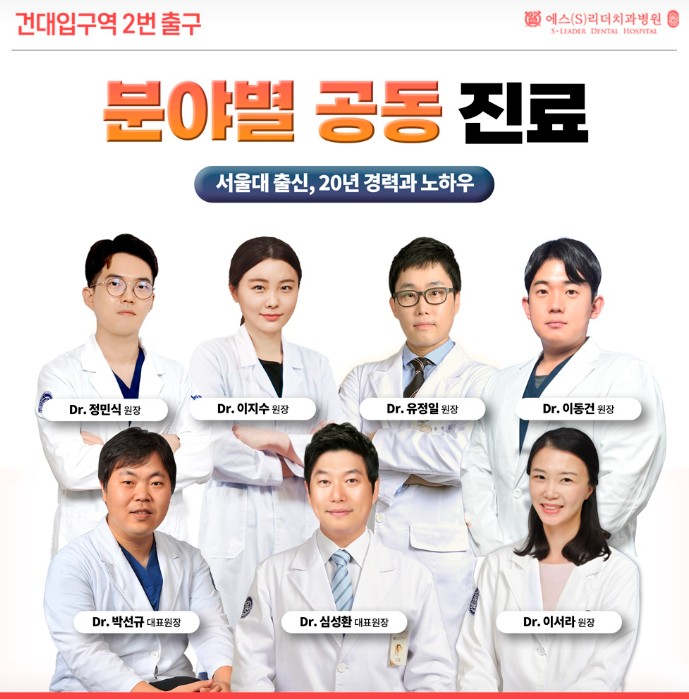
Hello, this is S Leader Dental Hospital, a dental hospital specializing in implants near Konkuk University Entrance, celebrating its 22nd anniversary this year.
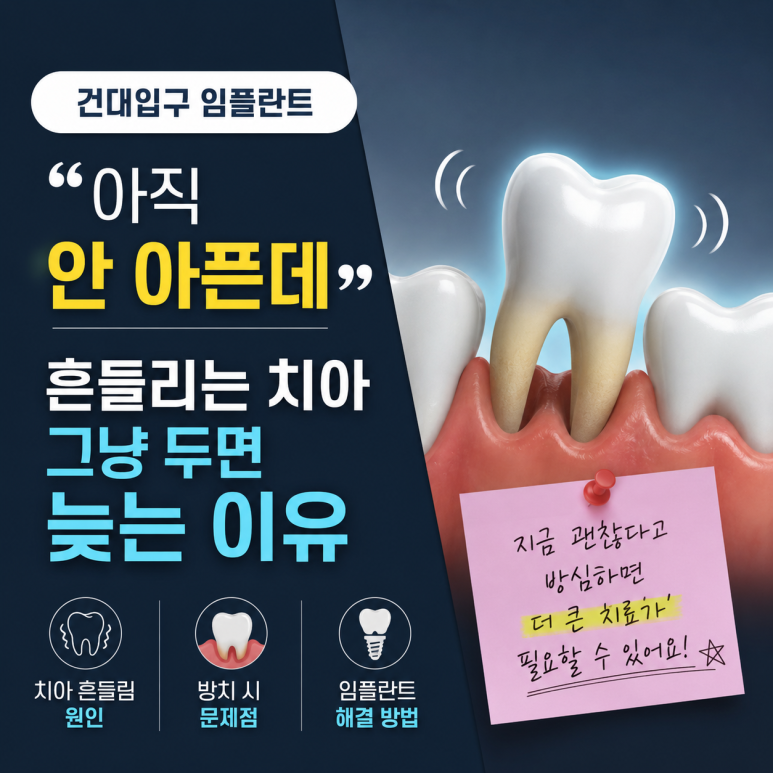
Have you ever felt one of your teeth move slightly while brushing your teeth?
At first, many people dismiss it, thinking, “Maybe I’m just tired,” or “Maybe my gums are temporarily swollen.” In fact, if the pain is not severe and there is no major difficulty chewing, people often continue to put off visiting the dentist. Especially in a busy daily routine, quite a few people simply monitor the condition because it is not immediately uncomfortable.
However, dentists consider the symptom of “a tooth feeling loose” more important than many people realize. Teeth are normally firmly fixed in the gums and jawbone, so if you can feel them moving, it is important to consider the possibility that changes may have already begun in the surrounding tissues.
The problem is that these symptoms usually do not suddenly become severe. Gum disease and damage to the alveolar bone often progress gradually over a long period, and in many cases, they pass without pain in the early stages. As a result, many people spend time thinking, “It doesn’t hurt, so it should be fine.”
Today, we will look at what problems can occur when loose teeth are left untreated for a long time and when implant treatment may become necessary.
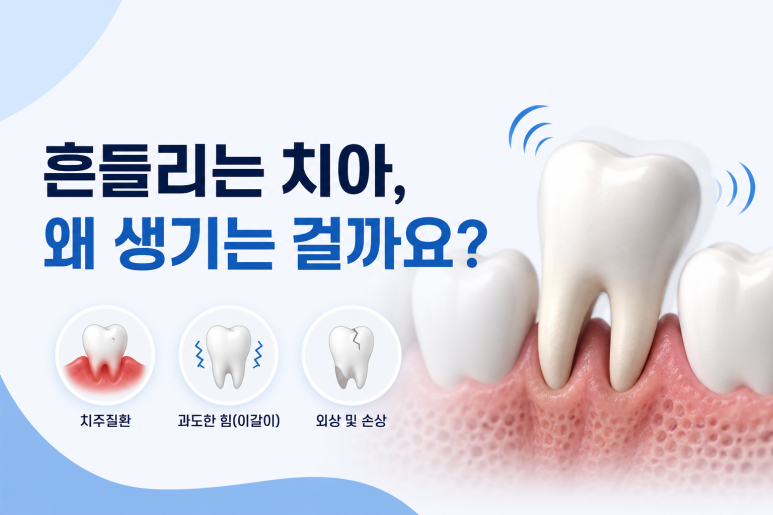
Why do teeth become loose?
There are more causes of loose teeth than you might expect.
One of the most common causes is periodontal disease. As gum disease progresses, the gums and jawbone surrounding the tooth become weakened, eventually making them unable to support the tooth firmly.
In the early stages, it often begins with symptoms such as bleeding while brushing or swollen gums. However, if this condition is left untreated for a long time, the inflammation can progress beneath the gums, gradually causing the alveolar bone to break down. Since the bone holding the tooth in place becomes weakened, the sensation of looseness may inevitably become more pronounced.
Teeth can also become loose when excessive force is repeatedly applied to them. Clenching, grinding, or an improper bite can continually concentrate stress on a particular tooth. In particular, when the gums are already weakened, even minor irritation may be more likely to lead to looseness.
In some cases, looseness may be caused by trauma, problems with old dental restorations, or inflammation at the tooth’s root. Therefore, rather than determining the cause based only on the feeling that “it seems a little loose,” it is important to have the condition checked through an accurate examination.
“ I can still chew, though.” Why leaving it untreated can be risky
Even when a tooth is loose, many people think, “I can still use it for now,” if they can chew food and the pain is not severe. However, dentists do not look only at whether the tooth is usable at the moment. They also consider how stably it can be maintained in the future.
For example, if considerable alveolar bone loss has already occurred, the tooth may still be usable now, but the looseness is likely to gradually worsen. In particular, it is not uncommon for severe pain to suddenly occur or for a tooth to break while eating hard or chewy foods.
Continued use of a loose tooth can also affect the surrounding teeth. People unconsciously chew while avoiding an uncomfortable area, and this can cause excessive force to become concentrated on the teeth on the opposite side or in other areas. Ultimately, what began as a problem with one tooth can develop into an overall bite-balance problem.
In fact, quite a few people experience increased wear on the teeth on the opposite side or discomfort in the jaw joint after one tooth begins to loosen. This is because teeth do not function as structures that move independently; they work together in balance.
Food can also become easily trapped around a loose tooth. As tiny spaces between the teeth widen, cleaning becomes more difficult and bacteria can accumulate more easily. If this process is repeated, gum inflammation may worsen and may even be accompanied by bad breath.
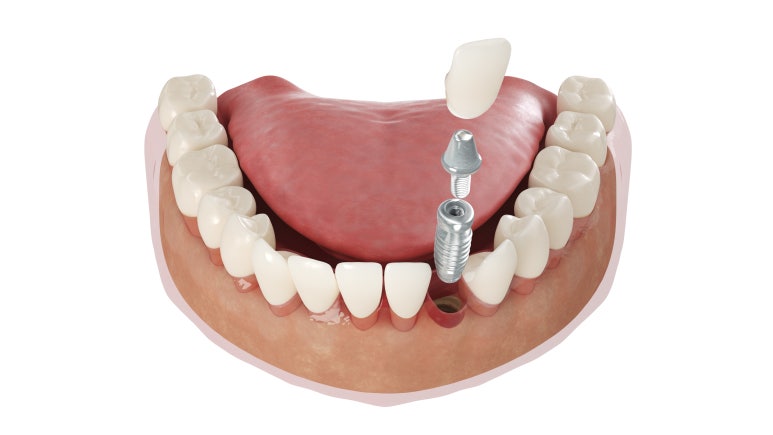
When should implants be considered?
Many people think of implants as “a treatment performed only when a tooth has completely fallen out.” However, in actual dental practice, dentists also consider whether the current tooth can be maintained over the long term.
For example, if looseness continues to worsen despite gum treatment, or if severe alveolar bone damage prevents the tooth from functioning properly, forcing the natural tooth to remain may place an even greater burden on the surrounding tissues.
In particular, if a tooth with recurring inflammation is left untreated for a long time, the surrounding jawbone may also be affected. Depending on the condition, considering an implant at an appropriate time may therefore be more beneficial in the long term.
In addition, if a missing tooth is left untreated for a long period after extraction, the jawbone may be resorbed quickly. The height and thickness of the bone in the area where the tooth was lost often gradually decrease over time. In such cases, bone grafting may be more likely to be needed later when placing an implant.
For this reason, dentists do not decide on a treatment approach based only on whether the area hurts right now. They also consider the future condition of the mouth.
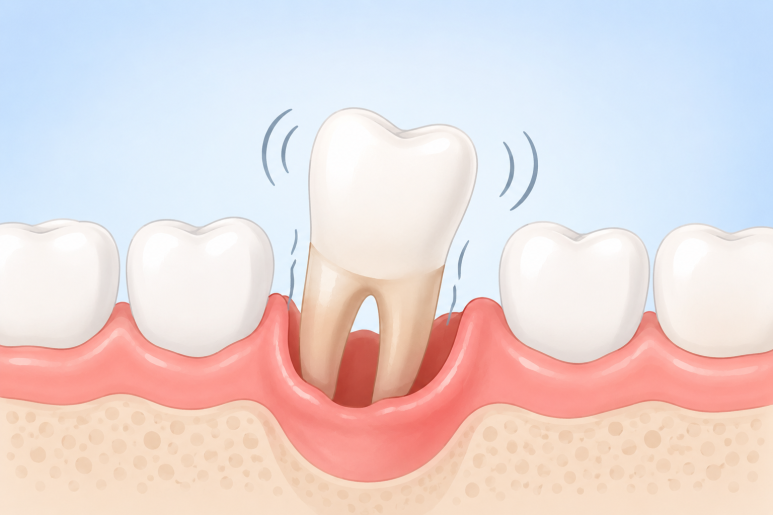
Leaving a loose tooth untreated for a long time can also make implant treatment more difficult.
Many people think, “Couldn’t I just get an implant later?” However, leaving a loose tooth untreated for too long can actually make implant treatment more complicated.
The main reason is jawbone resorption. If inflammation around a tooth continues for a long time, damage to the alveolar bone may gradually worsen. As a result, there is a greater possibility that there will not be enough bone in which to place an implant after extraction.
The jawbone also tends to shrink quickly when a tooth is extracted and the area is left untreated for a long time. Because the area is no longer used, the height and thickness of the bone gradually decrease. In such cases, additional treatment, such as bone grafting or a sinus lift, may be needed when an implant is placed later.
Of course, this is not the case in every situation. However, it is important to understand that missing the appropriate treatment window may lengthen the treatment period and increase its complexity.
Therefore, dentists do not simply conclude that a condition is fine because it does not hurt right now. They accurately assess the current condition and examine what changes may be expected in the future.
What should be checked before implant treatment?
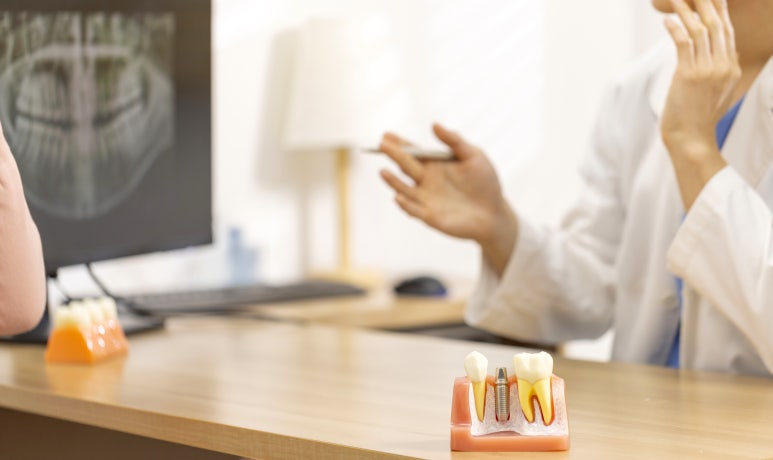
It is easy to think of implants as simply a treatment for placing teeth, but in practice, it is extremely important to accurately analyze the current condition of the gums and bone.
If inflammation remains around a loose tooth, gum treatment may need to come first, and the treatment plan may also vary depending on the condition of the alveolar bone. Smoking, systemic conditions such as diabetes, and teeth-grinding habits should also be considered, as these factors may help support stable maintenance.
Recently, digital equipment has increasingly been used for more precise diagnosis and treatment planning. However, regardless of how good the equipment is, it is important how carefully the current condition is diagnosed and explained.
Rather than proceeding with placement as quickly as possible, it is necessary to receive sufficient consultation about whether the natural tooth can be preserved and which approach is most suitable for the patient.
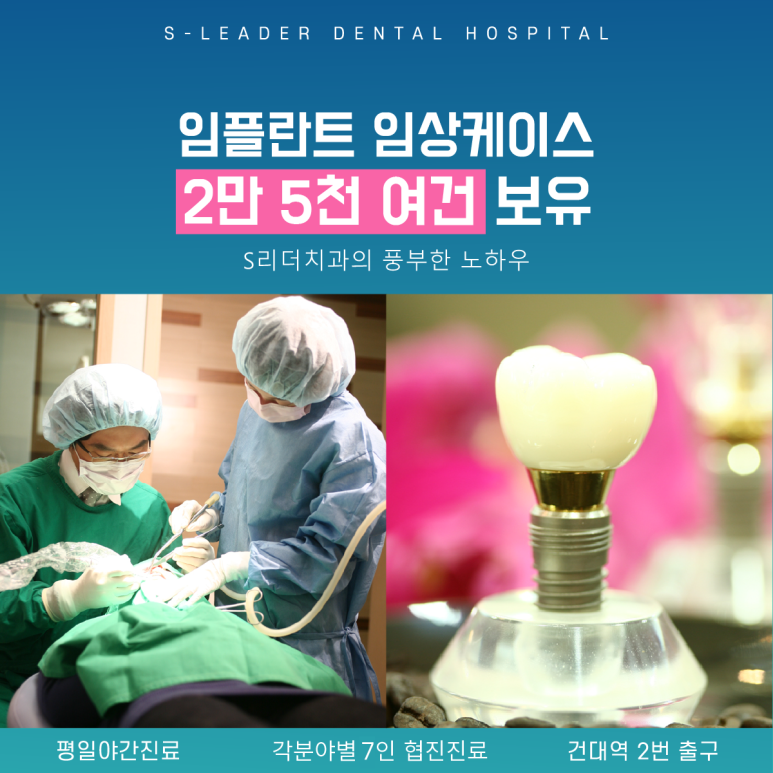
At S Leader Dental Hospital, a dental hospital specializing in implants near Konkuk University Entrance,
long-term maintenance should also be considered.
Implant treatment does not end with placement. How stably the implant is maintained and managed afterward is also extremely important. In particular, the length of time an implant remains in use may vary depending on gum health care and whether regular checkups are received. It is therefore advisable to consider both the initial diagnosis and the aftercare system.
If you are considering implant treatment near Konkuk University Entrance, it is important to look beyond simple costs or promotional events. You should also consider how thoroughly your current dental condition is checked and explained, and whether guidance is provided on long-term maintenance.

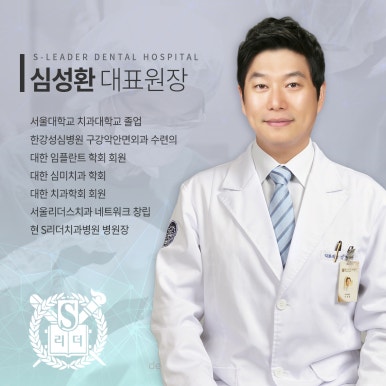
At S Leader Dental Hospital, a dental hospital specializing in implants near Konkuk University Entrance, we carefully assess each patient’s current oral condition and provide guidance on treatment options while considering both the possibility of preserving the natural tooth and whether an implant is necessary. Rather than simply proceeding with treatment quickly, we take into account our patients’ long-term oral health and function. If you have been concerned about a loose tooth, we recommend receiving an accurate examination first instead of continuing to put it off on your own.

Previous image
Next image

Konkuk University Entrance Implants :: S Leader Dental Hospital