Hello, this is S Leader Dental Hospital, a Gwangjin-gu dental clinic celebrating its 22nd anniversary this year.
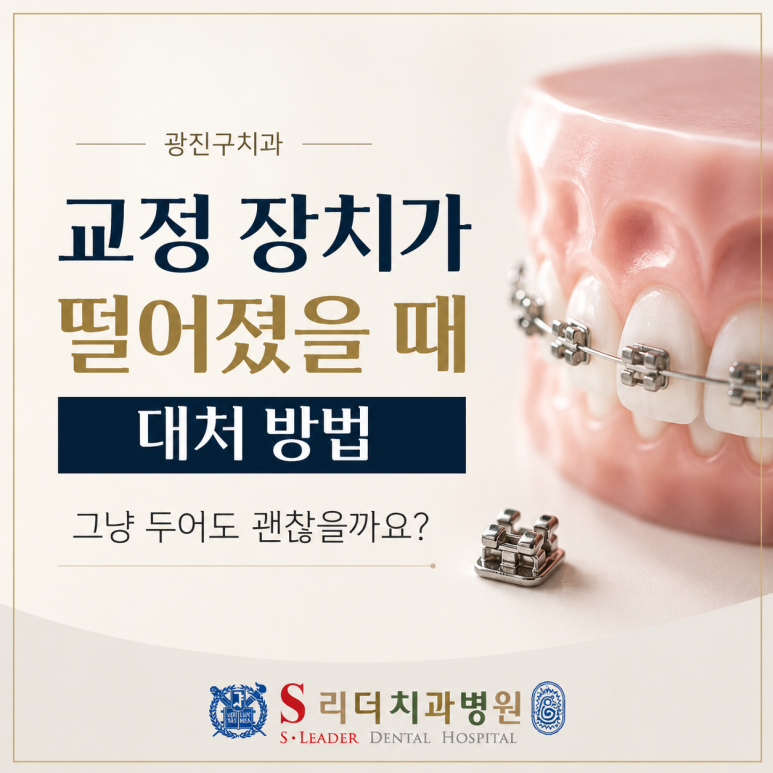
When you first begin orthodontic treatment, simply having an appliance in your mouth can feel quite bothersome. Many people become cautious while eating and worry that something might go wrong when brushing their teeth. Then, if one day you suddenly feel something small fall inside your mouth while eating, or notice an unfamiliar sensation when touching the area with your tongue, it is natural to feel startled.
In fact, orthodontic patients often contact us with questions such as, “My appliance came loose while I was eating,” “Something feels like it is moving when I brush my teeth,” or “A wire is sticking out and poking the inside of my cheek.” Because it is their first experience with such a situation, many people worry that something has gone wrong with their treatment or that their teeth might return to their original positions.
However, an orthodontic appliance coming loose does not necessarily mean that a serious problem has occurred. The important thing is to remain calm, accurately check the current condition, and take appropriate action.
Today, S Leader Dental Hospital, a Gwangjin-gu dental clinic, will explain in detail why orthodontic appliances come loose, what to do in different situations, and what care methods are helpful to know for prevention.
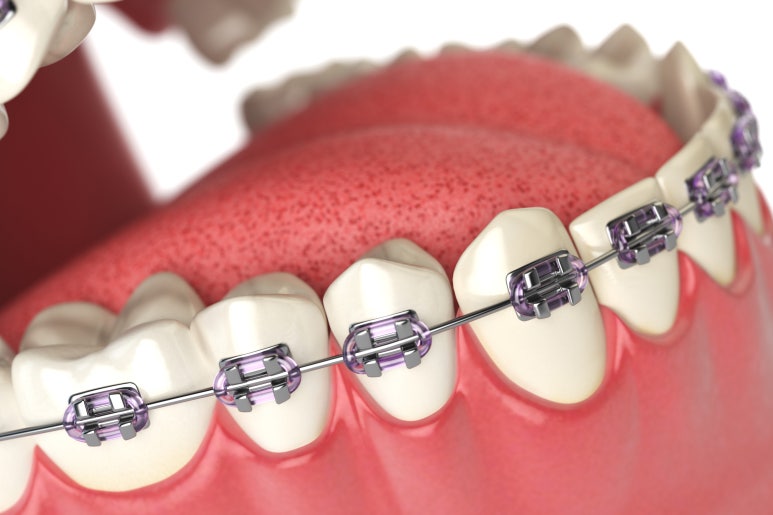
Why Do Orthodontic Appliances Come Loose?
When an appliance comes loose, many people first think, “Did I fail to take proper care of it?” Of course, an appliance can come loose after eating hard foods or when strong force is applied to it, but in many cases, it is not the patient’s fault.
Orthodontic treatment is a process of gradually moving the teeth. As time passes, the alignment of the teeth and the bite continue to change, so the condition of the mouth several months after the appliance was first placed can be considerably different. During this process, certain teeth may come into contact sooner than expected, or chewing forces may become concentrated in a particular area, causing an appliance to come loose.
Hard or sticky foods such as squid, beef jerky, nuts, ice, and caramel can also be common causes of orthodontic appliances coming loose. Even if there does not seem to be an immediate problem while eating, repeated force can weaken the adhesive bond.
Occasionally, an appliance may come loose during a period when the teeth are moving actively during orthodontic treatment. Therefore, rather than assuming that a loose appliance is always due to insufficient care, it is better to understand it as one of the situations that can occur during the current stage of orthodontic treatment.
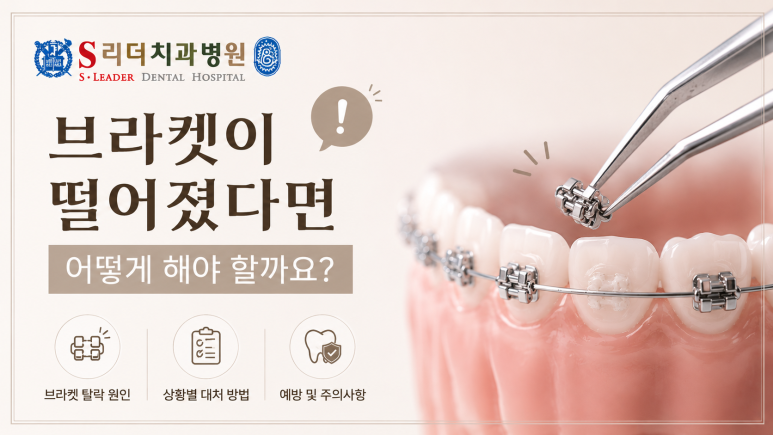
What Should You Do If a Bracket Comes Loose?
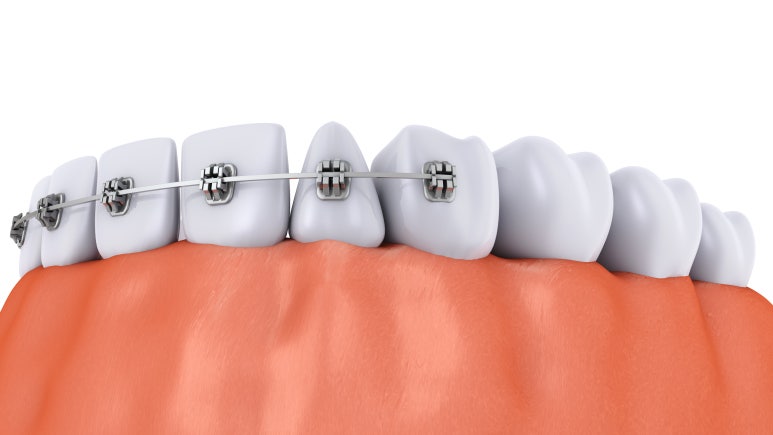
The orthodontic appliance that most commonly comes loose is the bracket. A bracket is a small, square-shaped appliance attached to the surface of a tooth, and it plays an important role in delivering orthodontic force to the tooth.
If a bracket comes loose, it is important to first check its current condition. Sometimes it remains hanging while connected to the wire, while in other cases it becomes completely detached and comes out into the mouth.
If it is still connected to the wire, do not forcibly pull or try to remove it. Handling it roughly could deform the wire or damage other appliances. In this situation, contact the dental hospital and schedule an appointment as soon as possible.
If it has become completely detached, it is best to keep it rather than throw it away. Depending on the situation, the same appliance may be able to be used again.
A loose bracket on a front tooth, in particular, may affect tooth movement and requires prompt evaluation. Appliances on the molars should not necessarily be taken lightly either. In orthodontic treatment, each appliance works in connection with the others, so even one loose bracket can affect the overall treatment plan.
Some people think, “I can mention it at my next appointment,” and leave it for several weeks, but this is not recommended because it may lengthen the treatment period or affect the direction of tooth movement.
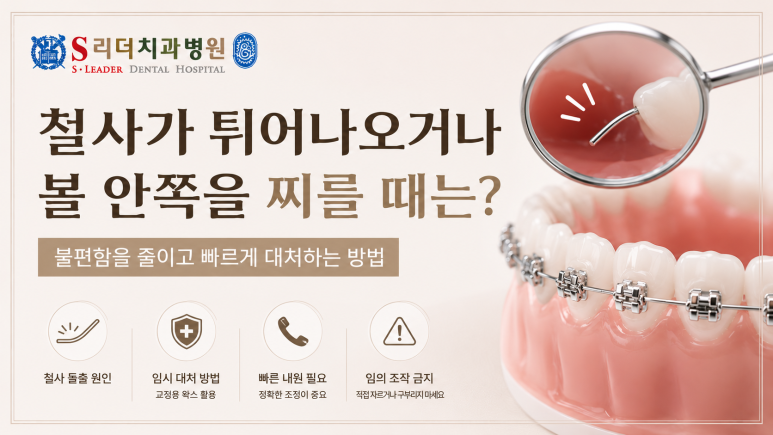
What Should You Do If a Wire Sticks Out or Pokes the Inside of Your Cheek?
Another cause of discomfort during orthodontic treatment is the wire. Some people suddenly feel a wire touching their tongue or the inside of their cheek, or experience the same area being repeatedly rubbed whenever they eat.
This is more common than you might think. In some cases, it may even appear as a sign that orthodontic treatment is progressing properly. As the teeth move, the wire may become relatively longer, causing its end to protrude and irritate the mucous membrane.
At first, it may feel merely irritating, but over time it can lead to canker sores or mucosal damage. Repeated irritation of the same area, especially while speaking or eating, can make the pain worse.
Using orthodontic wax can help in this situation. Covering the protruding part of the wire with wax can reduce irritation to the mucous membrane. However, this is only a temporary measure and not a fundamental solution, so it is best to contact the dental hospital and have the condition checked.
Some people look up information online and try to cut the wire with nail clippers or bend it themselves, but this is not recommended because it may instead damage the appliance.
What If There Is a Problem with an Orthodontic Screw or Elastic Appliance?
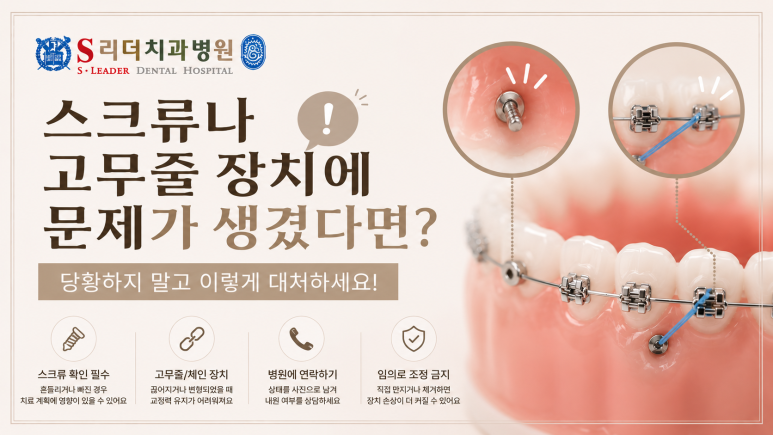
Orthodontic screws are increasingly used to move teeth more efficiently. An orthodontic screw is not merely an auxiliary appliance; it serves as an anchorage point for moving the teeth in the desired direction.
Therefore, if a screw feels loose or seems to have come out, it should not be taken lightly. Prompt evaluation is especially important during extraction-based orthodontic treatment or the space-closing stage, when the screw plays an important role.
The same applies to fixed elastics or chain-shaped elastics. From a patient’s perspective, they may look like just a small rubber band, but they actually play an important role in delivering continuous orthodontic force.
If an elastic has broken or the appliance appears to have become deformed, it is best to contact the dental hospital and have the current condition checked rather than waiting until the next appointment.
Is It Okay to Wait Until the Next Appointment?
This is one of the questions patients ask most often.
In fact, not every situation is an emergency. If only one bracket has come loose and there is no particular pain or discomfort, waiting a few days may not cause a major problem.
However, orthodontic treatment relies on delivering a set amount of force consistently. The longer an appliance remains in a non-functioning condition, the more likely it is to affect the planned movement of the teeth.
For example, if an appliance comes loose while space is being closed and is left untreated for several weeks or longer, tooth movement may slow down, and in some cases, the treatment period itself may become longer.
Therefore, the best approach is to contact the dental hospital, send a photograph, and seek advice rather than making the decision on your own. Even through a simple inquiry, it may be possible to determine whether an in-person visit is necessary.
How Can You Prevent Orthodontic Appliances from Coming Loose?
Because orthodontic treatment continues over a long period, everyday care habits are very important.
It is best to cut hard foods into small pieces whenever possible and avoid biting down forcefully with the front teeth. Habits such as chewing ice or biting into whole nuts should also be avoided.
In addition, habits such as unconsciously biting your nails or chewing on pens can place continuous stress on the appliance. Chewing food only on one side can also concentrate excessive force in a particular area, so caution is needed.
Brushing your teeth is also important. If food remains around the orthodontic appliances, it can affect not only cavities and gum inflammation but also appliance care. Using an orthodontic toothbrush and an interdental brush can help you clean thoroughly.
Most importantly, make a habit of having anything unusual checked promptly. Resolving a small problem early can reduce unnecessary discomfort and treatment delays.
Completing Your Orthodontic Treatment,
S Leader Dental Hospital, a Gwangjin-gu dental clinic, is here with you.
Orthodontic treatment is not simply a matter of attaching appliances and waiting. To achieve a more satisfactory result, it is also necessary to manage the various factors that may arise during treatment and consistently monitor the movement of the teeth.
An orthodontic appliance coming loose does not necessarily mean that treatment has failed or that you must start over from the beginning. However, because the treatment plan may be affected depending on how long the appliance is left unattended, accurately checking its condition and taking appropriate action are important.
S Leader Dental Hospital, a Gwangjin-gu dental clinic, provides detailed care not only through precise diagnosis before orthodontic treatment but also by carefully checking various situations that may occur during treatment, including loose appliances, wire irritation, and screw management, to help patients undergo treatment steadily. If unexpected discomfort occurs during orthodontic treatment or you are concerned about the condition of an appliance, please consult the dental professionals rather than worrying about it alone and have your condition accurately checked. S Leader Dental Hospital carefully monitors each patient’s orthodontic process and is here to work with you toward a healthier and more satisfactory orthodontic result.


Gwangjin-gu Dental Clinic :: S Leader Dental Hospital