Hello, this is Ttukseom Dental Clinic, S Leader Dental Hospital, celebrating its 22nd anniversary since establishment this year.
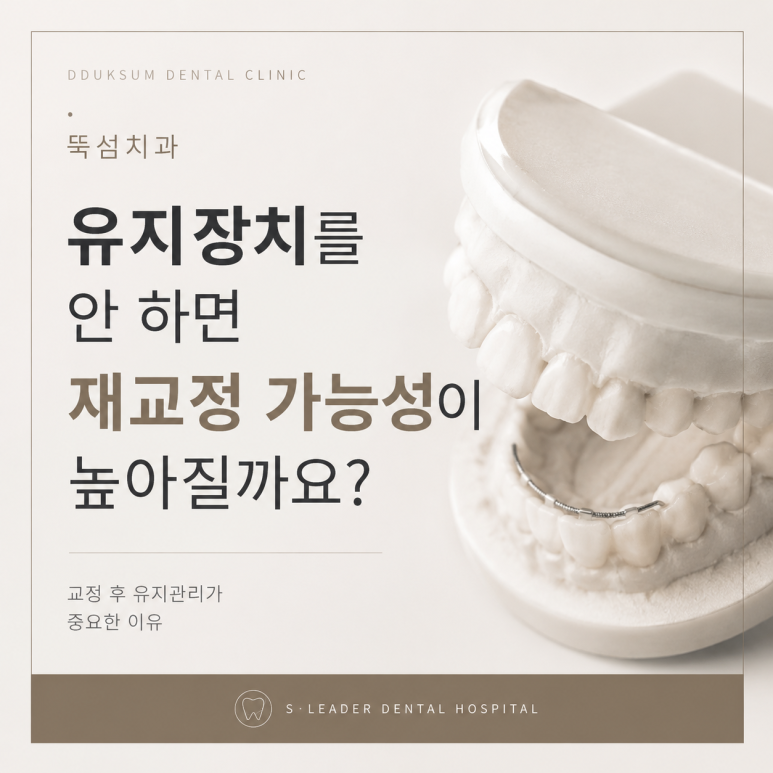
The moment many people look forward to most after completing orthodontic treatment is the day their orthodontic appliances are removed.
After having the brackets and wires that accompanied them for several months—or even several years—removed, seeing their neatly aligned teeth in the mirror can bring a great sense of satisfaction.
However, orthodontic treatment does not end completely simply because the appliances have been removed.
In fact, many orthodontists say, “True orthodontic care begins when the retention phase starts.”
Some patients who have completed orthodontic treatment actually experience their teeth becoming crooked again or their alignment changing over time.
One of the questions we hear most often at such times is this:
“Will my teeth really move again if I do not wear my retainer?”
“Will I need orthodontic retreatment if I stop wearing it for just a few months?”
“Why do I have to wear a retainer again after finishing orthodontic treatment?”
Today, Ttukseom Dental Clinic, S Leader Dental Hospital, will take an in-depth look at the role and importance of retainers and why the likelihood of needing orthodontic retreatment increases when retainers are not worn properly.
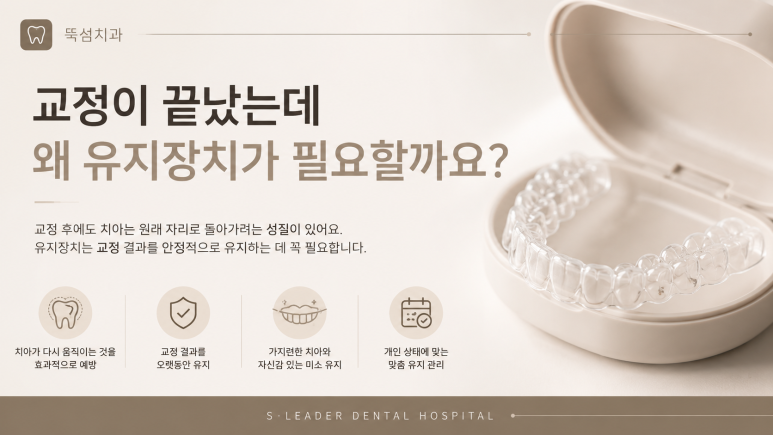
Why are retainers necessary after orthodontic treatment is complete?
This is one of the points many people misunderstand.
They think that because their teeth have been neatly aligned, they will remain that way permanently.
However, teeth have a stronger tendency to move than many people realize.
Even when teeth are moved to new positions through orthodontic treatment, the surrounding gums, periodontal ligaments, and jawbone may not yet have fully adapted.
Simply put, it is like moving from a place where you have lived for a long time to a new home.
During this period, forces may develop that try to move the teeth back to their original positions. This is known as “relapse.”
This tendency is often particularly strong immediately after orthodontic treatment.
That is why retainers are necessary after orthodontic treatment so that the newly aligned teeth can settle securely into position.
Will my teeth really move again if I do not wear a retainer?
The short answer is yes, it is possible.
This is also something that occurs in a considerable number of patients.
Of course, not everyone experiences the same degree of realignment.
The extent can vary depending on the individual condition of the teeth, the orthodontic method used, skeletal structure, and lifestyle habits.
However, when retainers are not worn, there is clearly a possibility that the teeth will gradually move.
Changes in the front teeth are especially noticeable, so patients often spot them first.
At first, the change may appear very subtle, but the misalignment can gradually become more pronounced over time.
Once teeth have moved again, they do not naturally return to their original positions, making ongoing care important.
How long should retainers be worn?
This is one of the questions patients ask most frequently.
In the past, patients were sometimes told that they could stop wearing their retainers completely after a certain period.
Recently, however, the importance of long-term retention has been emphasized more strongly.
This is because teeth can continue to move gradually throughout life.
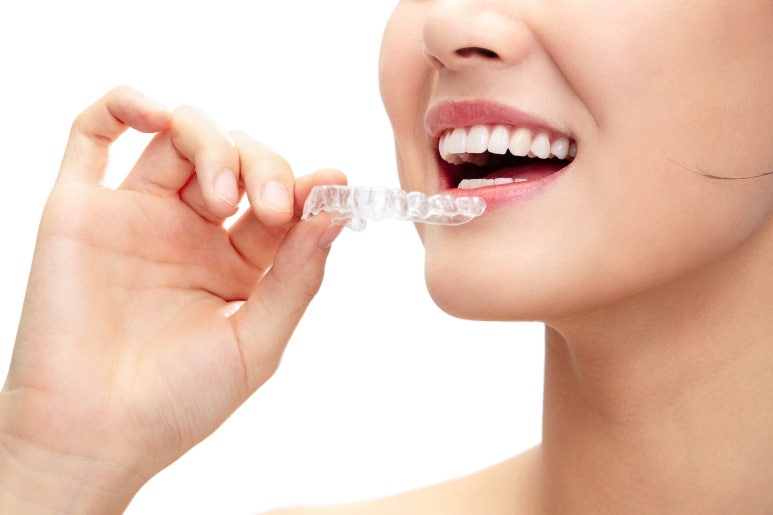
Generally, immediately after orthodontic treatment, retainers are worn for most of the day.
The wearing time is then gradually reduced according to the dentist’s instructions.
However, this may vary depending on the individual’s condition, and some patients continue wearing their retainers at night for an extended period.
Using retainers for a longer time may help reduce the possibility of realignment.
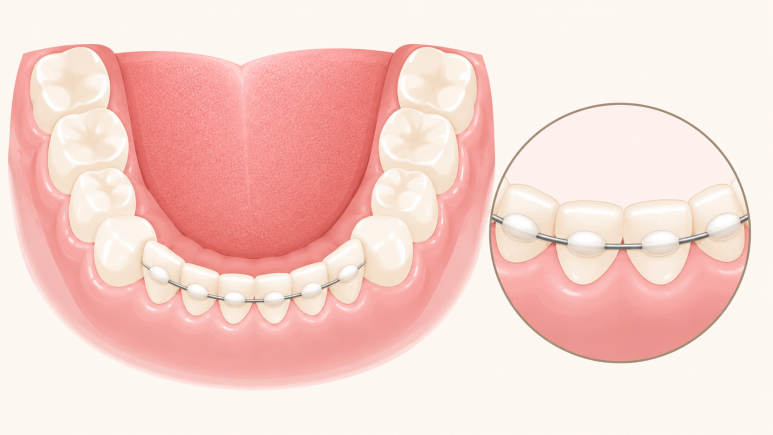
Can I feel reassured if I have a fixed retainer?
Fixed retainers are often used after orthodontic treatment.
They are typically attached to the back surfaces of the front teeth with a thin wire to help prevent tooth movement.
For this reason, some people think, “Since I have a fixed retainer, I do not need any additional care.”
However, fixed retainers are not a complete solution.
The bonding area can come loose over time, and some teeth may move individually.
In addition, because fixed retainers do not perfectly stabilize every tooth, removable retainers may also be used when necessary.
Therefore, it is important to check the condition of the retainer through regular examinations.
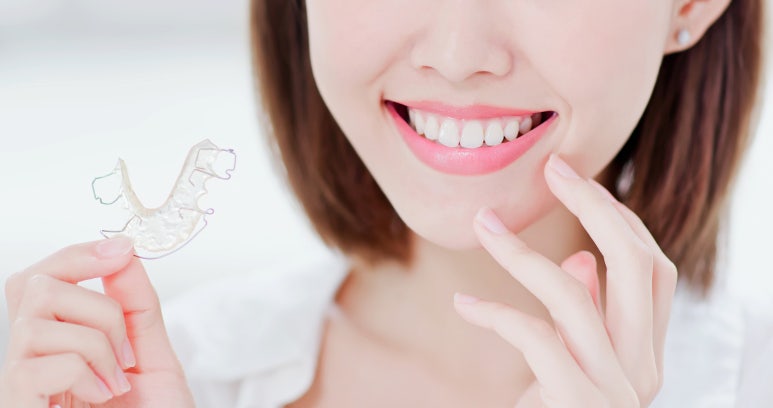
Can teeth still move even if I have worn my retainer properly?
It is possible.
Various factors can affect tooth alignment, including the influence of wisdom teeth, periodontal disease, teeth grinding, tongue habits, and skeletal growth.
However, when comparing people who use their retainers consistently with those who do not, there is a clear difference in the likelihood of realignment.
In other words, retainers do not completely prevent realignment; rather, they help reduce its likelihood and maintain the results of orthodontic treatment more stably.
Does realignment always mean that orthodontic retreatment is necessary?
Not necessarily.
When the alignment change is minor, it may be possible to manage it simply by making a new retainer or performing a partial adjustment.
On the other hand, if the misalignment has become more severe, partial orthodontic treatment or comprehensive retreatment may need to be considered.
The important thing is to identify changes early.
Minor movement can be addressed relatively easily, but the scope of treatment may become greater the longer it is left untreated.
Therefore, wearing retainers and undergoing regular examinations play a very important role in reducing the likelihood of orthodontic retreatment.
Maintaining Your Orthodontic Results Long-Term
with Ttukseom Dental Clinic, S Leader Dental Hospital
The goal of orthodontic treatment is not simply to straighten the teeth.
Treatment can truly be considered satisfactory only when it also includes maintaining the carefully achieved alignment in a healthy condition for a long time.
Retainers are an important part of the process that should not be neglected even after orthodontic treatment is complete. In particular, consistent care immediately after treatment is necessary so that the teeth can settle securely into their new positions.
If retainers are not worn properly, the teeth may move again and realignment may occur; depending on the circumstances, orthodontic retreatment may become necessary.
Ttukseom Dental Clinic, S Leader Dental Hospital, carefully monitors not only orthodontic treatment but also the retention and maintenance phase, helping patients maintain stable orthodontic results for a long time.
If you are concerned about wearing your retainer or changes in your tooth alignment after completing orthodontic treatment, please check your current condition through regular examinations. Small differences in care habits can determine the condition of your teeth several years later.
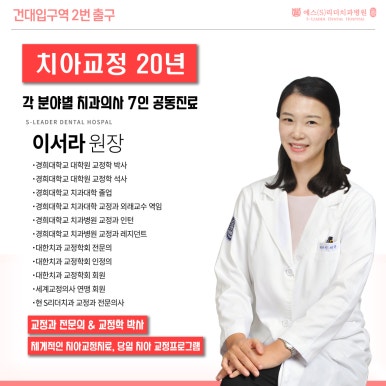


Ttukseom Dental Clinic :: S Leader Dental Hospital