Hello, this is S Leader Dental Hospital, a dental clinic in Gunja-dong celebrating its 22nd anniversary this year.
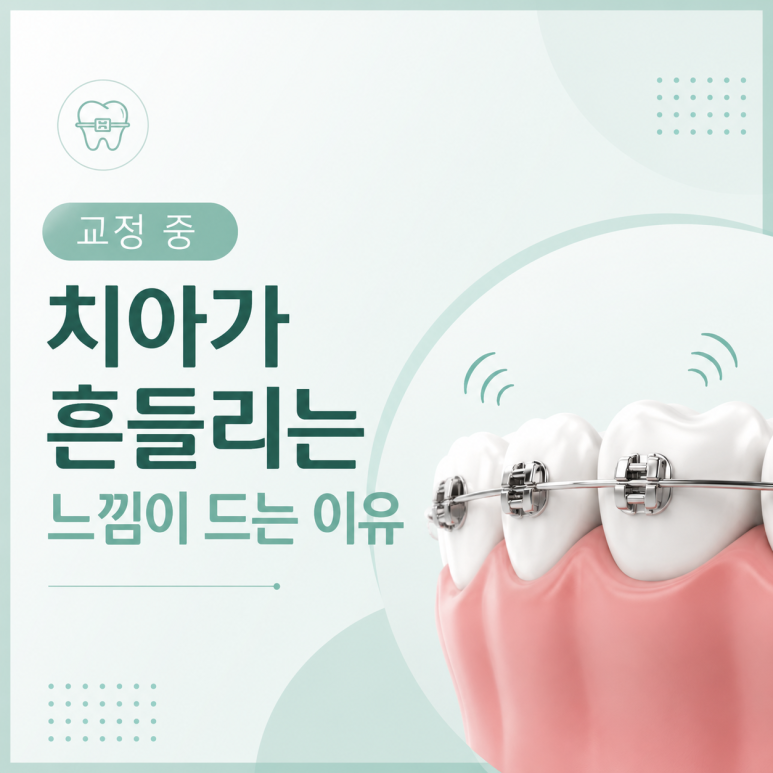
After starting orthodontic treatment, you may experience more changes than expected.
At first, you may feel uncomfortable because the orthodontic appliance has not yet become familiar in your mouth, or you may feel confused by sensations that differ from usual when chewing food. You may also experience pressure or pain as your teeth move.
Among these changes, one symptom that particularly worries patients is the “feeling that their teeth are loose.”
You may feel that a tooth moves more than usual while brushing your teeth, or experience the sensation that a particular tooth is loose while eating.
When these symptoms appear, many people become concerned.
“Could my tooth fall out during orthodontic treatment?”
“Could my teeth have become weaker?”
“Could something be going wrong with my orthodontic treatment?”
These are also questions that patients frequently ask when visiting during orthodontic treatment.
To begin with, a slight feeling of looseness during orthodontic treatment is a relatively common occurrence.
In many cases, it is a natural response that appears as the teeth move in the planned direction.
However, not all looseness is normal, so it is important to understand the cause and accurately check your current condition.
Today, S Leader Dental Hospital, a dental clinic in Gunja-dong, will explain in detail why your teeth may feel loose during orthodontic treatment and when you should consult a dentist.
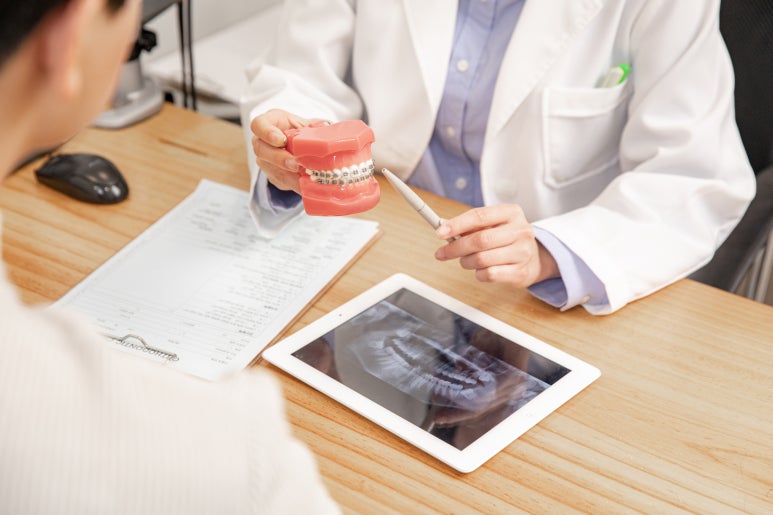
Are teeth completely fixed in place naturally?
Many people think that their teeth are firmly attached to the jawbone.
However, teeth are not actually directly attached to the bone.
A tissue called the periodontal ligament exists between the teeth and the jawbone.
The periodontal ligament supports the teeth and also acts as a cushion that absorbs the impact generated when chewing.
Therefore, even healthy teeth have extremely slight movement.
Although you can hardly feel this movement under normal circumstances, tooth movement occurs actively during orthodontic treatment, so you may perceive a greater feeling of looseness than usual.
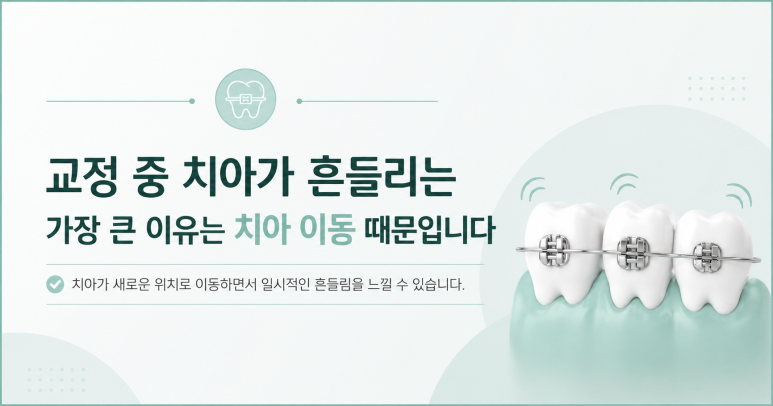
The main reason teeth feel loose during orthodontic treatment is tooth movement.
Orthodontic treatment moves the teeth into the desired positions by applying continuous and appropriate force.
When force is transmitted to the teeth through brackets and wires, orthodontic elastics, and orthodontic screws, the bone and tissues around the teeth begin to change in order to adapt to their new positions.
The bone on the side where force is applied is resorbed, while new bone forms on the opposite side, allowing the teeth to move gradually.
The tissues supporting the teeth also change during this process, which may temporarily cause a feeling of looseness.
In other words, a certain amount of physiological movement is necessary for the teeth to move.
Therefore, slight looseness during orthodontic treatment can be considered one sign that treatment is progressing.
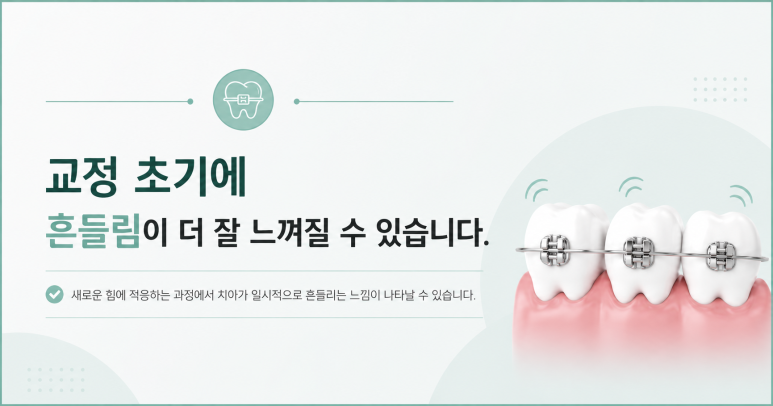
You may notice looseness more easily in the early stages of orthodontic treatment.
Tooth movement begins in earnest during the early stages of treatment.
After wires are first placed or the appliance is adjusted, the tissues around the teeth need time to adapt to the new force.
During this period, you may experience pain and pressure, and your teeth may feel slightly loose.
In particular, you may notice a different sensation than usual when chewing hard foods during meals.
However, in most cases, you gradually adapt over time, and these symptoms also lessen.
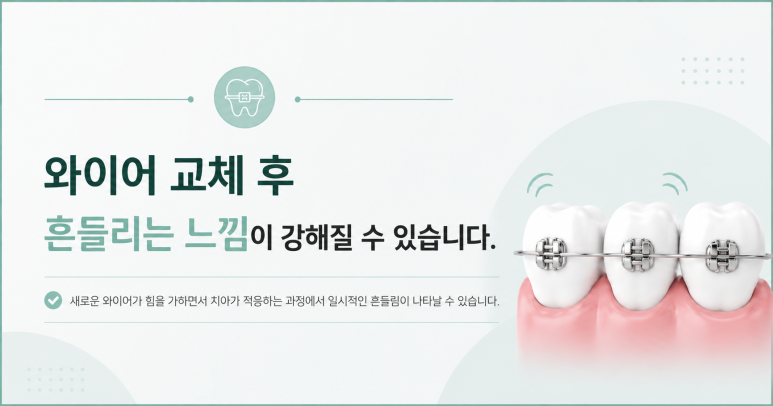
The feeling of looseness may become stronger after a wire change.
Orthodontic treatment involves repeatedly replacing or adjusting the wires through regular appointments.
When a new wire is placed, the force transmitted to the teeth also changes.
Therefore, immediately after a wire change, you may feel tooth movement or looseness more strongly.
This can be viewed as the tissues around the teeth responding to the new orthodontic force.
In many cases, you gradually adapt after several days to about a week.
It may be felt more strongly in patients undergoing extraction-based orthodontic treatment.
When extraction-based orthodontic treatment is performed, the amount of tooth movement may be relatively greater in order to close the spaces left by the extractions.
The teeth move actively, especially when the front teeth are moved backward or the molars are moved forward.
During this period, you may experience a feeling of looseness.
However, this is usually a normal response that occurs during the planned tooth movement process, and the teeth often stabilize over time.
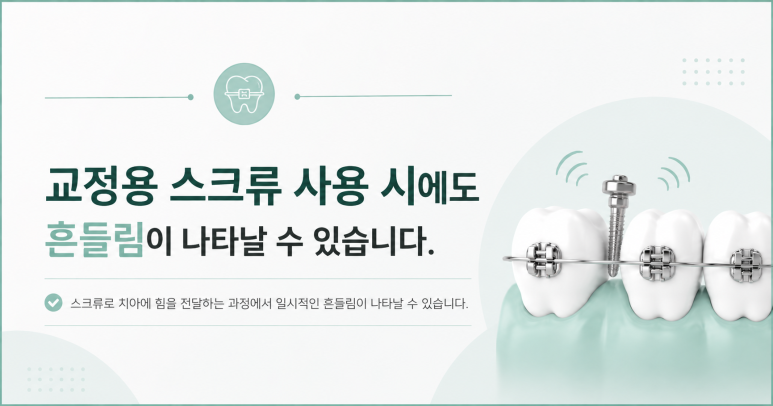
Looseness may also occur when orthodontic screws are used.
Orthodontic screws are now often used to move teeth more precisely.
They help deliver stronger and more efficient force to specific teeth.
The speed of movement may increase when screws are used to close spaces or move teeth.
As a result, you may feel tooth movement more clearly.
However, tooth looseness and orthodontic screw looseness are separate issues, so it is important not to confuse them.
Does looseness mean that the teeth have become weaker?
This is the aspect that worries many patients the most.
However, slight looseness occurring during a normal orthodontic process does not mean that the teeth have become weaker.
In many cases, it is a temporary response that appears as the tissues surrounding the teeth adapt to their new positions.
Once orthodontic treatment is complete and the teeth settle into stable positions and enter the retainer phase, the looseness also gradually decreases.
Therefore, there is no need to become excessively concerned simply because your teeth feel loose.
When should you consult a dentist?
Most looseness occurs during the normal orthodontic process, but it is advisable to receive an examination in some cases.
For example:
-
When a tooth is visibly very loose
-
When pain continues for an extended period
-
When the gums are swollen or repeatedly bleed
-
When only one particular tooth is especially loose
-
When the looseness suddenly becomes worse
You may need to have your condition checked by your treating clinician.
This is because other causes, such as gum disease or problems with the periodontal tissues, may also be present.
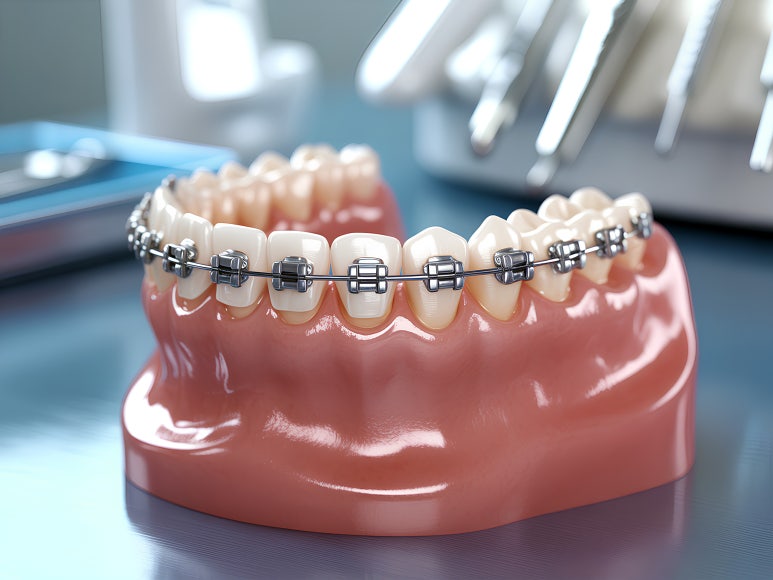
Gum care is also very important during orthodontic treatment.
Orthodontic appliances have structures where food can easily become trapped.
Therefore, inadequate care may cause gum inflammation.
Poor gum health can also affect the tissues supporting the teeth and may make looseness feel more pronounced.
During orthodontic treatment, thorough brushing, the use of interdental brushes, and regular checkups are especially important.
Maintaining gum health is just as important as tooth movement in achieving successful orthodontic results.
Safe orthodontic treatment with
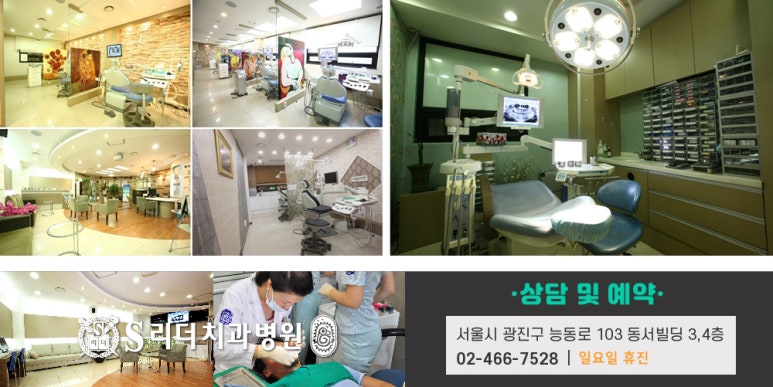
S Leader Dental Hospital, a dental clinic in Gunja-dong
The feeling that your teeth are loose during orthodontic treatment is experienced by more patients than you may expect.
In most cases, it is a natural response that appears as the teeth move in the planned direction and may be a sign that treatment is progressing normally.
However, depending on the degree of looseness and any accompanying symptoms, additional evaluation may be necessary. Therefore, it is important to check your current condition through regular examinations.
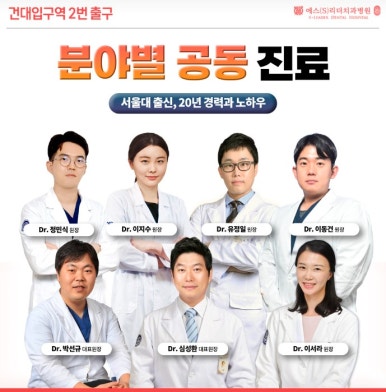
S Leader Dental Hospital, a dental clinic in Gunja-dong, carefully checks tooth movement and gum health throughout orthodontic treatment and strives to provide safer and more systematic care.
If you are concerned about tooth looseness, pain, or discomfort during orthodontic treatment, rather than worrying alone, please consult your clinician thoroughly. An accurate diagnosis and consistent care can be the most important starting point for achieving healthy and satisfactory orthodontic results.




Gunja-dong Dental Clinic :: S Leader Dental Hospital.