Hello, this is S Leader Dental Hospital, a Gwangjin-gu dental clinic with evening hours, celebrating its 22nd anniversary this year.
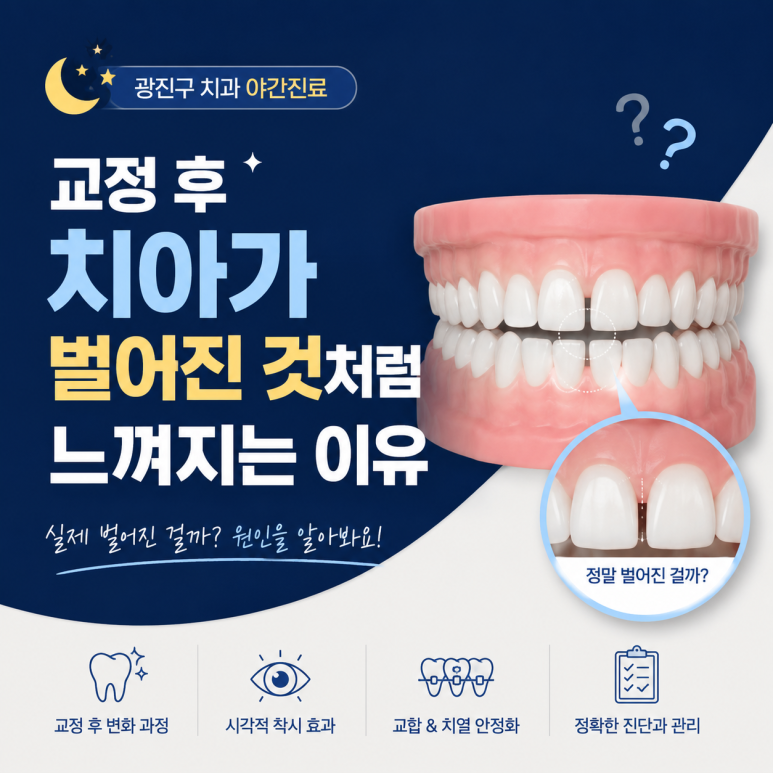
People begin orthodontic treatment for different reasons, but most hope to achieve a straighter tooth alignment and better overall oral health.
As treatment progresses, many patients experience positive changes, such as crooked teeth becoming straighter and protruding teeth improving.
However, some people notice an unexpected change while looking in the mirror as orthodontic treatment nears completion or after it has ended.
It may look as though spaces have developed between the teeth.
“Why does it look like there is a space now when I didn’t see one before orthodontic treatment?”
“Have my teeth become spaced apart?”
“Could something have gone wrong with my orthodontic treatment?”
“Do I need orthodontic treatment again?”
Many patients contact their dental clinic with concerns like these.
In reality, the teeth have often not newly become spaced apart. In many cases, this may be a natural change that occurs during orthodontic treatment, or a pre-existing space may simply have become more noticeable.
Today, S Leader Dental Hospital, a Gwangjin-gu dental clinic with evening hours, will explain in detail why teeth may feel spaced after orthodontic treatment and when treatment may be necessary.
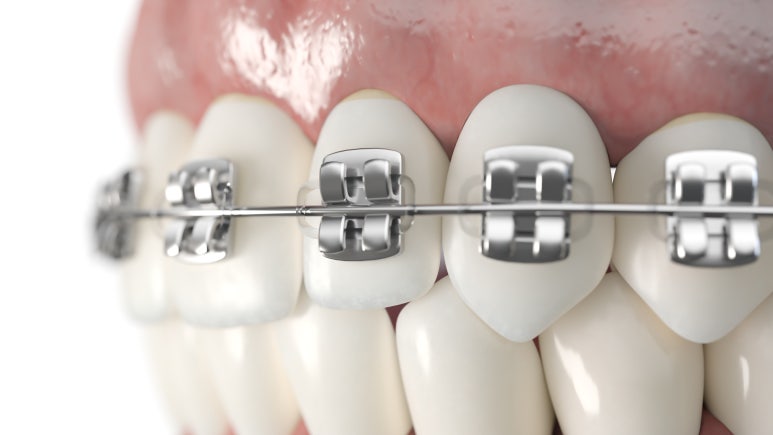
Why Teeth May Look Spaced After Orthodontic Treatment
Many people see a space between their teeth and simply think, “My teeth have become spaced apart.”
However, there can be various causes.
As the teeth move during orthodontic treatment, spaces that were not previously visible may become exposed. Changes in the shape of the gums can also make these spaces appear more noticeable.
This phenomenon is particularly common between the front teeth or around the lower front teeth.
Therefore, rather than judging the outcome of orthodontic treatment solely because a space is visible, it is important to identify the exact cause.
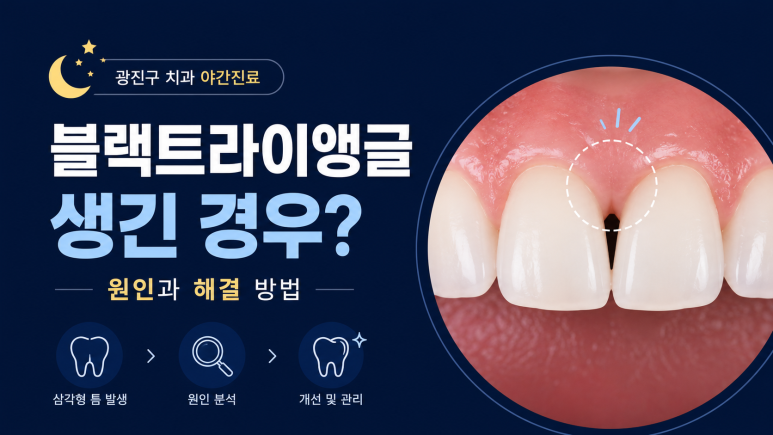
Could a Black Triangle Have Developed?
One of the most common reasons teeth appear spaced after orthodontic treatment is the development of a black triangle.
A black triangle refers to a phenomenon in which a black, triangular-shaped space appears because the gum between the teeth does not fully fill the area.
The teeth themselves have not necessarily become spaced apart. Instead, the area previously occupied by the gum appears empty, creating the sensation that a space has formed.
In particular, spaces that were not visible before orthodontic treatment because the teeth overlapped or were crooked may become visible afterward.
From the patient’s perspective, the space may appear larger than it was before orthodontic treatment. However, in many cases, this is simply a pre-existing structural characteristic that has become visible.
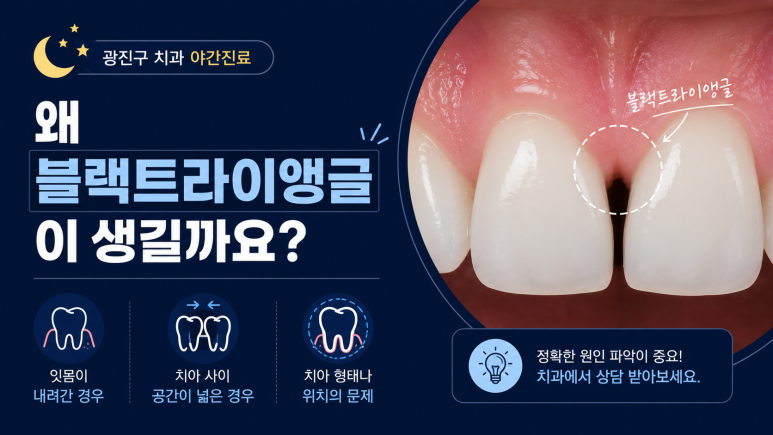
Why Do Black Triangles Develop?
Black triangles can develop for several reasons.
One of the most common causes is the shape of the teeth.
When teeth are closer to a triangular shape than a square shape, their tips may touch while a space remains near the gums.
In adults, the gums may also naturally recede with age.
As the teeth become properly aligned during orthodontic treatment, these characteristics may become more noticeable.
Gum health also has an important influence.
People who have experienced gum disease in the past or who have experienced some loss of supporting bone may be more likely to develop black triangles.
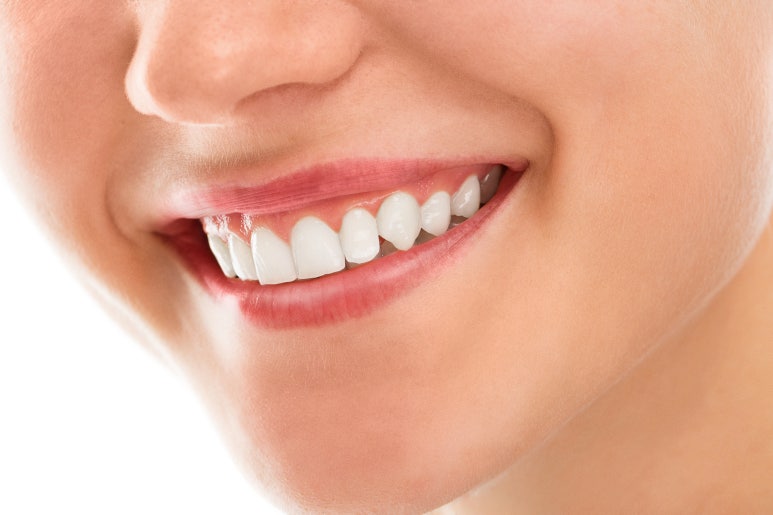
Spaces May Become Visible as the Teeth Alignment Changes
Orthodontic treatment is not simply a procedure for straightening the teeth.
It is a process of adjusting the position of the teeth while considering the bite, function, and appearance.
As teeth that had overlapped move into their proper positions, spaces that were not previously visible may appear.
This may be especially noticeable in cases involving severe crowding or rotated teeth, as the natural shape of the teeth becomes visible after treatment and may create the impression that a space has developed.
This is not necessarily a treatment failure. It may be a result of moving the teeth into their normal positions.
Could This Be Related to Extraction-Based Orthodontic Treatment?
People who have undergone extraction-based orthodontic treatment sometimes ask similar questions.
They may worry that the extraction spaces have not been properly closed.
However, in most cases, the extraction spaces are sufficiently closed before orthodontic treatment is completed.
The space patients notice is often not an actual extraction space, but rather a visual space caused by a black triangle or the shape of the teeth.
Therefore, simply seeing a space does not mean that extraction-based orthodontic treatment was unsuccessful.
It May Feel Larger While Brushing Your Teeth
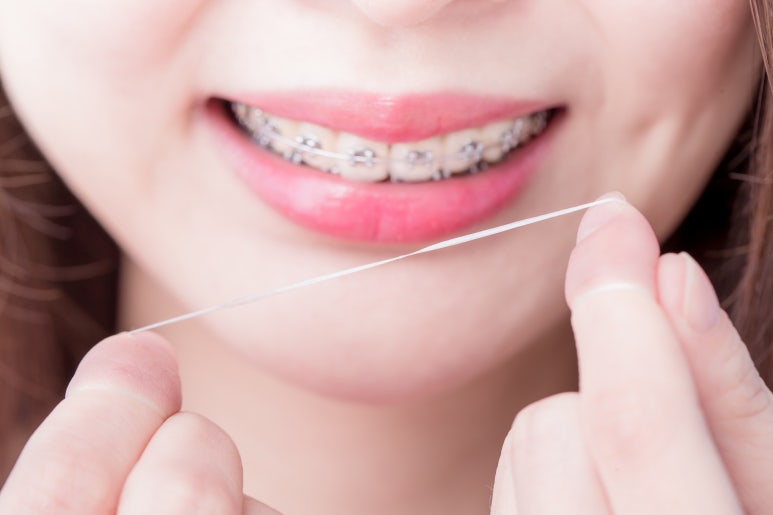
Using an interdental brush or dental floss is important during orthodontic treatment.
As you check the spaces between your teeth more frequently during this process, they may also feel larger than before.
In particular, when food becomes trapped or you feel air passing through, it is easy to think that the teeth have become spaced apart.
However, in many cases, the space is within the normal range.
Are Black Triangles a Health Problem?
A black triangle does not necessarily indicate a disease.
In most cases, it is primarily an aesthetic concern.
However, if the space is particularly large or food repeatedly becomes trapped, additional care may be necessary.
Additional examination may also be needed depending on the condition of the gums.
Therefore, rather than assuming that this is a problem that must always be treated, it is important to accurately assess the current condition.
Improvement May Be Possible
The methods used to improve a black triangle may vary depending on its cause.
In some cases, the shape of the teeth may be adjusted or the contact areas between the teeth may be modified during orthodontic treatment.
Depending on the situation, resin treatment may be used to fill or improve the space.
When the condition of the gums is a contributing factor, gum care may need to take priority.
The important thing is to have the current condition evaluated through consultation with a dental professional rather than judging it based only on photographs found online.
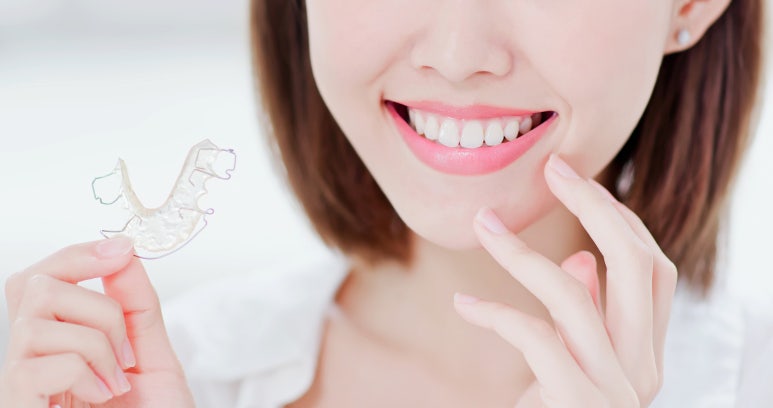
Wearing Your Retainer Is Also Important.
Orthodontic treatment is not completely finished simply because the active treatment has ended.
If the retainer is not worn properly, the teeth may move again.
During this process, actual spaces may develop or the alignment may change.
Therefore, after orthodontic treatment, it is important to wear the retainer and attend regular checkups consistently.
What Does Post-Treatment Orthodontic Care with S Leader Dental Hospital, a Gwangjin-gu Dental Clinic with Evening Hours, Involve?
The fact that your teeth appear spaced after orthodontic treatment does not necessarily mean that there is a problem.
In many cases, this may be a natural phenomenon caused by a black triangle, the shape of the teeth, or changes in the condition of the gums.
The important thing is to accurately understand the current condition and, when necessary, establish an appropriate care and treatment plan.
S Leader Dental Hospital, a Gwangjin-gu dental clinic with evening hours, considers not only tooth alignment before and after orthodontic treatment, but also gum health and aesthetic factors, working to provide results that meet patients’ expectations.
If you are concerned about spaces between your teeth or black triangles after orthodontic treatment, we recommend receiving a thorough consultation with a dental professional rather than worrying about it alone. An accurate diagnosis and systematic follow-up care may help you maintain a healthy and attractive smile for a long time.




Gwangjin-gu Dental Clinic with Evening Hours :: S Leader Dental Hospital.