Hello, this is S Leader Dental Hospital, a dental clinic near Gunja Station, celebrating its 22nd anniversary since establishment this year.
Have you ever been startled by the sudden sound of something breaking in your tooth while eating?
Many people visit the dentist after breaking a tooth while eating hard foods such as dried squid, nuts, ice, or candy.
Teeth can also be damaged by falls, collisions, accidents, or impacts during exercise.
At first, a tooth may appear to be only slightly chipped, so many people do not consider it a serious matter. However, depending on the extent of the damage, a tooth fracture can lead to nerve damage or even tooth loss.
Even if the pain is not severe, cracks or damage may be progressing inside the tooth, making an accurate diagnosis important.
Today, S Leader Dental Hospital, a dental clinic near Gunja Station, will explain in detail what tooth fractures are, why they occur, what symptoms they cause, as well as the treatment methods and first-aid measures.
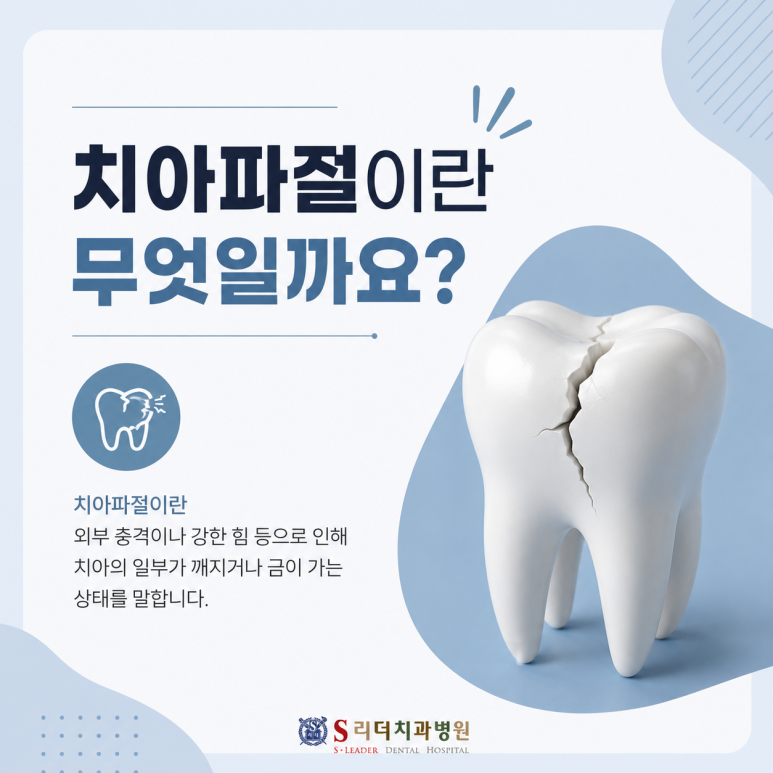
What Is a Tooth Fracture?
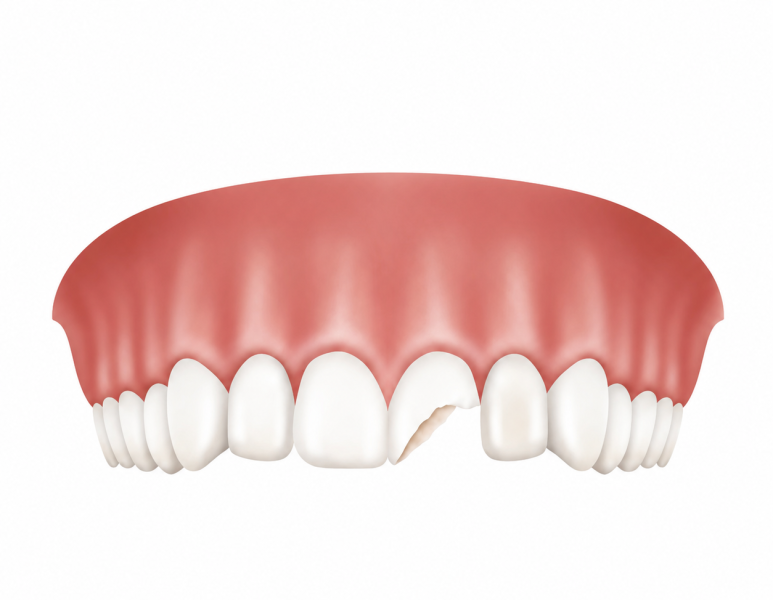
A tooth fracture refers to a condition in which a tooth breaks or part of it breaks away due to external impact or excessive force.
Although teeth are known to be the hardest tissue in the human body, they can become damaged when strong impacts or repeated stimulation accumulate.
The extent of a fracture can vary greatly.
Sometimes only the edge of a tooth is slightly chipped, while in other cases a crack forms in the center of the tooth or the nerve becomes exposed. In severe cases, a root fracture may occur, in which the crack extends to the tooth root.
Because teeth do not regenerate on their own like skin, appropriate treatment is necessary to help restore a fractured tooth.
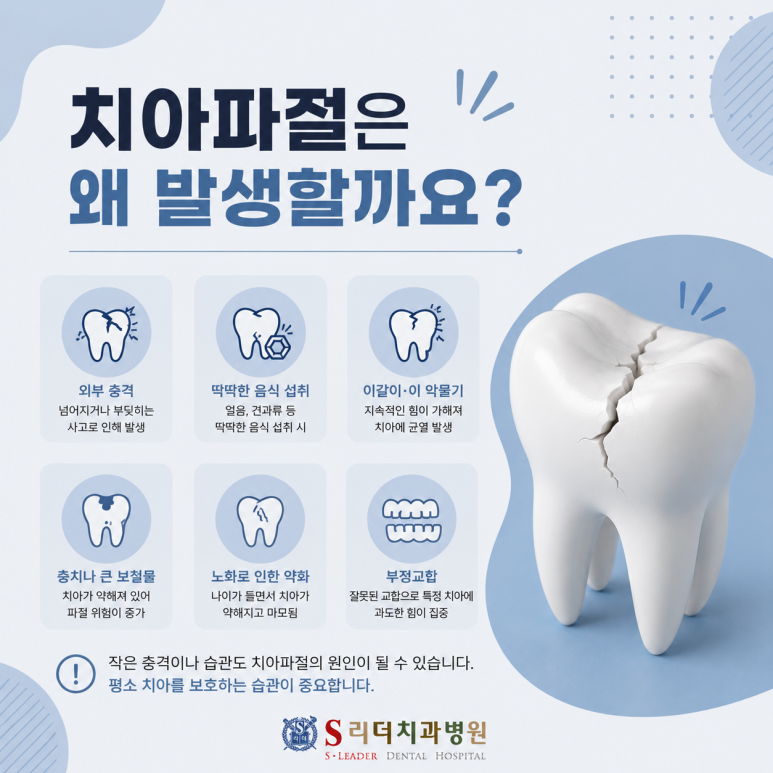
Why Do Tooth Fractures Occur?
Eating Hard Foods
This is one of the most common causes of tooth fractures. Biting down forcefully on hard foods such as ice, candy, nuts, or cartilage-covered bones can suddenly place a great deal of force on a tooth. The risk of fracture is even higher when a tooth already has decay or a weakened structure.
Dental Trauma
Teeth are also frequently broken by impacts during exercise, falls, or traffic accidents. The front teeth are especially susceptible because they are often the first to receive an external impact.
Tooth Decay
As tooth decay progresses, the internal structure of the tooth becomes weaker. Even if the tooth appears normal on the outside, a damaged interior can cause it to break from only a minor impact.
Teeth Grinding and Clenching
Grinding your teeth during sleep or unconsciously clenching them during the day places continuous pressure on the teeth. Repeated force can create tiny cracks that may eventually lead to a tooth fracture.
Old Dental Restorations
Teeth with old crowns or extensive resin fillings may become relatively weak. Teeth that have undergone multiple treatments may have a higher risk of fracture than healthy teeth.
What Types of Tooth Fractures Are There?
Enamel Fracture
This is a condition in which only the enamel, the outermost layer of the tooth, is broken.
There is usually little to no pain, but cosmetic concerns may arise.
Dentin Fracture
This refers to damage extending through the enamel to the dentin beneath it.
Sensitivity to cold foods may occur, and treatment is often necessary.
Fracture with Pulp Exposure
The fracture is deep enough to expose the nerve inside the tooth.
Severe pain may occur, and root canal treatment is often likely to be necessary.
Root Fracture
This refers to damage extending to the tooth root.
Depending on the extent of the damage, preserving the tooth may be difficult, so an accurate examination is important.
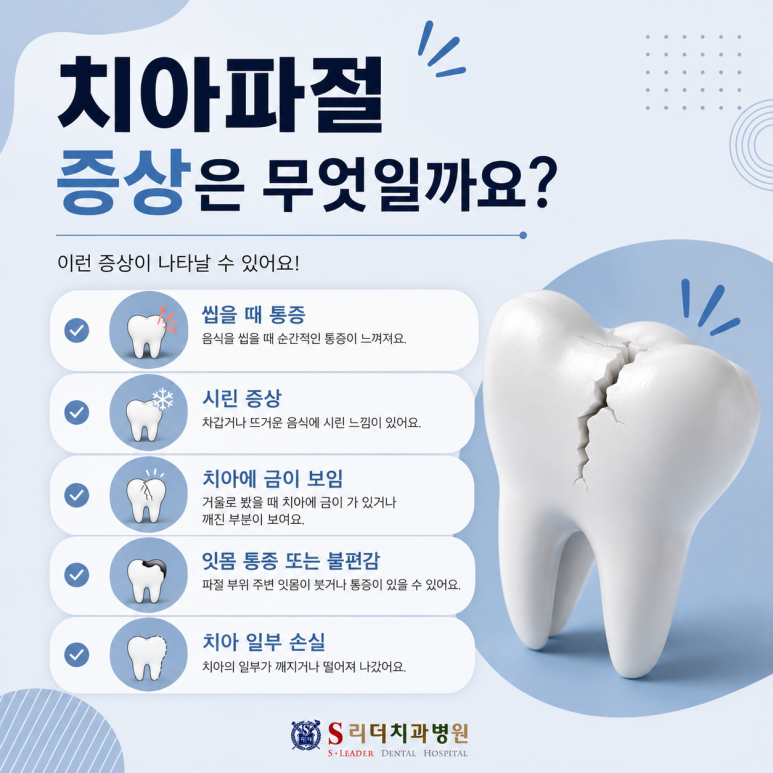
What Are the Symptoms of a Tooth Fracture?
Part of the tooth appears to be broken.
When looking in the mirror, you may notice that the shape of the tooth has changed or that part of it has broken away.
Pain occurs when chewing.
Pain may appear when pressure is placed on the fractured area during chewing.
Sensitivity to cold foods
When the dentin is exposed, the tooth may become sensitive to external stimuli.
A catching sensation on the tongue
If the broken area remains sharp, it may repeatedly rub against the tongue or the inside of the cheek.
The gums may swell or become painful.
If the fracture extends to the nerve, inflammation may occur, causing gum pain or swelling.
How Are Tooth Cracks Different from Tooth Fractures?
This is one of the aspects that patients often find confusing.
A tooth fracture means that part of the tooth has actually broken away.
By contrast, a tooth crack refers to a crack in the surface or interior of the tooth.
Cracks are often difficult to see with the naked eye at first and may cause pain at a specific moment when chewing.
Both conditions can lead to nerve damage if left untreated, so an accurate examination is necessary.
What Are the Treatment Methods for Tooth Fractures?
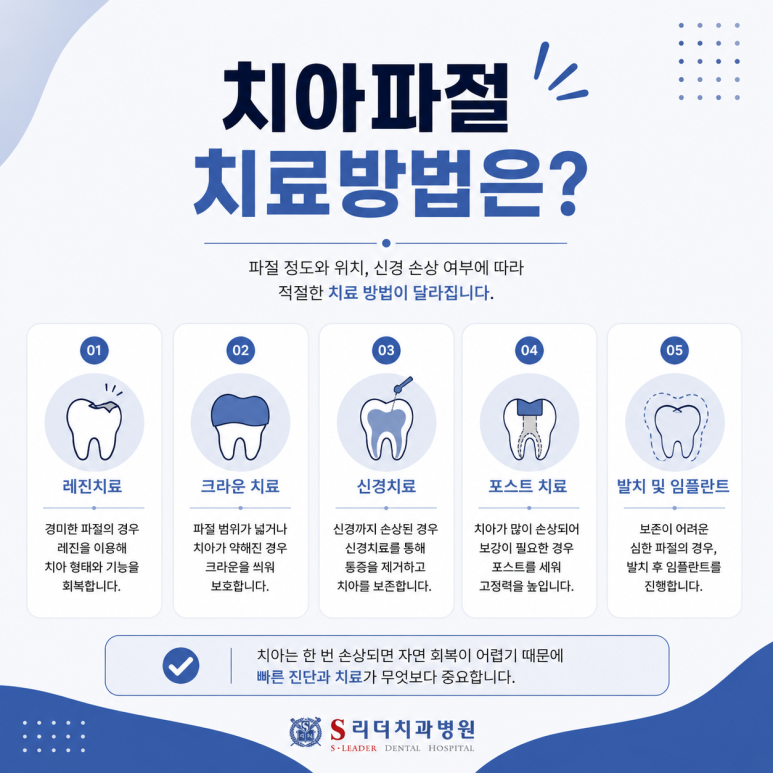
Resin Filling
This is performed when the damage is limited and there is no nerve damage. A material similar in color to the tooth is used to restore the broken area. Its advantages include good aesthetic results and relatively simple treatment.
Crown Treatment
This is performed when the fracture is extensive or the tooth has become weakened. Because a crown covers and protects the entire tooth, it can help prevent additional fractures.
Root Canal Treatment
This is necessary when the damage has extended to the nerve inside the tooth. The procedure involves removing infected nerve tissue, disinfecting the inside of the tooth, and sealing it. Crown treatment is often performed afterward to protect the tooth.
Extraction and Implant
If the tooth is severely split or the damage extends to the root, preserving the tooth may be difficult. In such cases, treatment options such as extraction followed by an implant may be considered. However, in recent years, treatment is often planned with the goal of preserving the natural tooth whenever possible.
What Happens If a Tooth Fracture Is Left Untreated?
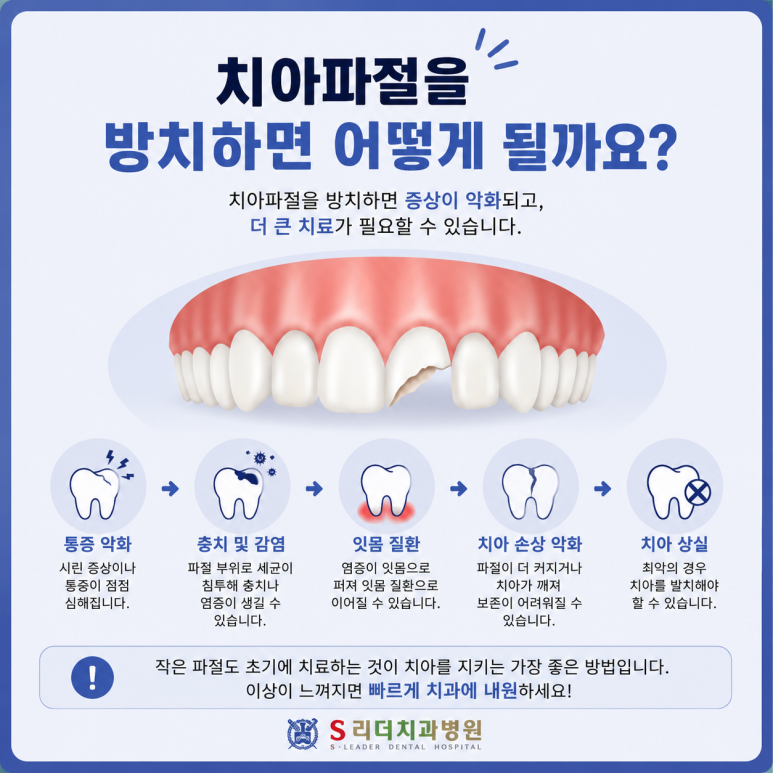
A fracture may initially appear small, but the crack can gradually become larger over time.
In addition, as food particles and bacteria penetrate the damaged area, tooth decay or inflammation of the nerve may develop.
If the infection progresses to the nerve, root canal treatment may be necessary. In severe cases, the tooth may not be able to be preserved and may need to be extracted.
Therefore, if a tooth breaks, it is important to have it examined regardless of whether you have pain.
What First Aid Should Be Provided When a Tooth Breaks?
If a tooth breaks, try not to panic and first rinse your mouth thoroughly. If you have the broken tooth fragment, do not throw it away. Keeping it and bringing it to the dentist may be helpful.
✔ Rinse your mouth with clean water
- Gently rinse if there is bleeding or debris.
✔ Store the broken tooth fragment
-
If possible, find the tooth fragment and store it in saline solution or milk.
-
Avoid leaving it dry for an extended period.
✔ Apply pressure with gauze if there is bleeding
- If the broken area is bleeding, bite down on clean gauze and apply pressure to stop the bleeding.
✔ Apply a cold compress if there is swelling or pain
- Applying a cold compress to the outside of the cheek may help relieve swelling and pain.
✔ Do not chew food with the broken tooth
- Be careful, as hard or chewy foods may cause further fracture.
✔ Visit a dentist as soon as possible
- Even if there is no pain, nerve damage or a tooth crack may be present, so an accurate examination is necessary.
Precautions
Many people leave a tooth untreated, thinking, “It’s only chipped a little, so it should be fine.” However, even a small fracture can deepen over time and lead to nerve damage. Therefore, if a tooth breaks, it is important to visit a dentist as soon as possible for an accurate diagnosis, regardless of whether you have pain.
S Leader Dental Hospital, a Dental Clinic Near Gunja Station
Prompt Action Is Important for Protecting Natural Teeth
A tooth fracture may not end as a simple case of a slightly chipped tooth. Depending on the extent of the damage, it can lead to nerve damage or additional fractures, and delaying treatment may make it difficult to preserve the natural tooth.
If your tooth is broken or you think it may be cracked, do not leave it untreated even if there is no pain. Please have it accurately examined.
S Leader Dental Hospital, a dental clinic near Gunja Station, carefully evaluates the extent of tooth damage through detailed examinations and develops treatment plans aimed at preserving each patient’s natural teeth as much as possible.
Tooth fractures may appear to be minor on the outside even when internal cracks have progressed deeply, making accurate testing and diagnosis especially important. The earlier treatment begins, the more likely it may be that the tooth can be preserved with a simpler treatment.
Based on extensive clinical experience, S Leader Dental Hospital provides customized care that takes each patient’s oral condition into account. After treatment, the hospital also helps patients maintain healthy teeth for a long time through regular care and checkups.
If your tooth is broken, you experience pain when chewing, or sensitivity keeps recurring, do not take it lightly. Visit S Leader Dental Hospital for an accurate consultation and examination. Please remember that the best way to use your natural teeth for a long time is through prompt diagnosis and appropriate treatment.




Gunja Station Dental Clinic :: S Leader Dental Hospital.