Hello, this is S Leader Dental Hospital, a Janghanpyeong Station dental clinic celebrating its 22nd anniversary this year.
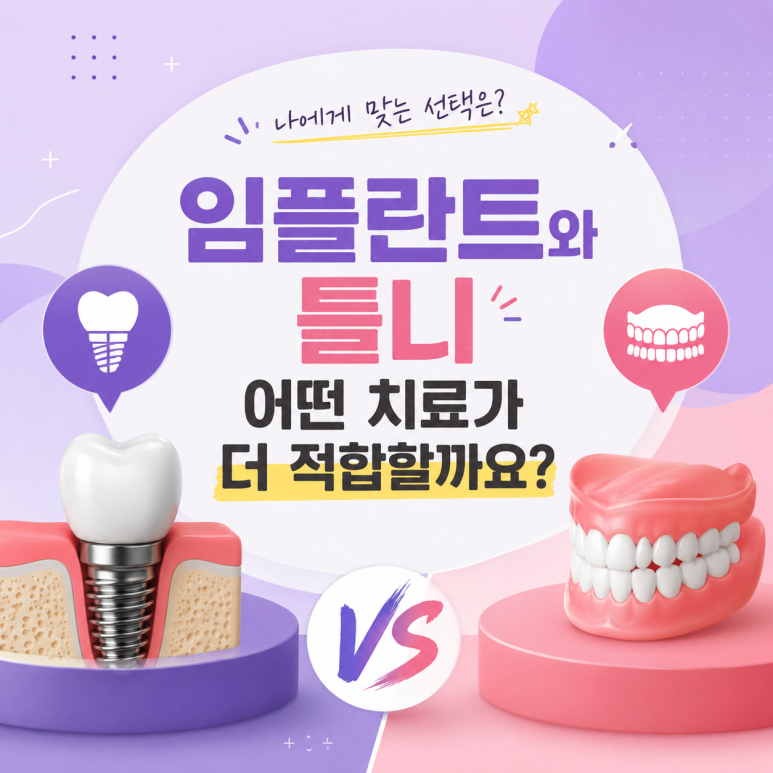
Have you ever wondered which treatment to choose when many teeth are missing?
When you find that you can no longer chew food with the same strength as before or that your pronunciation has become awkward, you naturally come to realize the importance of your teeth. In particular, when several teeth are missing, it often affects more than just comfort and can reduce your overall quality of life.
The treatments people most commonly consider in such cases are implants and dentures. You may hear various opinions from people around you, such as “implants are better” or “dentures are more comfortable.” However, many people find it difficult to determine what criteria to use when choosing the option that best suits their own situation.
Both treatments are methods of restoring dental function, but they differ greatly in structure, usage, maintenance, and other aspects, making it difficult to reach a conclusion through a simple comparison.
Today, S Leader Dental Hospital, a Janghanpyeong Station dental clinic, will take a closer look at the differences between implants and dentures, as well as their respective advantages, disadvantages, and selection criteria.
What Are Implants and Dentures?
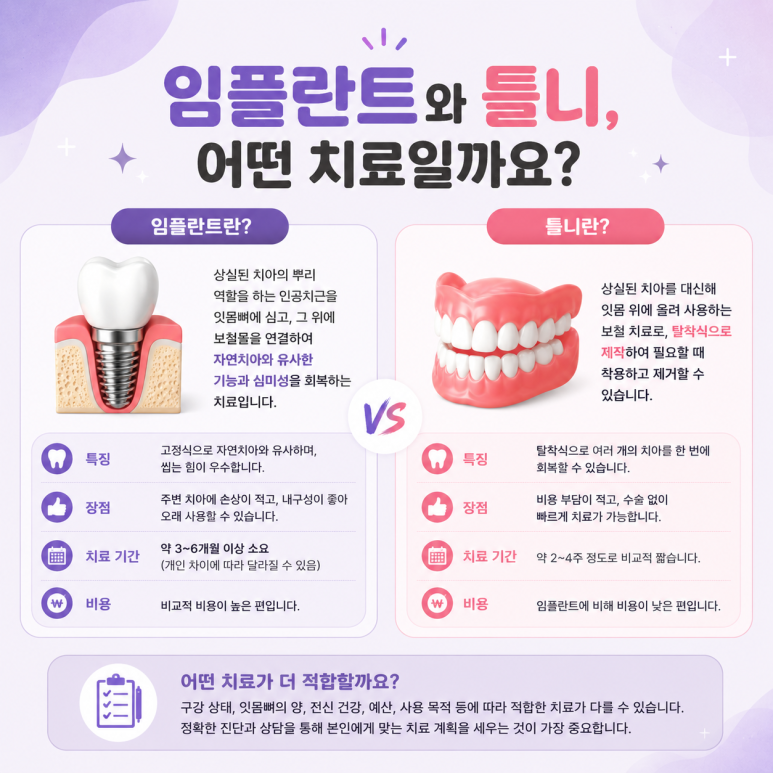
Implants are a treatment in which an artificial tooth root is placed in the jawbone where a tooth is missing, and a prosthesis is then connected to it.
In simple terms, this method creates a structure that replaces the role of a natural tooth root. One of its characteristics is that each tooth can be restored independently. Because the implant firmly integrates with the bone, it provides excellent stability and tends to feel secure when chewing.
Dentures, on the other hand, are prostheses that rest on the gums and can be removed and reattached as needed. Partial dentures are used when some teeth are missing, while complete dentures are used when all teeth are missing. Since they are supported by the gums and surrounding structures, they can be made relatively simply and used within a short period of time, which is an advantage.
The biggest difference between these two treatments is whether they are “fixed or removable.” This difference affects not only how they are used, but also overall comfort, chewing ability, maintenance, and psychological satisfaction.
What Are the Advantages and Disadvantages of Implants?
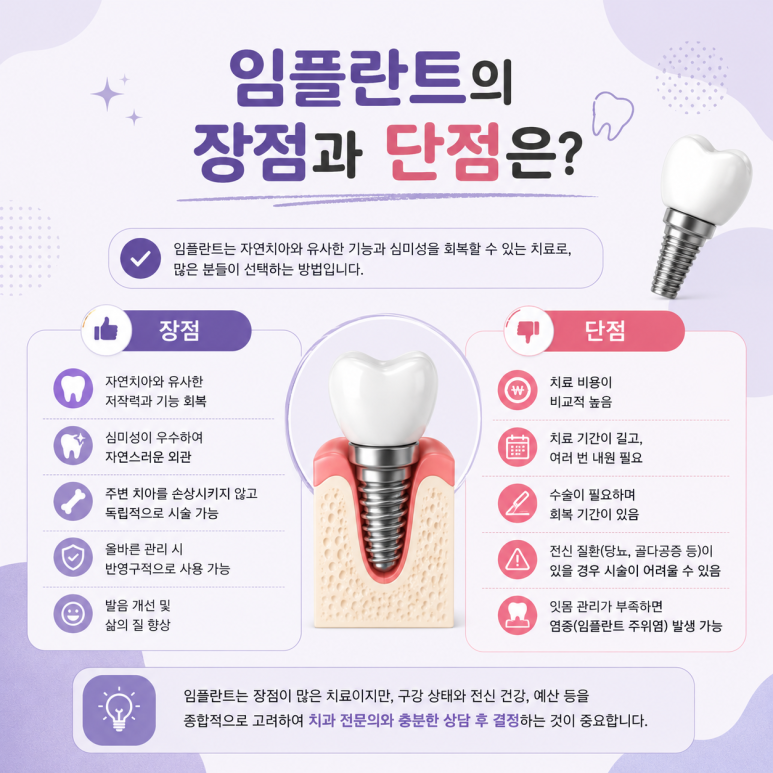
The greatest advantage of implants is that they can restore function in a way that most closely resembles natural teeth. Because the structure that serves as a tooth root is directly fixed into the jawbone, chewing forces are transmitted steadily, allowing comfortable use without movement. In particular, many people experience greater satisfaction with meals because they can eat relatively chewy or hard foods with less difficulty.
In addition, implants function independently rather than relying on adjacent teeth, meaning that existing teeth do not need to be damaged. In the long term, when properly maintained, they can be used for many years, so they are also viewed positively in terms of durability.
A natural-looking result can also be expected aesthetically. This is especially important for the front teeth, and implants tend to provide high satisfaction because they can be made with a shape and color similar to natural teeth.
However, there are also clear disadvantages. Many people feel burdened by the need for surgery, and additional bone grafting may be necessary depending on the condition of the jawbone. The treatment period may also be relatively long, and the initial cost tends to be high, which should be taken into consideration.
Advantages and Disadvantages of Dentures
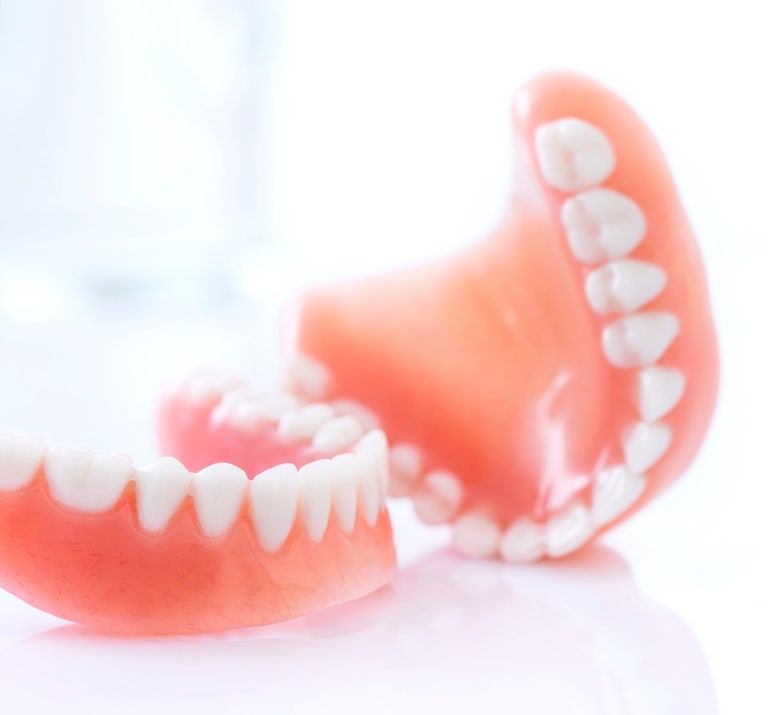
The greatest advantage of dentures is that treatment can be completed relatively simply without surgery. They can be a practical alternative for people who find surgery burdensome because of their general health or who need to restore function quickly. Another advantage is that, because the fabrication period is relatively short, people can return to daily life comparatively quickly.
They are also often chosen when financial considerations are important because the cost is relatively lower than that of implants. Dentures are a versatile treatment that can also be used when all teeth are missing.
However, the discomfort experienced during use can be a disadvantage. Because dentures rest on the gums, they may move while chewing, and many people feel that this reduces stability. In addition, chewing force itself tends to be weaker than with natural teeth or implants, which may limit the foods that can be eaten.
In some cases, continuous pressure on the gums can cause pain, or changes in the shape of the gums over time may require adjustment. The need to remove and clean them every day may also feel inconvenient.
When Are Implants More Suitable?
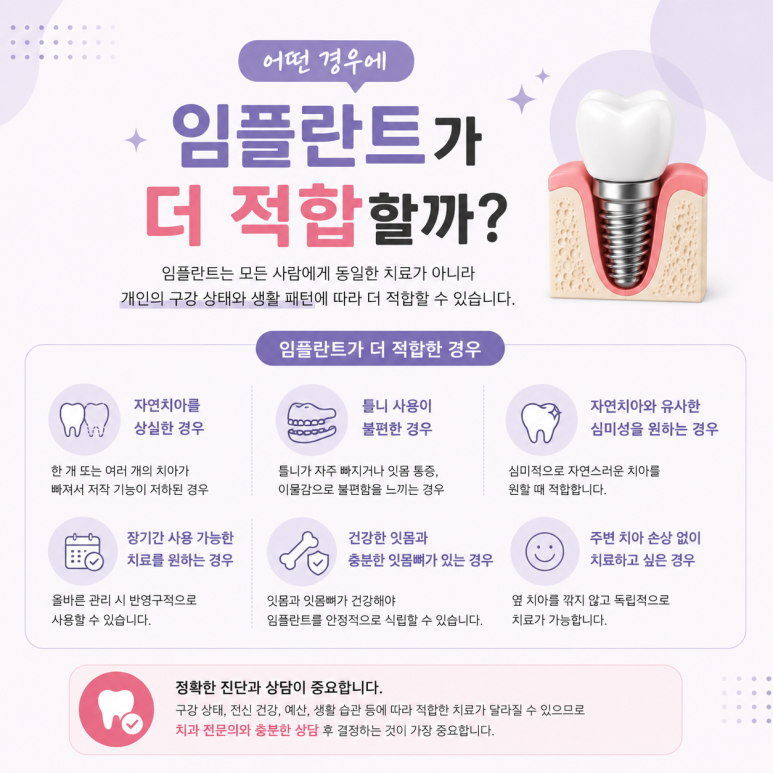
Implants are particularly suitable when functional recovery is a priority. They can be a satisfying choice for people who want to chew comfortably or desire a sensation similar to that of natural teeth.
When the condition of the gums and jawbone is relatively good, implants may provide stable results over the long term. They are also structurally advantageous when some teeth are missing because treatment can be performed while protecting the neighboring teeth.
Above all, if your long-term goal is “to receive treatment once and use it for a long time,” implants are often more suitable. This can be viewed as a choice that considers not only resolving current discomfort but also future oral health.
When Are Dentures More Suitable?
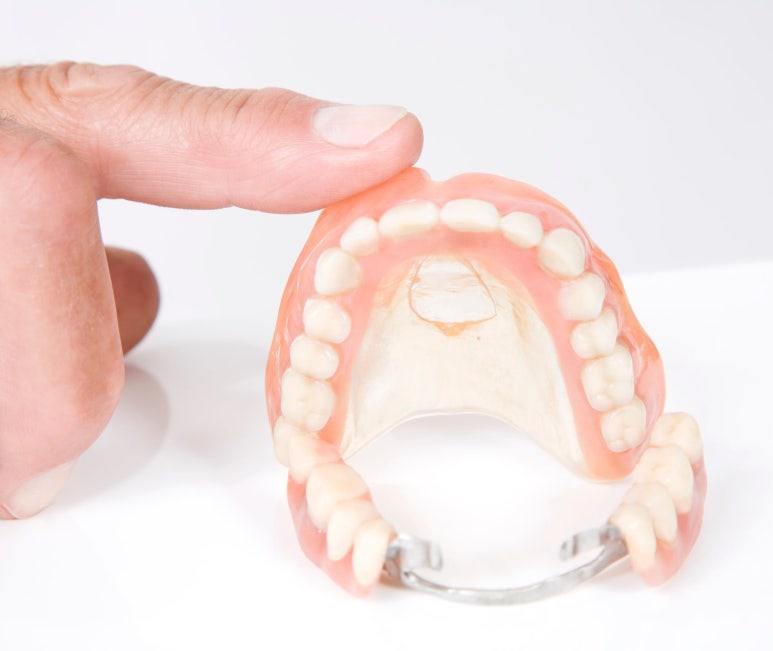
Dentures are suitable when surgery is difficult or overall health needs to be taken into consideration. They may be considered as a way to reduce the burden of surgery, particularly for older adults or people with chronic conditions.
Dentures can also be a practical choice when the financial burden is substantial or when dental function needs to be restored within a relatively short period. When all teeth are missing, dentures can restore basic chewing function comparatively simply.
However, because users must tolerate a certain degree of discomfort that may arise during use, individual adaptability and lifestyle are also important factors. Therefore, it is important to consider not only cost and convenience but also the possibility of long-term use.
Implants VS. Dentures: What Are the Selection Criteria?
Rather than deciding categorically that one of implants and dentures is better, the most important thing is to choose the treatment that suits your current condition. Even with the same dental condition, the appropriate method may differ depending on a person’s health, living environment, and expectations regarding treatment.
Various factors—including the condition of the gums and jawbone, overall health, budget, eating habits, and ability to manage the treatment—must be considered comprehensively. It is not advisable to make a decision based on just one criterion.
Ultimately, what matters is the process of finding “the treatment that is right for me,” and this requires an accurate diagnosis and sufficient consultation.
Maintenance Is Important Regardless of the Treatment
Choosing a treatment is important, but if proper care is not provided afterward, it can be difficult to maintain the results for a long time. Implants require care similar to that for natural teeth, and regular examinations and hygiene management are important. Consistent care is necessary because inflammation may occur if maintenance is neglected.
Proper cleaning and storage are also important for dentures, and regular adjustments may be needed if discomfort develops during use. Ongoing care is particularly necessary because dentures may no longer fit properly as the condition of the gums changes.
Regardless of which treatment you choose, consistent maintenance is essential for stable, long-term use.
Implant and Denture Selection Criteria
Presented by Janghanpyeong Station Dental Clinic, S Leader Dental Hospital
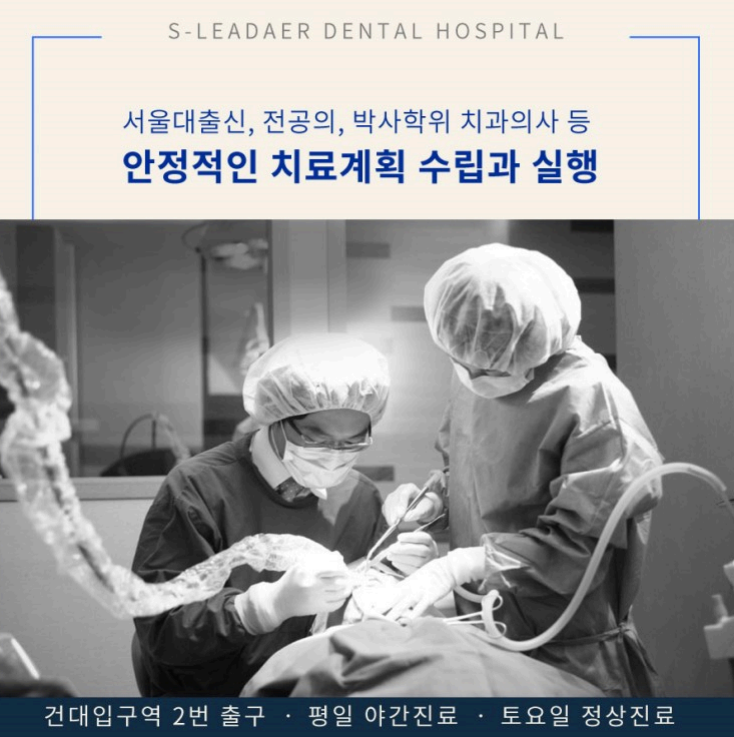
Because implants and dentures each have their own advantages and limitations, the most important thing is to choose the treatment that suits the individual rather than simply deciding that one is better. In particular, an accurate diagnosis must come first because not only the condition of the teeth but also the condition of the gums and jawbone and overall health must be considered together.
At S Leader Dental Hospital, a Janghanpyeong Station dental clinic, we carefully analyze each patient’s oral condition and propose a customized treatment plan that considers not only short-term treatment results but also long-term use. We believe it is important to explain the advantages and disadvantages of both implants and dentures thoroughly and determine the appropriate direction together based on each patient’s lifestyle and expectations.
We also systematically explain care methods and precautions so that patients can use their treatment reliably after completion. We aim to provide care that reduces unnecessary treatment while ensuring that essential aspects are not overlooked.
If you are unsure which treatment to choose because of tooth loss, we encourage you to consult S Leader Dental Hospital, confirm your current condition through an accurate consultation, and find the most appropriate treatment direction.

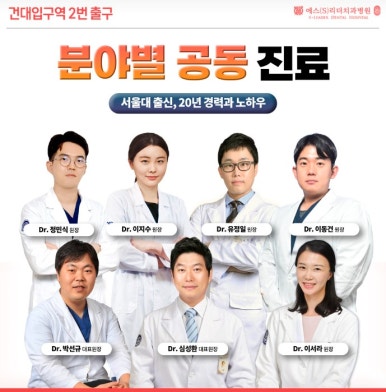

Janghanpyeong Station Dental Clinic :: S Leader Dental Hospital