Hello, this is S Leader Dental Hospital, a Gueui-dong dental clinic celebrating its 22nd anniversary this year.
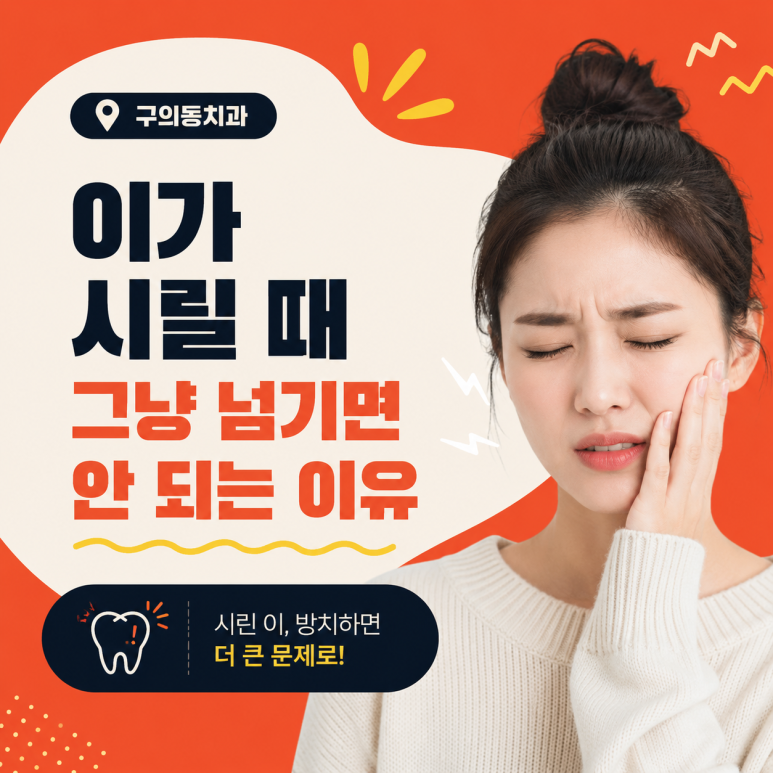
This is an AI-generated image, not an actual photograph. (To prevent misunderstanding)
You may have experienced a sudden, sharp sensitivity in your teeth when drinking cold water, eating ice cream, or brushing your teeth. Many people assume it is a temporary symptom and do not take it seriously, but tooth sensitivity may not simply mean that your teeth have become more sensitive—it may be an abnormal signal from your teeth.
It can occur for various reasons, including early tooth decay, gum recession, and tooth wear, and appropriate care and treatment are needed depending on the cause. Therefore, if the sensitivity occurs repeatedly or gradually worsens, it is important to identify the exact cause rather than leaving it untreated.
Today, S Leader Dental Hospital, a Gueui-dong dental clinic, will explain why teeth become sensitive, when dental treatment may be necessary, and how tooth sensitivity can be treated and prevented.
Why do teeth become sensitive?
Teeth are not made up of a single hard structure. They consist of several layers, and the outermost protective layer helps shield them from external stimuli. Normally, because this protective layer functions properly, many people do not experience significant discomfort when consuming cold or hot foods.
However, if the protective layer becomes worn or damaged for various reasons, external stimuli can reach the inside of the tooth, causing sensitivity to cold or hot foods and even while brushing. Therefore, tooth sensitivity may not simply mean that the teeth have become more sensitive; it may be a sign that changes have occurred in the structures protecting the teeth. If the sensitivity continues to recur, it is important to determine the exact cause.
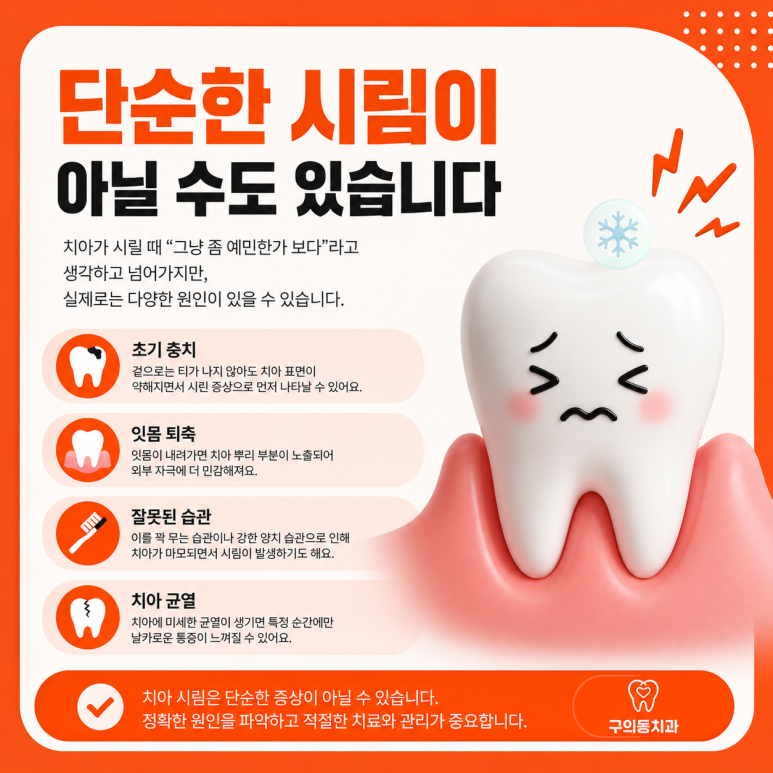
It may not be simple sensitivity.
Many people think that their teeth have simply become sensitive when they experience sensitivity, but various underlying causes may actually be involved. Early tooth decay may first appear as sensitivity even without a noticeable cavity or pain, and teeth may also become sensitive to external stimuli if the gums recede and expose the tooth roots.
Teeth may also become worn from brushing with excessive force or clenching them tightly. In some cases, tiny cracks in the teeth can cause a sudden, sharp sensation of sensitivity.
As tooth sensitivity can occur for various reasons, it is important not to dismiss it as simple sensitivity. If it recurs or gradually worsens, the exact cause should be identified.
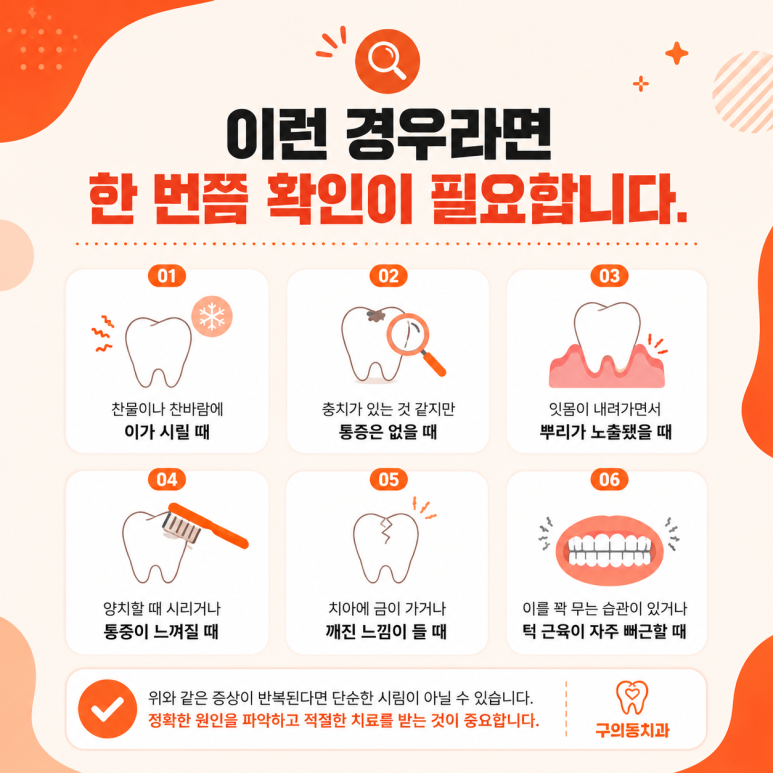
If this applies to you, it may be worth having it checked.
If you only occasionally experience tooth sensitivity, you may be able to move on without paying much attention to it. However, in certain situations, it is necessary to observe the symptoms more carefully. For example, if the sensitivity occurs more frequently than before or feels increasingly intense, this may be a sign that it is not merely a temporary response to stimulation.
Also, if sensitivity repeatedly occurs in only one particular tooth, there may be an issue in that area. In particular, if you feel pain not only with cold foods but also with hot foods, or if the discomfort continues for a long time after the stimulus is gone, it may be difficult to regard it as a simple symptom, and a more accurate examination is needed.
Leaving it untreated may cause the problem to worsen.
If tooth sensitivity is considered merely a symptom and left untreated, the problem may gradually become more serious over time.
What initially reacted only to cold foods may begin to react to various stimuli, and eventually discomfort may occur even without any stimulus. In particular, when tooth decay or tooth damage is the cause, the condition often progresses rather than improving on its own. If the appropriate time for treatment is missed, it may lead to more complicated treatment.
As a result, a problem that could have been resolved simply at first may eventually require more extensive treatment. Ignoring tooth sensitivity and simply enduring it may therefore increase the burden rather than solve the problem.
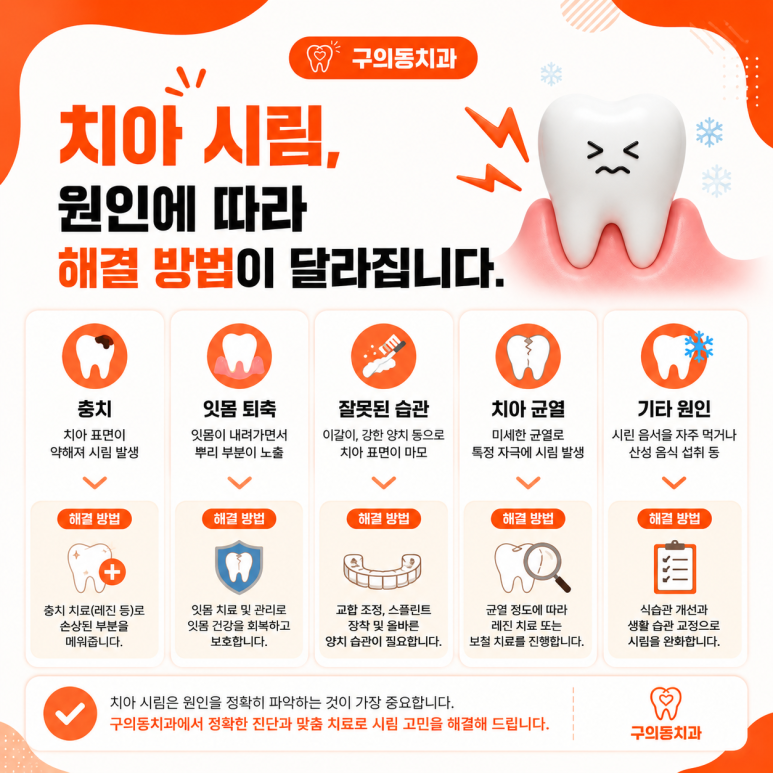
The solution for tooth sensitivity depends on its cause.
Because tooth sensitivity is not caused by just one factor, the appropriate solution also varies depending on the individual's condition. For example, if early tooth decay is the cause, the sensitivity may improve quickly with simple treatment of the affected area. If the gums have receded, treatment to protect the exposed area may be necessary, while tooth-surface wear may require consideration of ways to restore or reinforce the affected area.
The important thing is not simply to reduce the sensation of sensitivity, but to identify its exact cause and address it appropriately. If you try only to relieve the symptoms without accurately determining the cause, you may feel temporarily better, but the symptoms are likely to recur over time.
Daily care is also necessary.
Because tooth sensitivity is affected not only by treatment but also by everyday habits, daily care is an important part of management. Brushing with too much force can gradually wear down the tooth surface, so it is necessary to use a soft toothbrush and control the amount of pressure applied. Using toothpaste specifically designed for sensitive teeth may also help relieve the symptoms.
It is also advisable to temporarily avoid foods that are excessively cold or irritating when the symptoms are severe, while consistently maintaining your oral health. These small habits can have a positive effect on protecting your teeth over time.
The importance of dental care, as explained by
Gueui-dong Dental Clinic, S Leader Dental Hospital
Tooth sensitivity is a common symptom that anyone may experience at least once, but its causes and progression can differ from person to person. Therefore, rather than considering it a discomfort that can simply be endured and ignored, it is important to use it as an opportunity to check the condition of your teeth. In particular, if the sensitivity recurs or feels increasingly intense, it may be a signal from your teeth rather than simple sensitivity, so it should not be taken lightly.
If you continue to put off even a minor discomfort, a problem that could initially have been resolved simply may develop into one requiring more extensive treatment. Conversely, if the cause is accurately identified and managed early, many cases can be sufficiently improved through relatively simple methods. Ultimately, what matters is not the severity of the symptom, but how quickly you recognize and respond to the signal.
At Gueui-dong Dental Clinic, S Leader Dental Hospital, we focus not only on reducing the symptoms of sensitivity but also on accurately identifying why they have occurred. We consider each patient's dental condition and lifestyle habits together, and we believe it is important to provide precise guidance on only the necessary areas without unnecessary treatment.
Rather than taking even a minor discomfort lightly, having it checked in advance may be the most reliable way to protect your dental health for a long time.


Gueui-dong Dental Clinic :: S Leader Dental Hospital.