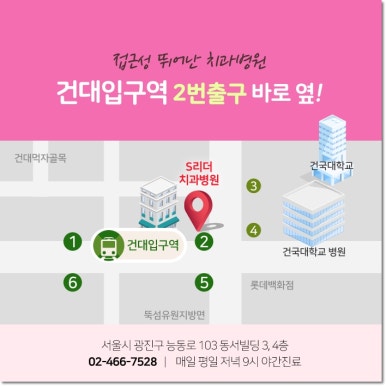
Hello, this is S Leader Dental Hospital, a dental hospital near Konkuk University Station celebrating its 22nd anniversary this year.
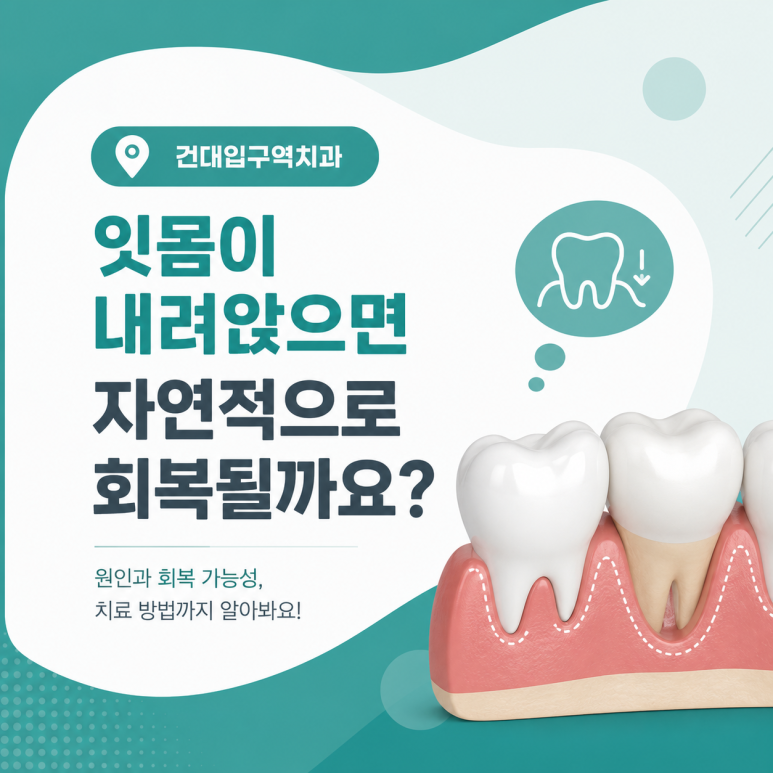
You may notice that your teeth look longer than before when looking in the mirror, or feel as if your gum line has moved downward while brushing. Some people also become concerned when a particular tooth is unusually sensitive when drinking cold water or when the area between the tooth and gums appears to have widened.
This condition, in which the gums move downward from their original position and expose the area around the tooth root, is commonly described as “receding gums.” More precisely, it is called gingival recession. It requires attention because it is not merely a cosmetic change and can lead to tooth sensitivity, gum inflammation, and loose teeth.
Many people especially wonder, “If my gums recede, will they naturally grow back?” Because the appropriate management of gingival recession can vary depending on its cause and progression, it is important to have the condition checked early.
Today, together with S Leader Dental Hospital near Konkuk University Station, we will take a detailed look at what gingival recession is, why it occurs, and what symptoms it can cause.
What Is Gingival Recession?
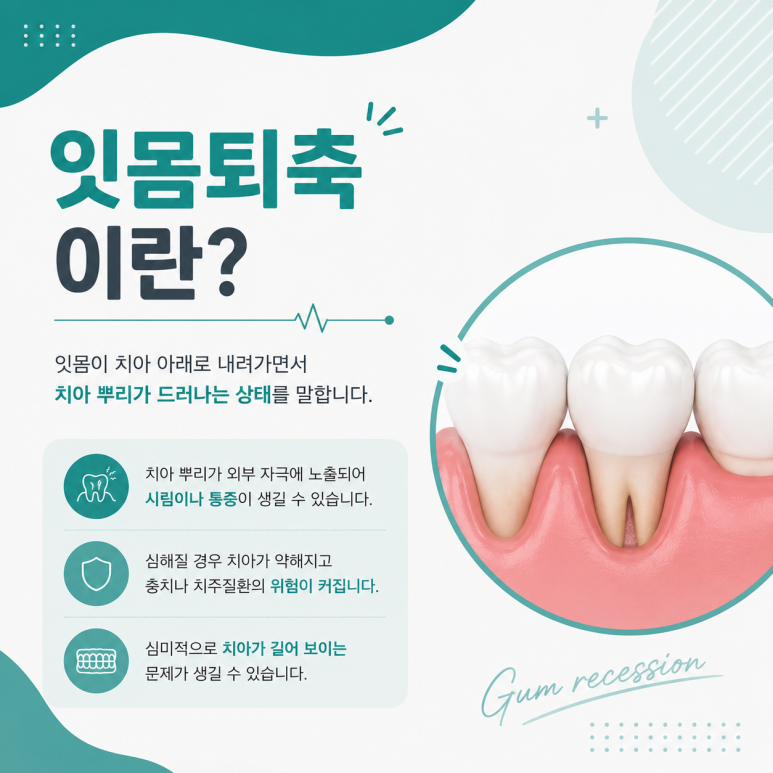
Gingival recession refers to a condition in which the gum tissue surrounding the teeth gradually moves downward, exposing part of the tooth root.
Healthy gums firmly surround the teeth and protect the roots from external irritation. However, when the gums shrink or move downward for various reasons, the part of the tooth root that should normally remain hidden becomes exposed.
Unlike the crown of the tooth, the root is not covered with hard enamel, making it more sensitive to external irritation. As a result, gingival recession can cause sensitivity to cold water or cold air, as well as discomfort while brushing.
Food particles and plaque can also accumulate more easily in areas where the gums have receded, leading to recurring gum inflammation. If the condition worsens, the support provided to the teeth may weaken.
Gingival recession usually progresses gradually rather than suddenly becoming severe. For this reason, many people do not notice it at first and only discover it after their teeth begin to look longer or sensitivity develops.
Can Receding Gums Recover Naturally?
To put it simply, it is uncommon for gums that have already receded to return to their original position on their own.
Gum tissue does not easily regenerate to its original height simply because a wound has healed, as skin does. In particular, when recession has progressed enough to expose the tooth root, complete natural recovery is difficult.
However, this does not necessarily mean that extensive treatment is required. If the recession is not severe and has stopped progressing, the priority may be to reduce the causes, manage the condition, and prevent further deterioration.
On the other hand, if sensitivity is severe or the gum recession continues to progress, the cause should be identified through an accurate examination, and appropriate treatment should be considered.
The important thing is not to regard gingival recession simply as “a change that occurs with age.” Various factors—including lifestyle habits, gum disease, brushing habits, and bite-related problems—can work together, so management should be tailored to the cause.
What Causes Gingival Recession?
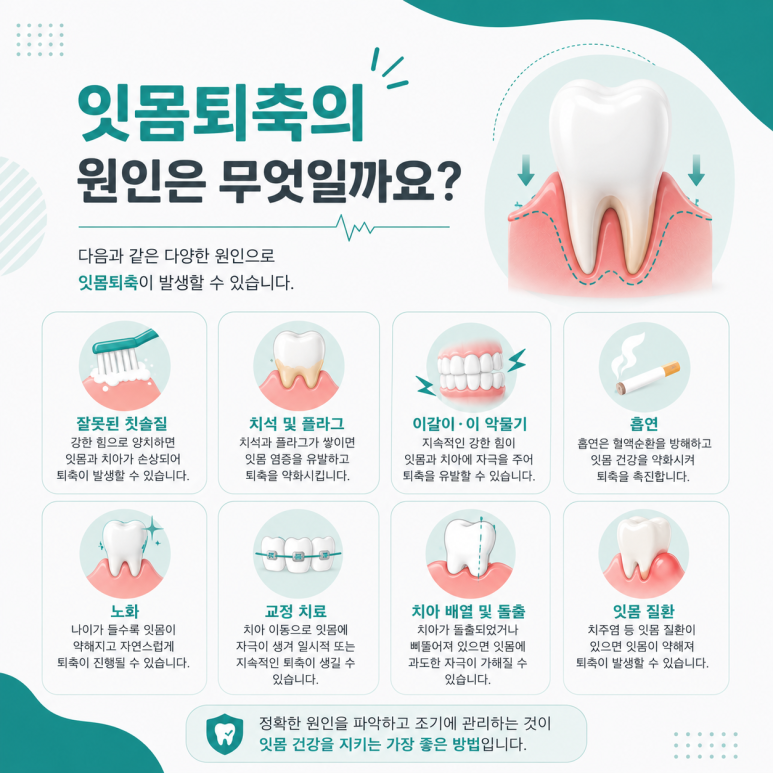
Gingival recession often progresses through the combined effects of several factors rather than from a single cause.
- Brushing Too Forcefully
One common cause of gingival recession is the habit of brushing with too much force.
Some people believe that scrubbing firmly is best for cleaning their teeth, but repeatedly brushing with excessive force can irritate the gums. In particular, using a hard-bristled toothbrush or vigorously scrubbing back and forth can gradually damage the gums.
At first, this may feel like slight swelling or bleeding of the gums, but over time the gum line may move downward and expose the tooth roots.
- Gum Disease
Gum diseases such as gingivitis and periodontitis are also important causes of gingival recession.
When plaque and tartar accumulate between the teeth and gums, inflammation can develop. It may initially begin with bleeding during brushing or swollen gums, but as the inflammation deepens, it can affect the jawbone that supports the teeth.
As periodontitis progresses, the gums may recede, the spaces between the teeth may appear wider, or the teeth may become loose. In this case, the problem may involve weakening of the structures that support the teeth, rather than simple gum recession, so caution is needed.
- Tooth Alignment and Bite Problems
Gingival recession can also occur when the teeth are not evenly aligned or excessive force is concentrated on a particular tooth.
If a tooth protrudes significantly outward or repeated force is applied to a specific area because the bite does not fit properly, stress can build up in the gums around that tooth.
In particular, if you also clench your teeth or grind them, greater pressure may be transmitted to the tissues around the teeth and gums, potentially increasing the likelihood that gingival recession will progress.
- Changes Associated with Aging
The gums may gradually move downward with age.
As the teeth are used over many years, the gums and surrounding tissues may weaken, and reduced gum elasticity may contribute to gingival recession. However, rather than assuming that aging alone is the cause, it is important to check whether gum disease or unhealthy lifestyle habits are also present.
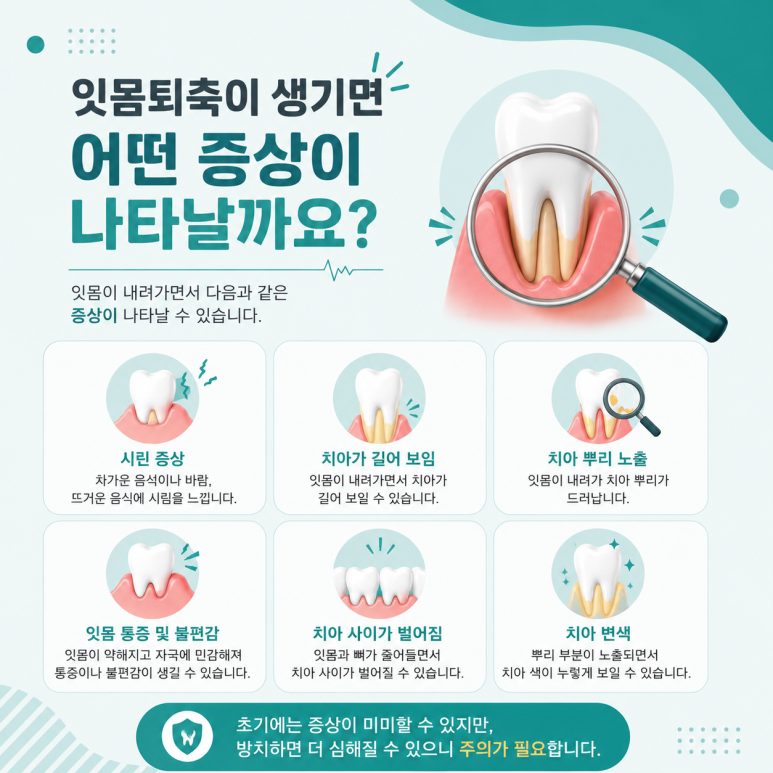
What Symptoms Can Occur with Gingival Recession?
Gingival recession often progresses without obvious pain in its early stages. Over time, however, various discomforts may develop.
The most common symptom is that the teeth appear longer. As the gums move downward, the part of the tooth root that was originally covered by gum tissue becomes exposed, making the teeth look longer than before.
You may also experience tooth sensitivity to cold water or cold air. Because the tooth root is sensitive to external irritation, sensitivity can develop easily when the gums recede.
The gums may feel sore or bleed while brushing. Because areas affected by gingival recession are more vulnerable to irritation, discomfort may become worse when brushing forcefully.
Food may frequently become trapped between the teeth and gums, or the spaces between the teeth may appear wider. As the gums shrink, the spaces between the teeth can become more noticeable, which may also cause cosmetic concerns.
If the condition progresses further, recurring gum inflammation or a feeling that the teeth are loose may develop. In particular, when periodontitis is also present, weakening of the jawbone can reduce tooth support, making early management important.
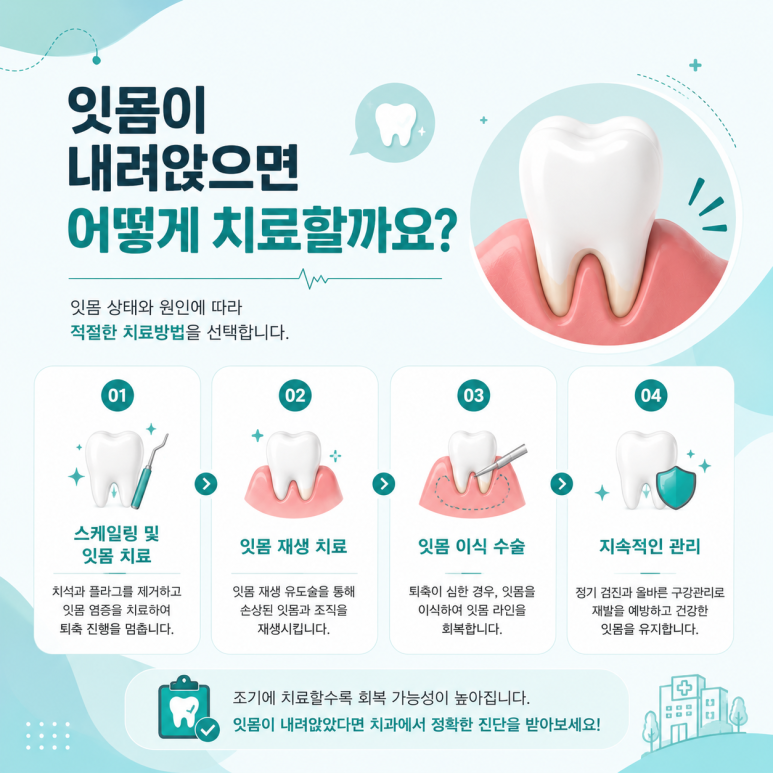
How Is Gingival Recession Treated?
Treatment for gingival recession is not simply a matter of raising the receded gums. The most important step is to accurately identify the cause and manage the condition so that it does not progress further. The treatment method may vary depending on the extent of recession, its cause, and whether gum disease is present.
If gum disease is the cause, treatment to reduce inflammation should come first. When inflammation has developed due to plaque and tartar buildup, scaling or periodontal treatment may be used to remove the inflammation and restore gum health. This is because gingival recession may progress more quickly while inflammation remains.
If brushing habits are the cause, it is important to learn proper brushing techniques. Rather than scrubbing with great force, use a soft-bristled toothbrush and brush in a way that does not place excessive stress on the gums. Even changing one small habit can help prevent further gum damage.
If clenching or nighttime teeth grinding is the cause, treatment to reduce the force placed on the teeth and gums may also be considered. When necessary, you may receive guidance on protecting the teeth and gums by wearing a mouthguard.
When gingival recession is severe, the tooth root is significantly exposed, sensitivity is substantial, or cosmetic discomfort is considerable, periodontal surgery such as a gum graft may be considered. However, this treatment is not necessary for every patient and is determined after thoroughly assessing the condition of the gums and the extent of recession.
The important thing is to avoid deciding whether treatment is needed based solely on information found online. Instead, obtain an accurate diagnosis of your current gum condition and establish a treatment plan suited to you.
How Can Gingival Recession Be Prevented?
Because gingival recession is often difficult to reverse naturally once it has progressed, daily care is especially important.
First, maintain the habit of brushing two to three times a day using the proper technique. Cleaning the teeth thoroughly is important, but be careful not to scrub the gums with excessive force. Using a soft-bristled toothbrush and brushing correctly without irritating the gums can be helpful.
It is also important to use dental floss and an interdental brush. A toothbrush alone may not remove all the plaque remaining between the teeth, so using additional oral hygiene products can help prevent gum disease.
Regular scaling and dental checkups are also recommended. Early gum disease often causes little to no pain, making it difficult to notice on your own. Checking the condition of your gums regularly allows even small changes to be detected and managed early.
If you habitually clench your teeth or grind them, it is also important not to ignore the issue and to seek advice. Repeated force can place stress not only on the teeth but also on the gums, so efforts to reduce the cause are necessary.
Protecting Your Healthy Gums Together with S Leader Dental Hospital near Konkuk University Station
Receding gums are not simply a matter of making the teeth look longer. They can lead to tooth sensitivity, gum disease, and, in severe cases, damage to the tissues that support the teeth. In particular, because gums that have already receded rarely recover naturally, it is especially important to identify the cause early and manage the condition appropriately.
At S Leader Dental Hospital near Konkuk University Station, we carefully examine each patient's gum condition and the tissues supporting the teeth to accurately diagnose the cause of gingival recession. We then provide guidance on treatment and management methods suited to each individual's oral condition.
If your teeth look longer than before, you repeatedly experience sensitivity to cold foods, your gums bleed, or you are concerned that your gums have receded, please have your current condition accurately evaluated through a dental examination rather than worrying about it on your own.
The earlier even small changes are managed, the more helpful it can be in maintaining healthy gums and natural teeth for a long time.

Konkuk University Station Dental Clinic :: S Leader Dental Hospital.