Hello. This is S Leader Dental Hospital, an orthodontic clinic near Konkuk University Station, celebrating its 22nd anniversary this year.
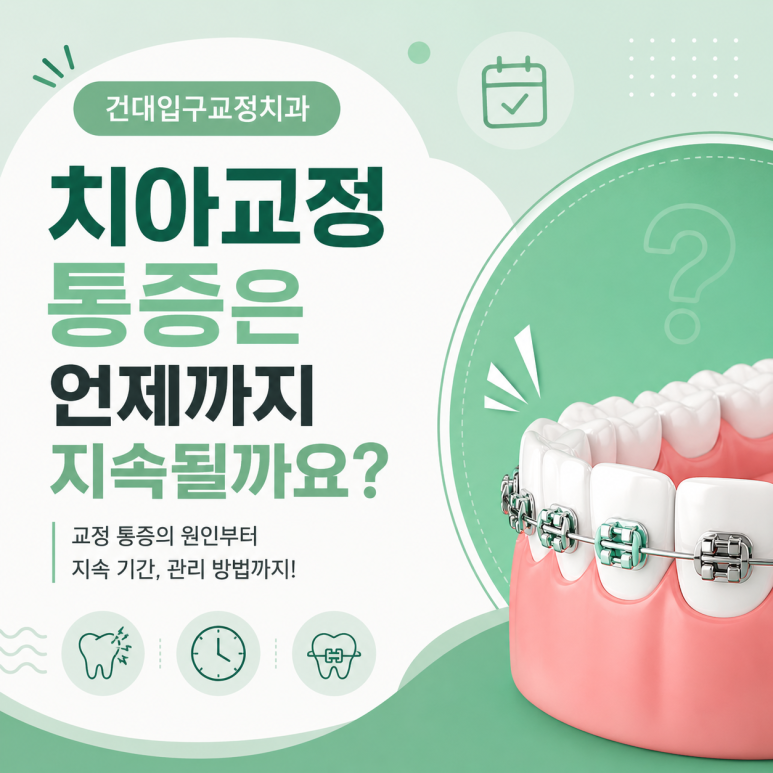
One of the questions people considering orthodontic treatment ask most often in the consultation room is, "Does orthodontic treatment hurt a lot?" or "How long does the pain last?" In fact, stories found online or heard from people around them vary widely, such as "I couldn't eat anything for several days" and "It didn't hurt as much as I expected," which can make people even more concerned.
However, the level of pain experienced during orthodontic treatment varies from person to person, and in most cases, severe pain does not continue throughout the entire treatment period. Rather, discomfort usually appears only at certain times and naturally subsides as time passes.
Teeth do not move immediately simply because force is applied. Instead, they gradually move as the jawbone and periodontal tissues adapt together. Temporary pressure or throbbing may occur during this process, and this can generally be considered a normal reaction.
Of course, orthodontic treatment is not completely pain-free, but knowing the causes and expected duration in advance can significantly reduce the burden of treatment.
Today, S Leader Dental Hospital, an orthodontic clinic near Konkuk University Station, will explain in detail why orthodontic pain occurs, how long it lasts, ways to reduce it, and when you should visit a dental hospital.
Why Does Orthodontic Pain Occur?
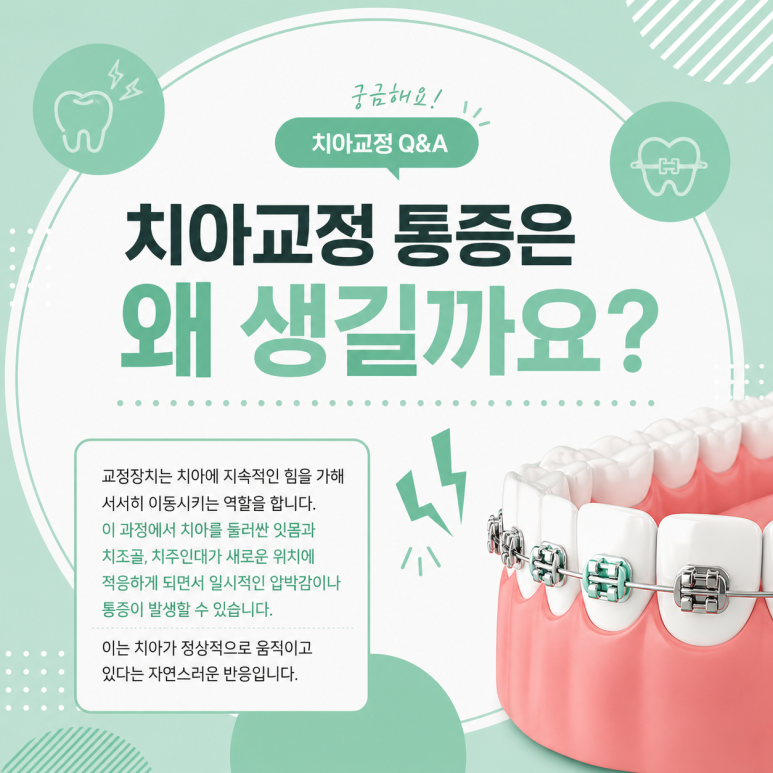
Orthodontic treatment uses orthodontic appliances to apply continuous, consistent force to the teeth and move them into the desired positions. During this process, the periodontal ligaments and jawbone supporting the teeth gradually change to adapt to their new positions.
When the orthodontic appliance begins moving the teeth, the periodontal ligament is compressed on one side and stretched on the other. The jawbone then repeatedly undergoes a process in which old bone is resorbed and new bone is formed. As these physiological changes take place, the area around the teeth becomes more sensitive, causing pain or a feeling of pressure.
In other words, the pain is not caused simply by the appliance itself. In many cases, it is a sign that the teeth are moving normally.
Discomfort may be greater than usual when orthodontic appliances are first attached, when the wire is replaced, or when elastics are worn for the first time, because new forces are being applied to the teeth.
How Long Does Orthodontic Pain Last?
① The Day the Orthodontic Appliance Is First Attached
Pain does not necessarily begin immediately after the appliance is attached.
For most people, a feeling of pressure gradually begins about 3–6 hours after the appliance is attached. At first, it may feel as though the teeth are being squeezed, but as time passes, throbbing may occur when chewing, or the teeth may feel sensitive even when they make slight contact.
Foods that normally cause no problems may become difficult to chew, and actions involving the front teeth may also feel uncomfortable.
② Days 2–3
This is usually when the pain feels strongest.
Even hard foods may be difficult to eat, and chewing soft foods may also feel burdensome. Some people may feel soreness throughout the teeth, while the appliance may irritate the oral mucosa and cause sores on the lips or inside of the cheeks.
However, these symptoms are generally temporary and gradually decrease over time.
③ Around Days 5–7
After about a week, most patients become somewhat accustomed to their orthodontic appliances.
Meals that were uncomfortable at first gradually become easier, and the pain felt when pressing on the teeth often decreases considerably.
Even people who say that the first few days of wearing the appliance were the most difficult usually return to their normal routines after about a week.
④ After Regular Orthodontic Adjustments
Orthodontic treatment does not end when the appliance is attached once.
Patients visit the dental hospital at intervals of approximately 4–8 weeks to have the wire replaced or the appliance adjusted. Each time, new force is applied to the teeth, so discomfort may recur.
Fortunately, the pain is often much milder than when orthodontic treatment first began, and in most cases it naturally improves after about 2–3 days.
[Various Types of Discomfort That May Occur During Orthodontic Treatment]
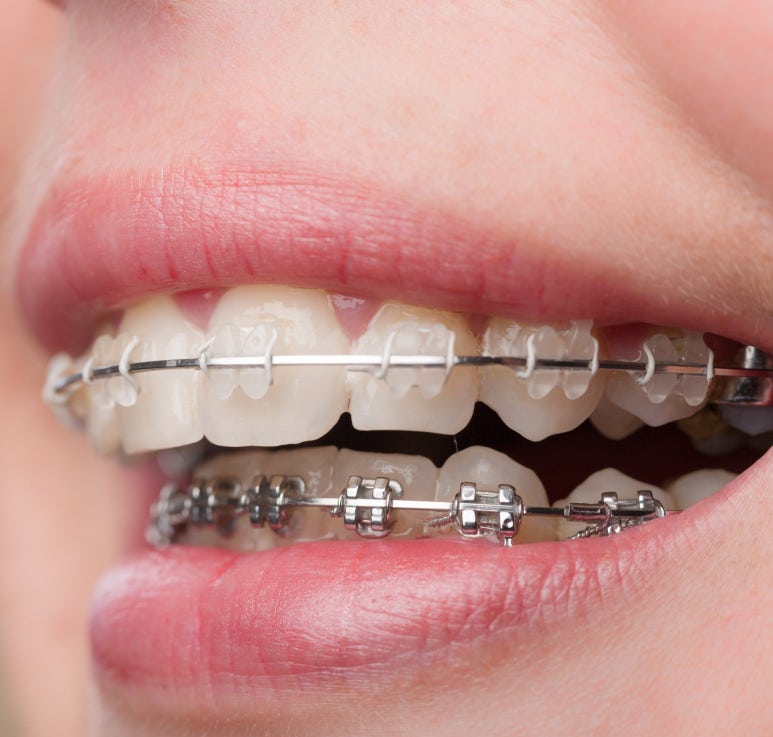
During orthodontic treatment, various symptoms may occur along with tooth pain.
Typical symptoms include a throbbing sensation when the teeth are pressed, difficulty chewing food, and difficulty biting food with the front teeth. In addition, orthodontic brackets or wires may continually come into contact with the oral mucosa, causing sores or a stinging sensation on the inside of the cheeks or lips.
Some patients also worry that their teeth feel loose. However, it is natural for teeth to move very slightly during orthodontic treatment so that they can shift positions, so there is generally no need for significant concern.
However, if the looseness is excessive or the pain continues for a long time, it is advisable to undergo an accurate examination.
How Can Orthodontic Pain Be Reduced?
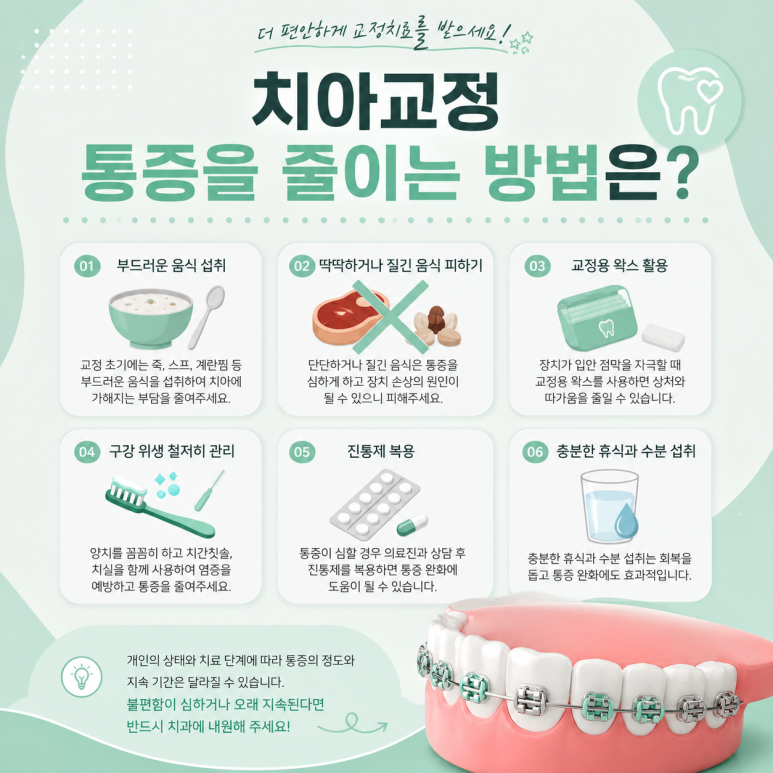
Although it is difficult to eliminate orthodontic pain completely, paying a little attention to your daily habits may help reduce discomfort.
Immediately after orthodontic treatment, it is best to eat soft foods such as porridge, soup, tofu, steamed eggs, and yogurt. Hard or chewy foods can place stress on the teeth, so they should be avoided during the early stages.
If the appliance repeatedly irritates your mouth, using orthodontic wax may also help. It can reduce direct contact between the wire or bracket and the mucosa, helping prevent sores.
Some people neglect brushing because they are in pain, but poor oral hygiene can cause gum inflammation and make the pain worse. Therefore, it is important to clean your teeth thoroughly with an orthodontic toothbrush, an interdental brush, and dental floss.
When necessary, taking a standard pain reliever after consulting a dental professional may also help relieve pain. However, rather than continuing to take medication on your own because the symptoms are severe, it is advisable to follow the instructions of your treating dental professional.
These Types of Pain Should Be Checked at a Dental Hospital
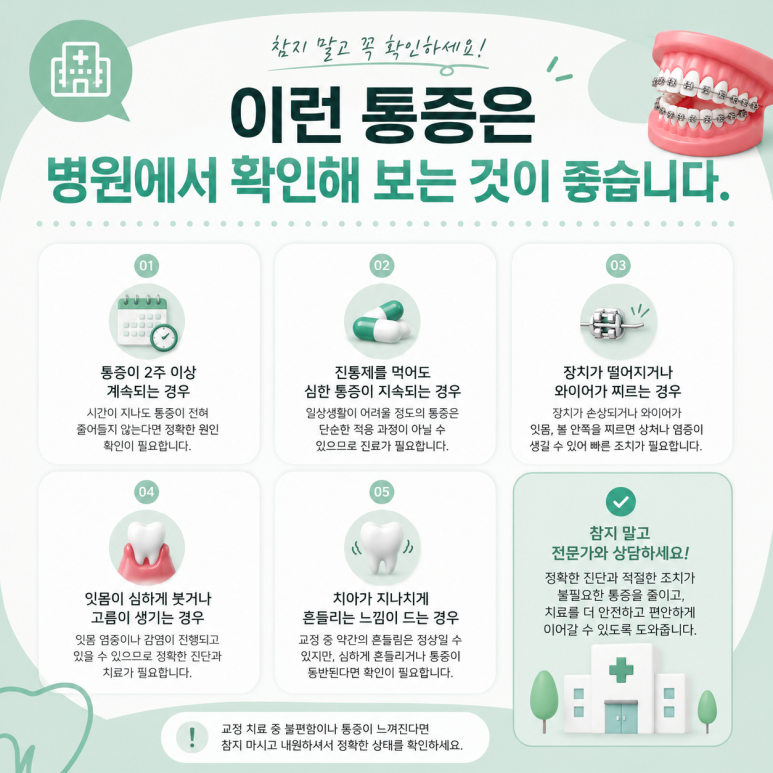
Most orthodontic pain naturally improves within a few days, but not all pain is normal.
If the pain continues for more than two weeks or does not decrease at all over time, the exact cause should be identified.
You should also visit a dental hospital if severe pain continues to the point that it is difficult to tolerate even after taking a pain reliever, if an appliance has come loose or a wire is severely poking the gums, or if the gums are significantly swollen or producing pus.
Rather than simply enduring the pain, having a dental professional examine your current condition can help you continue treatment safely.
Begin Comfortable Orthodontic Treatment with S Leader Dental Hospital, an Orthodontic Clinic Near Konkuk University Station
Orthodontic treatment is not simply a procedure for straightening the teeth; it is a process aimed at restoring a healthy bite and oral function. Although pain may occur during the early stages of treatment, it is generally a temporary reaction that occurs during the normal process of tooth movement, and patients gradually adapt over time.
Most importantly, rather than postponing treatment because you are afraid of pain, you should establish a plan suited to your oral condition and maintain it consistently. With regular visits and proper oral care, you can continue orthodontic treatment more comfortably.
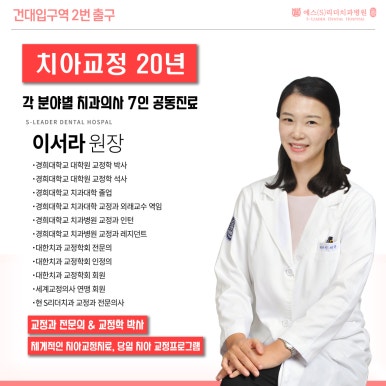
S Leader Dental Hospital, an orthodontic clinic near Konkuk University Station, carefully examines each patient's dental condition and bite before establishing a customized orthodontic plan. We also provide attentive management of any pain or discomfort that may occur during treatment.
If you are hesitating about orthodontic treatment because of concerns about pain, or if you are worried because discomfort continues during treatment, do not worry alone. Consult thoroughly with a dental professional to accurately assess your current condition.


S Leader Dental Hospital :: Orthodontic Clinic Near Konkuk University Station