Hello, this is S Leader Dental Hospital, celebrating its 22nd anniversary this year.
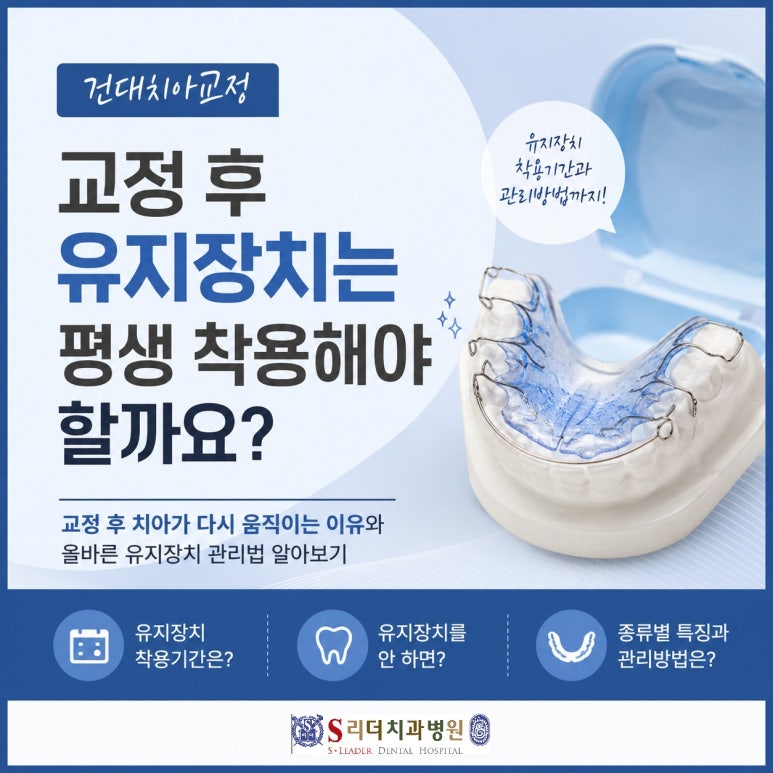
One of the questions most frequently asked by patients who have completed orthodontic treatment is, "How long do I need to wear my retainer?"
"Do I have to wear it for life?"
After wearing orthodontic appliances for a long time and finally having the brackets removed, it may feel as though all treatment is complete. In reality, however, orthodontic treatment is only complete when retainer care is continued as well.
Even teeth that have been neatly aligned through orthodontic treatment can move again over time. No matter how satisfied you are with the results, if you do not wear your retainer properly, there is a possibility of "relapse (realignment)," in which the teeth try to return to their original positions.
Today, S Leader Dental Hospital will explain in detail why retainers are important, whether they really need to be worn for life, and
the proper way to care for them.
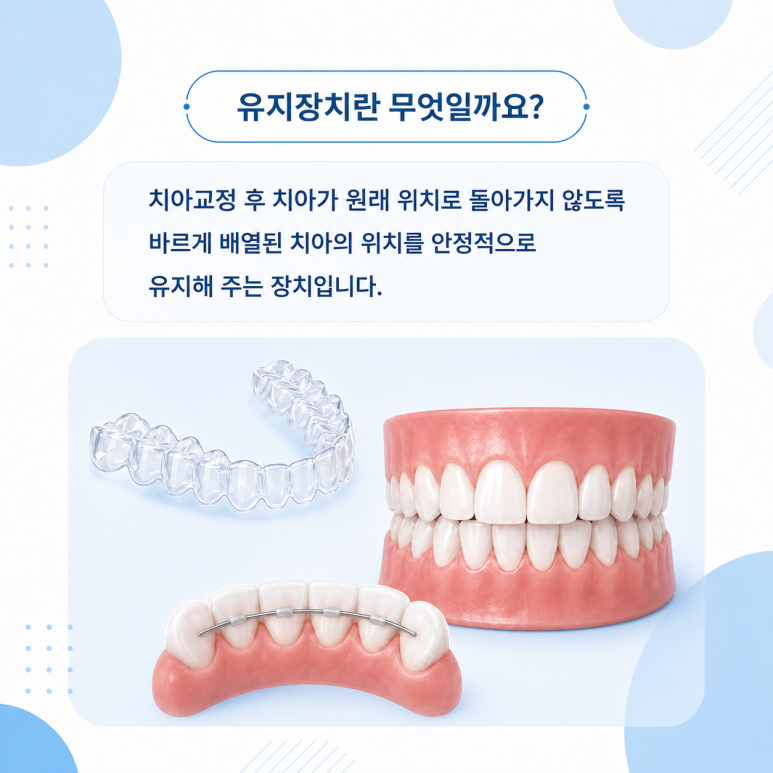
What Is a Retainer?
A retainer is an appliance that helps keep the teeth in their current positions after orthodontic treatment has ended.
During orthodontic treatment, the teeth are moved by the force of wires and brackets, but it takes
longer than you may expect for the teeth to fully adapt to their new positions.
The gums, alveolar bone, and periodontal ligaments that support the teeth also gradually change to accommodate their new positions. If a retainer is not worn before this process is complete, the teeth naturally tend to return to their original positions.
In other words, it may be easiest to understand orthodontic treatment as the process of moving the teeth, while retainers help preserve the results.
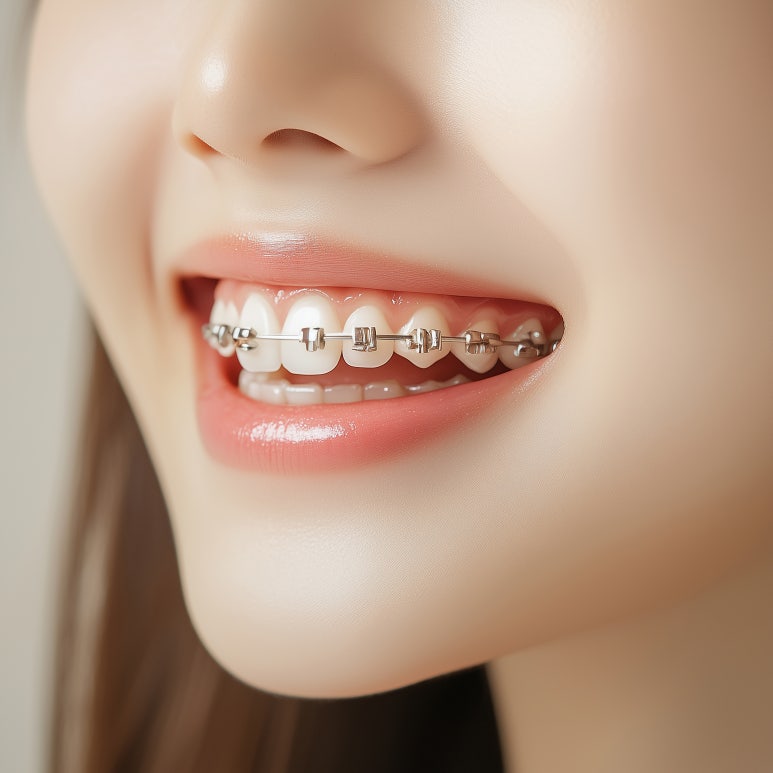
[Why Do Teeth Move Again?]
Many people wonder, "Why are my teeth moving again even though I had orthodontic treatment?" In fact, teeth are living structures that move little by little throughout life.
Especially immediately after orthodontic treatment, the surrounding tissues that support the teeth have not yet fully stabilized, so realignment can occur more easily.
The following factors can also affect tooth movement:
-
The elasticity of the periodontal ligaments as they try to return to their original positions
-
Alveolar bone that has not yet fully stabilized
-
The habit of thrusting the tongue forward
-
The habit of breathing through the mouth
-
Clenching or grinding the teeth
-
The habit of biting nails or pens
-
Natural tooth movement associated with aging
-
Changes in the gums caused by periodontal disease
Because teeth are affected by various factors, completing orthodontic treatment does not mean that they will remain in exactly the same condition for life.
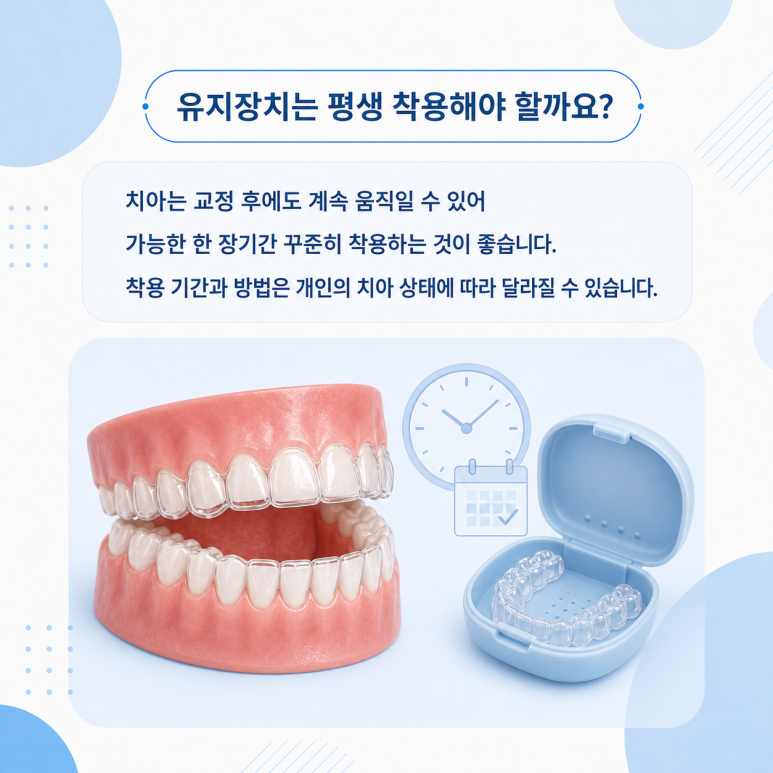
Do Retainers Need to Be Worn for Life?
To give you the conclusion first: it is best to understand this as, "You do not need to wear a retainer all day for the rest of your life, but lifelong maintenance is necessary."
Retainer use generally proceeds as follows.
① Immediately after orthodontic treatment
This is the period when the teeth are most unstable. Patients are often instructed to wear the retainer for at least 20 hours a day, wearing it most of the time except when eating and brushing their teeth.
② Approximately 6 months to 1 year later
Once the teeth and surrounding tissues have stabilized to some degree, the wearing time is gradually reduced. In many cases, the retainer is worn only while sleeping.
③ Long-term maintenance stage
Even several years after orthodontic treatment has ended, patients are often advised to maintain the habit of wearing their retainers while sleeping. Because the degree of tooth movement varies from person to person, it is most important to follow the instructions of your treating dental professional regarding the exact wearing period.
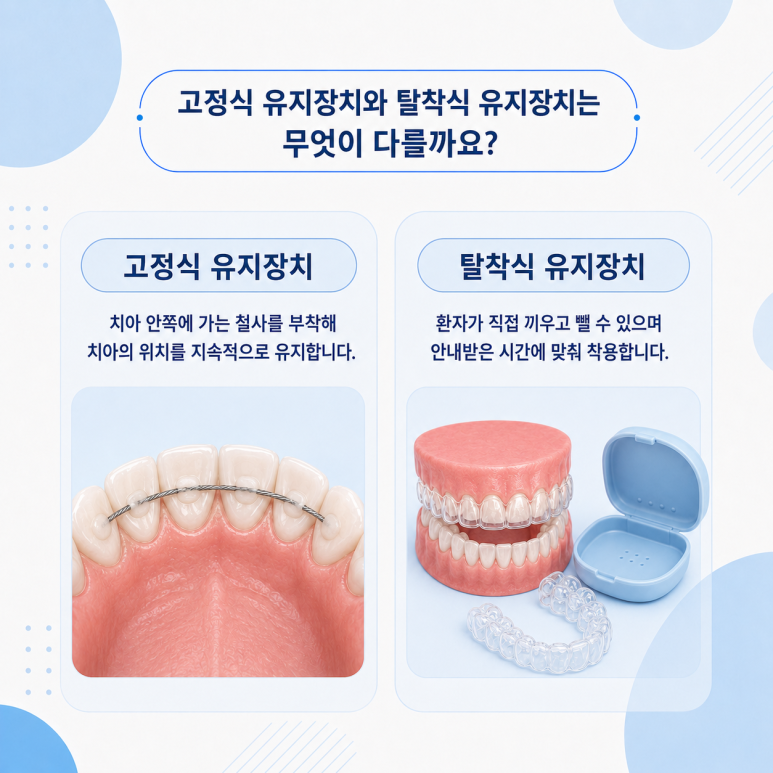
What Is the Difference Between Fixed and Removable Retainers?
Retainers are broadly divided into two types.
Fixed Retainers
This type is secured by bonding a thin wire to the inner surfaces of the teeth.
Advantages
-
There is no need to worry about forgetting to wear it.
-
It is effective for maintaining the alignment of the front teeth.
-
It is not easily visible.
Points to Note
-
Flossing can be somewhat difficult.
-
Plaque and tartar can build up easily, so thorough care is necessary.
-
If the wire comes loose, it must be reattached at a dental clinic.
Removable Retainers
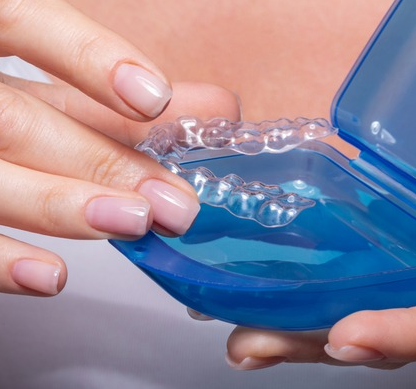
These can be inserted and removed by the patient.
Advantages
-
They are easy to clean.
-
They are easy to manage hygienically.
-
They can be replaced when necessary.
Points to Note
-
Their effectiveness may decrease if you forget to wear them.
-
They may become deformed if placed in hot water.
-
It is best to store them in their dedicated case.
-
In many cases, both types of retainers are used together.
What Happens If You Do Not Wear Your Retainer?
If you frequently remove your retainer or do not wear it for an extended period, the following changes may occur.
-
The front teeth may begin to overlap again.
-
Gaps may develop between the teeth.
-
Your bite may change.
-
The alignment of your teeth may gradually become irregular.
-
Extraction spaces may partially reopen.
-
In severe cases, this may lead to a situation requiring retreatment.
In particular, the first one to two years after orthodontic treatment is the period with the highest possibility of relapse, so extra care is needed.
[How Should You Care for Your Retainer?]
Proper care is also important for using a retainer for a long time.
✔ Clean it at least once a day with a soft toothbrush
✔ Do not boil it or sterilize it in hot water
✔ Always store it in its dedicated case when not in use
✔ Do not subject it to strong impact
✔ Use floss and an interdental brush together with a fixed retainer
✔ If the retainer becomes loose or breaks, do not leave it unattended; visit a dental clinic
Even After Orthodontic Treatment, S Leader Dental Hospital Continues to Support You.
Orthodontic treatment is not simply a procedure for straightening the teeth. To maintain satisfactory results for a long time, care after orthodontic treatment must continue as well. Because retainers play an important role in preventing the teeth from moving again, it is especially important to follow the wearing method and period instructed by your dental professional.
In addition, even if you wear your retainer consistently, the condition of your teeth and gums may gradually change over time. Therefore, it is advisable to have regular checkups to assess both the condition of the retainer and the alignment of the teeth. If even small changes are detected early,
they can be managed more simply, which can help maintain the results of orthodontic treatment for a long time.
S Leader Dental Hospital carefully examines each patient's dental condition, bite, and treatment progress, providing attentive support not only during orthodontic treatment but also throughout post-treatment maintenance. If you have questions about how long to wear your retainer, if the appliance has become loose, or if you are concerned that your teeth may be moving again, please do not worry alone—consult with a dental professional.
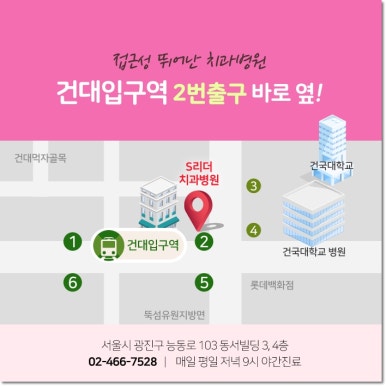
Going forward, S Leader Dental Hospital near Konkuk University Station will continue to do its best to help patients maintain healthy, well-aligned teeth for a long time through accurate diagnosis and systematic follow-up care.


Konkuk Orthodontics :: S Leader Dental Hospital.