Hello, this is S Leader Dental Hospital, a Geondae dental clinic celebrating its 22nd anniversary this year.
Some people experience bleeding from their gums when brushing after starting orthodontic treatment, or feel that their gums are more swollen and uncomfortable than usual. If these symptoms appear after orthodontic appliances are attached, even though everything was fine before treatment, it is natural to worry that something may be wrong with the gums.
Once orthodontic appliances are attached, food particles and plaque can easily remain between the brackets and wires, increasing the likelihood of gum inflammation. In addition, avoiding brushing because the gums are bleeding—or, conversely, brushing too aggressively—can worsen the symptoms.
So, why do gums swell and bleed during orthodontic treatment? Today, S Leader Dental Hospital, a Geondae dental clinic, will discuss the main causes and proper care methods.
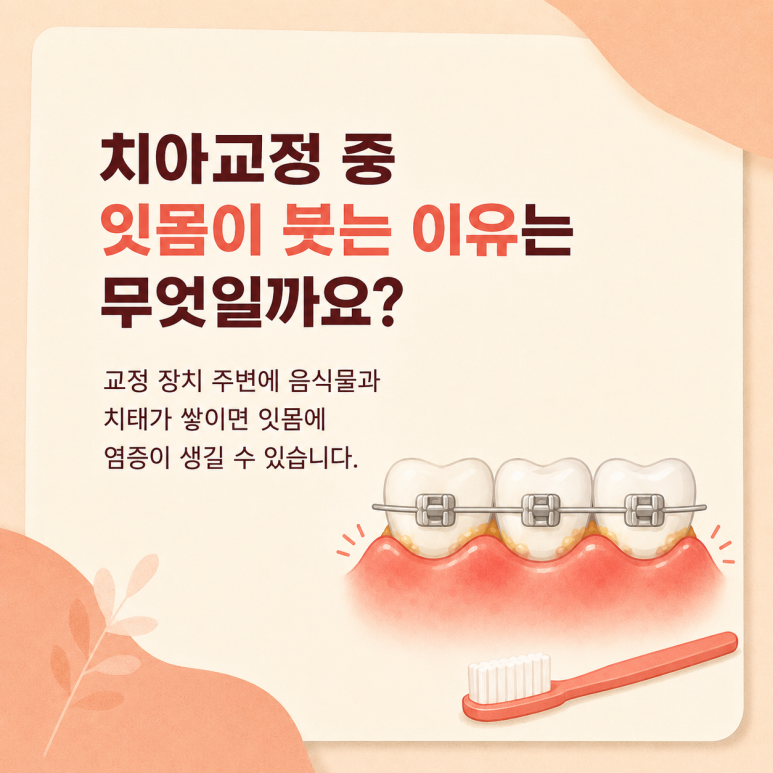
What causes gums to swell during orthodontic treatment?
During orthodontic treatment, brackets and wires are attached to the tooth surfaces, making brushing more difficult than before.
In particular, if food remains between the appliances and gums or plaque is not adequately removed, bacteria can multiply and cause gum inflammation. As a result, the gums may become red or swollen, and bleeding may occur when brushing.
In many cases, it is not the orthodontic appliances themselves that cause the gums to swell, but rather the inflammation that develops because it becomes more difficult to keep the area around the appliances clean.

[Is bleeding when brushing also caused by gum inflammation?]
Healthy gums do not bleed easily from ordinary brushing.
However, when the gums become inflamed, the tissue weakens, and bleeding may occur even from light contact with a toothbrush. If you avoid brushing the area because it is bleeding, more plaque can accumulate and the inflammation may worsen.
It is important to use a soft toothbrush and carefully clean the gums and the area around the orthodontic appliances. However, if bleeding occurs repeatedly or the gums become severely swollen, it is advisable to have the condition accurately assessed.
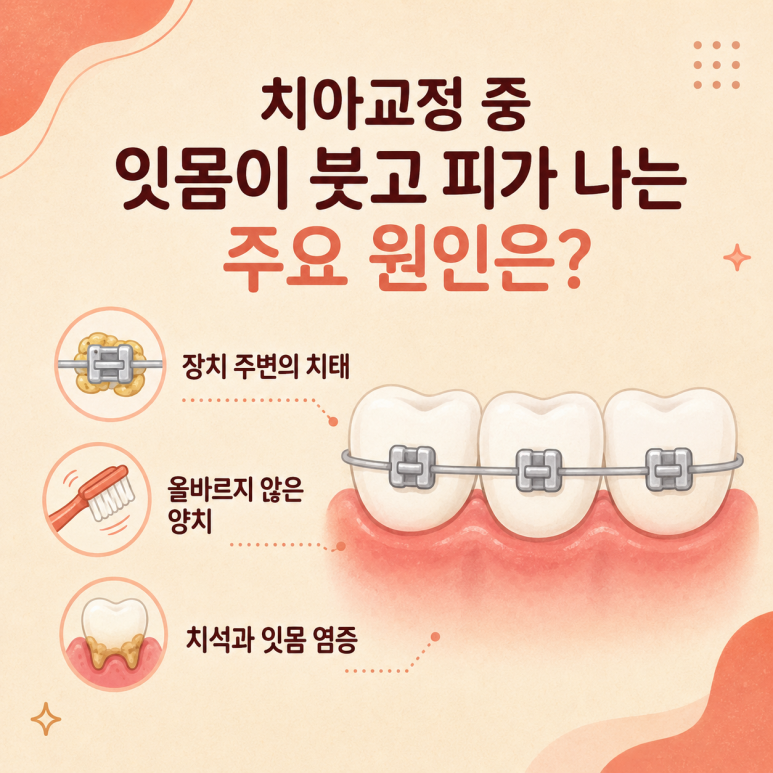
What are the main causes of swollen and bleeding gums during orthodontic treatment?
- Plaque accumulated around the orthodontic appliances
Food can easily become trapped around brackets and wires, and ordinary brushing may not completely remove plaque. When bacteria in accumulated plaque irritate the gums, swelling and bleeding may occur.
- Improper brushing habits
Brushing only the tooth surfaces lightly because the appliances are uncomfortable, or brushing with excessive force, can irritate the gums.
In particular, if the area where the gums and teeth meet is not cleaned thoroughly, inflammation can develop more easily.
- Accumulated tartar
Plaque that is not removed can harden into tartar over time. Tartar is difficult to remove with brushing alone and can cause gum inflammation to persist.
- Irritation from the orthodontic appliances
If the end of a wire or a bracket repeatedly irritates the gums or the oral mucosa, a specific area may swell or become injured.
If one area is especially painful or an appliance feels as though it is poking the gums, the condition of the appliance should be checked at a dental clinic.
- Pre-existing gum disease
If gingivitis or periodontal disease was present before orthodontic treatment, gum symptoms may appear more easily during treatment. In such cases, it is important to continue managing the condition of the gums along with the orthodontic treatment.
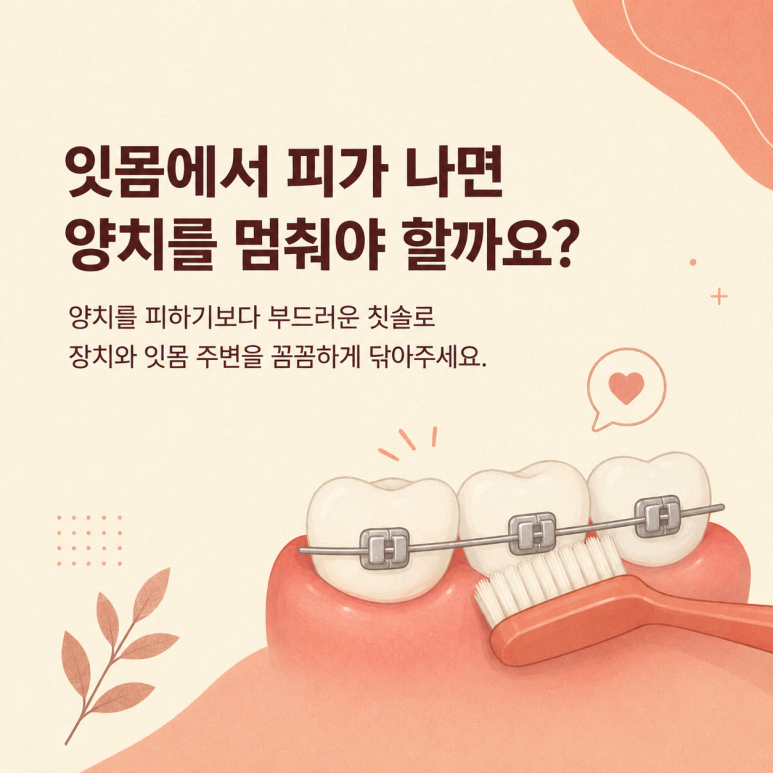
Should you stop brushing if your gums bleed?
It is not advisable to stop brushing just because your gums are bleeding. On the contrary, more plaque may accumulate in the area, causing the inflammation to worsen.
However, rather than scrubbing with force, it is better to use a soft toothbrush and carefully clean the upper and lower areas of the appliances separately.
Using an orthodontic toothbrush, interdental brush, and flossing aids together can help remove food particles left between the brackets and wires. Do not force an interdental brush into place; it is important to use a size that fits you.
[If you have any of the following symptoms, treatment is needed]
Mild bleeding may improve with proper oral care, but if any of the following symptoms occur, it is advisable to receive an examination at a dental clinic.
-
Gum bleeding and swelling continue
-
Gum pain gradually worsens
-
Pus or an odor comes from the gums
-
The teeth feel significantly looser than usual
-
The gums recede or the teeth appear longer
-
An orthodontic appliance pokes the gums or causes an injury
If gum inflammation is left untreated for a long time, it may affect the progress of orthodontic treatment, so it is important not to take these symptoms lightly.
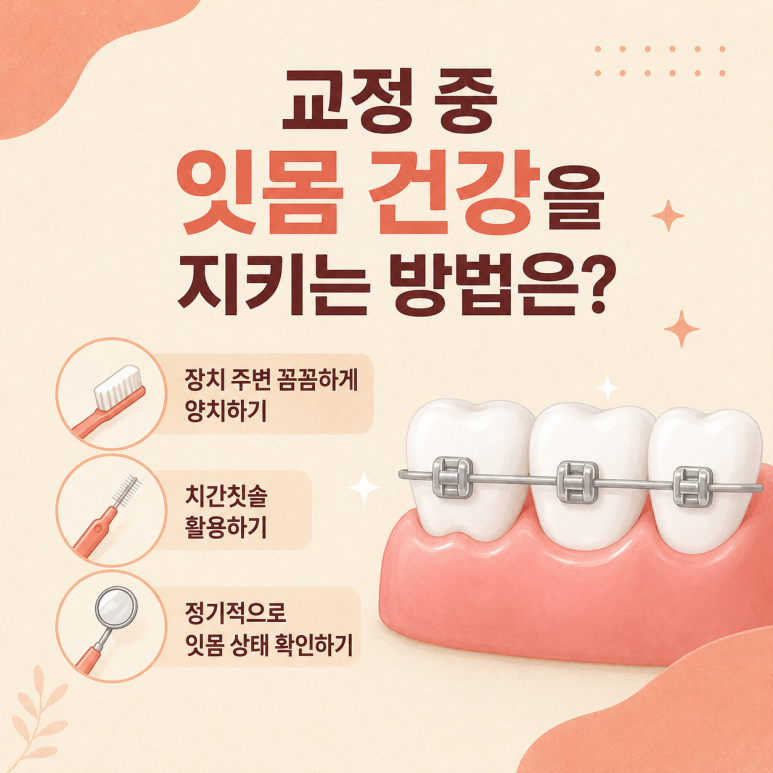
How can you protect your gum health during orthodontic treatment?
Brush your teeth whenever possible after meals, and carefully clean the area where the brackets and gums meet. Auxiliary tools such as interdental brushes and water flossers may also be helpful.
Along with regular orthodontic appointments, have the condition of your gums checked, and consider professional scaling when necessary. Scaling can be performed during orthodontic treatment depending on your oral condition, and the appropriate interval should be determined in consultation with your dental care provider.
Foods that are high in sugar or stick easily to the teeth may remain around the appliances for a long time, so clean more thoroughly after eating them.
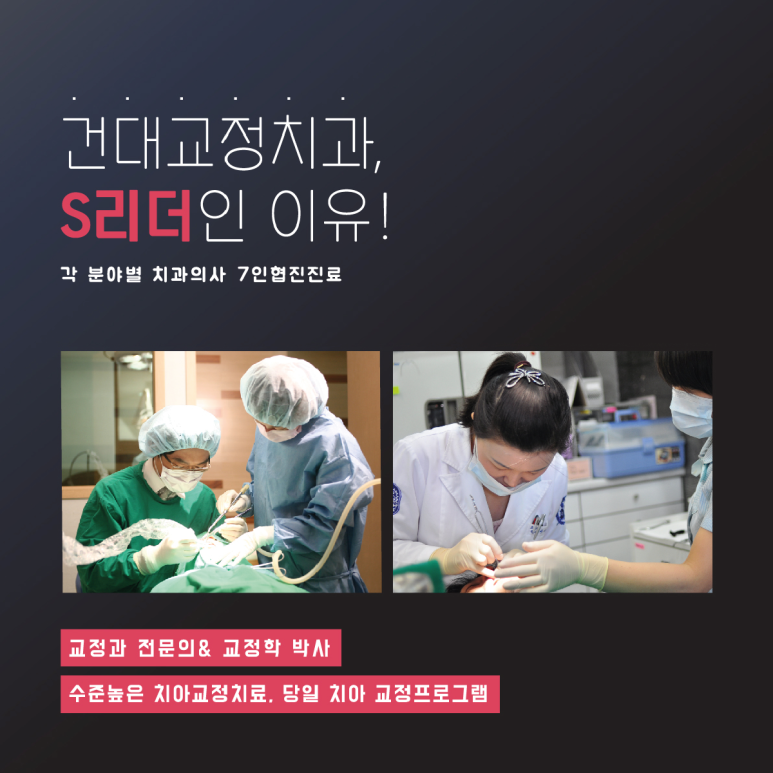
With Geondae Dental Clinic, S Leader Dental Hospital
Take careful care of your gum health as well
Swollen gums or bleeding when brushing during orthodontic treatment often occur when food particles and plaque accumulate around the orthodontic appliances. Because brushing becomes more difficult than usual when the appliances are attached, it is necessary to carefully clean not only the teeth but also around the brackets and wires and the areas where the gums and teeth meet.
Avoiding brushing in the area because it is bleeding may actually worsen the inflammation. Use auxiliary tools such as a soft toothbrush and an interdental brush correctly, and manage plaque and tartar through regular examinations and scaling.
However, if gum swelling and bleeding continue for a long time or are accompanied by pain, pus, or severe looseness, it is important not to dismiss them as a simple part of orthodontic treatment and to receive an accurate examination. This is because poor gum health may affect the progress and outcome of orthodontic treatment.
At S Leader Dental Hospital, a Geondae dental clinic, we proceed with treatment while monitoring not only tooth movement and orthodontic appliances but also gum health. If you experience uncomfortable gum symptoms during orthodontic treatment, do not worry about them alone or leave them untreated; please receive examinations and care suited to your current oral condition.






Geondae Dental Clinic :: S Leader Dental Hospital.