Hello, this is Gunja Dental Clinic and S Leader Dental Hospital, celebrating our 22nd anniversary since establishment this year.
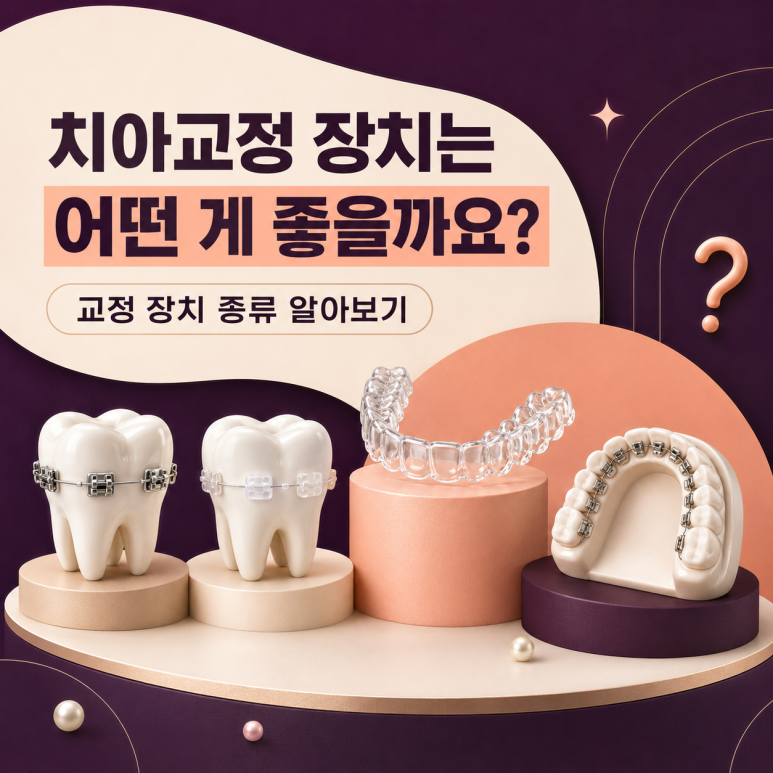
When looking into orthodontic treatment, you may encounter more types of appliances than expected, including metal braces, ceramic braces, self-ligating braces, lingual braces, and clear aligners.
Because each appliance differs in visibility, maintenance requirements, and how it is worn, you may find yourself wondering, “Which orthodontic appliance is best?” Many people also find it difficult to choose an appliance because they expect there to be significant differences in treatment duration or results.
However, there is no single appliance that is universally best for every patient. Tooth alignment, the severity of the malocclusion, whether extractions are needed, the tooth movements required, oral hygiene ability, and lifestyle habits must all be considered together.
An appliance that is less noticeable may be more convenient in daily life but may not be suitable for the current condition of the teeth. In some cases, a familiar fixed appliance may instead be more advantageous for managing complex tooth movements.
Today, Gunja Dental Clinic and S Leader Dental Hospital will take a detailed look at the types of orthodontic appliances, their individual characteristics, and what to check when choosing an appliance.
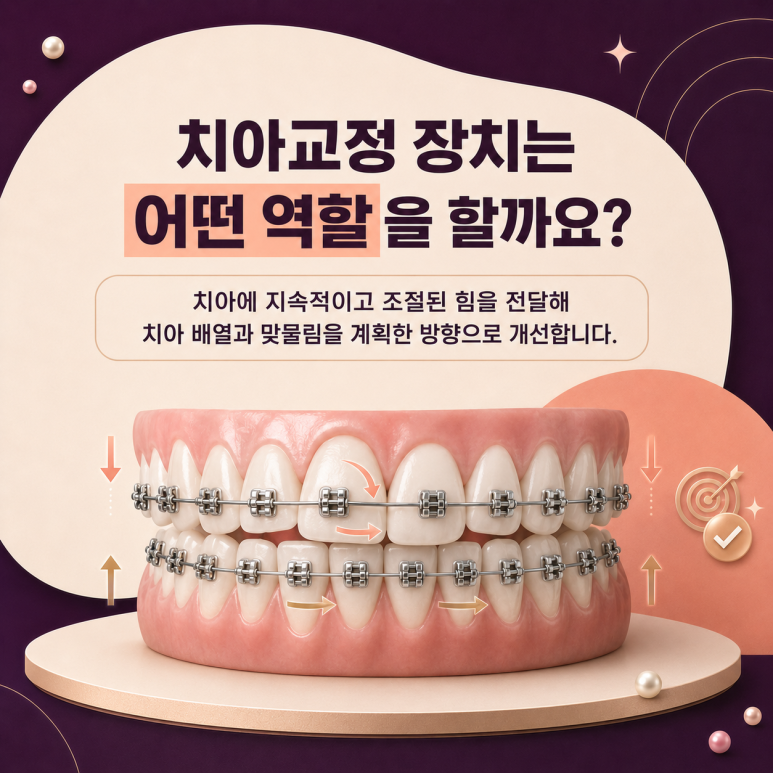
What role do orthodontic appliances play?
Orthodontic appliances deliver continuous, controlled force to the teeth, helping them move to their planned positions.
Although appliances may differ in form, their basic purposes are similar.
-
Aligning overlapping or rotated teeth
-
Closing spaces between separated teeth
-
Adjusting the position and angle of protruding front teeth
-
Improving the midline of the upper and lower teeth
-
Adjusting the way the front teeth and molars come together
-
Closing extraction spaces
-
Improving the bite and facial balance
Fixed orthodontic appliances move the teeth using brackets attached to the tooth surfaces and wires. Clear aligners work by replacing multiple transparent appliances that fit closely over the teeth in sequence, gradually moving the teeth step by step.
Regardless of which appliance is used, an accurate diagnosis and treatment plan, along with regular progress checks, are necessary.
How are orthodontic appliances broadly classified?
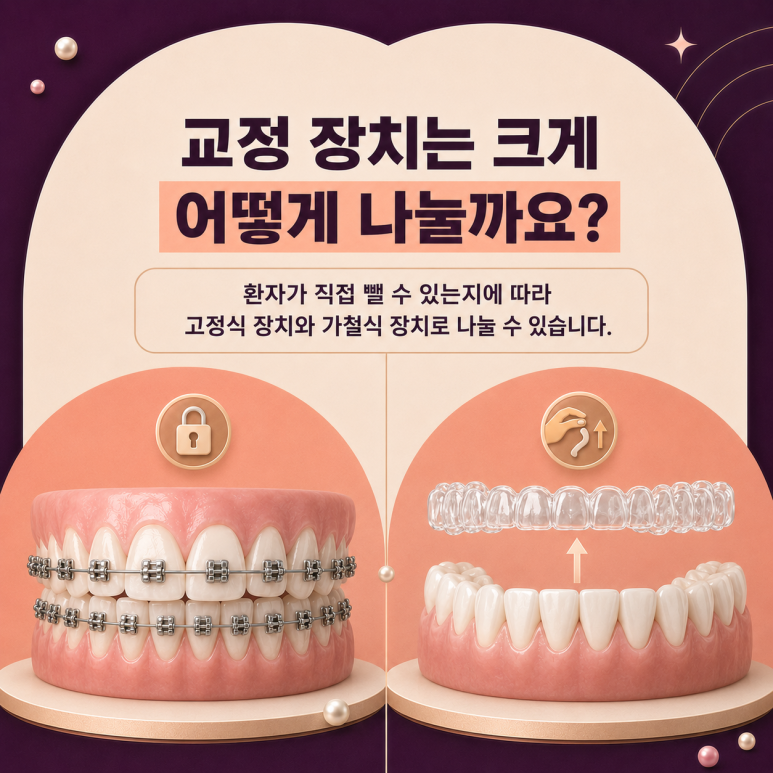
Orthodontic appliances can be divided into fixed and removable appliances according to whether the patient can remove them personally.
Fixed orthodontic appliances
This method involves attaching brackets to the tooth surfaces and connecting them with wires. Patients cannot remove them on their own, and the appliances continuously deliver force to the teeth throughout the treatment period.
Metal braces, ceramic braces, self-ligating braces, and lingual braces are examples of fixed appliances.
Removable orthodontic appliances
These appliances can be put in and removed by the patient. They may include clear aligners and functional appliances used for growing patients.
Removable appliances can be taken out while eating and brushing, but the prescribed wearing time must be followed for the planned tooth movements to occur.
1. Metal orthodontic appliances
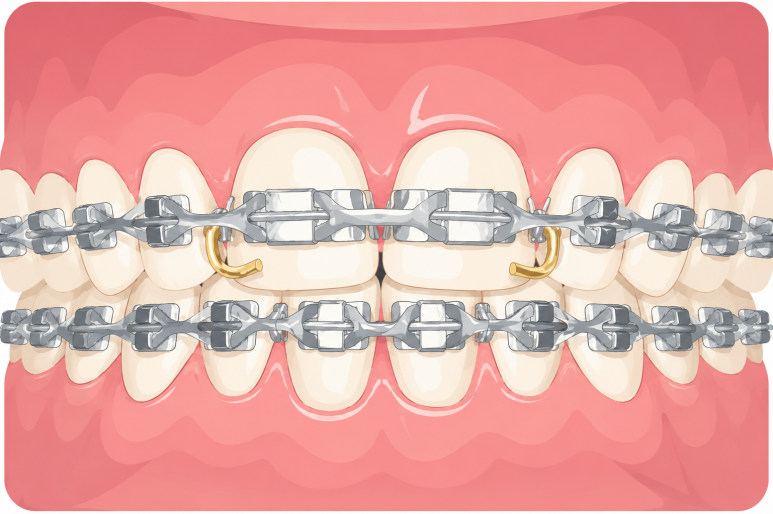
Metal braces are the most common type of fixed orthodontic treatment. Small metal brackets are attached to the front surfaces of the teeth and connected with wires.
This method has been used for a long time and can be applied to various types of malocclusion. It also makes it relatively easy to adjust the position and angle of the teeth precisely.
Advantages of metal braces
-
They can be used for various types of tooth movement.
-
The brackets are relatively durable.
-
They can be used to manage complex tooth alignment and bite adjustments.
-
The dental team can directly manage the condition of the appliances and tooth movement.
-
They often involve less financial burden than other aesthetic appliances.
Points to consider
-
The metal appliances on the tooth surfaces are highly visible.
-
At first, they may cause a foreign-body sensation on the inside of the lips or cheeks.
-
Food can easily become trapped around the brackets and wires.
-
Hard or sticky foods can damage the appliances.
-
Thorough care with a toothbrush and interdental brush is necessary.
This method may be considered if stable maintenance and a broad range of applications are more important to you than the aesthetic appearance of the appliances. However, whether it is actually suitable should be determined according to the malocclusion and treatment plan.
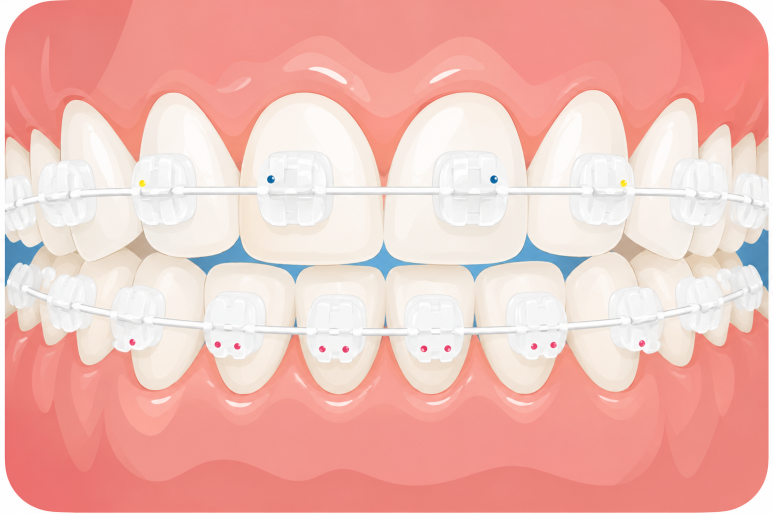
2. Ceramic orthodontic appliances
Ceramic braces use brackets made of a tooth-colored or translucent material instead of metal brackets.
Their basic structure is similar to that of metal braces, but they blend more naturally with the teeth and are therefore relatively less noticeable.
Advantages of ceramic braces
-
They are less noticeable than metal brackets.
-
Although attached to the front surfaces of the teeth, they appear relatively natural.
-
They can be used for various tooth alignment and bite treatments.
-
They continuously deliver force without requiring the patient to manage wearing time personally.
Points to consider
-
Compared with metal brackets, the material may be more likely to break or wear down.
-
Depending on food and oral hygiene, the rubber rings or components around them may become stained.
-
They may cost more than metal braces.
-
Their use may be limited on some teeth depending on where the upper and lower teeth come into contact.
-
The area around the appliances must be maintained carefully.
This option may be considered by people who value aesthetics but find it difficult to wear clear aligners for the prescribed amount of time.
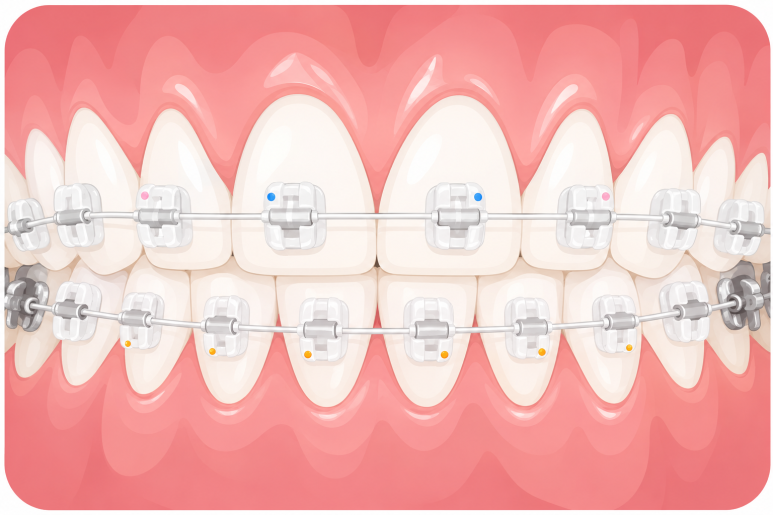
3. Self-ligating orthodontic appliances
Conventional fixed appliances use rubber rings or thin wires to secure the wire to the bracket. Self-ligating appliances have a small door or clip mechanism built into the bracket that can be opened and closed to hold the wire.
Self-ligating brackets may be made not only of metal but also of aesthetic materials similar in color to teeth.
Advantages of self-ligating appliances
-
The structure used to secure the wire to the bracket is relatively simple.
-
Replacing or adjusting the wire during appointments may be convenient.
-
When rubber rings are not used, concerns about staining may be reduced.
-
Care around the appliances may feel somewhat easier.
-
In some cases, patients can choose between metal and aesthetic types.
Points to consider
-
They may cost more than conventional fixed appliances.
-
The brackets themselves do not necessarily shorten the entire treatment period.
-
Whether extractions are needed or what results are achieved is not determined by the appliance alone.
-
Food and plaque can accumulate in the bracket locking mechanism, so oral hygiene is still necessary.
It is easy to assume that using self-ligating appliances guarantees no pain or a faster treatment. However, treatment duration and discomfort vary depending on the extent of tooth movement, the condition of the gums and alveolar bone, the treatment plan, compliance with elastic wear, and cooperation with appointments.
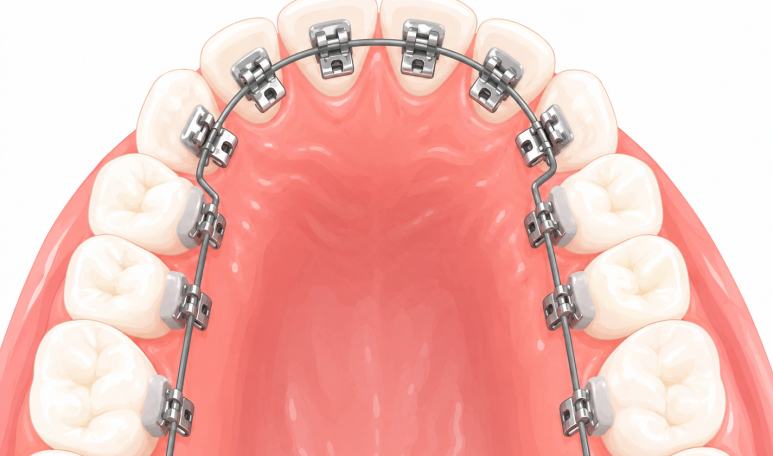
4. Lingual orthodontic appliances
Lingual braces attach brackets and wires to the inner surfaces of the teeth, where the tongue contacts them, rather than to the outer surfaces.
Because the appliances are barely visible from the front when smiling or speaking, this method attracts interest from adult patients who place importance on aesthetics.
Advantages of lingual braces
-
The appliances are not visible on the front surfaces of the teeth.
-
They can reduce aesthetic concerns for people who have many external activities or face-to-face work responsibilities.
-
Because they are fixed appliances, patients do not need to manage wearing time themselves.
Points to consider
-
Because the appliances touch the tongue, they may cause a significant foreign-body sensation at first.
-
Some speech sounds may temporarily feel awkward.
-
Because the appliances are on the inner surfaces of the teeth, brushing and oral hygiene may feel difficult.
-
They may cost more than conventional braces attached to the front surfaces of the teeth.
-
Treatment and appliance adjustments may require more precise procedures.
-
Application may be difficult depending on the shape of the teeth and the bite.
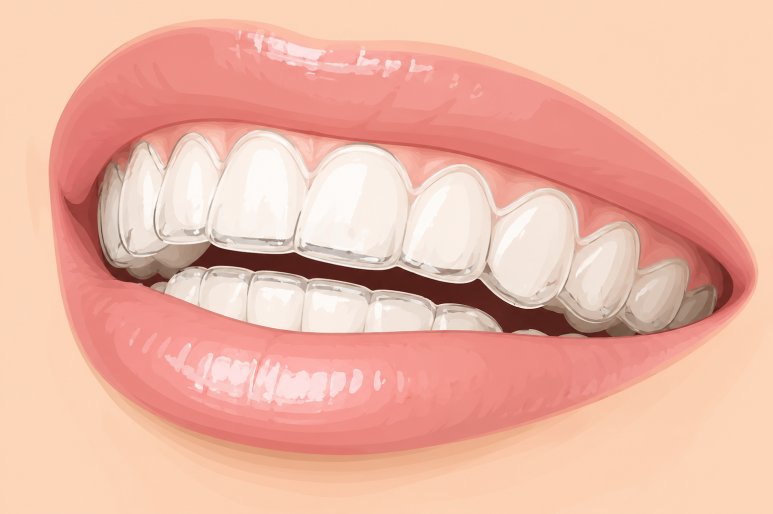
5. Clear aligners
Clear aligners are thin, transparent plastic appliances worn closely over the teeth. Multiple stages of appliances are made according to the planned tooth movements and replaced in a prescribed sequence.
Advantages of clear aligners
-
Because the appliances are transparent, they are relatively inconspicuous.
-
They can be removed while eating and brushing.
-
There are fewer restrictions on food choices than with fixed appliances.
-
They can be temporarily removed for important events or photographs.
-
Brushing is relatively convenient because there are no brackets or wires on the tooth surfaces.
Points to consider
-
They must be worn consistently for the prescribed amount of time.
-
Planned tooth movements may not occur if the appliances are removed frequently or the wearing time is not followed.
-
Drinking beverages other than water while wearing the appliances may increase the risk of staining or cavities.
-
The appliances must be managed carefully to prevent loss or deformation.
-
Small attachments may be placed on the teeth, or elastics may be used together with the aligners.
-
For complex malocclusions, fixed appliances may be used alongside them, or another method may be considered.
Clear aligners have the advantage of being nearly invisible, but the patient's compliance with wearing them has a significant impact on treatment progress. Because they must be brushed after eating and then worn again, lifestyle habits should also be taken into account.
6. Partial orthodontic appliances
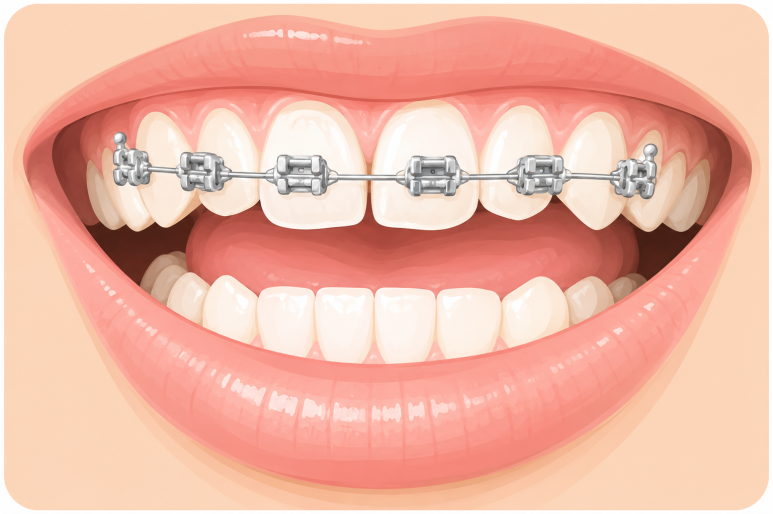
Partial orthodontic treatment improves the alignment of some front teeth or a specific area rather than all of the teeth. Because the treatment scope is limited, it may sometimes be completed in a shorter period than full orthodontic treatment.
Fixed brackets or clear aligners may be used. However, the first step is to determine whether the condition can be addressed with partial orthodontic treatment, rather than focusing on the type of appliance.
Cases in which partial orthodontic treatment may be considered
-
The front teeth are mildly overlapping or rotated.
-
Small spaces between the teeth need to be adjusted.
-
The position of a specific tooth needs to be moved before prosthetic treatment.
-
A few teeth have shifted slightly after previous orthodontic treatment.
-
There is no significant problem with the overall bite.
Cases in which partial orthodontic treatment may be difficult
-
The way the upper and lower teeth come together must be improved together.
-
Protruding front teeth need to be moved sufficiently backward.
-
Multiple teeth need to be moved using extraction spaces.
-
There is a skeletal malocclusion.
-
Multiple teeth are severely overlapping.
-
The dental midline and molar relationship also need to be adjusted.
Straightening only the front teeth may produce a quick visible improvement, but if the overall bite is not considered, force may become concentrated on certain teeth or stability after treatment may decrease. The suitability of partial orthodontic treatment should be confirmed through a detailed examination.
Does pain vary depending on the appliance?
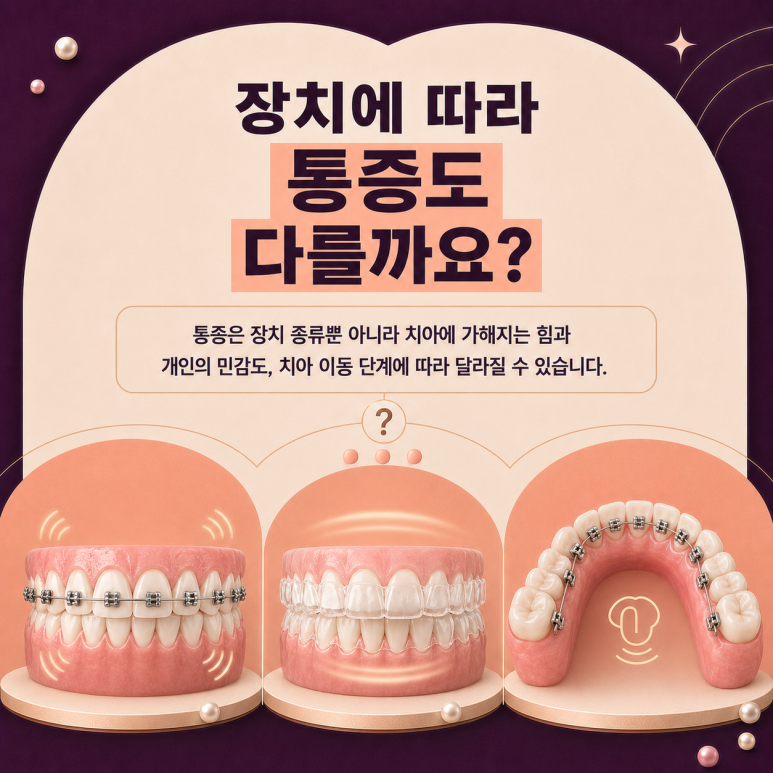
Orthodontic pain varies not only according to the type of appliance but also according to the force applied to the teeth, individual pain sensitivity, and the stage of tooth movement.
In most cases, after an appliance is first attached, a wire is replaced, or a new clear aligner is put in, the teeth may feel sore or chewing may be uncomfortable.
Fixed appliances can irritate the inside of the lips or cheeks with their brackets and wires, while lingual appliances may cause a foreign-body sensation on the tongue. Clear aligners can also feel tight when replaced with a new set.
Rather than concluding that one particular appliance causes the least pain for everyone, it is better to understand that the location and nature of discomfort can differ from one appliance to another.
You should contact your dental clinic if the pain is severe, an appliance comes loose, a wire is poking, or a clear aligner does not fit completely.
What should you check when choosing an orthodontic appliance?
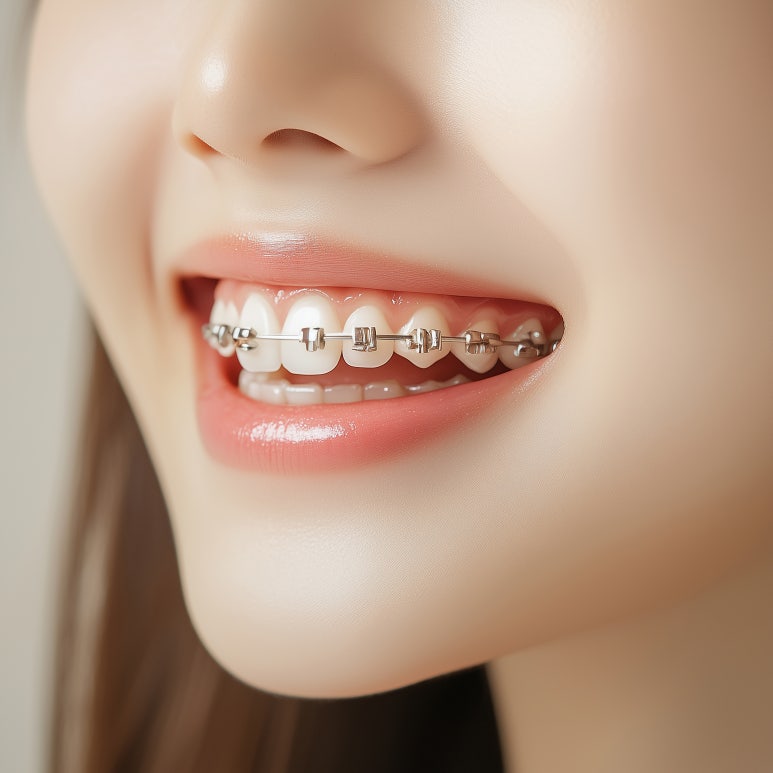
When choosing an orthodontic appliance, it is best to consider the following points rather than comparing only the appearance or price of the appliance.
1. Can the appliance be used for your current malocclusion?
Not every orthodontic appliance is equally suitable for every type of tooth movement. The priority is whether the required movement and bite adjustment can be carried out stably.
2. How important are aesthetics to you?
If you are very concerned about visible appliances, you may consider ceramic braces, lingual braces, or clear aligners. However, along with aesthetics, you should also check the difficulty of maintenance, cost, and suitability for your condition.
3. Can you follow the prescribed wearing time?
With clear aligners, patients must put in and remove the appliances themselves. You should realistically assess whether you can consistently maintain the habit of putting them back in after meals.
4. Can you maintain good oral hygiene?
Food can easily become trapped around the brackets and wires of fixed appliances, while lingual appliances require care on the inner surfaces of the teeth. Hand dexterity and the existing condition of the gums may also be considered.
5. Does it fit your work and lifestyle?
Considering whether you have a lot of face-to-face work or presentations, eat out frequently, or can wear the appliance for long periods may help reduce inconvenience during treatment.
6. What are the expected cost and treatment duration?
The cost may vary depending on the type of appliance, treatment difficulty, and any additional appliances required. It is advisable to check not only the appliance cost but also the overall treatment scope and retention care.
Find the orthodontic appliance that is right for you at Gunja Dental Clinic and S Leader Dental Hospital
Orthodontic appliances come in many types, including metal, ceramic, self-ligating, lingual, and clear aligners, and each has different advantages and points to consider.
However, treatment results are not determined by the name of the appliance alone. The first step is to accurately diagnose the condition of the teeth and jawbones and establish a treatment plan that considers the necessary tooth movements and bite improvement.
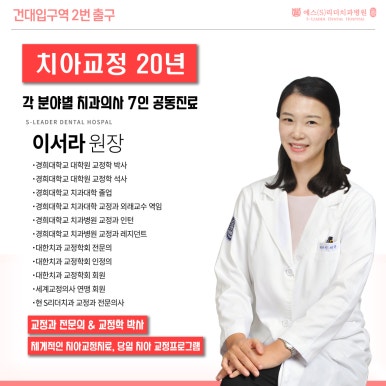
At Gunja Dental Clinic and S Leader Dental Hospital, we comprehensively assess tooth alignment, the upper and lower bite, and facial and jaw balance based on oral examinations, X-rays, oral photographs, and digital records.
We provide guidance on applicable orthodontic appliances and treatment directions by considering the detailed diagnostic results together with the patient's priorities, such as aesthetics, ease of maintenance, and lifestyle.
If you are considering orthodontic treatment but find it difficult to decide which appliance is suitable, rather than choosing a specific appliance first, accurately assess your current oral condition and receive sufficient consultation on the advantages and disadvantages of each treatment method.



Gunja Dental Clinic :: S Leader Dental Hospital