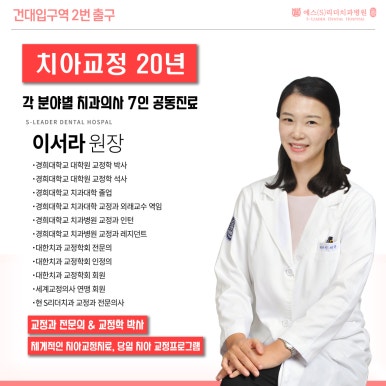
Hello, this is S Leader Dental Hospital, a dental hospital in Gunja-dong celebrating its 22nd anniversary this year.
"How long does orthodontic treatment usually take?"
This is one of the questions people who are preparing for an orthodontic consultation or considering treatment are most curious about. If you search online, you can easily find a variety of reviews, such as "I finished in one year," "It took more than two years," and "It ended sooner than I expected."
Because treatment duration varies from person to person, many people also wonder, "Why did someone else finish quickly while mine is taking so long?" "Would choosing a more expensive orthodontic appliance make treatment finish faster?" and "Will treatment take longer if teeth are extracted?"
However, orthodontic treatment is not simply a procedure for straightening teeth. It involves adjusting the bite so that the upper and lower teeth fit together stably, while also taking into account the gums and alveolar bone surrounding the teeth. For this reason, treatment cannot be completed in the same amount of time for everyone.
Even when teeth appear to have the same type of crowding, the distance and direction each tooth needs to move can differ. In addition, various factors—including gum condition, jawbone structure, whether teeth are extracted, and the patient's cooperation—can affect treatment duration.
Therefore, with orthodontic treatment, how stably treatment progresses is more important than how quickly it finishes.
Today, S Leader Dental Hospital in Gunja-dong will take a detailed look at why the duration of orthodontic treatment differs from person to person and at the various factors that determine treatment duration.
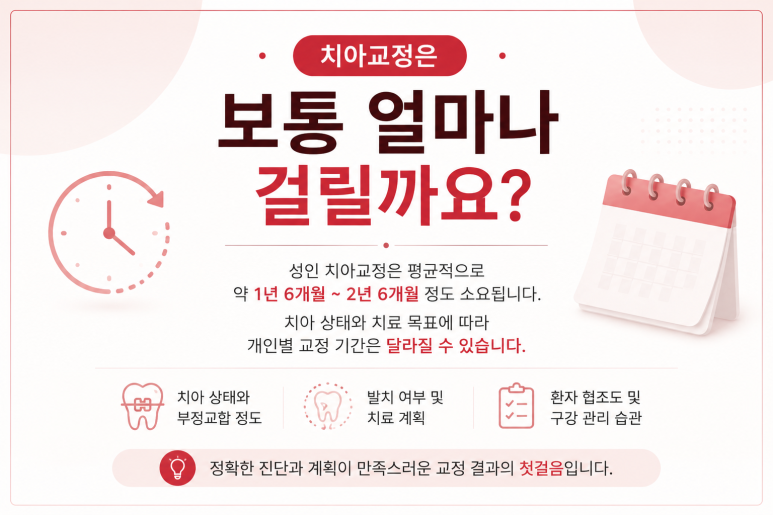
How long does orthodontic treatment usually take?
Adult orthodontic treatment often takes approximately 1 year and 6 months to 2 years and 6 months on average.
However, this is only an average duration, and the actual treatment period may vary depending on an individual's oral condition and treatment goals.
When tooth alignment is relatively simple, treatment may be completed in about one year. Conversely, when a person has protruding teeth or jaws, severe malocclusion, or requires extractions, treatment may continue for more than two years.
Also, treatment does not completely end just because the appliances have been removed.
Teeth moved through orthodontic treatment tend to return to their original positions, so the retention period, during which retainers are worn to stabilize the alignment, is also very important.
Therefore, it is best to consider the orthodontic treatment period as including not only the time spent wearing appliances but also the process of maintaining the results over the long term.
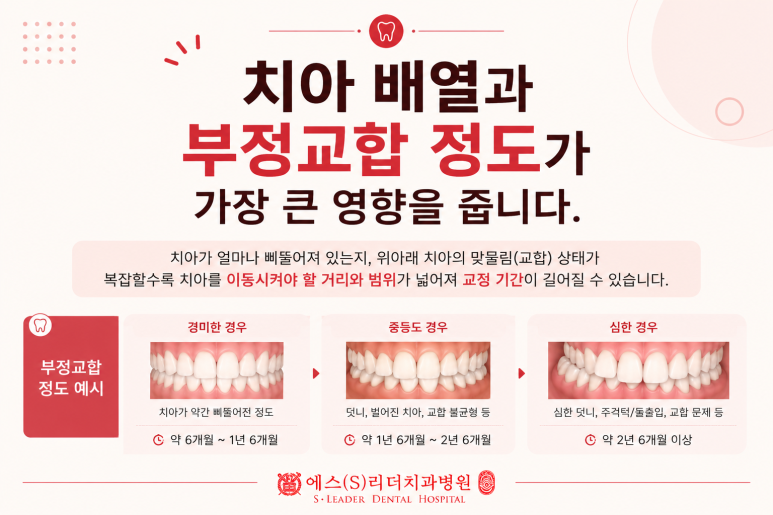
The alignment of the teeth and severity of malocclusion have the greatest impact.
The alignment of the teeth and severity of malocclusion have the greatest impact.
The biggest factor determining orthodontic treatment duration is the current condition of the teeth.
If the teeth are only slightly crooked, the distance they need to move is short, so treatment may progress relatively quickly.
Conversely, treatment may take longer in the following cases:
-
Teeth that are severely overlapping
-
Severe crowding or pronounced crooked teeth
-
Severe protrusion of the teeth or jaws
-
Open bite, in which the front teeth do not meet
-
Underbite, in which the lower jaw extends forward
-
A significant discrepancy in the way the upper and lower teeth fit together
In these cases, the overall bite must be adjusted in addition to simply aligning the teeth, which can make the treatment process more complicated.
In particular, teeth do not move independently one at a time; they move while affecting one another. Therefore, moving one area quickly does not necessarily speed up the entire treatment.
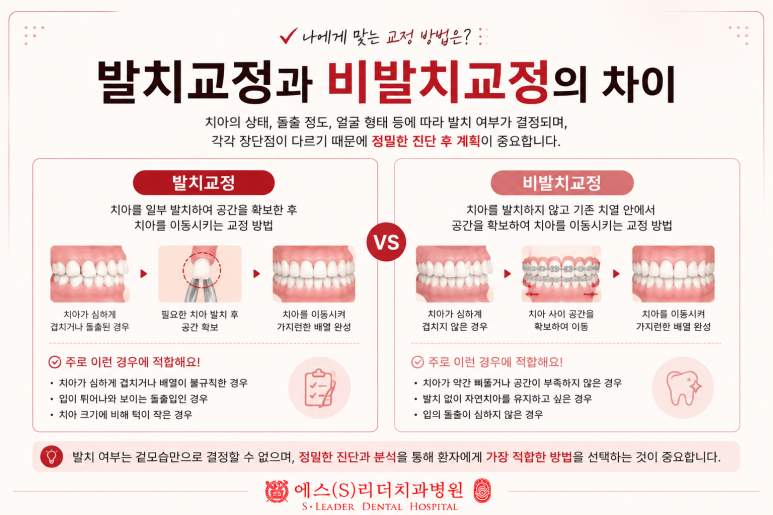
The difference between extraction and non-extraction orthodontic treatment
One of the topics most frequently discussed during orthodontic consultations is whether teeth need to be extracted.
Extraction orthodontic treatment involves removing premolars or other teeth to create space for alignment and then moving the teeth into that space.
Non-extraction orthodontic treatment, on the other hand, proceeds by creating space within the existing dental arch or gradually moving the teeth to align them.
Because extraction treatment includes the additional process of closing the spaces left by the extractions, it may sometimes require a little more time than non-extraction treatment.
However, this does not mean that non-extraction treatment is always the better option.
If non-extraction treatment is chosen despite the condition of the teeth, the lips may appear more protruded or the bite may become unstable.
In other words, rather than avoiding extractions simply to shorten treatment, it is much more important to establish a treatment plan suited to the current oral condition.
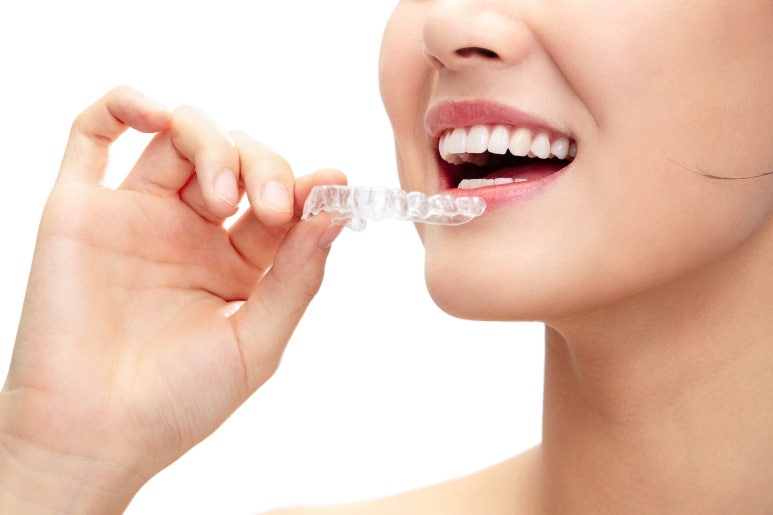
The speed at which teeth move differs from person to person.
Many people think that if they use the same appliances, their teeth will move at a similar speed.
In reality, however, the speed at which teeth move also varies from person to person.
Teeth do not move immediately simply because force is applied. Instead, they gradually move through a natural physiological process in which the alveolar bone is repeatedly resorbed and regenerated.
This process may vary depending on an individual's physical condition.
The following are some representative factors that may have an impact:
-
Age
-
Alveolar bone density
-
Gum health
-
Shape of the tooth roots
-
Overall health
-
Lifestyle
For example, when the gums are healthy and treatment progresses as planned, the teeth may move relatively smoothly. However, if periodontal disease is present or the gums are not in good condition, gum treatment may need to be completed first.
Therefore, the speed at which teeth move is closely related not only to the appliances but also to oral health.
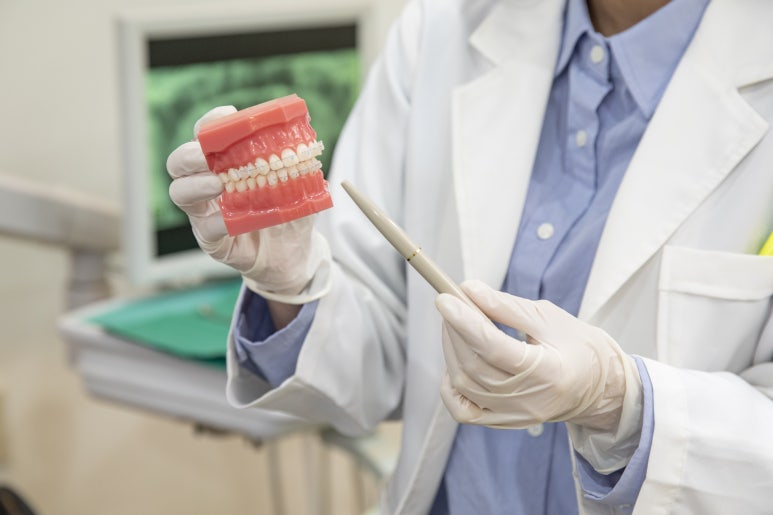
Accurate diagnosis is more important than the type of orthodontic appliance.
Accurate diagnosis is more important than the type of orthodontic appliance.
Recently, various orthodontic methods have become available, including metal braces, ceramic braces, self-ligating braces, and clear aligners.
As a result, we are often asked, "Which appliance will allow treatment to finish the fastest?"
However, there is something more important than the type of appliance in actual treatment.
That is an accurate diagnosis and a treatment plan tailored to the individual.
Even with the same metal braces, the treatment process may differ depending on the direction in which the teeth are moved and the order in which forces are applied.
In other words, the appliances themselves do not determine treatment duration. More important factors include how accurately the current condition of the teeth is analyzed and how carefully the treatment is planned.
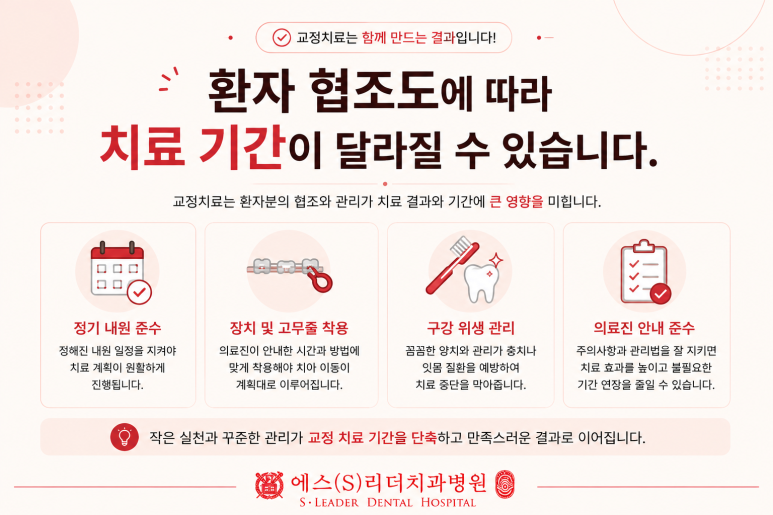
Treatment duration may vary depending on patient cooperation.
Orthodontic treatment is not completed through the care provided by the dental team alone; patient cooperation is also necessary.
Even if a treatment plan is prepared with great precision, teeth may not move at the planned pace if regular appointments are not kept or the dental team's instructions are not followed properly.
Treatment may take longer than expected in the following cases:
-
Frequently postponing regular appointments
-
Not wearing orthodontic elastics for the recommended amount of time
-
Leaving a detached orthodontic appliance untreated for an extended period
-
Damaging the appliance by frequently eating hard or chewy foods
-
Not following instructions for wearing retainers
Orthodontic elastics play an important role in adjusting the way the upper and lower teeth fit together. If they are not worn for enough time, tooth movement may be slower than planned, which can also affect the overall treatment duration.
In addition, regular appointments are often scheduled every 4–8 weeks during orthodontic treatment. At these visits, the movement of the teeth is checked, wires may be replaced, and the force may be adjusted. If appointments are repeatedly postponed, the time at which the next stage can begin may also be delayed.
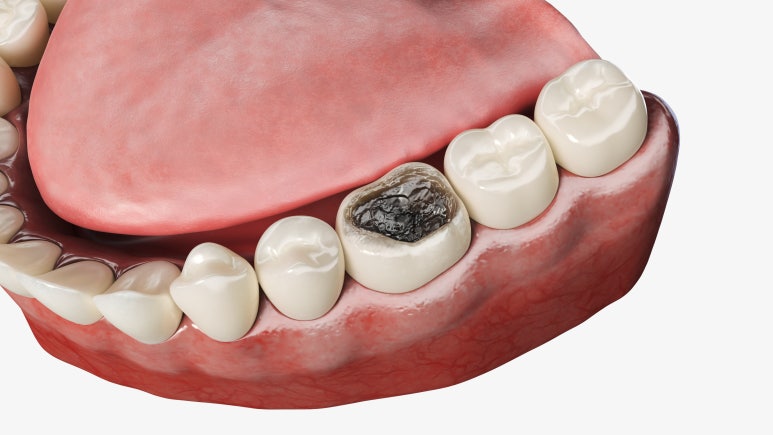
Treatment may be delayed if cavities or gum disease develop during orthodontic treatment.
Once orthodontic appliances are attached, brushing may become more difficult than usual.
This is because food particles and plaque can easily remain around the brackets and wires, potentially increasing the likelihood of cavities or gum disease.
If cavities develop during treatment or gum inflammation becomes severe, it may be necessary to treat those problems first.
This is an important process for maintaining oral health, and in some cases, orthodontic treatment may need to be temporarily adjusted.
Therefore, to keep treatment on schedule, it is very important to manage not only the orthodontic appliances but also everyday oral hygiene.
In addition to brushing, appropriately using interdental brushes, dental floss, and oral irrigators may help clean around the appliances more thoroughly.
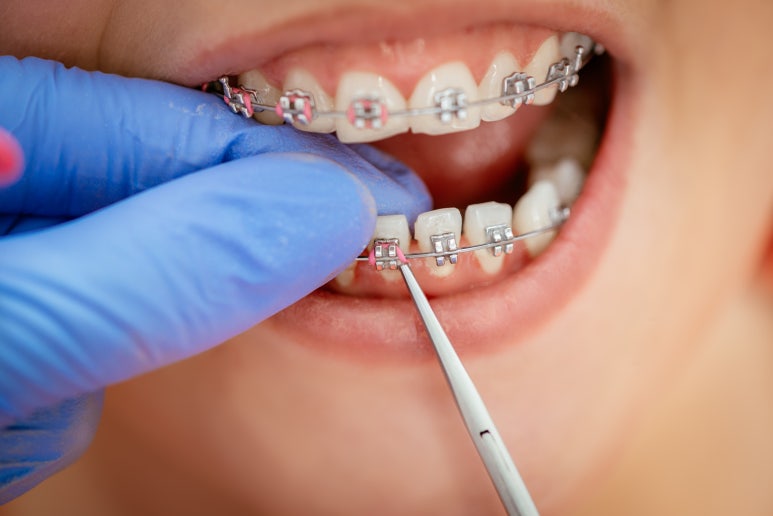
How can you keep orthodontic treatment on schedule?
There is no way to shorten treatment unconditionally, but certain habits can help treatment progress according to the planned schedule.
✔ Keep your regular appointment dates
✔ Follow the dental team's instructions regarding how long to wear elastics
✔ Contact the hospital as soon as possible if an orthodontic appliance becomes detached
✔ Be careful with hard or chewy foods
✔ Brush thoroughly and use an interdental brush
✔ Prevent cavities and gum disease
✔ Consistently follow the instructions for wearing retainers
These small habits, when practiced consistently, can help the treatment process proceed more smoothly.
S Leader Dental Hospital in Gunja-dong,
Orthodontic treatment that begins with an accurate diagnosis
The duration of orthodontic treatment is difficult to explain with a single number, such as "it takes several years."
Because various factors—including tooth alignment and the severity of malocclusion, whether extractions are needed, gum health, the condition of the alveolar bone, treatment goals, and patient cooperation—work together, the duration may differ from person to person even for the same orthodontic treatment.
Above all, rather than comparing your treatment duration with someone else's, it is important to establish a plan suited to your oral condition and continue treatment consistently according to the dental team's instructions.
Before beginning orthodontic treatment, S Leader Dental Hospital in Gunja-dong carefully examines tooth alignment, the bite, gum condition, and other factors through a detailed examination, and establishes a treatment plan suited to each patient's oral condition.
If you are considering orthodontic treatment or are curious about the expected treatment duration, we recommend accurately assessing your current oral condition through a thorough consultation and detailed diagnosis, then establishing a treatment plan appropriate for you.



Gunja-dong Dental Clinic :: S Leader Dental Hospital