Hello, this is S Leader Dental Hospital, a Gujuidong dental clinic celebrating its 22nd anniversary this year.
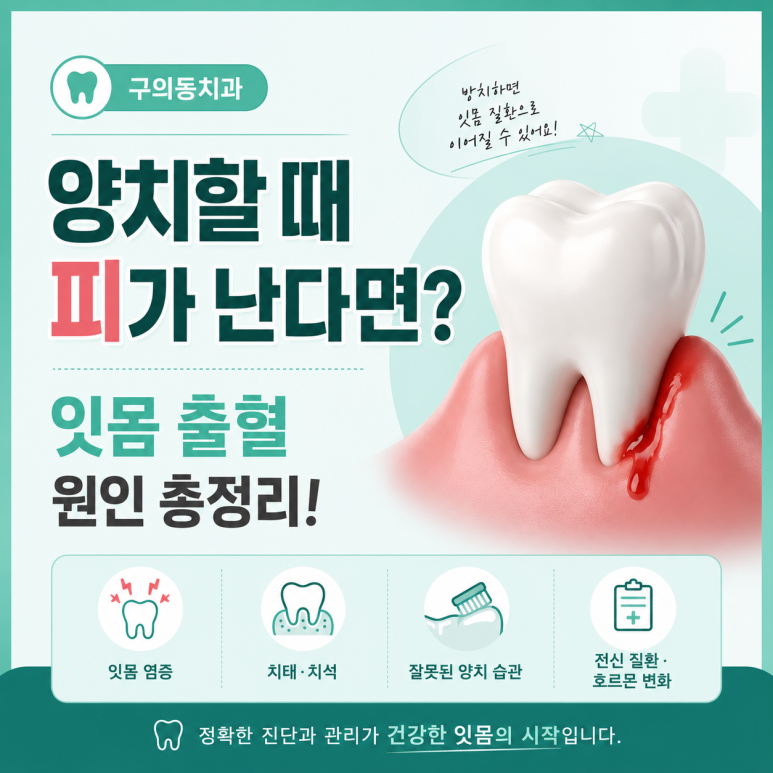
Have you ever noticed blood on your toothbrush while brushing, or experienced bleeding from your gums after using dental floss?
Many people tend to dismiss it, thinking, “Maybe I brushed too hard,” or “It only happens occasionally, so it should be fine.” However, gum bleeding may not be caused simply by brushing too hard.
Healthy gums do not bleed easily just from brushing or flossing. Bleeding can occur due to temporary irritation, but if it happens repeatedly, it may also be a sign that inflammation has developed in the gums.
In particular, gum disease causes little to no pain in its early stages, making its symptoms easy to overlook. In addition to bleeding, various signs such as swelling, bad breath, and changes in gum color may appear. If left untreated, it can affect not only the gums but also the tissues that support the teeth.
Today, S Leader Dental Hospital, a Gujuidong dental clinic, will take an in-depth look at the common causes of gum bleeding when brushing, the symptoms that may occur alongside it, and when it is advisable to visit a dentist.
Is it normal for your gums to bleed when brushing?
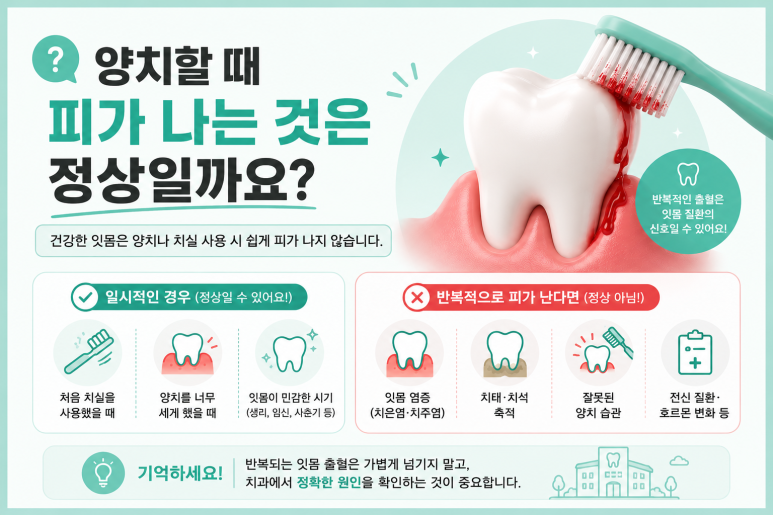
To put it simply, repeated gum bleeding is difficult to consider a normal condition.
Temporary bleeding may occur when you use dental floss for the first time or brush too vigorously. However, if neither of these situations applies, it is worth checking whether gum inflammation or another oral disease may be the cause.
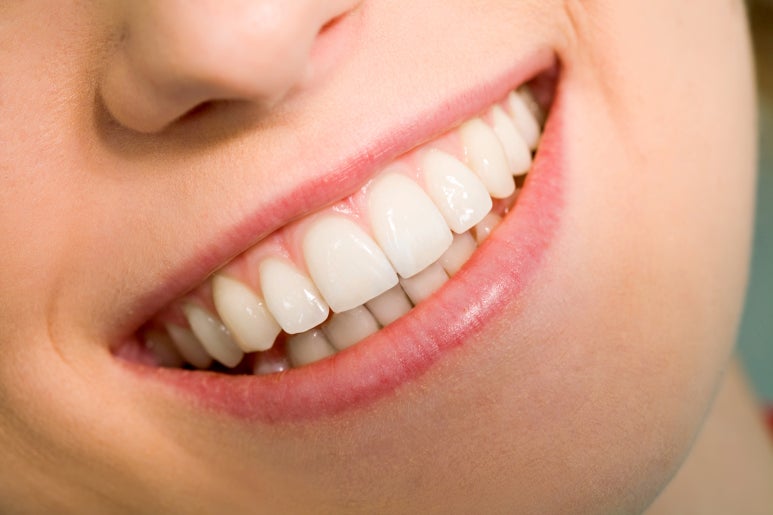
Healthy gums are light pink and do not bleed easily when brushing or flossing. In contrast, if the gums become red and swollen and continue to bleed even with minor stimulation, this may be a sign that inflammation has weakened the tissue.
Also, the fact that the bleeding has stopped does not mean that the problem has been resolved. If the symptom recurs, it is advisable to undergo a dental examination to determine the exact cause.
What are the common causes of gum bleeding?
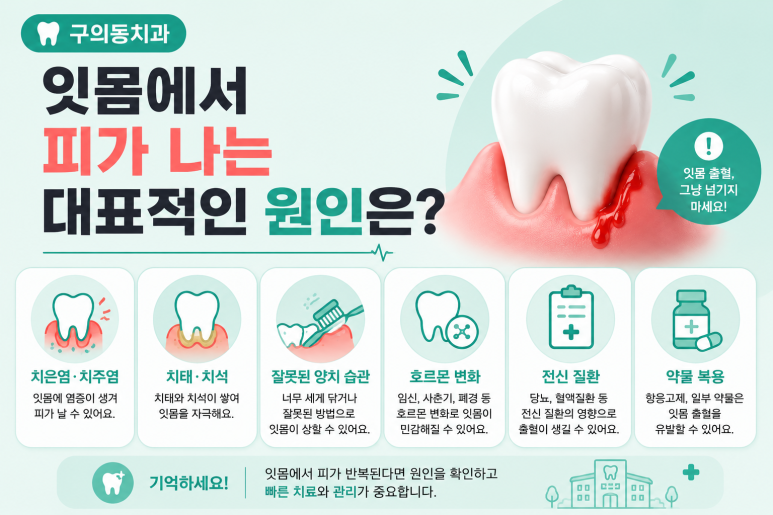
Gum bleeding does not occur for just one reason. Various factors, including oral hygiene, lifestyle habits, and overall health, may have an effect.
Gingivitis
One of the most common causes is gingivitis.
Gingivitis refers to inflammation of the gums caused by plaque buildup along the boundary between the teeth and gums.
There is usually little pain in the early stages, but the gums may bleed easily when brushing or flossing. Swelling or redness of the gums may also occur.
Periodontitis
If gingivitis is left untreated for a long time, it may progress to periodontitis.
Periodontitis refers to a condition in which inflammation has spread beyond the gums to the jawbone and surrounding tissues that support the teeth.
At this stage, symptoms may include more than simple bleeding, such as worsening bad breath, a sensation that the gums are receding, or loose teeth.
As periodontitis progresses, treatment and ongoing management may take longer, making early detection and treatment especially important.
Buildup of plaque and tartar
If brushing is insufficient, plaque builds up on the surface of the teeth.
When plaque is not properly removed over time, it hardens into tartar, which is difficult to remove with a toothbrush alone.
Because bacteria easily adhere to the surface of tartar, it can continuously irritate the gums and cause inflammation and bleeding.
Tartar buildup deep between the teeth and gums can be difficult to see, so regular scaling can be helpful for managing it.
Incorrect brushing habits
Brushing with excessive force does not make your teeth cleaner.
On the contrary, repeatedly brushing too hard can injure the gums and cause bleeding.
Conversely, if you brush for too short a time or fail to clean the boundary between the teeth and gums properly, plaque may remain and increase the likelihood of inflammation.
Using a toothbrush with excessively firm bristles or continuing to use a toothbrush for too long may also affect gum health.
Hormonal changes and overall health
Gum bleeding may be related not only to problems inside the mouth but also to changes in the body.
During periods of hormonal change, such as pregnancy or puberty, the gums may become more sensitive than usual and may swell or bleed easily.
Gum bleeding may also occur if you have a systemic condition that can affect gum health, such as diabetes, or if you are taking certain medications.
What symptoms may occur along with gum bleeding?
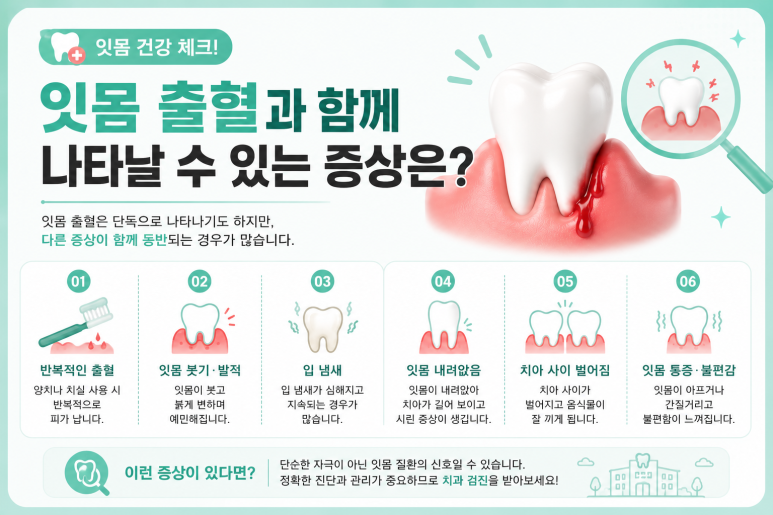
Gum bleeding may occur on its own, but it is also often accompanied by other symptoms.
Common symptoms include the following:
-
Repeated bleeding when brushing or flossing.
-
Swollen, reddened gums.
-
Persistent bad breath.
-
Itchy gums or a feeling of discomfort.
-
Receding gums that make the teeth look longer.
-
Pain or sensitivity in the gums when chewing.
If these symptoms recur, it is advisable to consider the possibility that there may be a problem with your gum health rather than assuming they are simply the result of temporary irritation.
In particular, if your gums frequently swell along with bleeding or your teeth feel loose, it is important to have your current condition accurately assessed rather than making your own judgment.
What problems can occur if gum bleeding is left untreated?
Some people leave gum bleeding untreated for a long time, thinking, “It is only a little blood, so it should be fine.”
However, gum bleeding is not merely a symptom; it may be a sign that something is wrong with your gum health. If inflammation continues to progress, it may affect not only the gums but also the tissues that support the teeth.
Even if bleeding initially occurs only while brushing, the gums may swell or become painful over time, and bad breath may worsen.
As the condition progresses, the gums may recede, exposing the tooth roots and causing sensitivity. Some people may also notice that food becomes trapped more easily as the spaces between their teeth gradually widen, or that their teeth look longer.
If the condition progresses to periodontitis, damage to the jawbone may weaken the support for the teeth. This can affect daily life by causing loose teeth or discomfort when chewing.
Above all, gum disease often progresses gradually even when there is little pain. Therefore, rather than waiting until the symptoms become severe, it is important to identify the cause and begin appropriate care if you experience repeated bleeding.
How is gum bleeding treated?
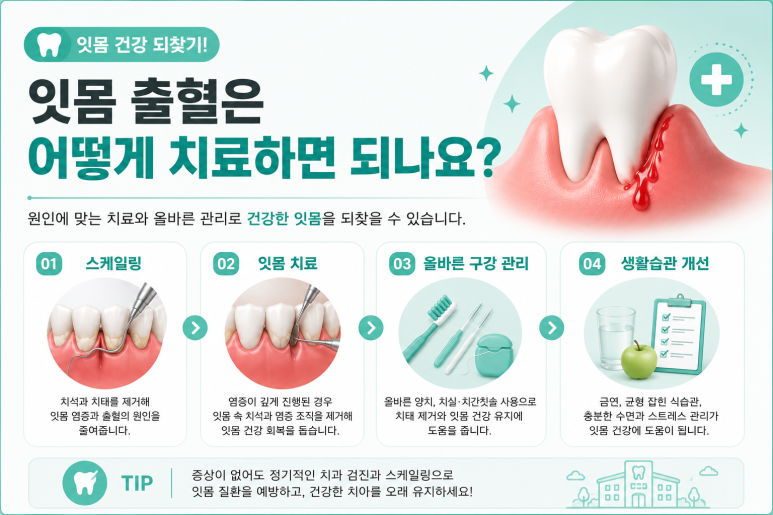
Treatment for gum bleeding is not simply aimed at stopping the blood; it is intended to address the cause of the bleeding.
After comprehensively checking whether the condition is gingivitis or periodontitis, how much tartar has accumulated, and whether there are any abnormalities in the jawbone, a treatment plan is developed according to the condition.
Scaling
One of the most basic treatments for gum bleeding is scaling.
This process removes tartar and plaque attached to the surface of the teeth and around the gums, reducing the source of bacterial irritation to the gums.
In relatively early-stage gum disease, such as gingivitis, bleeding often improves with scaling and proper oral care alone.
Temporary sensitivity or mild bleeding may occur after scaling, but in most cases, these symptoms gradually improve over time.
Gum treatment
If inflammation has progressed into the deeper areas of the gums, scaling alone may not be sufficient.
In such cases, gum treatment to remove tartar and inflamed tissue from deep inside the gums may be considered.
The extent of treatment may vary depending on the condition of the gums, and it may be carried out over several sessions if necessary.
Gum treatment may help reduce current inflammation, slow the progression of periodontal disease, and maintain gum health.
Proper oral care
Dental treatment alone does not completely resolve gum disease.
Even after treatment, it is important to keep the areas between the teeth and gums clean by maintaining proper brushing habits and using dental floss, interdental brushes, and other tools.
Some people stop brushing because their gums are bleeding, but this can cause more plaque to accumulate and worsen the inflammation.
Lifestyle improvements
Smoking is known to be one of the factors that can worsen gum disease by reducing blood circulation in the gums.
In addition, frequent consumption of sugary foods or inadequate oral hygiene can allow bacteria to multiply easily.
A balanced diet, sufficient fluid intake, and regular brushing habits may help maintain gum health.
If you have a systemic disease, it is also important to manage your overall health in consultation with your healthcare provider.
How can gum bleeding be prevented?
Gum health is greatly affected by your everyday care habits.
Above all, it is important to develop the habit of brushing properly two or three times a day. Carefully cleaning not only the teeth but also the boundary between the teeth and gums can help reduce plaque buildup.
Using dental floss or interdental brushes as well is also beneficial. A toothbrush alone may not completely remove food particles and plaque between the teeth.
Even if you have no symptoms, it is important to check the condition of your gums through regular oral examinations and scaling. Early inflammation can be difficult to notice, but regular checkups can help detect and manage it at a relatively early stage.
If your gums bleed frequently, do not dismiss it as a temporary occurrence. Identifying the cause may help you maintain healthy teeth for a long time.

Gujuidong Dental Clinic, S Leader Dental Hospital
It is important to identify the exact cause of repeated gum bleeding.
Not everyone who experiences bleeding while brushing has a serious disease.
However, if bleeding occurs repeatedly or is accompanied by swollen gums, bad breath, sensitivity, or other symptoms, it is worth considering the possibility that there may be a problem with your gum health.
The earlier appropriate care is started for gum disease, the more it may help maintain healthy gums. Conversely, if symptoms are left untreated for a long time, the scope of treatment may expand, making early assessment important.
At Gujuidong Dental Clinic, S Leader Dental Hospital, we do not determine the cause of gum bleeding based solely on the symptoms. Instead, we comprehensively assess the condition of the mouth and gums, then provide guidance on a care and treatment plan suited to each patient’s condition.
Healthy gums provide the foundation for maintaining healthy teeth over the long term. If bleeding while brushing continues to recur, do not take it lightly. Have your current condition checked through an accurate diagnosis and find an appropriate way to manage it.






Gujuidong Dental Clinic :: S Leader Dental Hospital.