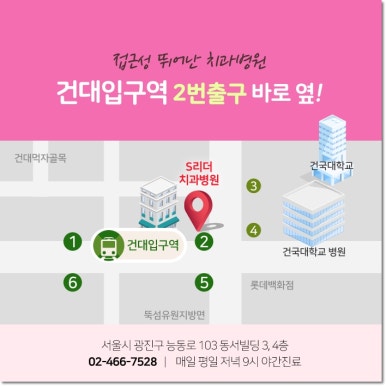
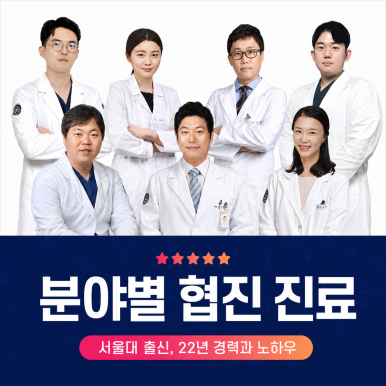
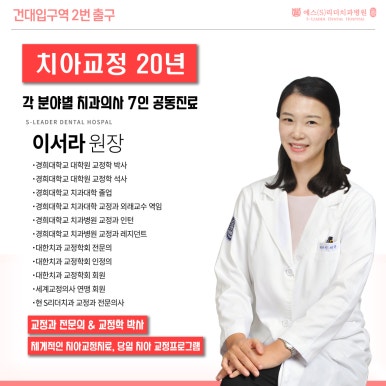
Hello, I am Shim Seong-hwan, Director of Gwangjang-dong Dental Clinic, S Leader Dental Hospital, which is celebrating its 22nd anniversary this year.
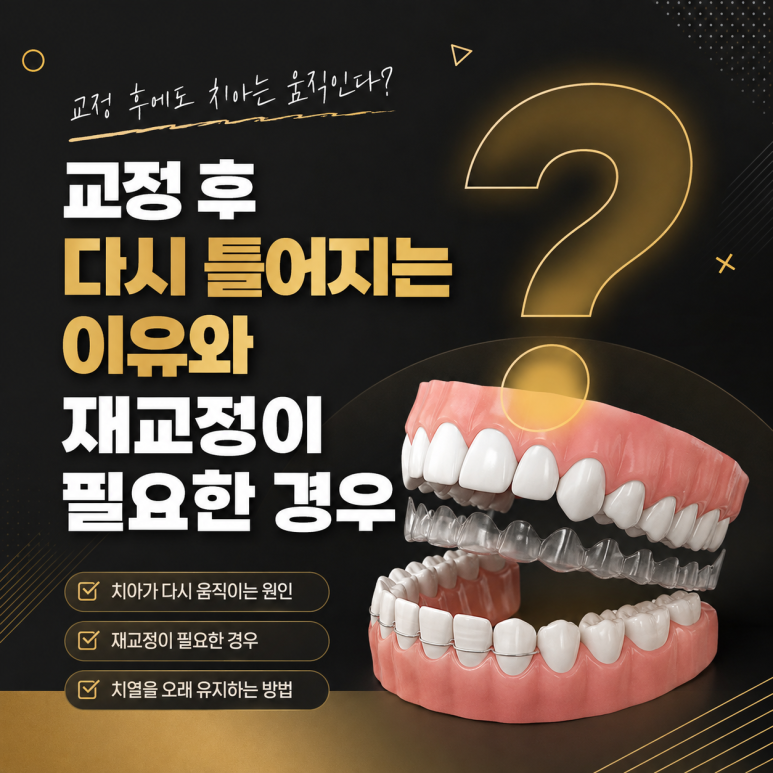
Many people feel satisfied when they see their straightened teeth and changed smile after completing orthodontic treatment. After enduring the discomfort of wearing orthodontic appliances for a long time, they may feel, “It’s finally over.”
However, orthodontic treatment does not completely end simply because the appliances have been removed. In fact, quite a few people experience their teeth gradually shifting over time after treatment or becoming crooked again as they were before.
“Why did my teeth become crooked again even though I had orthodontic treatment?”
“Do I need orthodontic treatment again?”
“Can my teeth move even if I wear a retainer?”
Many people have questions about changes in their teeth after orthodontic treatment.
Today, Gwangjang-dong Dental Clinic and S Leader Dental Hospital will discuss why teeth become crooked again after orthodontic treatment, when retreatment may be needed, and how to manage your teeth to maintain a straight alignment for a long time.
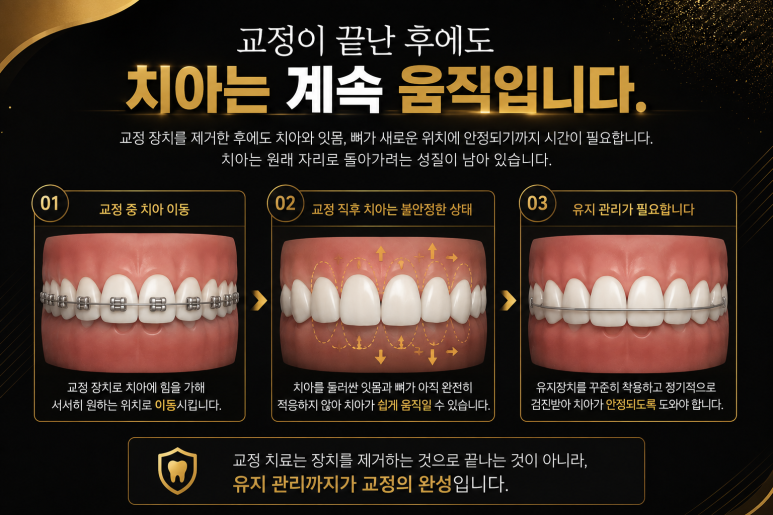
Teeth continue to move even after orthodontic treatment is complete.
There is one common misconception many people have.
It is the belief that once orthodontic treatment is complete, the teeth become completely fixed in place.
However, teeth are not firmly embedded in the jawbone; they are supported by tissue called the periodontal ligament. Orthodontic treatment uses this periodontal ligament to gradually move the teeth into the desired positions.
The issue is that immediately after the teeth have been moved, the surrounding gums and bone have not yet fully adapted to their new positions.
In other words, the teeth retain a tendency to return to their original positions, which is called a “relapse tendency.”
This phenomenon does not occur because there is necessarily a specific problem; it can occur naturally to some extent.
That is why retention and maintenance after the appliances are removed are considered very important in orthodontic treatment.
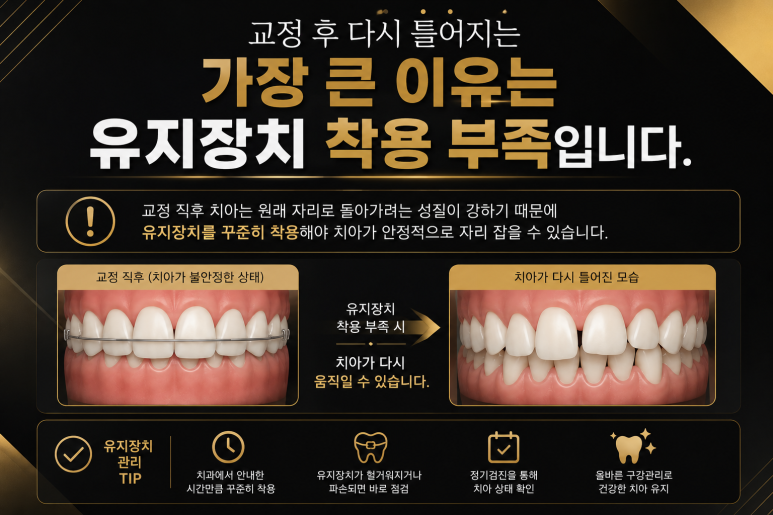
The biggest reason teeth become crooked again after orthodontic treatment is insufficient retainer wear.
The most common reason teeth move again after orthodontic treatment is not wearing the retainer properly.
A retainer helps the teeth that were moved during orthodontic treatment settle securely into their new positions.
Immediately after orthodontic treatment, the teeth are still in a state where they can move easily, so the retainer must be worn consistently for a certain period.
However, if you
-
gradually reduce the amount of time you wear it,
-
stop wearing it, thinking that it will be fine to go without it for a few days, or
-
lose the retainer and do not have a new one made for a long time,
the teeth may begin to move more quickly than expected.
The front teeth, in particular, are the area where patients notice changes first because even small changes are easy to see.
Can teeth move even if you wear a retainer?
Some people occasionally say that their tooth alignment seems to have changed slightly even though they have been wearing their retainers consistently.
In reality, several causes may act together.
Common examples include:
-
a deformed retainer,
-
a retainer that does not fit properly,
-
a bonded retainer that has come loose, or
-
insufficient wearing time.
In particular, because fixed retainers are attached to the back of the front teeth, they can often come loose without being easily noticed.
If a wire has broken or is only partially detached and this continues for a long time, the affected tooth may gradually move on its own.
Therefore, even if you use a retainer, it is important to check its condition through regular dental examinations.
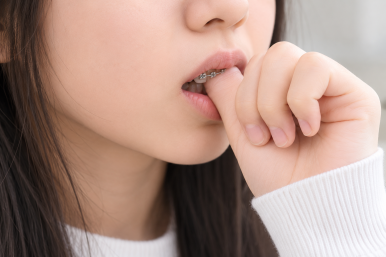
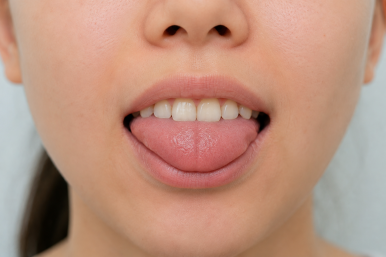
Lifestyle habits can also affect tooth alignment.
Teeth are affected by a wider range of habits than many people realize.
This is because unconscious, repetitive behaviors can apply continuous force to the teeth when they continue for a long time.
For example:
-
constantly pushing the front teeth with the tongue,
-
sucking a finger,
-
breathing through the mouth,
-
chewing food only on one side,
-
clenching the teeth or grinding them,
can affect changes in tooth alignment.
It is especially important to correct these habits along with the orthodontic treatment because the period immediately after treatment is when the alignment is stabilizing.
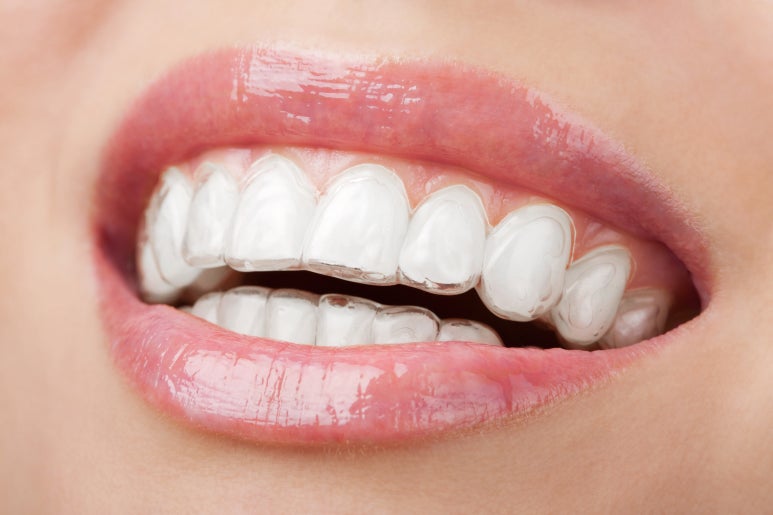
When is retreatment needed?
Not everyone needs orthodontic retreatment simply because their teeth have moved slightly after treatment.
In some cases, very minor changes do not cause functional problems and may be noticeable only to the patient.
However, if tooth movement is becoming progressively more severe or is affecting daily life, it is advisable to undergo an accurate examination again.
Retreatment may be considered in the following cases:
-
The front teeth are noticeably overlapping or crooked.
-
Gaps between the teeth have reopened.
-
It is difficult to chew food because the bite does not fit properly.
-
The way the upper and lower teeth meet has changed when the mouth is closed.
-
You feel strain on the jaw joint.
-
The retainer no longer fits even when you wear it.
Because even small changes in the front teeth are easy to see, many people consider retreatment for cosmetic reasons.
However, an appropriate treatment plan can be established only after checking not just appearance but also tooth function and the bite.
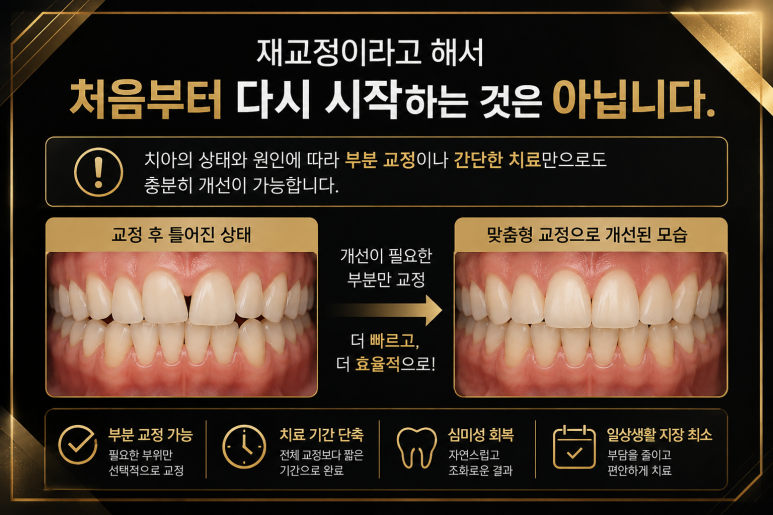
Retreatment does not necessarily mean starting over from the beginning.
There is one question people considering retreatment ask most often:
“Do I have to undergo orthodontic treatment for another two or three years, just like the first time?”
Not necessarily.
The treatment period and method for retreatment vary greatly depending on how much the teeth have moved and why they have become crooked again.
For example, if only part of the front teeth has shifted slightly, partial orthodontic treatment may be enough to improve the condition.
Conversely, if the bite itself has changed significantly or several teeth have moved together, full orthodontic treatment may need to be performed again.
In other words, retreatment does not involve the same treatment for everyone. The current alignment is analyzed accurately, and a treatment method suited to each individual is selected.
Partial orthodontic treatment may resolve some cases.
Not all retreatment means full orthodontic treatment.
In the following cases, improvement may be possible with partial orthodontic treatment:
-
one or two front teeth have rotated slightly,
-
a small gap has formed between the teeth,
-
there are only minor alignment changes, or
-
there has been no severe change in the bite.
Because partial orthodontic treatment covers a relatively limited area, it often takes less time than full treatment and may cause comparatively less discomfort.
However, even if the front teeth appear to be the only problem, they may actually be connected to the overall bite. Whether partial treatment alone is possible must therefore be determined through an examination.
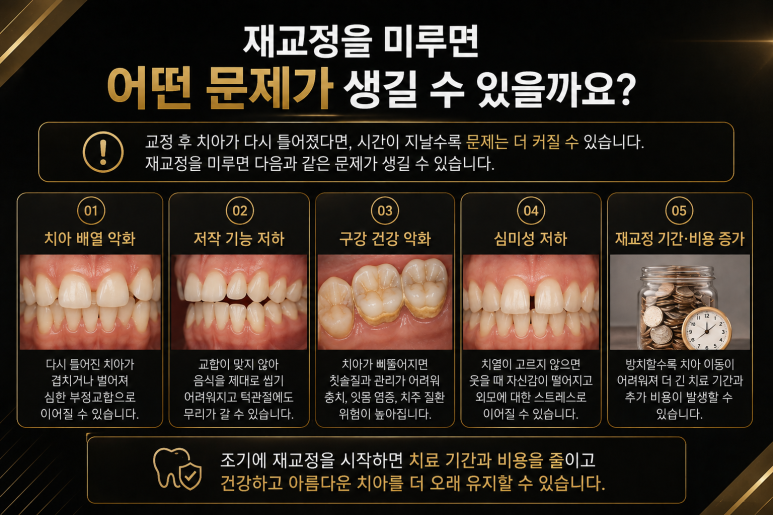
What problems can occur if retreatment is delayed?
Leaving teeth that have become misaligned again untreated for a long time can cause more than just cosmetic problems.
When teeth overlap or are crooked, a toothbrush may not reach those areas properly, allowing plaque and tartar to build up easily. This may increase the risk of cavities and gum disease.
In addition, when the bite does not fit properly, excessive force may be concentrated on particular teeth, potentially causing tooth wear or cracks.
In some cases, increased strain on the jaw joint may cause discomfort when opening the mouth or clicking sounds in the jaw.
Of course, not every case leads to these problems. However, if changes in alignment are continuing, it is advisable to check the current condition rather than leave it untreated.
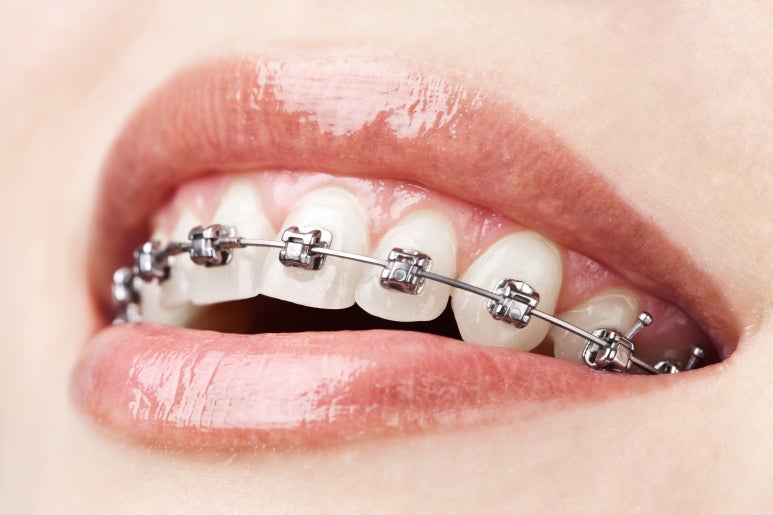
How can you maintain your tooth alignment for a long time after orthodontic treatment?
Consistent care is especially important for maintaining the results of orthodontic treatment over the long term.
The following habits can help reduce the likelihood of the teeth moving again:
✔ Wear the retainer consistently for the amount of time instructed by your dentist.
✔ If the retainer breaks or becomes loose, have it checked without delay.
✔ Visit the dentist regularly to check your tooth alignment and bite.
✔ Seek advice if you clench your teeth or grind them.
✔ Improve habits such as pushing the teeth with your tongue or breathing through your mouth.
✔ Maintain gum health through scaling and oral care.
Orthodontic treatment is not a process that moves only the teeth; it is also a process in which the gums and alveolar bone adapt together.
Therefore, consistent care even after treatment is complete can help maintain a stable tooth alignment for a long time.
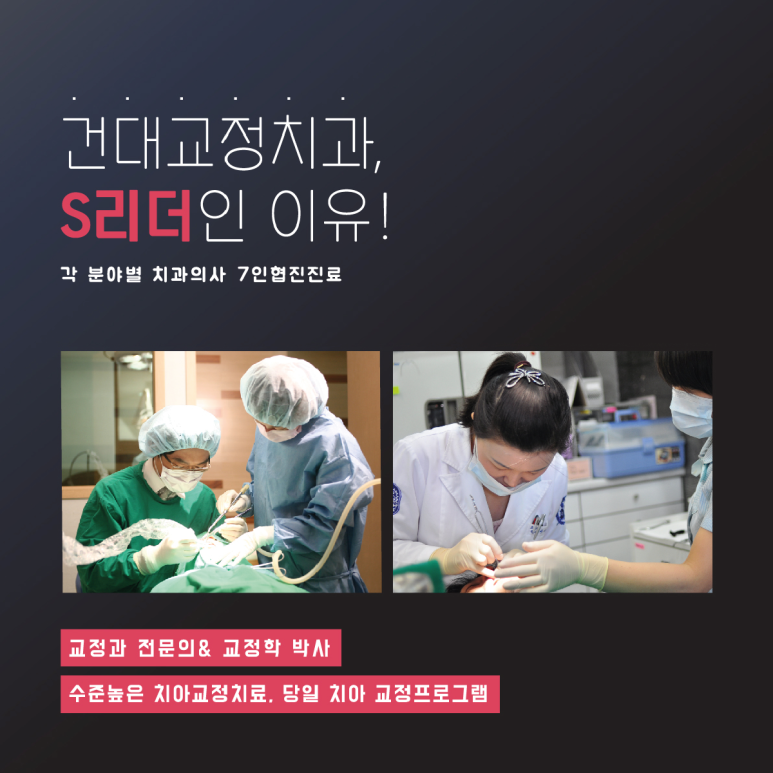
With Gwangjang-dong Dental Clinic and S Leader Dental Hospital
Thorough care, including post-orthodontic management
Orthodontic treatment does not end at the moment the appliances are removed. It can be said to be complete only when post-treatment care and retention are included as well.
At Gwangjang-dong Dental Clinic and S Leader Dental Hospital, we carefully check each patient’s tooth alignment and bite, and help maintain the results of orthodontic treatment steadily through retainer care and regular examinations.
If your teeth seem to be moving again after orthodontic treatment or your retainer does not feel as though it fits properly, rather than worrying about it on your own, have your current condition accurately diagnosed.
When small changes are identified early, they may sometimes be improved through a simpler method, and consistent care can be a great help in maintaining healthy, straight teeth for a long time.


Gwangjang-dong Dental Clinic :: S Leader Dental Hospital.