Hello, I am Sim Seong-hwan from Neungdong Dental Clinic and S Leader Dental Hospital, which is celebrating its 22nd anniversary this year.
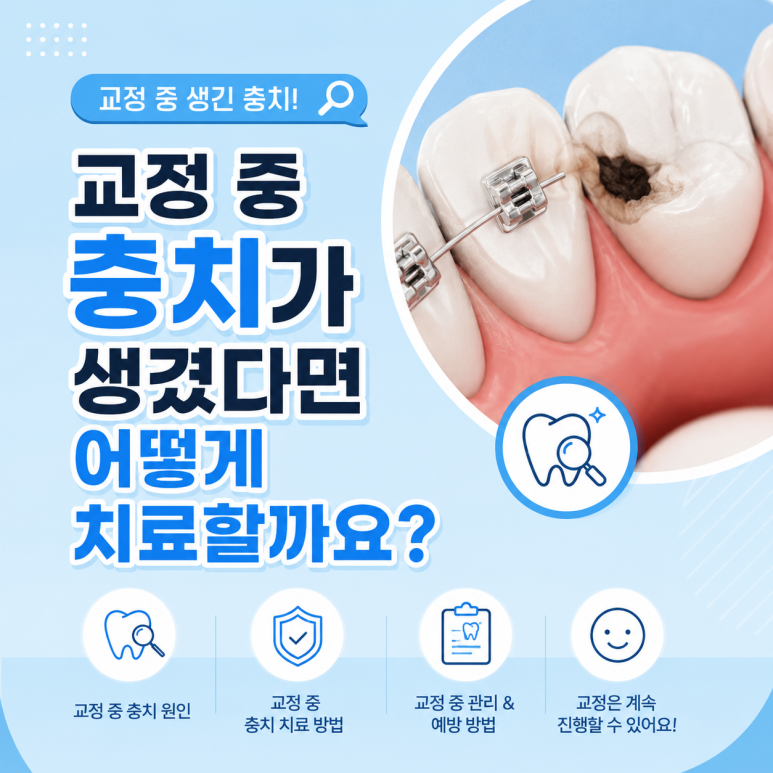
Many people look forward to having straighter teeth and a changed appearance when they begin orthodontic treatment. However, quite a few patients also worry about questions such as, “I’ve been told I have a cavity. Is it okay to continue orthodontic treatment?” or “Do the brackets need to be removed before it can be treated?”
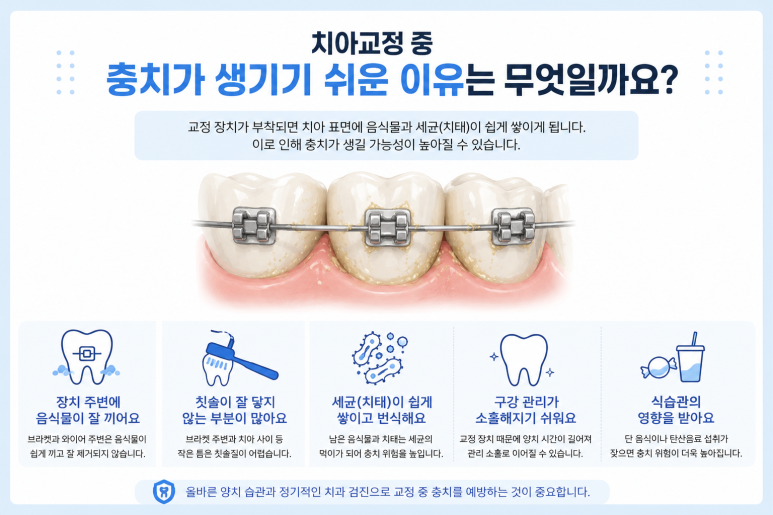
Because orthodontic appliances are attached to the surfaces of the teeth, food can become trapped more easily than usual, and there are more areas that are difficult for a toothbrush to reach. Therefore, inadequate oral care can increase the likelihood of developing cavities.
So, how should a cavity be treated if it develops during orthodontic treatment?
Today, Neungdong Dental Clinic and S Leader Dental Hospital will take a detailed look at everything from the reasons cavities develop to treatment methods and preventive care.
What makes cavities more likely to develop during orthodontic treatment?
Orthodontic appliances do not directly cause cavities. However, because brackets and wires are attached to the tooth surfaces, food particles and plaque can remain more easily than they would under normal conditions.
In particular, areas around the brackets and beneath the wires are difficult for toothbrush bristles to reach. If these areas are not brushed thoroughly, they can become an environment where bacteria multiply easily.
In addition, brushing may take longer than usual after starting orthodontic treatment, and using dental floss or interdental brushes may feel inconvenient. If oral care becomes neglected for these reasons, plaque can accumulate, and acids produced by bacteria can damage the tooth surfaces, increasing the likelihood of cavities.
The risk of cavities may be even higher if you have any of the following habits:
-
Frequently postponing brushing after meals
-
Not using dental floss or interdental brushes
-
Frequently consuming sweets or carbonated drinks
-
Delaying regular checkups
-
Not cleaning carefully around the orthodontic appliances
During orthodontic treatment, you need to take slightly more meticulous care than usual.
Do you need to stop orthodontic treatment if a cavity develops?
This is one of the questions we are asked most often.
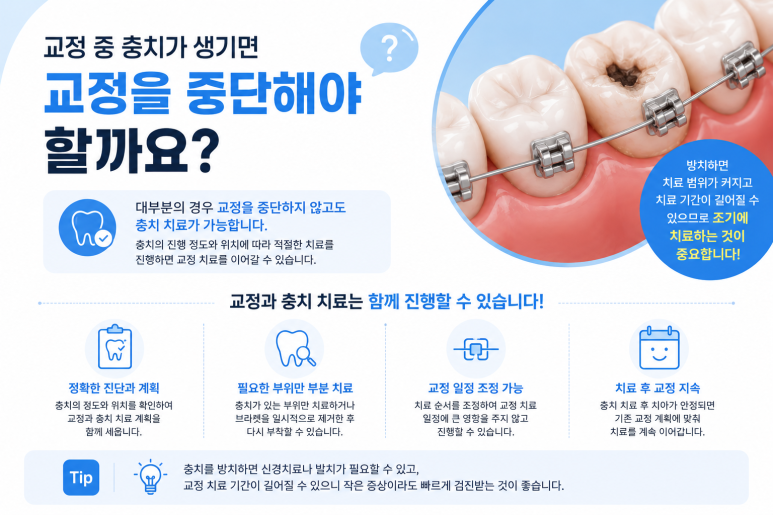
Many people worry, “Do I have to stop orthodontic treatment now?” or “Will I have to start over from the beginning?” when a cavity is discovered. In reality, however, this is usually not the case.
Cavity treatment and orthodontic treatment can be carried out together.
After checking the size and location of the cavity and adjusting the treatment plan, orthodontic treatment can usually continue without major problems.
However, if a cavity is left untreated for a long time, inflammation may progress to the dental pulp. As the scope of treatment becomes more extensive, it may also affect the orthodontic schedule.
Therefore, if you experience tooth sensitivity, a frequent sensation of food getting stuck, or pain in a particular tooth during orthodontic treatment, it is best not to ignore it and to have an examination.
Treatment methods vary depending on how far the cavity has progressed.
- Early-stage cavities
If the cavity is in its early stage and is limited to the enamel, the outermost layer of the tooth, it can be treated relatively simply.
Depending on the condition, fluoride may be applied, and small cavities are often treated simply with composite resin.
At this stage, treatment is usually possible without removing the orthodontic appliances.
- Moderate cavities
If the cavity has progressed into the dentin, the damaged area is removed, followed by treatment with composite resin, an inlay, or another method.
Depending on the location of the cavity, part of the bracket may be temporarily removed before treatment and then reattached afterward.
This process is often relatively straightforward, and it does not mean that orthodontic treatment must be started over from the beginning.
After treatment, orthodontic care can continue according to the existing treatment plan.
- Severe cavities
If the cavity has progressed to the dental pulp, root canal treatment may be necessary.
A crown may also be placed afterward to protect the tooth. If the tooth damage is extremely severe, extraction may need to be considered.
Even in these cases, the orthodontic and restorative dentistry teams carefully plan the order of treatment, so orthodontic treatment is not automatically discontinued.
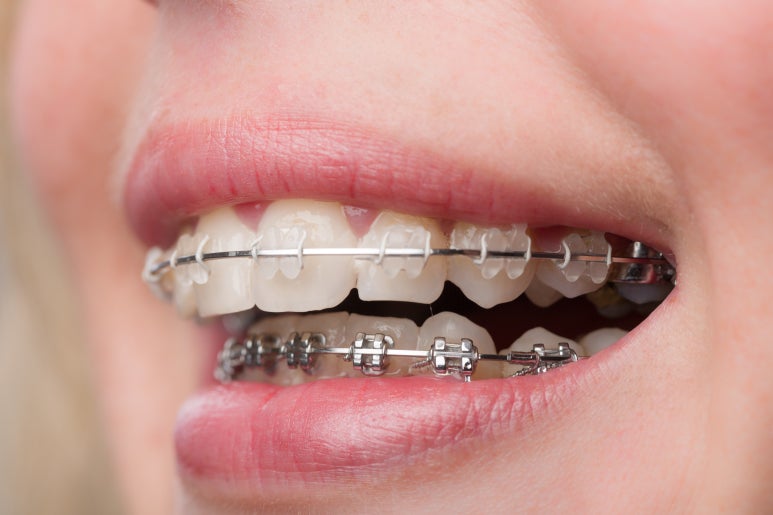
Do brackets need to be removed in order to treat a cavity?
Not necessarily.
If the cavity is located away from the appliance, treatment is often possible while leaving the bracket in place.
On the other hand, if the cavity is located directly beneath a bracket or in a position that is difficult for dental instruments to access, the affected bracket may be temporarily removed. Treatment is then performed and the bracket is reattached.
In other words, it is very rare for all the appliances to need to be removed or for orthodontic treatment to have to start over from the beginning.
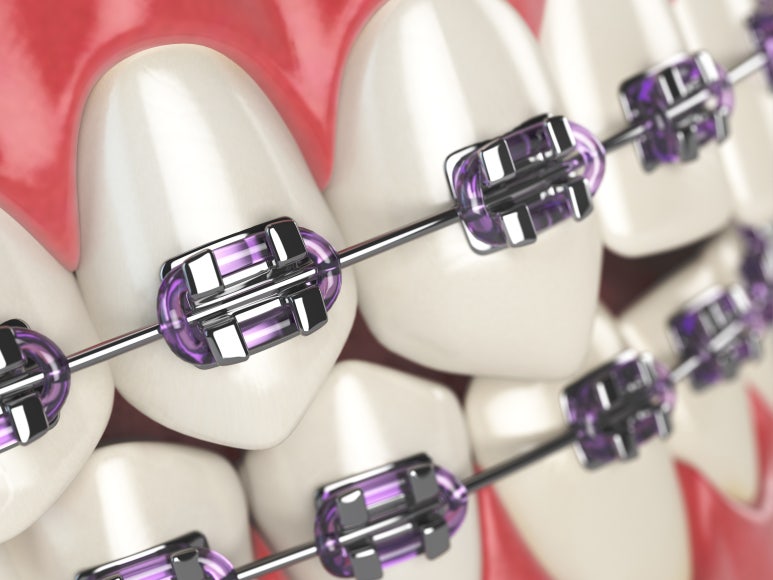
What problems can occur if a cavity is left untreated during orthodontic treatment?
A cavity is not a condition that improves on its own over time.
If treated early, it can usually be resolved relatively simply. However, the longer it is left untreated, the deeper the cavity may become, and the scope of treatment may gradually increase.
In severe cases, root canal treatment may be necessary, and it may become difficult to preserve the tooth.
In addition, changes in the shape of the tooth or pain may make it difficult to continue orthodontic treatment as planned, potentially lengthening the overall treatment period.
Therefore, it is important not to dismiss even minor symptoms during orthodontic treatment.
-
These symptoms may indicate a cavity.
-
Sensitivity when eating cold or sweet foods
-
Discomfort or pain when chewing with a particular tooth
-
A tooth becoming brown or black
-
Food repeatedly getting stuck between the teeth
-
A small hole visible on the surface of a tooth
-
Throbbing pain without a specific cause
Because it is often difficult to determine on your own whether discomfort is caused by the orthodontic appliances or by a cavity, it is best to have an accurate examination.
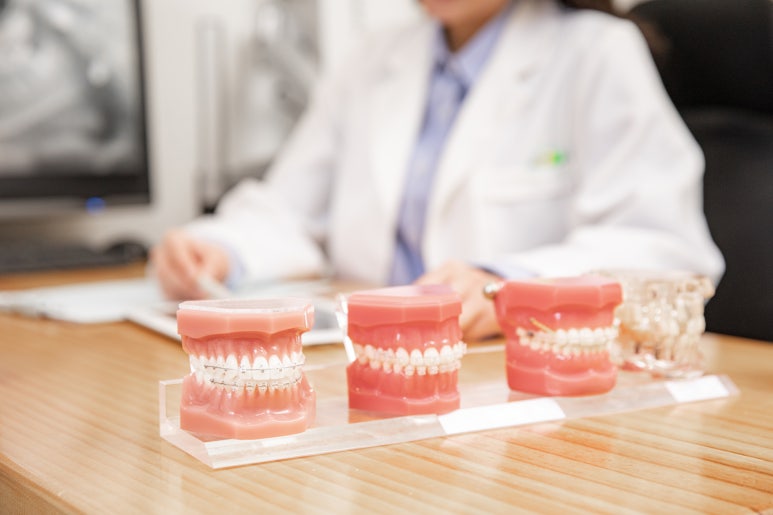
How can you prevent cavities during orthodontic treatment?
Preventing cavities is much more important than treating them.
During orthodontic treatment, using not only a regular toothbrush but also an interdental brush, orthodontic floss, and a single-tuft toothbrush can help you clean more thoroughly around the brackets.
It is also helpful to brush as soon as possible after meals. If brushing is difficult, making a habit of rinsing your mouth several times with water can help remove food particles.
Avoid sticky foods such as hard candies and caramel whenever possible. Drinking water after consuming sweet beverages can also help prevent cavities.
Most importantly, regular checkups are essential.
During orthodontic treatment, it is necessary to check not only the movement of the teeth but also for cavities and gum health. Therefore, it is best to keep your scheduled appointments.
Continue Your Healthy Orthodontic Treatment
with Neungdong Dental Clinic and S Leader Dental Hospital
The goal of orthodontic treatment is not simply to straighten the teeth. It is most important to maintain healthy teeth and gums for a long time even after treatment is completed.
If a cavity develops during orthodontic treatment, rather than becoming overly worried or delaying treatment, it is important to receive an accurate diagnosis of how far the cavity has progressed and obtain appropriate treatment.
At Neungdong Dental Clinic and S Leader Dental Hospital, we carefully check for cavities and gum disease that may occur during orthodontic treatment and provide personalized care suited to each patient’s oral condition.
We coordinate orthodontic and general dental care to maintain continuity of treatment, while taking into consideration not only function and appearance but also long-term oral health.
If you experience tooth sensitivity or pain during orthodontic treatment, or have symptoms that suggest a cavity, instead of worrying on your own, have an accurate examination to determine the appropriate time for treatment. Treating a small cavity early is the best way to achieve a healthy orthodontic outcome.




Neungdong Dental Clinic :: S Leader Dental Hospital