Hello. I am Sim Seong-hwan from S Leader Dental Hospital, a Gangbyeon Station dental clinic celebrating its 22nd anniversary this year.
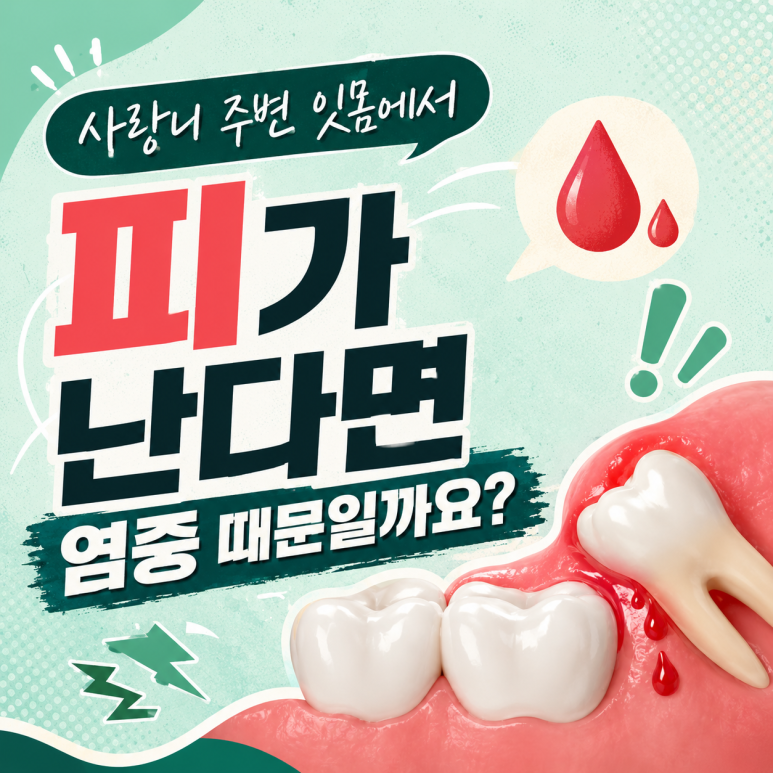
It is easy to feel alarmed when you see blood on your toothbrush while brushing or notice a reddish tinge in the water when rinsing your mouth. In particular, if there was no noticeable problem before but bleeding keeps recurring around the wisdom tooth at the very back of your mouth, you may wonder whether it is simply due to brushing too hard or whether your gums have become inflamed.
Because wisdom teeth are located at the very back of the mouth, they are harder to reach with a toothbrush than other teeth. A wisdom tooth that has fully erupted in an upright position may be relatively easy to care for. However, if a wisdom tooth has only partially erupted or is growing at an angle, it can create an environment where food debris and bacteria easily remain between the tooth and gums. This may lead to pericoronitis, in which the gums around the wisdom tooth become swollen and bleed.
The problem is that, at first, it may cause only slight bleeding during brushing, making it easy to dismiss. However, as the inflammation worsens, it may be accompanied by pain, swelling, and bad breath, as well as discomfort when opening the mouth or swallowing food, so caution is needed.
Today, S Leader Dental Hospital, a Gangbyeon Station dental clinic, will explain in detail why the gums around a wisdom tooth may bleed, the symptoms of pericoronitis, how to manage the area routinely, and when a dental examination is necessary.
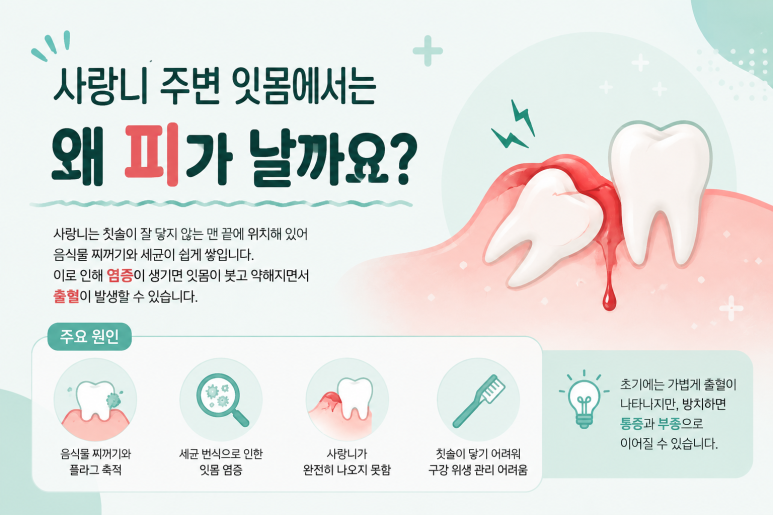
Why Do the Gums Around a Wisdom Tooth Bleed?
Bleeding gums can be one of the characteristic symptoms that occur when the gum tissue becomes inflamed.
Healthy gums do not bleed easily from ordinary brushing. However, if plaque and food debris remain around the teeth for a long time and bacteria multiply, the gums may become inflamed, red, or swollen. At this point, even minor irritation from a toothbrush or food can cause bleeding.
Wisdom teeth are located in an area where these problems are likely to occur. In particular, when a wisdom tooth has not fully erupted and only part of it has emerged through the gums, the gums may cover part of the tooth.
If food debris or bacteria enter beneath these gums, they become difficult to remove completely through ordinary brushing alone. Eventually, the bacteria multiply and cause inflammation, which can lead to bleeding during brushing or swelling and pain around the wisdom tooth.
However, bleeding around a wisdom tooth does not necessarily mean that it is pericoronitis. Other possibilities, such as an injury to the gums caused by brushing too hard or gum disease affecting a neighboring tooth, should also be checked.
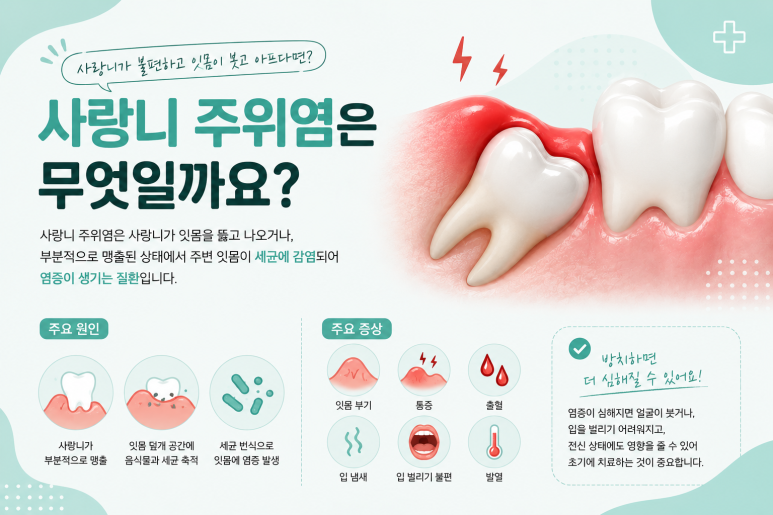
What Is Pericoronitis?
Pericoronitis refers to inflammation that develops in the gum tissue around a wisdom tooth. It can occur relatively often, especially when the wisdom tooth has not fully erupted.
The gums may partially cover a partially erupted wisdom tooth. If food debris and bacteria enter between the tooth and the gum, an environment favorable to inflammation can develop.
At first, it may begin with slight swelling around the wisdom tooth or bleeding during brushing. You may feel discomfort when the gums are pressed while chewing, or a stinging sensation when the toothbrush touches the area.
As the inflammation progresses, pain and swelling around the wisdom tooth may worsen. You may also notice an unpleasant taste or odor in your mouth. In some cases, the surrounding tissues may be affected, making it difficult to open your mouth wide or causing discomfort when swallowing food.
Therefore, if bleeding around a wisdom tooth repeatedly occurs along with swelling or pain, it is best not to regard it as simple gum bleeding.

Avoiding Brushing Because of Bleeding May Actually Make It Worse
When the area around a wisdom tooth bleeds, some people avoid brushing it because they think, “Could the toothbrush be causing further irritation?”
However, if the bleeding is caused by inflammation, not brushing may actually worsen the symptoms. This is because plaque and food debris continue to accumulate, allowing bacteria to increase and the inflammation to become more severe.
There is no need to brush the area around a wisdom tooth aggressively just because it is bleeding. It is better to use a soft toothbrush and carefully clean the boundary between the tooth and gums without applying excessive pressure to the gums.
Because wisdom teeth are located at the very back of the mouth, a large toothbrush head may not reach them properly. When necessary, using a toothbrush with a small head may help you access the back area.
However, if the gums are severely swollen and painful, avoid forcing a toothbrush into the area or trying to remove food with a sharp instrument.
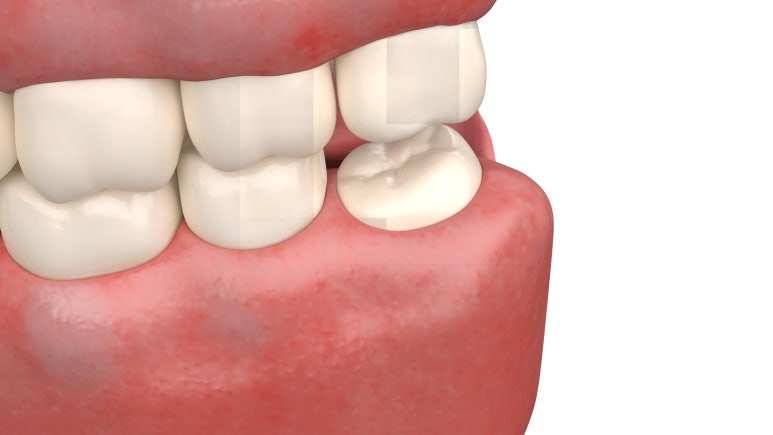
The Area Between the Wisdom Tooth and the Molar in Front of It Also Needs Care.
One area that is easy to overlook when caring for a wisdom tooth is the space between the wisdom tooth and the molar directly in front of it.
Food can easily become trapped where an angled or partially erupted wisdom tooth touches the molar in front of it. Because this area is difficult to see directly and hard for a toothbrush to reach, food may remain there for a long time.
If this condition continues, there may be a risk not only of inflammation in the gums around the wisdom tooth but also of cavities developing in the wisdom tooth itself or in the molar directly in front of it.
Therefore, if the area around a wisdom tooth bleeds, it is important to check not only the wisdom tooth but also the gums and possible cavities in the tooth directly in front of it.
If food frequently becomes trapped even after brushing, there is a strong odor when using dental floss, or blood repeatedly appears from a particular area, it is a good idea to have an examination.
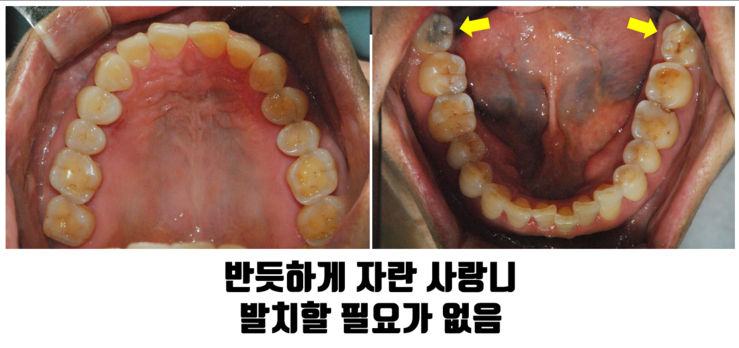
If the Area Around a Wisdom Tooth Frequently Swells and Bleeds, Does It Need to Be Extracted?
Not every wisdom tooth must be extracted simply because inflammation has developed around it.
If the wisdom tooth has erupted sufficiently in a normal direction, has an opposing tooth, and can be kept clean without difficulty, it may be possible to keep and manage it depending on its condition.
On the other hand, if the wisdom tooth is growing at an angle or has only partially erupted, causing the gums to swell repeatedly, or if its structure makes it unavoidable for food and bacteria to continue accumulating, the possibility of recurrent inflammation should be considered.
It is also necessary to check whether the wisdom tooth is touching the molar directly in front of it and causing cavities or gum problems.
Therefore, rather than simply deciding, “The wisdom tooth must be removed because it is bleeding,” it is important to assess the need for extraction after considering the tooth’s position and direction, degree of eruption, and the condition of the surrounding gums and adjacent teeth as a whole.
If These Symptoms Occur Together, Have an Examination
A small amount of bleeding once or twice around a wisdom tooth does not necessarily indicate a serious problem. However, if the bleeding recurs or is accompanied by other symptoms, it is a good idea to have your current condition checked.
In particular, if the gums around the wisdom tooth are red and swollen, if they bleed every time you brush, or if you feel pain while chewing, it is necessary to check for inflammation.
The same applies if you notice an unpleasant odor or taste around the wisdom tooth, discharge that appears to be pus, or pain that extends to the jaw or surrounding areas.
If worsening inflammation makes it difficult to open your mouth or causes discomfort when swallowing, it is better to receive dental care rather than leave the symptoms untreated.
Wisdom tooth pain can also improve and then return. A reduction in pain or swelling after a few days does not necessarily mean that the cause of the inflammation has been resolved. If similar symptoms recur, it is important to have the condition of the wisdom tooth accurately examined.

If the Gums Around a Wisdom Tooth Bleed,
Have Them Checked at Gangbyeon Station Dental Clinic, S Leader Dental Hospital
If the area around a wisdom tooth bleeds, it is important to determine whether the gums were simply scratched by a toothbrush, whether temporary irritation occurred because food became trapped, or whether inflammation such as pericoronitis has begun.
Wisdom teeth are located deep inside the mouth, making it difficult to check their condition directly. Even if a wisdom tooth appears to have emerged slightly, it may actually be positioned at an angle or partially embedded beneath the gums. When necessary, its position and relationship with the surrounding teeth can be examined through radiographic imaging and other methods.
At S Leader Dental Hospital, a Gangbyeon Station dental clinic, we consider the appropriate management and treatment direction for each patient’s current condition by checking not only the gum condition around the wisdom tooth but also the direction in which it has grown, its degree of eruption, and its relationship with the molar directly in front of it.
If the area around your wisdom tooth continues to bleed when brushing or if swelling and pain recur, it is best not to leave it untreated for a long time by assuming it is simple gum bleeding. Because pericoronitis can improve and then return, it is important to identify the cause and begin the necessary care.
Take care to clean around your wisdom tooth thoroughly, and if you experience recurring bleeding or pain, consider having the condition of your wisdom tooth and the surrounding gums checked at S Leader Dental Hospital.






Gangbyeon Station Dental Clinic :: S Leader Dental Hospital