
Hello, we are Merry Plastic Surgery Clinic, pursuing natural and beautiful changes.
Nose surgery was one of the cosmetic procedures that many people considered.
Because the image can change greatly depending on the height, angle, and proportions of the nose, it has also drawn even more attention.
Rather than simply following a preferred nose shape, the procedure also had to take into account the balance and size in relation to the face, so it was a surgery that required even more caution.
If the functional aspects of the nose are overlooked and the focus is only on appearance, various side effects can occur, so many people even put effort into finding the right clinic from the very beginning.
In particular, if the implant used in rhinoplasty is not selected with proper suitability in mind, complications such as inflammation and capsular contracture can occur, and revision surgery may be needed.
Today, we will introduce Merry non-implant rhinoplasty, which can help reduce concerns about side effects, and take a look at the characteristics of autologous tissue.
What is Merry non-implant rhinoplasty?

This is a rhinoplasty procedure that uses only the patient's own tissue, offering a soft and natural feel. After it integrates, it can last semi-permanently and is resistant to external impact.
The autologous tissues mainly used included septal cartilage, costal cartilage, and ear cartilage.
Septal cartilage did not require separate harvesting, but if there was not enough tissue, other cartilage could also be harvested and used.
Because autologous tissue is natural and comes from the patient's own body, it has fewer side effects, making it helpful for those who prioritize stable results.
What are the types and characteristics of autologous tissue?
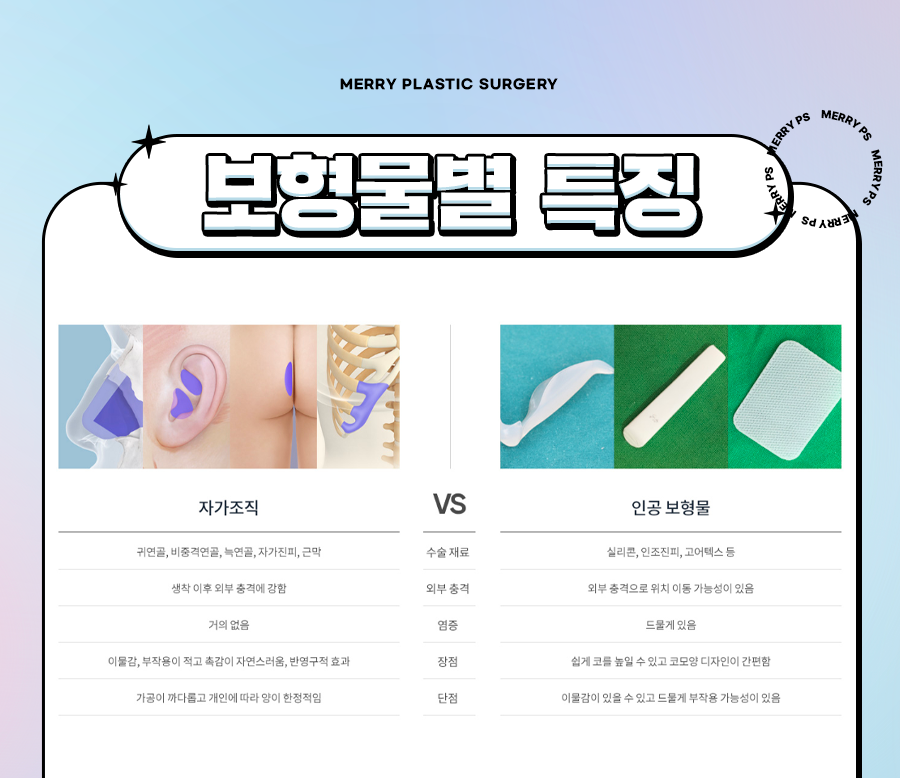
Nose surgery is usually performed using either artificial implants or autologous tissue.
Rather than saying one is definitely better, each implant has its own pros and cons, so it was important to determine which one is suitable for me.
Artificial implants included silicone, Gore-Tex, and mesh pore, among others.
They can shift position due to external impact and may sometimes be accompanied by side effects such as inflammation.
However, artificial implants are convenient for easily raising the nose and refining its shape.
On the other hand, autologous tissue becomes strong against external impact after it has integrated.
Because it is the patient's own tissue, it also has the advantage of causing fewer inflammatory reactions, less foreign-body sensation, and fewer side effects.
However, autologous tissue is difficult to process, and the available amount is limited depending on the individual, so it should not be used indiscriminately.
Then what are the characteristics of each type of autologous tissue?
Autologous tissues used in Merry non-implant rhinoplasty
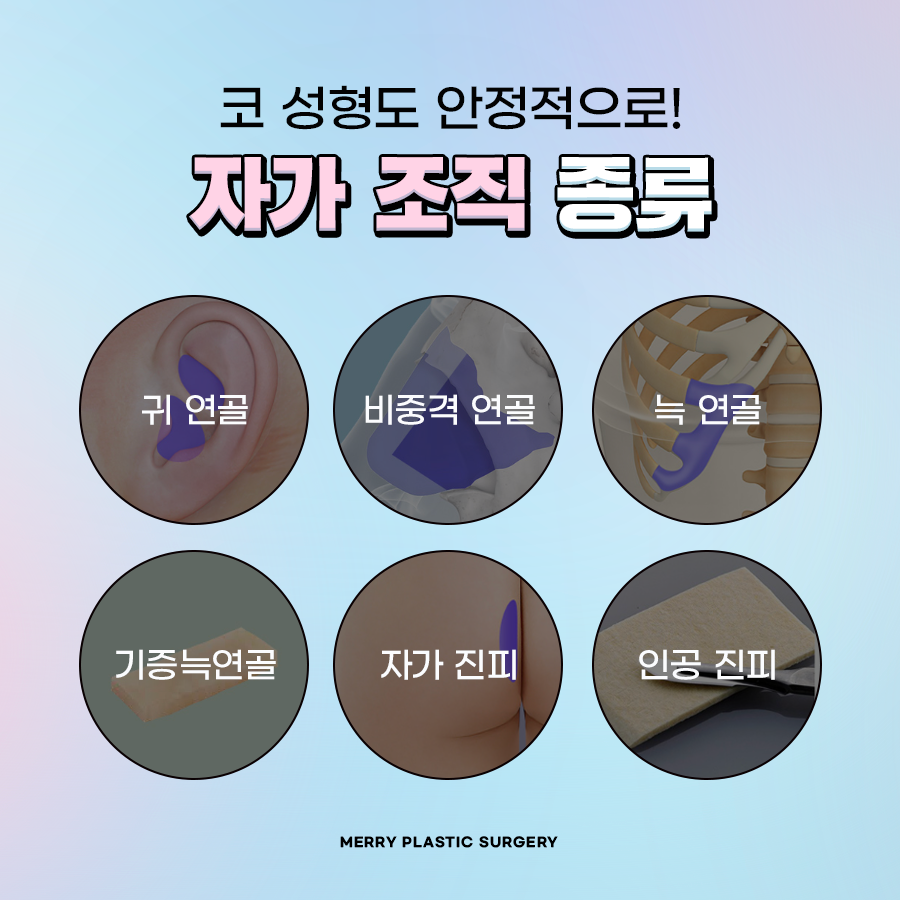
👃 Septal cartilage
Septal cartilage, located inside the nose, is mainly used to lift the nasal tip or lengthen the nose. Since it is harvested from inside the nose, it has the advantage of not requiring a separate incision.
👃 Costal cartilage
Costal cartilage, located at the end of the ribs, is characterized by having fewer side effects, strong support and durability, and the ability to secure a sufficient amount.
For that reason, it can be said to be a material that can satisfy both functional and aesthetic aspects.
👃 Ear cartilage
Ear cartilage is similar in shape to the nose and is round and elastic, making it suitable for building the structure of the nasal tip.
If there is not enough septal cartilage, it is appropriate to use additionally.
👃 Donor costal cartilage
This is costal cartilage that has been processed to remove sources of infection and prevent immune reactions, and it is used when there is not enough autologous cartilage available for harvesting.
👃 Autologous dermis
Autologous dermis is used when the skin on the bridge of the nose is thin or when there is insufficient soft tissue in the nose. It can be used on sensitive or thin skin without a foreign-body sensation.
👃 Acellular dermal matrix
This is a material made by processing dermis harvested from a cadaver to remove immune components, viruses, and harmful substances. It is used for auxiliary purposes such as reinforcing thin skin.
What is the key point of Merry non-implant rhinoplasty?
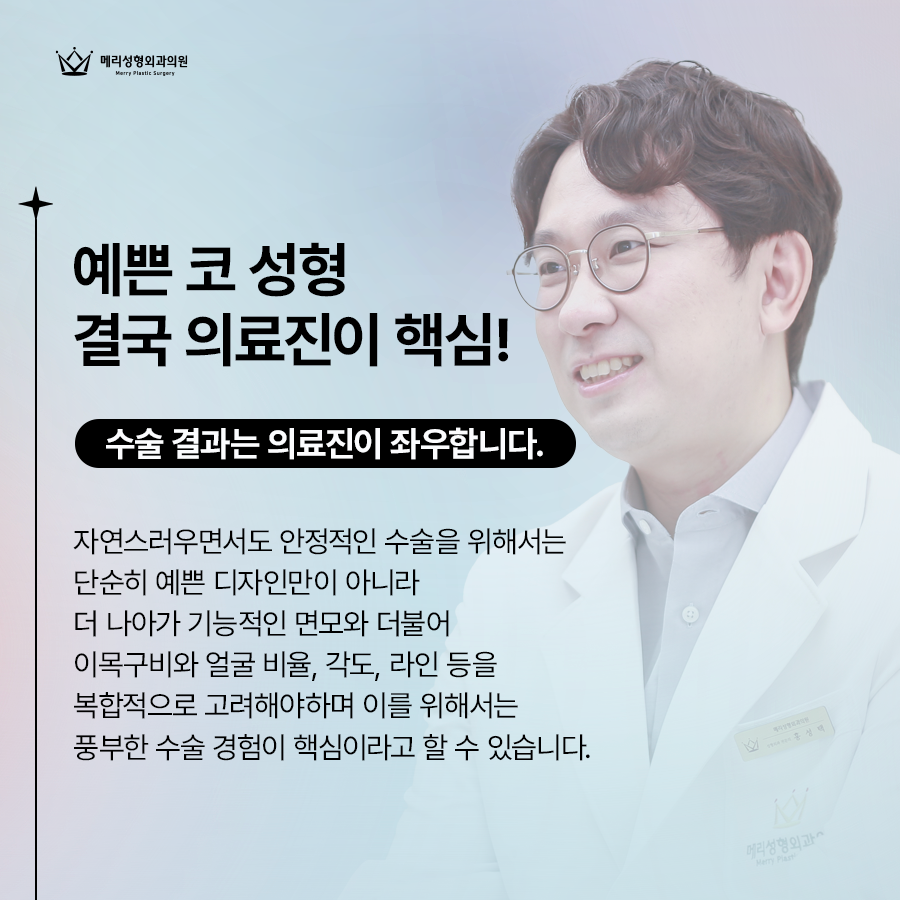
Merry non-implant rhinoplasty helps with surgery by using only the various autologous tissues introduced above.
The tissue needed can be selected while taking into account the shape and structure of the nose, as well as any functional defects.
However, if the nasal bridge is severely low or an implant is needed, a combined approach can also be used.
Our clinic's non-implant rhinoplasty is helpful for those who need to reduce side effects such as inflammation and foreign-body sensation.
It is also ideal if natural-looking results after rhinoplasty are the goal.
By using autologous tissue, we strive to create a nasal line that feels soft to the touch and moves naturally.
After integration, it becomes a strong, semi-permanent nasal line that is resistant to external impact.
To maintain these advantages for a long time, it is important to have a thorough understanding of the condition of the nose before surgery.
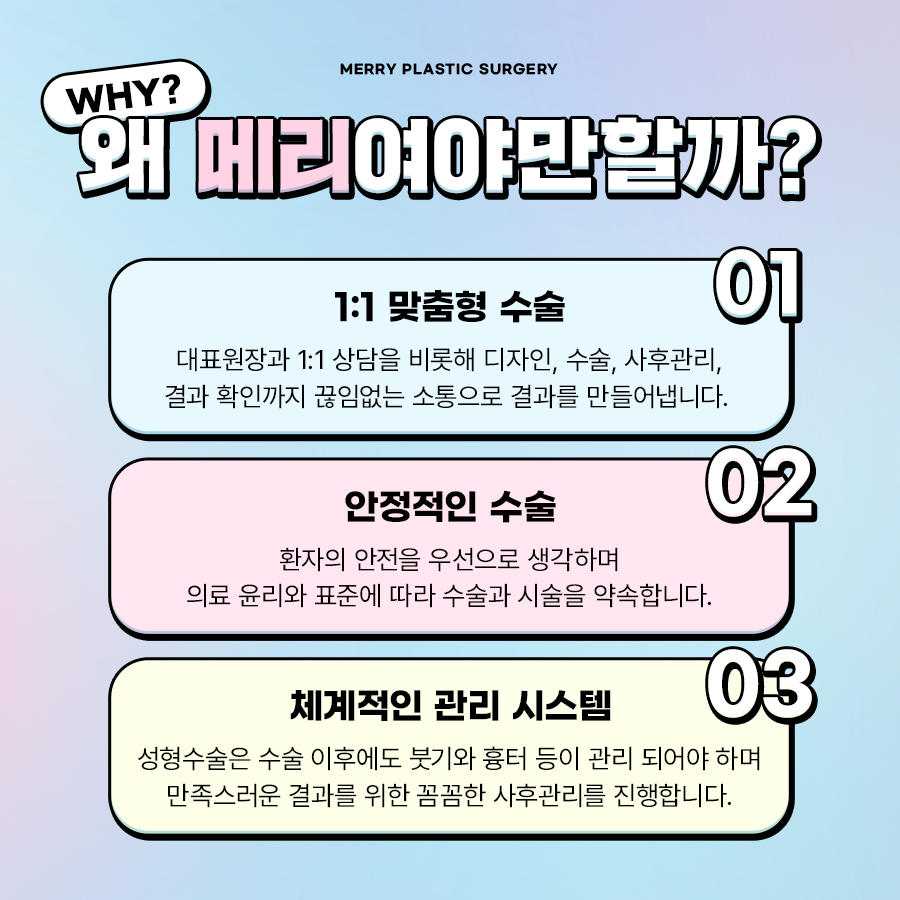
It is also necessary to establish a 1:1 customized surgical plan and carefully manage swelling and scars after all procedures are completed in order to achieve satisfying results.
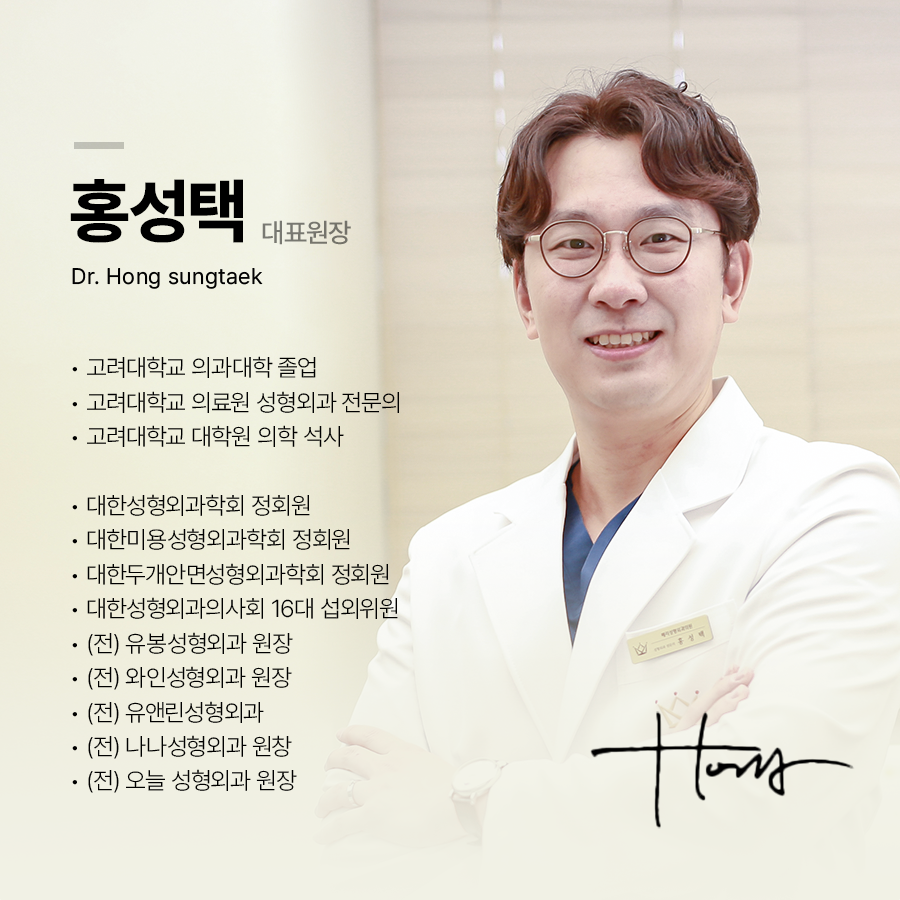
The medical team at our clinic, which assists with Merry non-implant rhinoplasty, strives to provide 1:1 customized care based on extensive surgical experience and anatomical knowledge.
If you are expecting a beautiful line and stable results, you can visit our clinic for a consultation.











Previous image
Next image