�
Hello, we are Merry Plastic Surgery Clinic, which pursues natural and beautiful changes.
As much as taking care of the inner self matters, the importance of appearance was also becoming more prominent.
As competition and the importance of appearance have risen in this way, more people have been considering plastic surgery to refine themselves and improve their image.
Among these procedures, the nose can enhance the three-dimensional look of the face and, depending on its shape, change the overall impression, so it is a highly preferred surgery for people of all ages and genders.
The problem is that, as demand is high, revision surgery cases are also being reported quite often.
The nose had to be considered comprehensively in terms of both function and aesthetics, as well as the materials used in surgery.
In addition, because various blood vessels and nerves are distributed throughout the nose, bleeding and swelling also had to be managed.
�
If the first surgery left you unsatisfied or caused discomfort, many people found that those problems were especially concentrated at the nasal tip.
Today, let’s look at the cases that require nose revision surgery, along with how cartilage is used for nasal tip revision surgery.
�
Cases That Require Nose Revision Surgery

�
✅ When an implant is visible through the skin
✅ When the nasal bridge is bent
✅ When the nasal bridge is too high or the nostril shape has been distorted
✅ When the nasal tip shape has been distorted
✅ When it is elevated or shortened due to contracture
✅ When the shape has been altered due to a foreign substance in the nose
�
When people talk about an aesthetically pleasing nose, they often want a straight bridge that is not drooping or crooked.
In particular, it was desirable for the bridge and line to match the proportions and image of the individual’s face while also having an appropriate angle.
For this reason, those considering plastic surgery could undergo full nose surgery or partial surgery on only the bridge or the tip, depending on their needs.
However, regardless of which area is treated, there is always concern about side effects.
Among them, a representative case is not only dissatisfaction with the shape but also cases of side effects caused by implants, which have been reported quite often.
The implants used at this time were mainly artificial implants, and problems tended to arise when they were not suitable for the individual.
�
Can Cartilage Be Used for Nasal Tip Revision Surgery?
If side effects cause problems such as the nasal tip becoming crooked or lifted, along with inflammation or foreign substances, nasal tip revision surgery can be considered through partial improvement.
At this time, costal cartilage can be used as cartilage for nasal tip revision surgery.
�
What Is Costal Cartilage?

�
Costal cartilage is the cartilage located at the end of the ribs under the chest. Because it is firm and durable, it can create a strong support structure, and because a sufficient amount of cartilage can be obtained, it is a type of cartilage for nasal tip revision surgery that can be used in many ways for rhinoplasty.
As living tissue, it has the advantage of a low risk of inflammation-related side effects and can be used for a variety of purposes.
�
How Is Cartilage Used for Nasal Tip Revision Surgery?
�
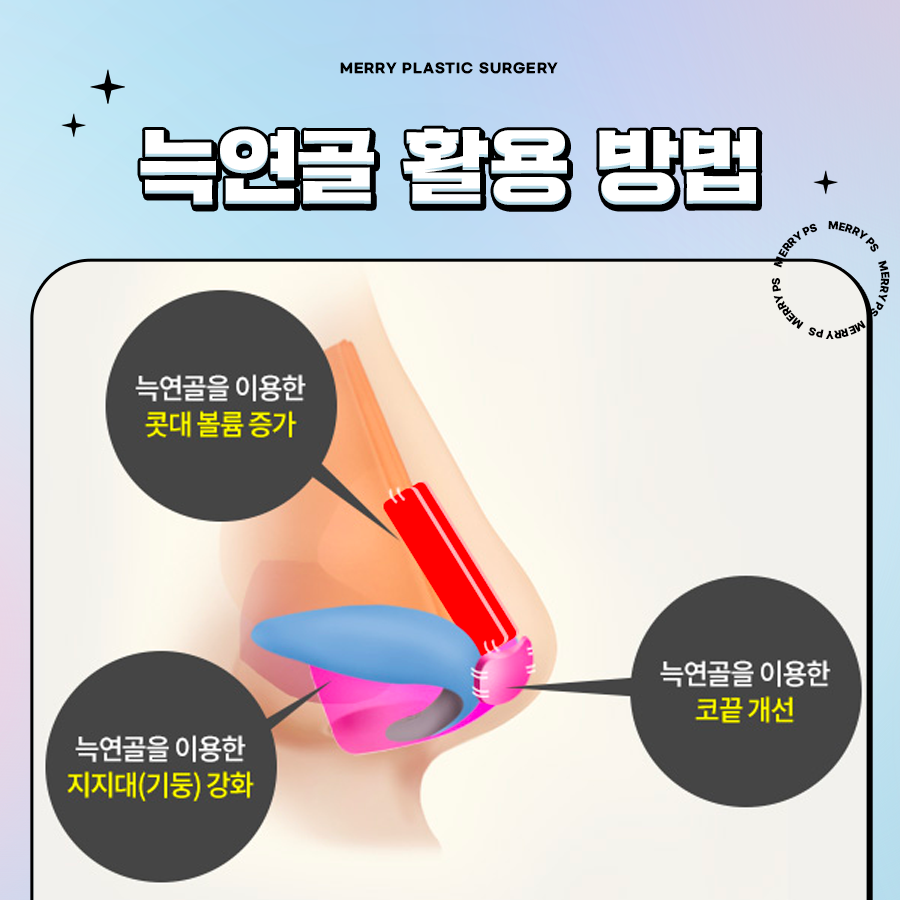
In general, costal cartilage must be precisely shaped and inserted into the nasal bridge, columella, and nasal tip.
When the nasal tip has risen too high, costal cartilage can be used to bring it down, and if the bridge needs to be raised, autologous dermis can also be used additionally.
However, when using costal cartilage, checking how it is handled is key to avoiding another revision surgery.
�
How Is Costal Cartilage Cut?
�
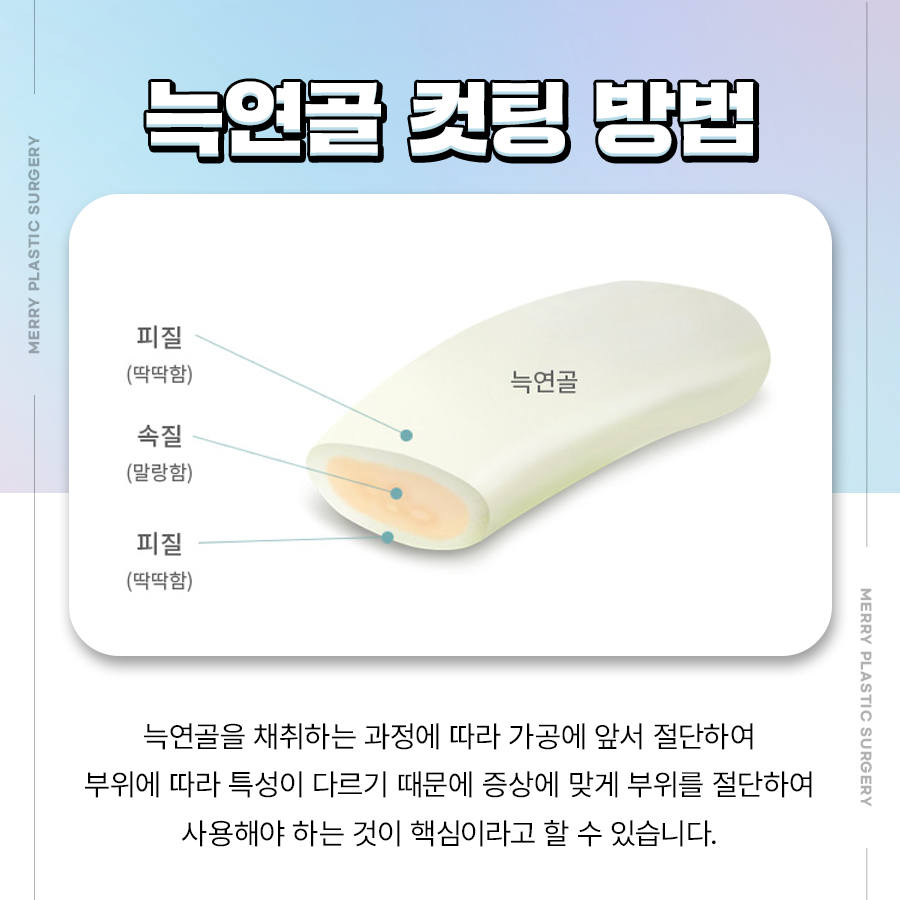
Depending on how the costal cartilage is harvested, it is cut before processing.
Because each area has different characteristics, the key is to cut and use the appropriate section according to the symptoms.
When examining cartilage, the cortex is the outer part of the cartilage and is characterized by its hardness, while the medulla is the inner part of the cartilage and has a soft nature.
There are also advantages and disadvantages depending on the cutting method.
In general, cutting along the long axis (horizontal direction) allows for long and wide cartilage to be secured, but because the cortex and medulla have different properties, warping can occur, so caution is needed.
When cutting the cross-section along the short axis (vertical direction), uniform costal cartilage can be made, and because its strength is good, it has the advantage of less warping.
However, it has the disadvantage of being difficult to use because it is narrow.
For this reason, at our clinic, when using autologous costal cartilage, we cut it diagonally to compensate for the drawbacks of both cutting methods.
When cut diagonally, it is possible to create costal cartilage with high strength and sufficient width.
�
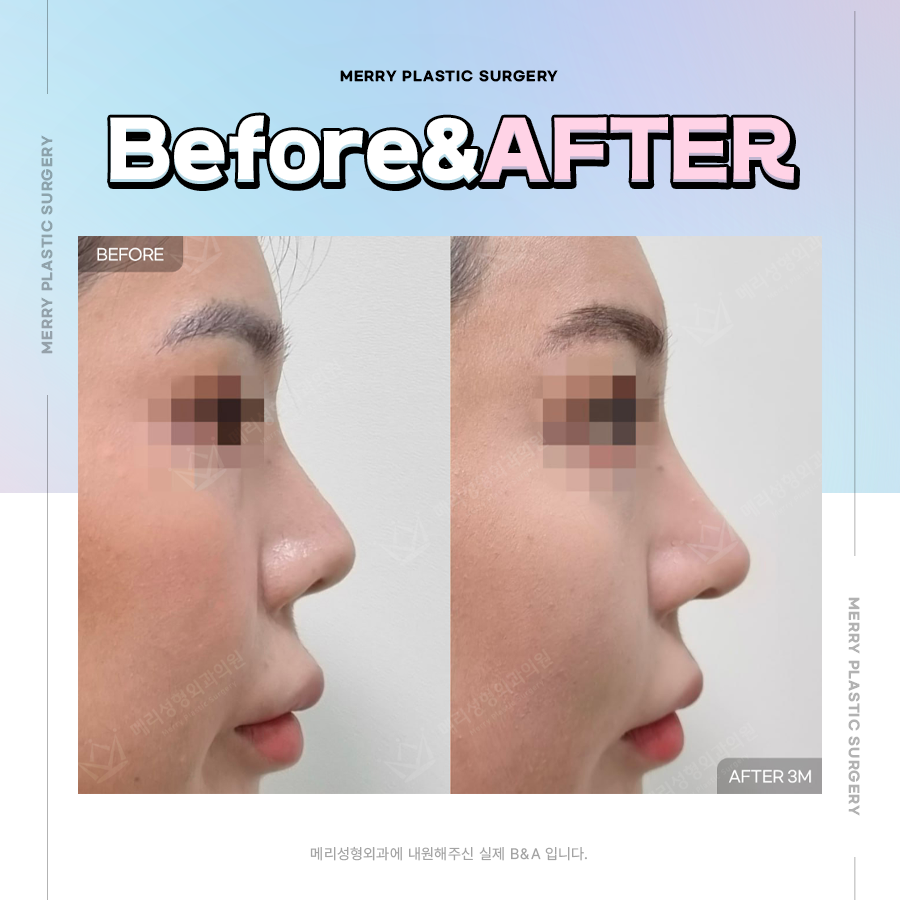
�
For nasal revision surgery, including the nasal tip revision discussed today, it is best to proceed at least 6 to 12 months after the first surgery.
However, the condition of the nose and the timing for improvement vary depending on the previous surgical method, so we recommended visiting the clinic and receiving 충분한 상담 from the medical staff.
Thank you.