Hello, we are Merry Plastic Surgery Clinic, pursuing natural and beautiful changes.
As we age, going through the aging process is, in a way, only natural.
However, if wrinkles become especially deep and more noticeable, the face can look older and give a more stubborn impression, so many people tend to worry about it.
This is because wrinkles like these and the loss of skin elasticity have limits when it comes to self-care such as skincare.
Accordingly, more and more people have been deciding to seek medical help for clearer wrinkle improvement.
Among these, thread lifting is a procedure that can directly lift the skin, unlike laser lifting procedures such as Ulthera or Thermage.
For that reason, it can be expected to provide immediate effects along with a longer duration of maintenance.
Today, we will explain thread lifting PDO ingredients and the characteristics of the different types of threads that use them.
What is thread lifting?

Thread lifting is a procedure that uses medical absorbable threads to increase tension.
Ingredients used in thread lifting include PDO, PLLA, and PCL, and as the threads dissolve in the body after several months, the elastic tissue around them recovers, making it possible to expect skin elasticity to be maintained for a longer period.
Such effects are not artificial, and because they are free from the risks of incisions and scars that can occur in surgeries such as facelift procedures, this is a highly satisfying procedure.
What are PDO ingredients for thread lifting?
As mentioned earlier, the threads used in thread lifting are broadly divided into three types.
Among them, PDO ingredients for thread lifting are the most commonly used.
Because they have also been used as suture material in heart surgery, they can be said to be harmless to the human body.
However, depending on the manufacturer, the shape of the thread varies and the type of barbs also differs, so each can be applied to the treatment area in a way that makes use of its own characteristics.
So, what exactly are PDO ingredients for thread lifting?
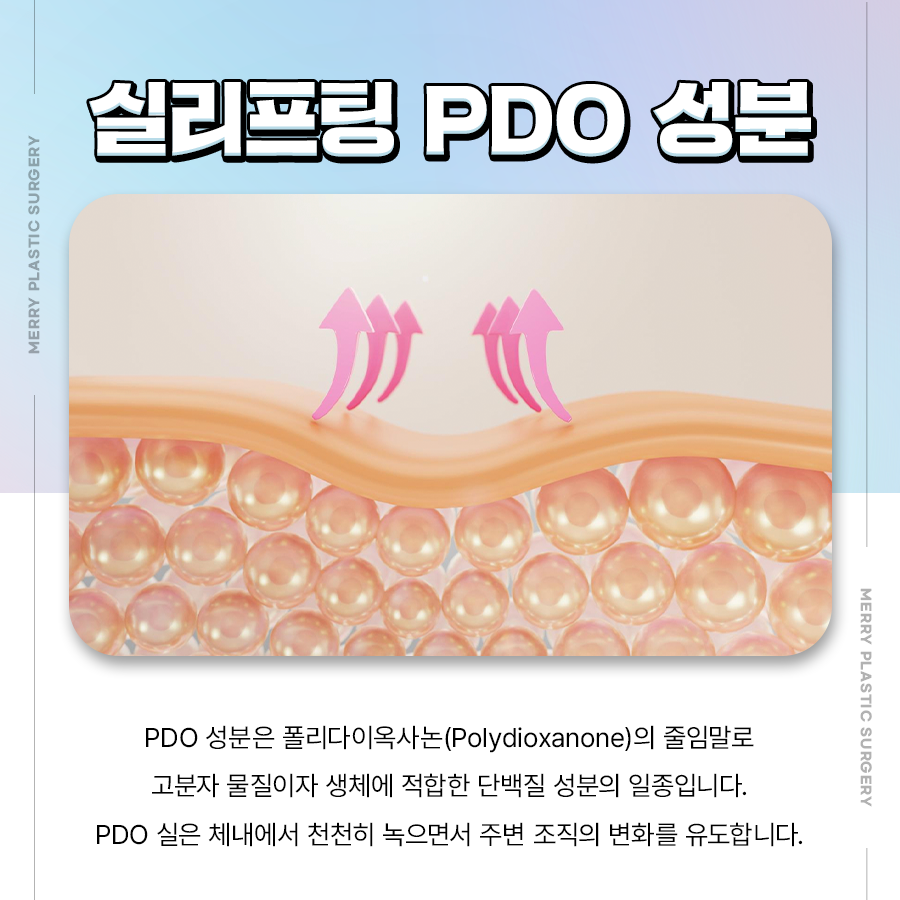
PDO ingredients for thread lifting is short for Polydioxanone, a polymer material and a type of biocompatible protein ingredient.
The PDO thread is made by compressing this ingredient into a fibrous form.
PDO threads made this way slowly dissolve in the body while inducing changes in the surrounding tissue.
By pulling the skin to add tension while also stimulating the surrounding tissue, they can be expected to promote collagen regeneration and skin recovery.
What types of PDO threads are there?
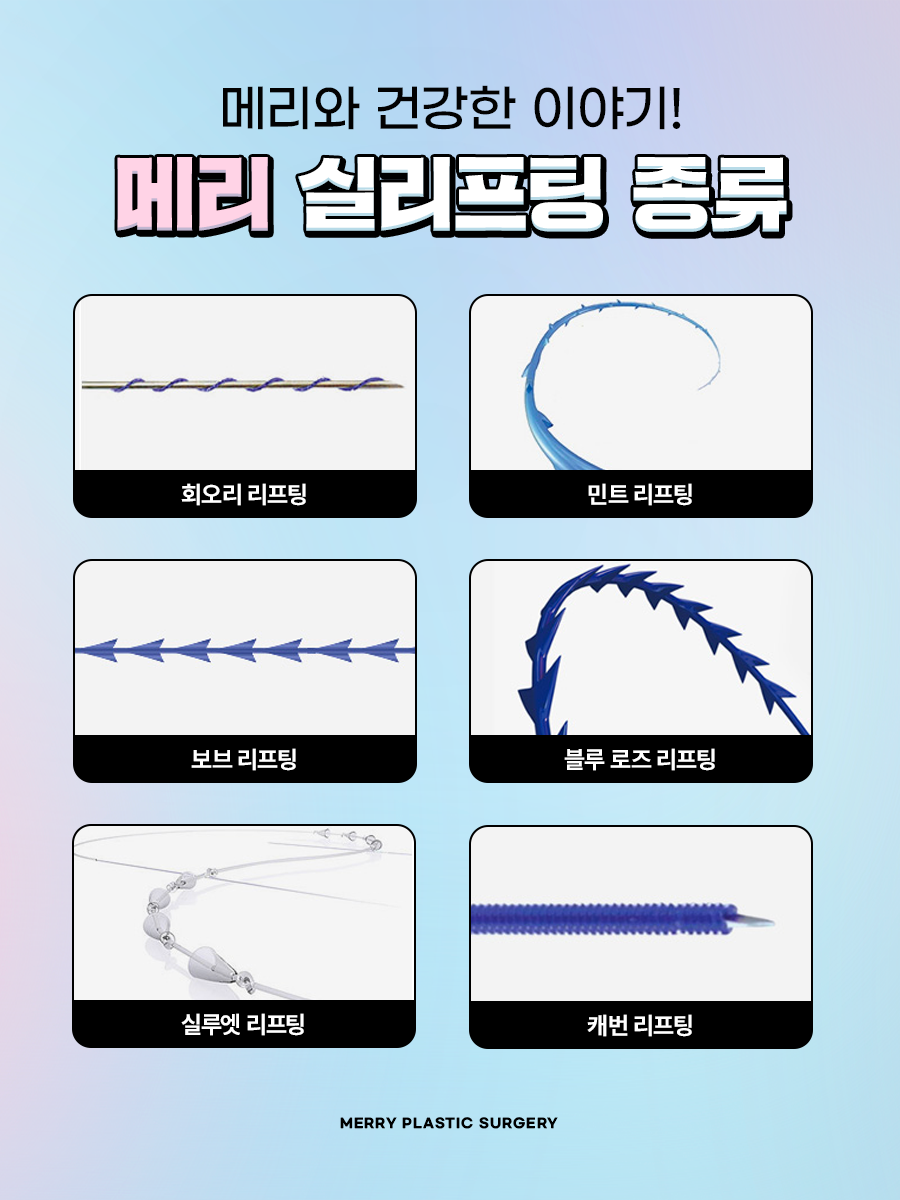
Broadly speaking, PDO threads can be divided into mono threads and barbed threads.
Mono threads are used for skin collagen regeneration, while barbed threads are used for lifting at the same time.
Therefore, when performing thread lifting, they can be used in combination depending on the patient’s needs.
✅ Mint Lifting
A lifting procedure effective for sagging cheeks and deep wrinkles with a powerful 360° barbed structure.
As a molded, minimally invasive PDO thread for fixation of facial tissue, it is widely used for elasticity as well as facial contour lines.
✅ Bob Lifting
A thread made by heat-treating PDO yarn with specially processed blades to form even and firm barbs without heating, and effective for deep wrinkles and sagging cheeks.
✅ Blue Rose Lifting
A thread whose safety has been certified through various approvals, and because it is made using a special molding method, the thread thickness remains consistent and breakage is less likely, so it tends to have a longer duration.
What is more important than the PDO ingredients for thread lifting?
Because PDO ingredients have long been loved for their stability, concerns are greater about side effects caused by the procedure process than by the ingredients themselves.
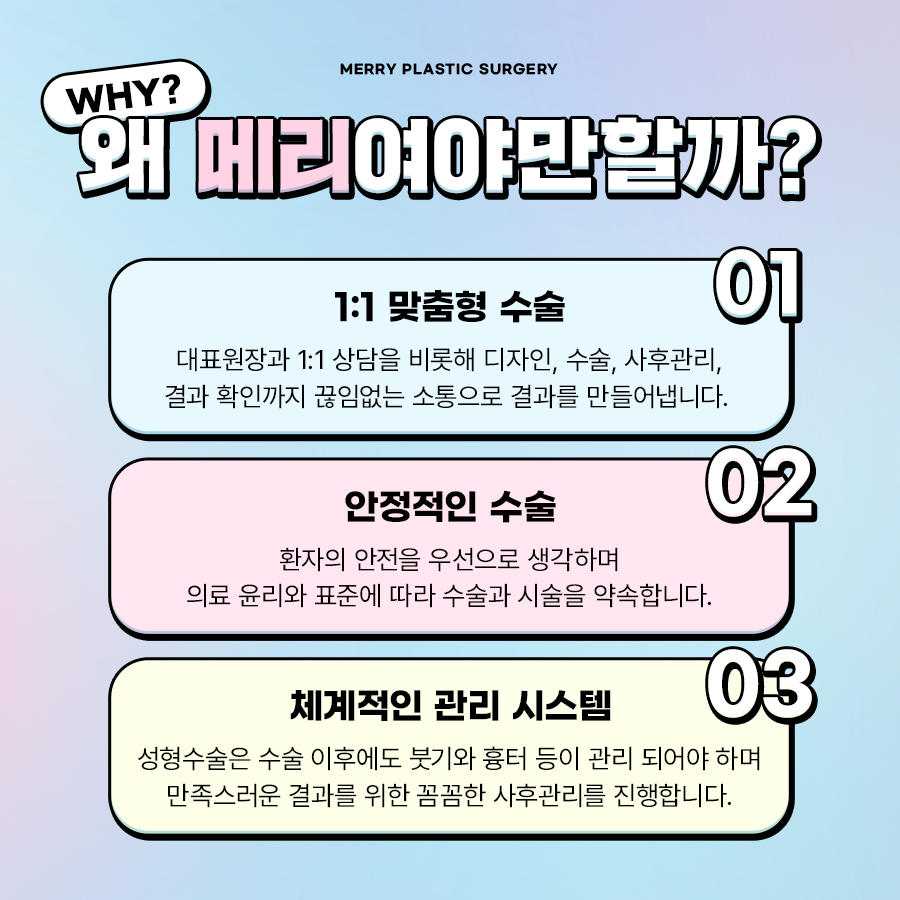
Therefore, in order to fully expect the effects of thread lifting, it is important to visit a clinic with extensive experience in performing customized procedures for each patient.
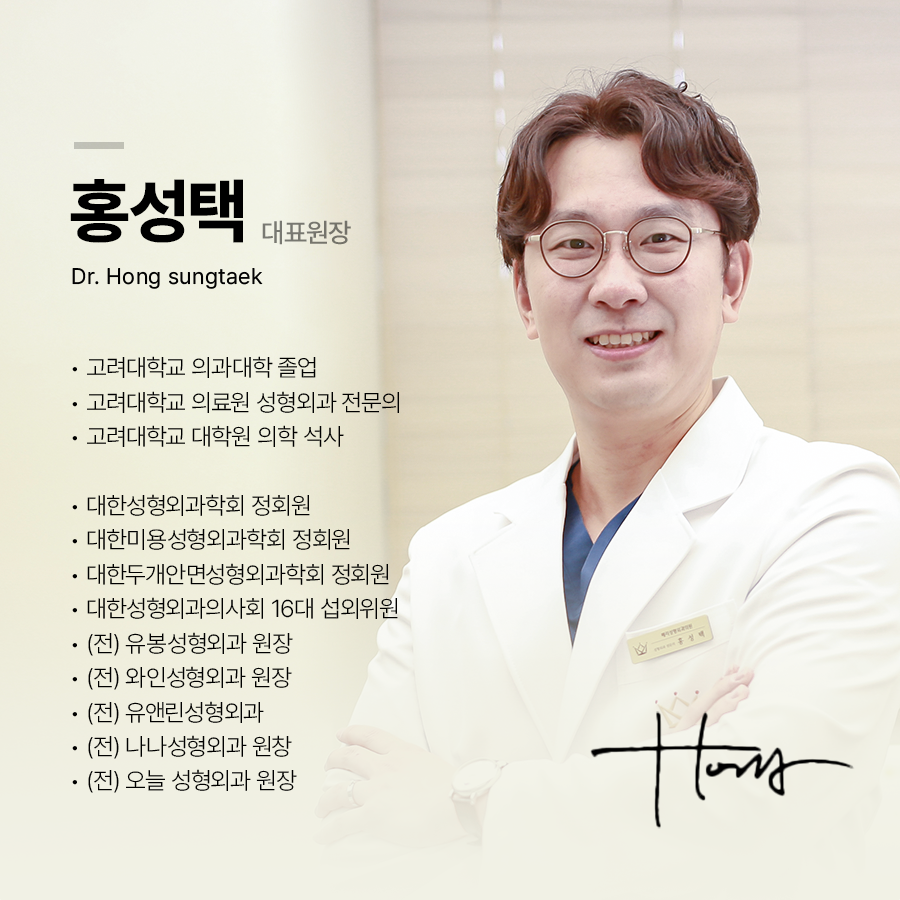
At our clinic, the chief director, who has extensive experience with various thread lifting procedures as well as anti-aging plastic surgery, takes charge of the entire process from pre-procedure consultation and analysis to the procedure itself and aftercare, helping with thorough checks.
Although each patient may have similar concerns, no two cases are the same.
By considering factors such as skin thickness and the areas where sagging is more severe, a 1:1 customized design can provide more aesthetically pleasing results.
Sometimes patients explain the type of thread they want or the details of their desired treatment in more detail.
Because we identify these needs while also recommending only the procedures truly necessary for each patient, we practice honest treatment that helps you feel more assured about stable results tailored to you and less worried about side effects.











Previous image
Next image