
Hello. We are Mary Plastic Surgery Clinic, pursuing natural and beautiful changes.
More and more people have been improving areas they once considered complexes for aesthetic effects.
There were many different ways to make cosmetic improvements, but among them, plastic surgery was especially preferred because it creates semi-permanent changes to one’s original appearance.
In particular, areas such as the eyes and nose, which are located at the center of the face, can make a big difference in impression with even a small change, so many people decide to undergo plastic surgery.
Among these, rhinoplasty has unfortunately been one of the surgeries with a high frequency of postoperative side effects, and there are many cases that lead to revision surgery.
Many people decide to undergo revision surgery simply because they are unhappy with the design, but in most cases, it is due to the high frequency of rhinoplasty complications and revision surgery.
Today, we will look at representative cases that require revision surgery for rhinoplasty complications, along with methods for removing foreign materials.
What are the cases that require revision surgery for rhinoplasty complications?

Then, what are the cases that require revision surgery for rhinoplasty complications?
✅ When an implant is visible
✅ When the bridge of the nose is crooked
✅ When the bridge is too high or the nostril shape has become deformed
✅ When the tip of the nose has become deformed
✅ When it has become lifted or shortened due to contracture
✅ When the shape of the nose has been distorted due to foreign material
Revision nose surgery is usually performed differently depending on the cause of the failure.
Therefore, for successful revision nose surgery, it is most important to carefully analyze the reason the previous surgery did not produce good results.
What is foreign material removal nose revision surgery?

Among the revision cases for rhinoplasty complications introduced above, when the shape has changed due to foreign material, the foreign material must be carefully removed before revision surgery to prevent the same problem from recurring.
In particular, this can be said to be a method of improving foreign material that has caused deformation of the skin and soft tissue and side effects due to inappropriate procedures, repeated filler procedures, implants, and so on.
If foreign material that has hardened or become inflamed after a previous surgery is left untreated, it can even lead to skin necrosis in severe cases, so rather than delaying treatment, it is important to consult about the proper timing and make improvements.
At our clinic, we use 3D CT to check the location of the foreign material and the condition of the skin, soft tissue, and bone, and then discuss whether foreign material removal is possible and which surgical method should be used.
Areas that can be removed without damaging the skin are not only checked visually and removed through FULL HD endoscopy, but are also suctioned using a fine cannula, allowing residual foreign material to be carefully removed as well.
Depending on the condition after removal, nasal surgery may be performed, or a new surgical plan may be established later.
Since the number of revision surgeries for the nose can vary depending on how thoroughly the existing problems are corrected, effort should be focused on removing foreign material so that everything can be completed in one procedure.
What is the revision nose surgery at Mary Plastic Surgery Clinic?

To expect satisfying results from revision nose surgery in one procedure, the cause of the poor results from the previous surgery must be thoroughly analyzed to prevent the same problem from recurring.
At our clinic, after sufficiently explaining and helping patients understand whether the desired result is possible based on the nose shape they want and information about their past surgery, we provide surgery accordingly.
In particular, revision nose surgery is a highly difficult procedure, so it should be done with a medical team that has abundant surgical experience, anatomical knowledge, and technical skill.
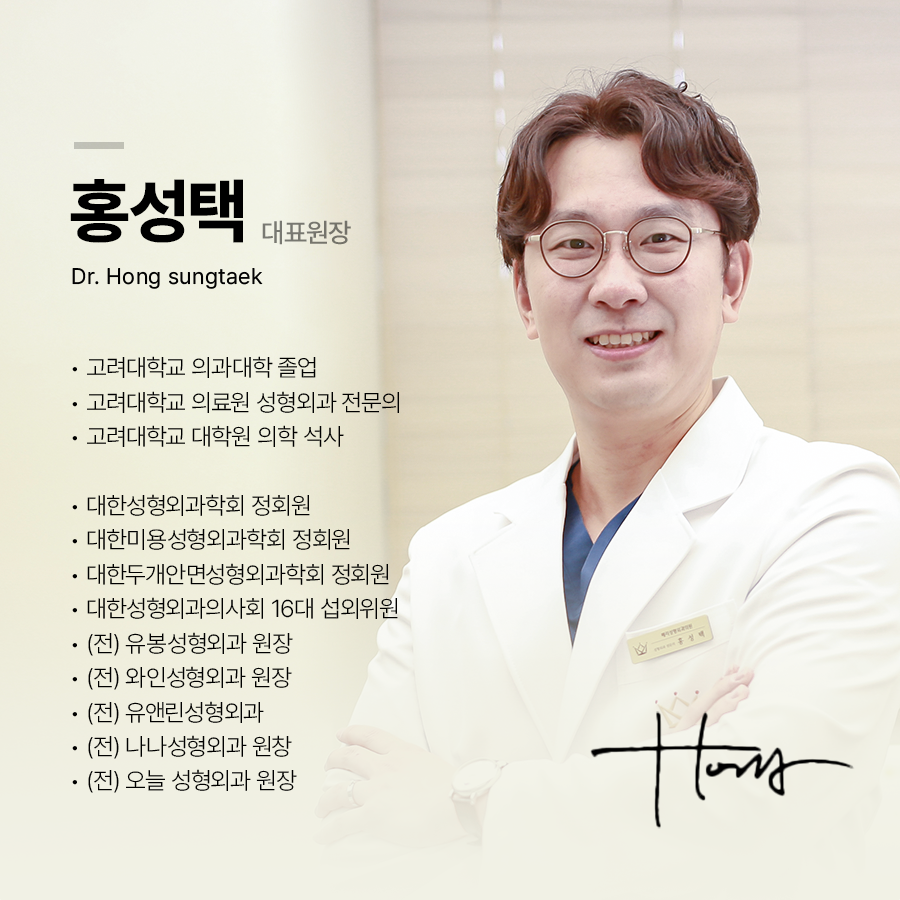
Our head doctor is a board-certified plastic surgeon, and based on extensive surgical experience, patients can expect highly satisfying results through 1:1 customized surgical planning and performance.
Furthermore, the nose is not a surgery whose results appear immediately once the operation is finished.
It is no exaggeration to say that the final shape appears depending on how scars, swelling, and other postoperative factors are managed later.
At our clinic, in addition to surgery, thorough aftercare helps reduce concerns about side effects and supports a natural-looking result.














Previous image
Next image