Hello. We are Mary Plastic Surgery Clinic, pursuing natural and beautiful changes.
As July has arrived, the full-scale monsoon season has also begun.
With heavy rain advisories issued across the country, many of you are likely preparing carefully for disaster-related risks caused by the rainy season.
In particular, buildings in low-lying areas or semi-basements have suffered flood damage year after year during the monsoon season, so extra caution is needed.
That is why many people tend to pay especially close attention to the weather forecast during the rainy season.
However, when it comes to rainfall amounts, it is often hard to really feel how much rain is falling.
Today, let’s look at the difference between a heavy rain advisory and a heavy rain warning, along with how intense hourly rainfall feels.
What is the 2024 monsoon season?
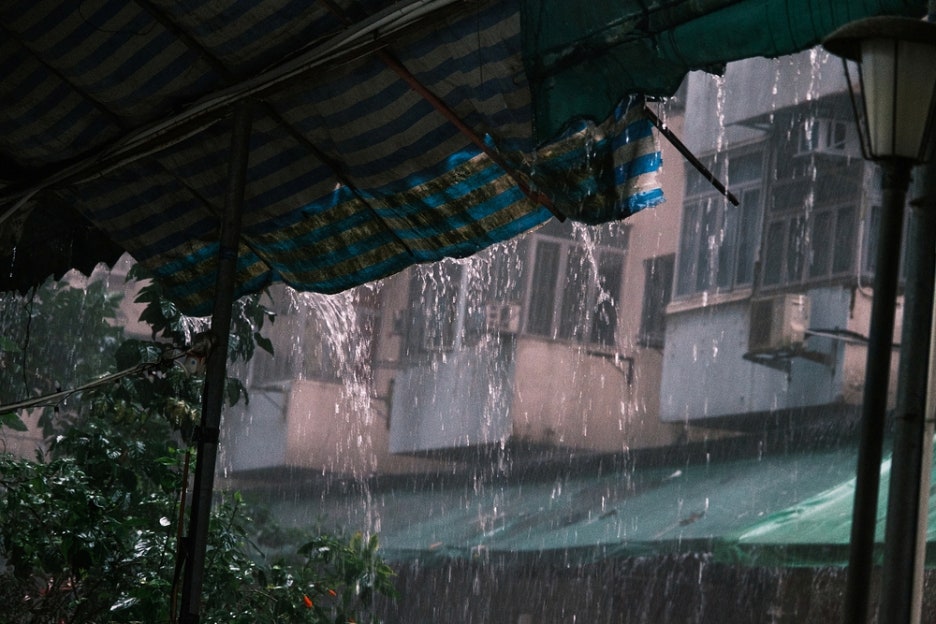
When does the 2024 monsoon season start and end?
For the central region, it is forecast from June 25 to July 26; for the southern region, from June 23 to July 24; and for Jeju, from June 19 to July 20.
This year’s monsoon season is expected to last about a month, similar to a typical year, but it was especially recommended to keep an umbrella handy because this year is expected to resemble Southeast Asia’s squall-type climate, often referred to as a “goblin monsoon.”
What is the difference between a heavy rain advisory and a warning?
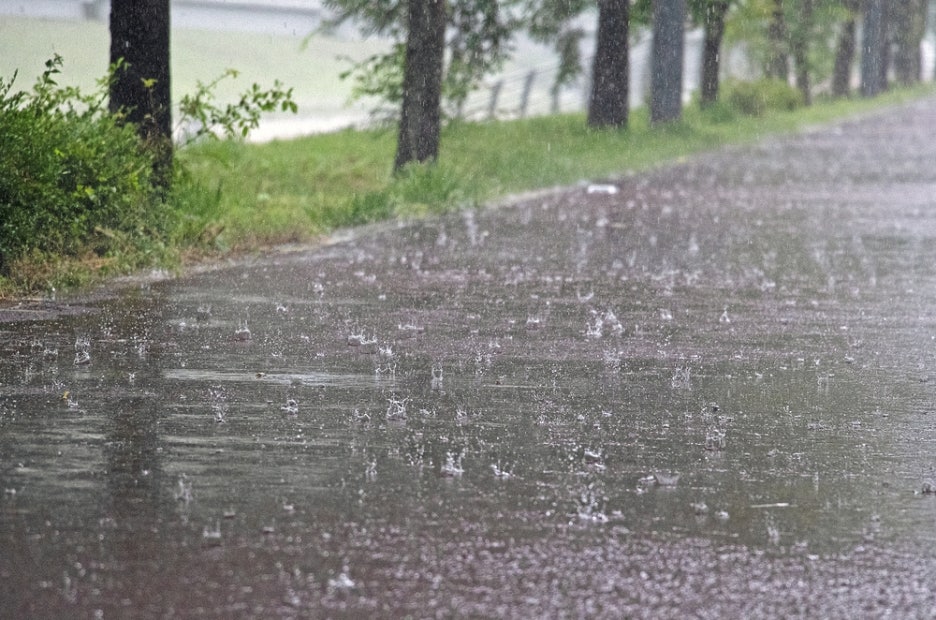
During the monsoon season, unusually high rainfall is a defining feature.
Among these, the criteria for issuing a heavy rain advisory and a heavy rain warning are as follows.
☔ Heavy rain advisory
When 3-hour cumulative rainfall of 60 mm or more is expected, or 12-hour cumulative rainfall of 110 mm or more is expected
☔ Heavy rain warning
When 3-hour cumulative rainfall of 90 mm or more is expected, or 12-hour cumulative rainfall of 180 mm or more is expected
What is the difference between rainfall and precipitation?
Looking at the difference between a heavy rain advisory and a warning, you can see that rainfall is used as the 기준, which is not a word people use often.
Are rainfall and precipitation different?
First, precipitation refers to the total amount of water that falls in a certain place over a certain period, including rain, snow, hail, and fog.
It includes all precipitation that falls to the ground.
Because of this, the amount of pure snow should be recorded as snowfall, and the total amount of rain as rainfall.
If hourly precipitation and rainfall are calculated at high levels, there is concern about damage from localized heavy rain, the monsoon, typhoons, and more, so caution is needed.
How intense does hourly rainfall feel?

The perceived intensity of hourly rainfall is classified by the amount of precipitation.
Hourly rainfall is categorized as follows:
☔ Less than 3 mm: light rain
☔ 3–less than 15 mm: moderate rain
☔ 15–less than 30 mm: heavy rain
☔ 30 mm or more: very heavy rain
(*Based on hourly rainfall)
Among these rainfall descriptions, very heavy rain of 30 mm or more may be accompanied by disasters depending on the severity, so it is best to be aware of how intense hourly rainfall feels and avoid going out.
So, how does hourly rainfall actually feel?

☔ 5 mm or more
Rain of 5 mm or more, which falls under moderate rain among rainfall descriptions, can be handled even with a raincoat.
Puddles may form, but outdoor activities such as camping are generally possible without much trouble.
For outdoor sports, events may be canceled due to the risk of injury.
☔ 10 mm or more
Even with a raincoat, this is enough rain to get clothes wet, and even if you use an umbrella, the lower half of your clothing may get wet.
☔ 20 mm or more
This is heavy rain, with raindrops hitting the umbrella so loudly that nearby sounds are hard to hear. Forward visibility becomes difficult, and clothes may still get wet even with an umbrella.
In such cases, because visibility becomes poor, public transportation is recommended over driving your own car during commuting.
☔ 30 mm or more
This corresponds to very intense rain, enough to interfere with walking. It is best to avoid going out as much as possible, and for young children, it is advisable to prohibit going out.
☔ 40 mm or more
Walking for adults also becomes very difficult, and it becomes extremely hard to see ahead.
Regardless of whether you have an umbrella, it becomes hard to hear surrounding sounds, and water begins to rise in low-lying areas.
☔ 50 mm or more
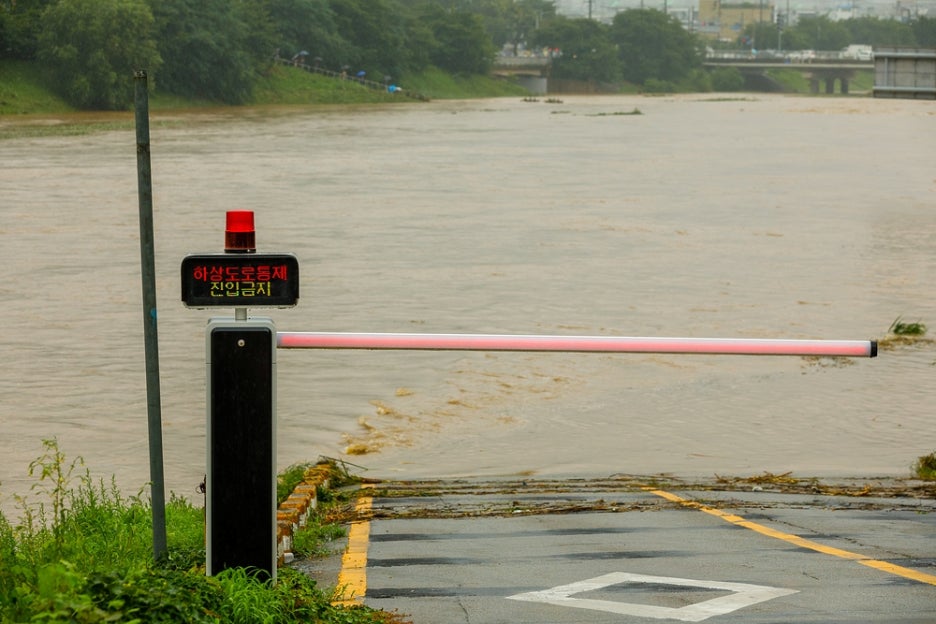
Even standing becomes difficult for adults, and the risk of river overflow increases, so going out should be avoided regardless of age.
On roads with low ground elevation, such as riverside roads, there is a risk of flooding.
☔ 100 mm or more
If hourly rainfall perception exceeds 100 mm, the likelihood of disasters is high.
In addition to river overflow, it may be accompanied by sewer backflow, landslides, and other disasters, so evacuation is necessary if you are in a low-lying area.
Today, we looked at how intense hourly rainfall feels.
For a clearer sense of it, the Korea Meteorological Administration’s Weather Nuri page provides audiovisual materials.
During the monsoon season, which is expected to continue for quite some time, accidents from slipping due to high humidity and puddles are common, so pedestrians should also pay attention to what they wear.
Also, because visibility becomes poor, drivers are advised to slow down or consider using public transportation.
Thank you.









Previous image
Next image