
Hello. We are Mary Plastic Surgery Clinic, which pursues natural and beautiful changes.
Deciding to undergo plastic surgery was never a simple matter.
In addition to the financial burden, it required a great deal of patience until the desired result was achieved.
However, if the outcome is not only unsatisfactory but also accompanied by side effects, the disappointment would be beyond words.
Today, we will look at representative side effect cases and the reasons why columella retraction occurs.
What Is Nasal Revision Surgery?

Nasal revision surgery is a procedure in which the surgical method must be adjusted differently depending on the cause of the failed result.
For a highly satisfying outcome, it is necessary to carefully analyze the reason the previous surgery did not go well and to work to prevent the same problem from recurring.
Nasal revision surgery is performed after the tissue has already been damaged once, so the difficulty increases with each additional surgery. That is why it is important to work with medical staff who have the know-how and technical skill.

Representative Cases Where Nasal Revision Surgery Is Needed
✅ When an implant is visible
✅ When the bridge of the nose is crooked
✅ When the nasal bridge is too high or the nostril shape has become deformed
✅ When the nasal tip shape has become deformed
✅ When it is upturned or shortened due to contracture
✅ When the nose shape has been altered by foreign material
✅ When columella retraction has occurred
What Is Columella Retraction?

Among these, columella retraction refers to a condition in which the columella appears collapsed or not visible when viewed from the front or the side.
Common symptoms include nostril drooping, a bulbous nose, or a drooping nasal tip, resulting in a pressed appearance of the lower part of the nose.
The reason columella retraction occurs is that, during the original surgery, the alar cartilage was not sufficiently dissected and could not be fixed to an appropriate support, or inflammation occurred due to an implant used as nasal tip support, and contraction developed during the healing process of the surrounding tissue, causing the columella to shorten or collapse.
In addition, as revision surgeries are repeated, the tissue around the columella may not recover sufficiently, and if the nasal tip is raised excessively, skin necrosis and contracture may occur, which can lead to columella retraction.
For this reason, the role of the support structure is especially important in columella lengthening surgery.
What Is Columella Lengthening Surgery?
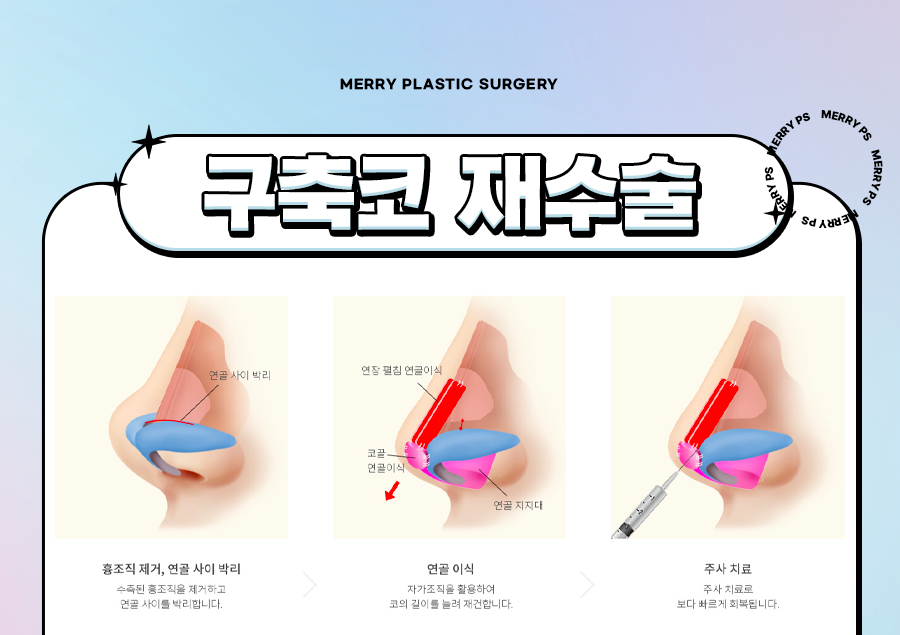
So, how is columella lengthening surgery performed when contracture occurs?
In revision surgery for a contractured nose, the hard, contracted scar tissue can be removed and columella lengthening can be performed using autologous tissue.
At this time, if any previous inflammation or foreign material remains, there is concern that the problem may recur.
At our clinic, we carefully remove foreign material using methods such as endoscopy and micro-suction, and we work to reduce the chances of the same problem recurring.
What Is Nasal Revision Surgery at Mary Plastic Surgery Clinic?

At our clinic, we use columella lengthening surgery to lower a retracted nasal tip and create a soft, natural-looking nose tip.
In addition, various types of nasal revision surgery require identifying the cause of the previous surgery’s failure and establishing a surgical plan accordingly.
Therefore, the more detailed the information patients provide about their previous surgery history, the more stable the outcome can be expected.
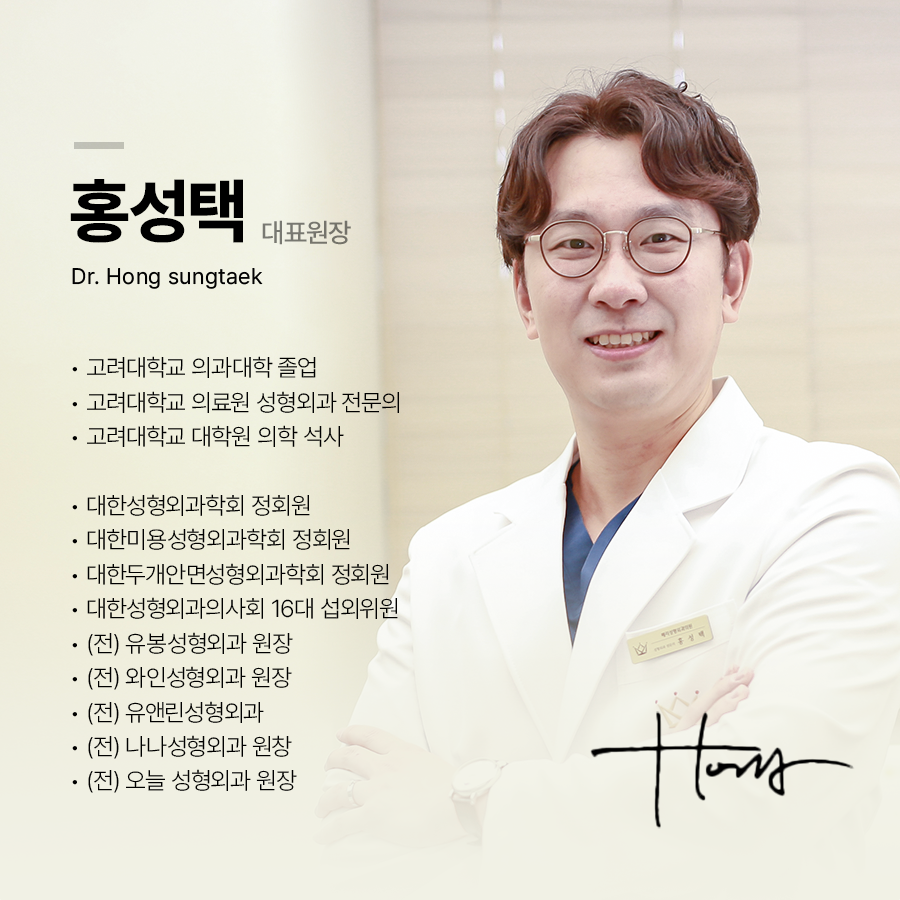
Our chief director, Hong Seong-taek, is a board-certified plastic surgeon who, based on many years of rich surgical experience, can help provide rhinoplasty with reduced concern about side effects.
If you are not satisfied with the result of your rhinoplasty, please visit our clinic to receive a consultation about revision surgery and an analysis of the cause of the problem.
Thank you.













Previous image
Next image