Hello, I’m Hong Seong-taek, the director of Merry Plastic Surgery Clinic, nice to meet you.
It seems like winter makes people even more curious about surgery.
Today, let’s talk about surgery-related pain and post-surgery pain management.

Post-nose surgery pain management: there’s a reason it matters as much as the results
Among people considering nose surgery,
many say,
“Of course the results are important, but what worries me most is how much it will hurt during recovery.”
This is actually one of the questions I hear most often in the clinic.
Nose surgery is not just a procedure that changes appearance.
It is a surgery that affects natural breathing function, daily life, and even sleep quality.
That is why I consider pain management just as important as aesthetic and functional outcomes.
Pain is not something to simply endure; it is something that can be managed
Some people think of post-surgery pain as something you just have to “put up with,”
but medically, pain is not that simple.
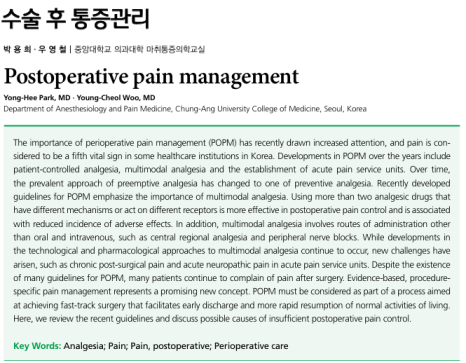
In various papers in pain medicine,
postoperative pain is explained as something that should be managed as one of the ‘important vital signs,’ like blood pressure and pulse.
If pain is not properly controlled, it goes beyond simple discomfort:
As a result, it can reduce the patient’s overall quality of life.
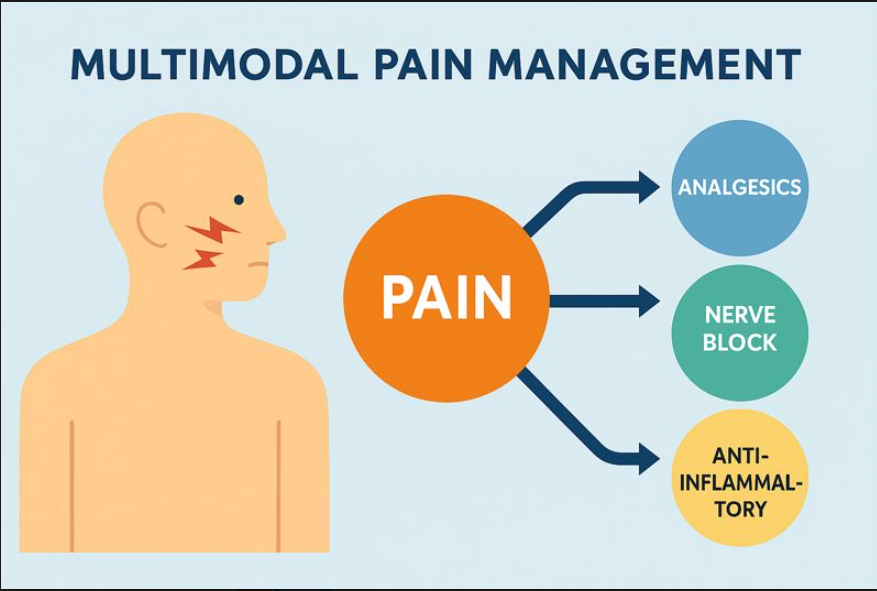
That is why the approach used these days is called “multimodal pain control”
The term “multimodal pain control” may sound a bit difficult.
But the concept is very simple.
Rather than suppressing pain forcefully with just one method,
it separates the different causes of pain and reduces each one little by little.
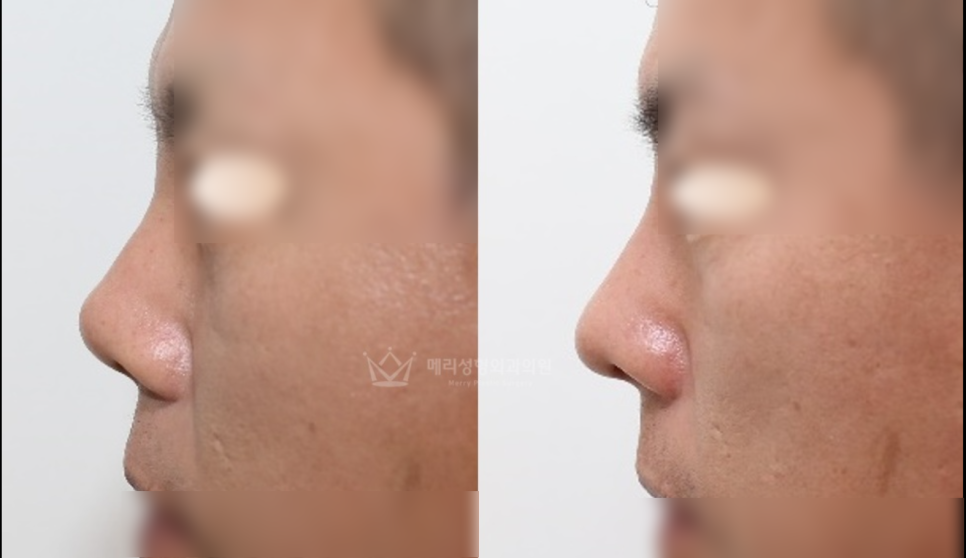
Correction of a shortened nose caused by contracture (contracted nose correction)
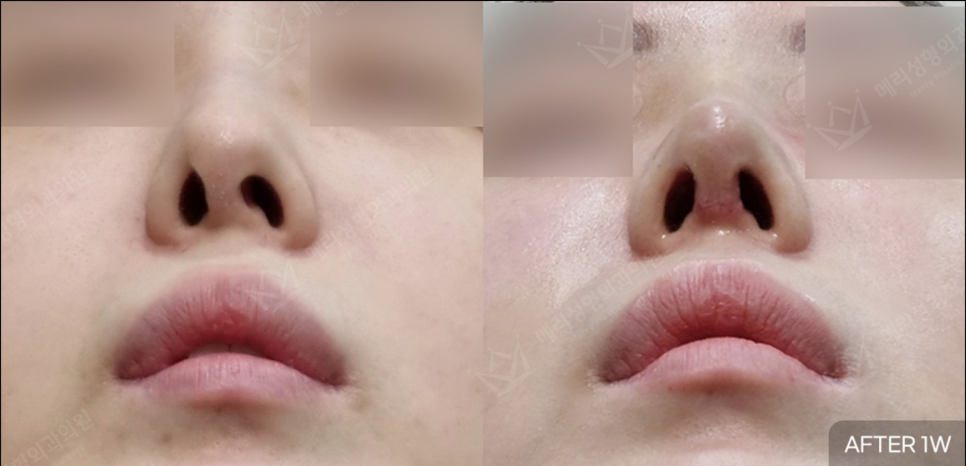
Crooked nose correction / uneven nostril correction
Pain does not arise from just one reason
Pain after nose surgery usually results from several factors working together.
-
Tissue irritation caused during surgery
-
Inflammatory response after surgery
-
Swelling and pressure
-
Tension and anxiety about the surgery
To put it simply, there are many possible causes besides these as well,
so if you try to solve it with only one painkiller,
you may need stronger medication, and that can place more burden on the body.
How multimodal pain control works
By contrast, multimodal pain relief
uses an appropriate combination of methods that each play different roles.
For example:
-
Medication that reduces inflammation
-
Medication that gently lowers pain signals
-
Local anesthesia that minimizes irritation at the surgical site
-
Care that reduces tension that interferes with recovery
When these methods are mixed and used together in small amounts,
their effects overlap and work together, making pain much more comfortable to manage.
Papers also explain that this approach
can provide better pain control than using a single painkiller,
and can reduce the risk of side effects.
The difference patients actually feel is clear
What I personally notice while following patients after surgery is this.
“I was less sore than I expected after watching recovery vlogs”
“The recovery period was much easier”
“When I slept well, it seemed like the swelling went down faster”
When pain is well managed,
the way you spend the days after surgery changes itself.
I believe that this difference ultimately leads to a difference in satisfaction with the surgery.
Pain management is especially important in nose surgery
The nose is at the center of the face,
and it is connected to everyday functions such as breathing, speaking, and sleeping.
If the pain is severe,
-> breathing becomes uncomfortable
-> it becomes hard to sleep
-> and as a result, stress can increase throughout the recovery period.
That is why we think carefully not only about aesthetic results and the functional results of rhinitis surgery,
but also about how the patient spends the recovery period.
I believe the completion of nose surgery includes the recovery experience as well
I define the results of nose surgery like this.
- Above all, morphological perfection that naturally highlights one’s inherent beauty
- Functional completeness that improves the body’s natural breathing function
- And a comfortable recovery process
Pain management is not optional;
it is one of the basic steps of surgery that protects the patient’s quality of life.
At Merry, the head surgeon stays involved from consultation through recovery.
This has been Hong Seong-taek, the director of Merry Plastic Surgery Clinic, nice to meet you.