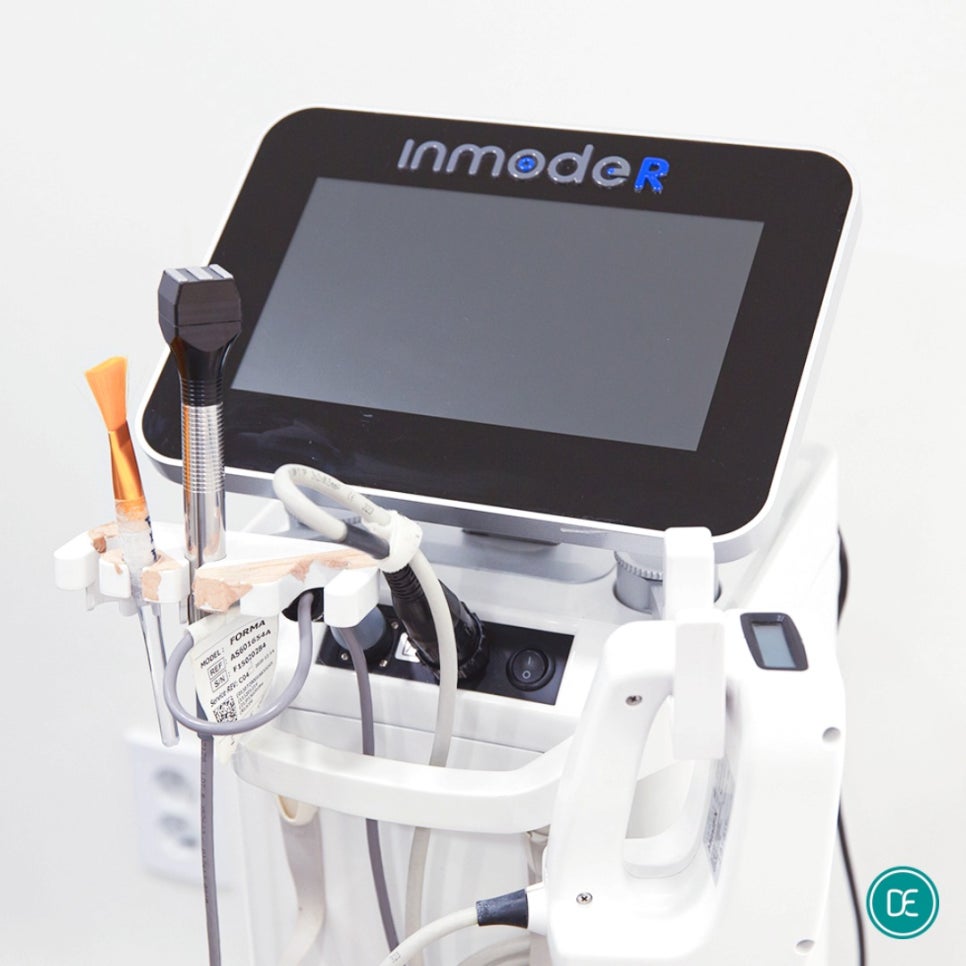
If you are interested in skin care or lifting,
you have probably wondered at least once,
“How much would it hurt?”
Even when the same area is treated,
the level of pain felt can differ quite a bit
depending on the intensity of the thermal energy used
and the way it is delivered.
In particular, areas like the face, where nerves are densely concentrated,
tend to react sensitively, so discomfort before and after care
can feel burdensome in some cases.
Today, I’ll introduce a lifting solution
that is designed to reduce discomfort
even though it involves a feeling of heat.
If you have been interested in care that considers
both reducing unnecessary fat and improving firmness,
this may be worth taking a look at.
This method is a deep-heat-based lifting treatment
that delivers thermal energy of about 45 to 47 degrees
to the fat layer.
In particular, it uses a sensor that detects temperature
1,000 times per second,
with a focus on reducing the possibility of burns or blisters
caused by unnecessarily high heat.
Thanks to this system, which allows real-time temperature checks,
it is a non-invasive method designed so that pain and discomfort
can be lowered and the treatment can be received
in a more comfortable environment.
It can help reduce unnecessary fat while also
promoting collagen formation to support firmness improvement.
- Gwangju InMode FX: Differences in Pain by Type?
: Duration of Effects

What are the intervals and how long do they last?
Then let me explain the treatment interval
and how long the results may last.
Usually, it is carried out as a basic plan
of about three sessions at one-month intervals,
and in this case the changes may last from
about 6 months to as long as 1 year and 6 months.
Of course, it can be adjusted depending on an individual’s skin condition,
underlying density, and the distribution of the fat layer,
and in some cases the interval may be set longer.
Because it is difficult to expect immediate results from just one session,
following the prescribed cycle and number of sessions
is one of the important points of care.
When can changes be noticed?
Since this method uses thermal energy,
the process of reducing fat cells takes time,
so changes are generally visible to the naked eye
after about 2 to 4 weeks.
Rather than expecting changes too hastily,
it is better to observe over a certain period
and proceed gradually.
In particular, if you are also considering skin texture or tone refinement,
or even contour adjustment,
focusing on accumulated results rather than short-term judgment
may be the more desirable approach.
- Gwangju InMode FX
If there are differences in pain depending on the type?
Who is it suitable for?
Then let me explain who this solution
may be a good fit for.
✔ Those who are concerned about sagging chin fat or cheek fat
✔ Those worried that their overall facial contour has lost definition
✔ Those who want to firmly refine the deeper layers of the dermis
✔ Those who prefer a method that has a sense of heat but less pain
If this sounds like you, this treatment method
may be an appropriate choice.
It is also well suited for those who want to refine contour density
through repeated treatment.
What methods are good to combine with it?
It is fine to proceed on its own,
but if the goal is contouring or lifting,
combining it with other care methods is also an option.
In particular, when combined with injection-based methods such as contouring, V-Olet, or masseter botulinum toxin,
more three-dimensional line adjustments are possible.
Because methods that act on different layers
do not overlap and instead complement each other,
they can induce more balanced changes.
If you have multiple concerns,
finding a direction for improvement through combination treatment
can also be a good approach.
- Gwangju InMode FX, Differences in Pain by Type?
In closing

What should you be careful about?
Lastly, I’ll summarize what to keep in mind
after this treatment.
It is important not to rub or irritate the treated area.
Please avoid alcohol and smoking for about one week.
Please avoid hot baths, saunas,
and strenuous exercise.
Please apply sunscreen and moisturizer sufficiently
to protect the skin.
If you follow these guidelines well,
the changes can last longer
and care can continue more comfortably.
In closing
One of the important criteria when choosing a solution
is, “How much will it hurt?”
The method introduced today may involve a feeling of heat,
but it is designed to lower pain
and build results gradually,
so it can be approached as a relatively less burdensome treatment.
If you are considering both fat reduction and firmness improvement,
you may want to refer to this information
when making your choice.
Thank you for reading this long post today.
I hope you have a bright and comfortable day.