Recently, it has become more common to feel that facial lines look looser than before, or that the skin’s elasticity is not what it used to be.
In particular, when changes around the jawline or cheeks stand out in the mirror, people naturally become interested in various types of care.
Among them, methods that use thermal energy are relatively well known, so many people are curious about them.
In this article, I’ll organize how this type of care works and what kind of sensation you may feel during the procedure.
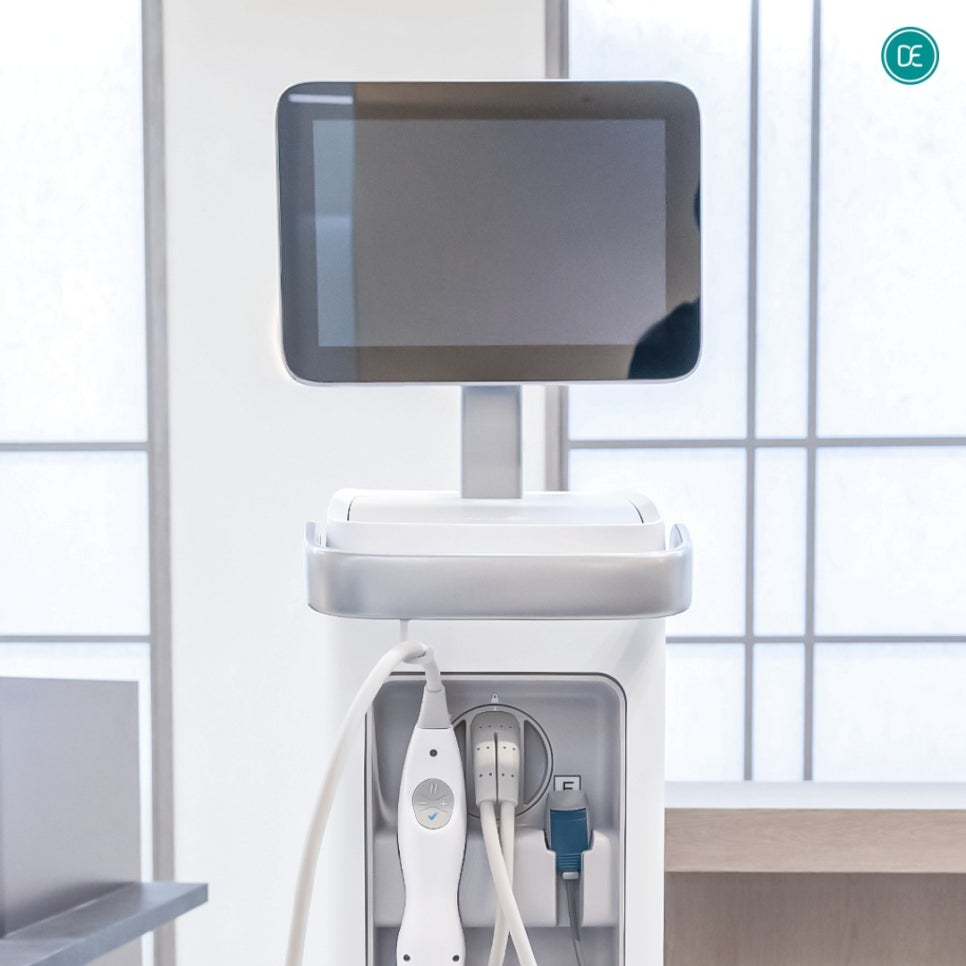
First, it helps to look at the overall operating structure.
This method is structured to deliver thermal energy to the deeper layers while protecting the surface.
In other words, it is characterized by being designed so that the outside remains cool while heat is delivered to the inside.
At this point, the delivered heat stimulates the tissue and works in a way that induces collagen formation.
And these changes do not appear immediately, but rather unfold gradually over time.
In addition, the process of heat delivery works together with a cooling function to reduce surface stimulation, focusing on maintaining overall balance.
As a result, this type of care can be seen as a structure that aims for elasticity and tightening changes by using the temperature difference between the outside and the inside.
- What Are the Effects of Thermage in Ingye-dong, Does It Hurt, and When Do Changes Appear?
Now let’s look at the sensation people are most curious about during the procedure.
Basically, since this method uses heat, you may feel warmth or slight stimulation for a moment.
However, recent devices are designed to ease this discomfort by applying vibration functions and cooling pulses together.
In particular, vibration works together at the moment the heat is delivered, helping to distribute the burden you feel.
In addition, because the surface is cooled at the same time, it helps reduce the feeling that stimulation is concentrated in one area.
That said, the degree of sensation may vary from person to person, and even with the same method, the feeling may differ depending on your condition or the area being treated.
So overall, it is often understood as a level of intermittent stimulation.
When Changes Appear with Ingye-dong Thermage
Now that we’ve looked at the principle, let’s continue by seeing when changes begin to appear.
This method is characterized by changes appearing gradually over time rather than immediately after the procedure.
In general, it shows a gradual change over the course of 1 month, 3 months, and 6 months.
This is because the process of collagen formation inside does not finish immediately, but progresses over a certain period of time.
Therefore, even if you do not notice a big difference at first, many people later feel gradual changes as time passes.
- What Are the Effects of Thermage in Ingye-dong, and Does It Hurt?
: Maintenance Flow and Considerations

After checking when changes appear, it is also good to look at how long the results are maintained and at what intervals.
Generally, it tends to be maintained for about 1 year, though there may be differences depending on the individual.
The interval is considered in terms of 1 month, 3 months, and 6 months, and when sagging is felt more significantly, another session at the 6-month mark is also mentioned.
In this way, it is more natural to understand it not as something that ends with just one session, but as a method that continues while adjusting the interval according to the condition.
And these cycle settings are often decided by considering the current condition and the flow of changes together.
Care Also Considered Along with Ingye-dong Thermage
Lastly, let’s look at other approaches that are considered alongside it, rather than on their own.
Along with methods that use thermal energy, ultrasound-based care or skin booster categories are sometimes mentioned together.
These combinations focus on achieving overall balance by using different mechanisms of action.
For example, one may stimulate deeper layers, while another may help improve the surface condition.
However, not all methods are applied in the same way, and the choice may vary depending on the current condition and the direction you want to pursue.
Therefore, it is important to understand the features of each method and then consider a combination that fits the overall flow.
- What Are the Effects of Thermage in Ingye-dong, and Does It Hurt?
: Closing Notes
To summarize, this care method is structured to protect the surface while delivering heat to the inside to encourage changes in elasticity.
During the procedure, you may feel momentary stimulation, but it is designed to reduce burden through vibration and cooling functions.
Also, the changes are not immediate but gradually appear over time, and the duration of maintenance can vary depending on the individual’s condition.
Approaching it with an understanding of the overall flow can help set more realistic expectations.
I hope today’s summary helped answer your questions, and I wish you a comfortable day.