There are moments in daily life when, looking in the mirror, the facial line feels blurrier than it used to.
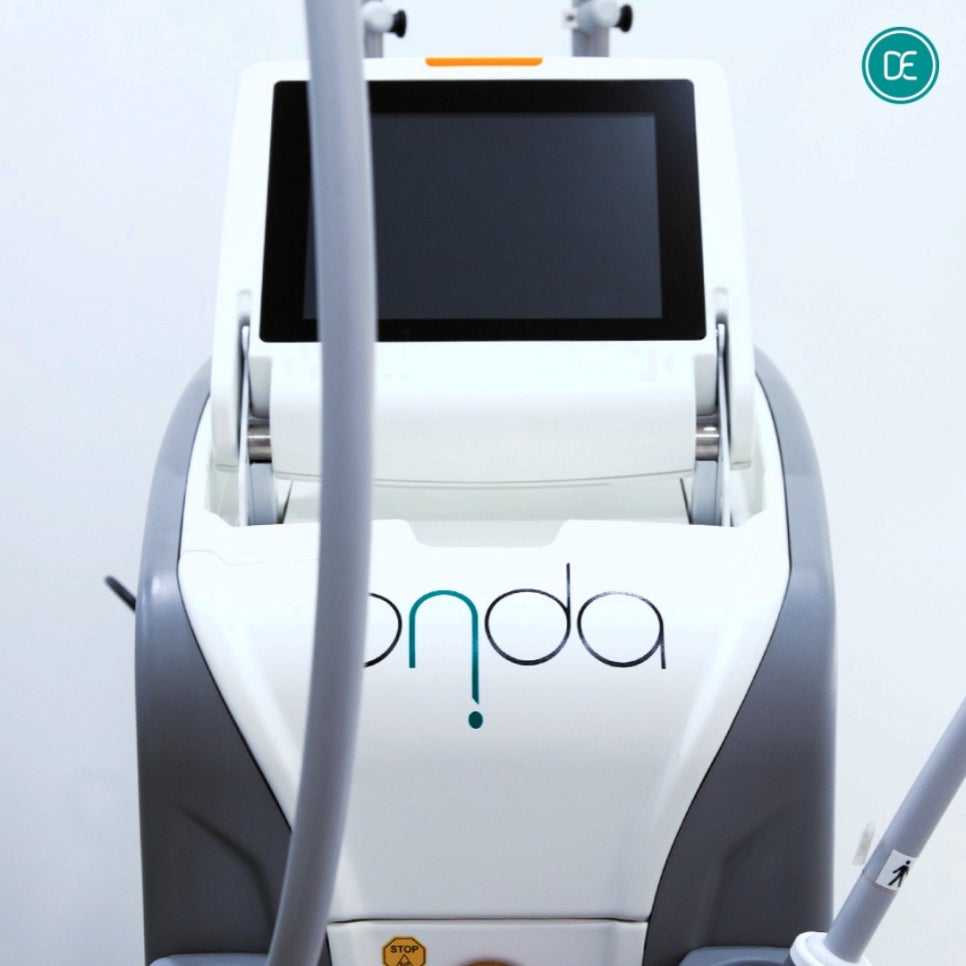
One of the methods often mentioned in times like this is the Onda method.
In particular, because there are various tip structures, many people wonder what the differences are.
In this post, I will organize the flow by focusing on the types of tips used in the Onda method and the features of each one.
First, if you understand the overall working principle, the differences between the tips will also connect naturally.
The Onda method uses ultra-high-frequency microwaves to deliver heat into the interior. This heat acts on collagen fibers, inducing contraction and at the same time leading to a flow that stimulates the formation of new tissue.
Also, because energy is concentrated toward the inner center rather than the skin surface during heat delivery, it is known to feel relatively less stimulating. In addition, the device itself includes a cooling structure, which also gives it the feature of trying to maintain a consistent surface temperature.
Based on this basic structure, different tips are divided and used according to depth.
- Apgujeong Onda lifting tip types: how different are they?

Now that we understand the principle, we can look at the tip applied to shallow depths.
The 3mm tip is a form that acts on a relatively shallow layer, and its focus is on inducing contraction of collagen fibers.
This process leads to a flow that makes elasticity changes felt near the surface of the face, and it is often used when the goal is overall texture refinement or a denser feeling.
Also, because it approaches in a way that is less burdensome than deeper structures, it is often chosen when someone is trying it for the first time or wants a mild change.
Features of the Apgujeong Onda 7mm tip
Unlike shallow tips, there is also a structure designed to target deeper layers.
The 7mm tip delivers energy to a relatively deep area and acts in a way that affects fat cells. At the same time, it also induces the collagen recovery process.
Because of these characteristics, it is used in situations where the focus is on refining the facial line or organizing the line in areas with more volume.
In addition, even within the same depth range, there are subtypes, so the choice may differ depending on the application area or purpose.
- Apgujeong Onda lifting tip types, differences and
considered flow

Summary of the differences between the two tips
After looking at the features of each above, let’s summarize the differences.
The biggest difference is the depth of action. The 3mm tip induces elasticity-centered changes in areas close to the surface, while the 7mm tip takes into account both line refinement and structural changes in deeper areas.
The direction of changes that people perceive can also differ. Shallow tips tend to focus on texture refinement and a denser feel, while deep tips are often connected to facial contour refinement.
In this way, even with the same device, the range of action and the direction of change differ depending on the tip selected, so it is important to understand and distinguish them according to your purpose.
Flow considered together with Apgujeong Onda
Lastly, it is also necessary to look at the flow considered together with tip selection.
In general, it is often performed several times at one-month intervals, and a flow of around 8 months to 1 year is mentioned based on a certain number of sessions.
Also, changes are known to be felt gradually, rather than appearing immediately, starting about 3 to 4 weeks later.
And depending on the case, it may be performed together with other care; a representative example is a flow carried out in parallel with a method that induces collagen formation.
- Apgujeong Onda lifting tip types, differences
: concluding remarks
Although it may seem like a single method, in practice it has the characteristic that the direction of action changes depending on the depth of the tip.
There are tips centered on shallow areas and tips that handle deeper layers, and because each role is different, it is important to understand them by distinguishing them according to your purpose.
If you approach it with these differences in mind, you can grasp the overall flow more clearly.
Thank you for reading this long post. I hope you have a comfortable day.