There are moments in daily life when, every time you look in the mirror, changes in skin elasticity or facial contours start to bother you.
In particular, as time passes, the jawline may look less defined, or you may feel that the overall firmness has decreased.
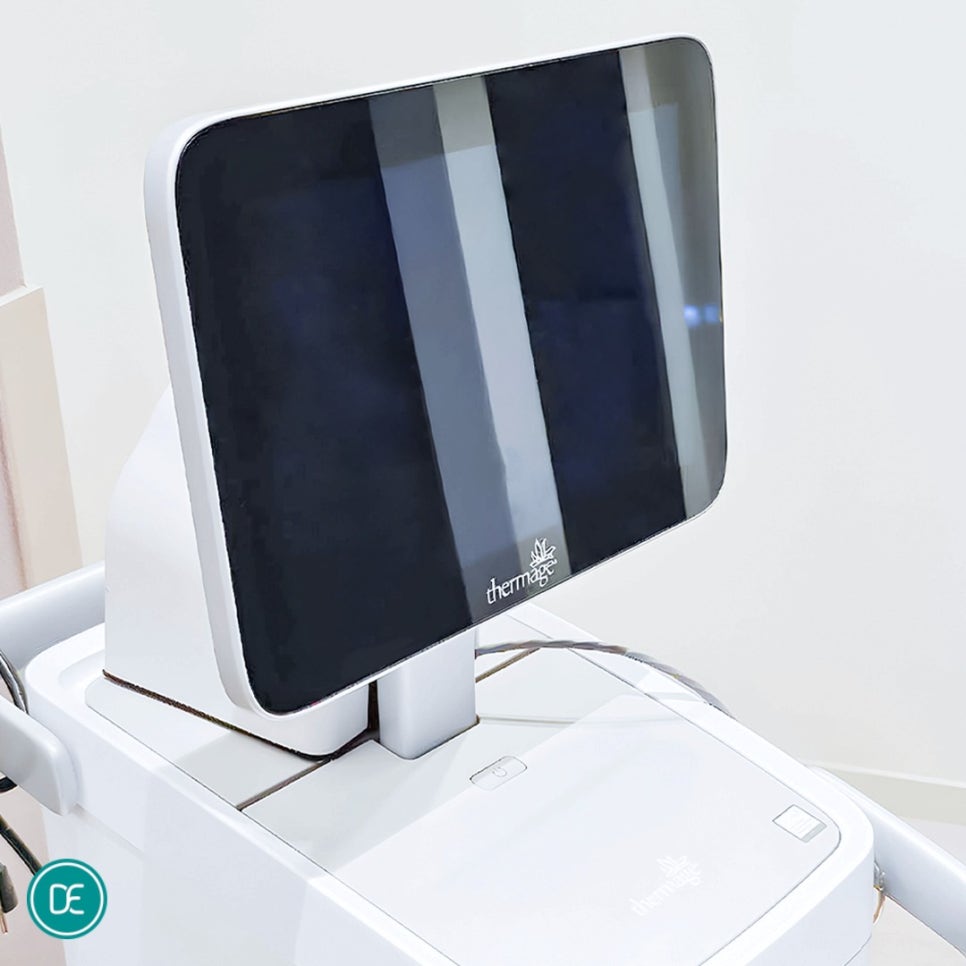
At times like these, care methods that use heat energy are often mentioned, and among them, Thermage often raises questions about the level of pain involved.
So in this post, I’ll organize the flow around the characteristics of the sensation felt during the procedure and the criteria for comparison.
To understand the overall flow, it is best to look at how it works first.
This method is structured to deliver heat energy to the deeper layers while protecting the surface.
When the heat is delivered, an environment is created that helps collagen formation, and in this process, a momentary heat sensation may be felt.
At the same time, cooling pulses operate together to cool the surface, which helps prevent the sensation from concentrating in one direction.
In addition, vibration is added to disperse the sensation.
Because heat delivery, cooling, and vibration all work at the same time, it is often perceived not simply as “hot,” but as short, repeated sensations.
- When comparing the level of Thermage pain in Yeonsu-gu
How much is it felt?
Now that we have looked at the principle, let’s continue by seeing how the actual sensation differs.
Although the feeling varies from person to person, it is commonly described as a repeated momentary tingling or stinging sensation.
In particular, there are differences depending on the area of the face. Areas with more thickness, such as the jawline or cheeks, are often felt at a relatively tolerable level.
On the other hand, thinner areas such as around the eyes or the forehead can react more sensitively, making the sensation feel stronger.
Also, even with the same device, the perceived sensation can vary depending on a person’s tension or condition.
So rather than defining pain as a single level, it is more natural to understand it as a sensation that changes depending on the area and condition.
Comparing with earlier methods
Next, let’s look at how it differs when compared with earlier methods.
In the latest version, the tip area has become wider and the speed has increased, which shortens the overall procedure time.
A shorter time also means a reduction in the total time during which the sensation is felt.
In addition, with the vibration function and cooling system applied together, many people find it more comfortable than before.
In particular, as the area delivered at once becomes wider, the number of times the same area must be treated repeatedly decreases.
As a result, the overall burden felt has changed in a way that is less than before.
- What structure helps reduce the level of Thermage pain in Yeonsu-gu?
Now, let’s continue by organizing the factors that affect the perceived sensation.
First, a major influence is individual sensitivity.
Even with the same method, some people may feel it lightly, while others may perceive it more strongly.
Differences can also occur depending on the thickness or condition of the area receiving the care.
The interval and number of sessions are also important factors.
As the process is repeated at regular intervals, you may gradually become accustomed to it and feel less stimulation than at first.
Because various factors work together in a complex way, it is necessary to consider all conditions together rather than relying on a simple comparison.
Structures that reduce the burden of pain
Finally, let’s organize the features designed to reduce stimulation.
A representative feature is the cooling pulse, which quickly cools the surface at the moment heat is delivered.
In addition, an omnidirectional vibration function works together to help disperse the sensation.
As these two elements work simultaneously, they reduce the feeling of concentration at a specific point.
As a result, the system is designed to lower the perceived burden while still delivering the same heat energy.
Because of these characteristics, there are more cases in which it is perceived more comfortably than before.
- Comparing the level of Thermage pain in Yeonsu-gu
: Closing remarks
We looked at the characteristics of the sensation felt during the procedure and the criteria for comparison.
Overall, there is a momentary sensation that comes from the heat delivery process, but with the cooling and vibration functions working together, the perceived burden is distributed.
Also, because the degree of sensation can vary depending on the area, the individual’s condition, and the device’s characteristics, it is helpful to understand it as a process rather than expressing it with a simple number.
Keeping these points in mind can help you receive the information in a more balanced way.
Thank you for reading. I hope you have a comfortable day.