| * This article is intended to provide accurate information. * |
Hyperhidrosis Symptoms: Excessive Sweating and Body Odor—Let’s Treat Them with SIT Surgery
Kim Heon-gon Plastic Surgery Axillary Odor Clinic
Hello, everyone^^
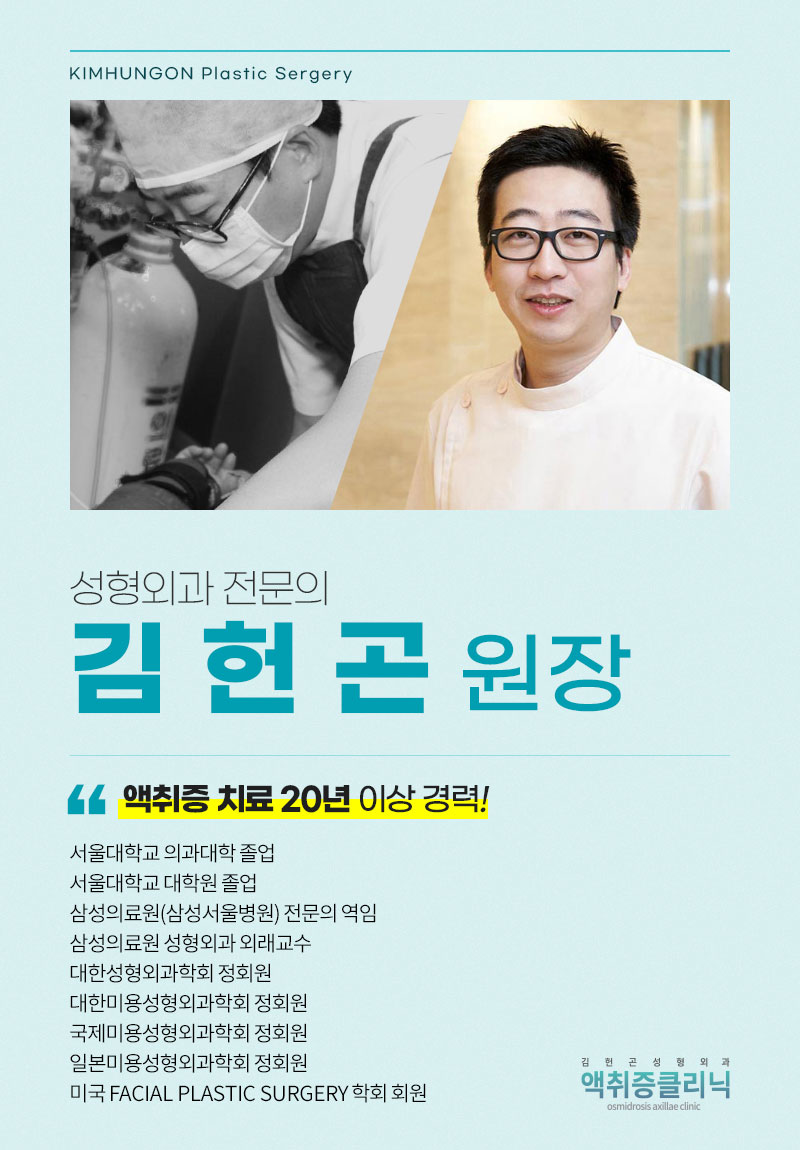
This is Kim Heon-gon Plastic Surgery Axillary Odor Clinic, staffed by a board-certified plastic surgeon with 20 years of experience treating bromhidrosis and hyperhidrosis.
When excessive sweating occurs in specific areas such as the hands, feet, or armpits, many people experience not only discomfort in daily life but also stress from body odor caused by it.
Let’s take a look at SIT surgery, one of the methods used to improve these hyperhidrosis symptoms.
| Kim Heon-gon Plastic Surgery Axillary Odor Clinic (Bromhidrosis/Hyperhidrosis Treatment) |
|---|
| The know-how and skill developed through many years of practice cannot be ignored by anyone. We promise responsible care so that patients can feel comfortable from their first consultation to their final visit. |
| Board-certified plastic surgeonGraduate of Seoul National University College of MedicineGraduate of Seoul National University Graduate SchoolFormer specialist at Samsung Medical Center (Samsung Seoul Hospital)Visiting professor of Plastic Surgery at Samsung Medical CenterFull member of the Korean Society of Plastic and Reconstructive SurgeonsFull member of the Korean Society for Aesthetic Plastic SurgeryFull member of the International Society of Aesthetic Plastic SurgeryFull member of the Japanese Society of Aesthetic Plastic SurgeryMember of the American Society of Facial Plastic Surgery |
| ▶ Main phone: 080-080-3080▶ KakaoTalk ID: Kim Heon-gon Plastic Surgery Axillary Odor Clinic▶ Address: Room 201, Boramae Nasan Suite, 24 Boramae-ro 5ga-gil, Dongjak-gu, Seoul |
Hyperhidrosis is a condition in which excessive sweating occurs due to an overreaction in nerve transmission. Depending on the cause and the pattern of sweating, it can be classified as localized or generalized hyperhidrosis.
When there is heavy sweating in the armpits, bacteria or fungi may infect the stratum corneum, causing a foul odor, or secretions from the apocrine glands may be broken down by bacteria, leading to severe body odor.

In the case of localized hyperhidrosis, excessive sweating occurs in a specific part of the body, mainly the palms, soles, flexural areas of the arms and legs (intertriginous areas), the armpits (axillary area), and the groin (the hollow area where the thighs begin).
It can also appear on the forehead or the tip of the nose. Sweating caused by emotional stimulation is something most people experience and is usually not a problem, but in some people it can be severe enough to interfere with social life.
In the case of generalized hyperhidrosis, stimulation may be transmitted from temperature receptors in the skin, but it usually refers to cases in which body temperature rises due to external factors such as high ambient temperature or because of illness.
Gustatory hyperhidrosis usually refers to heavy sweating on the face, especially the forehead, upper lip, around the mouth, the sternum area, and the cheeks within a few minutes after consuming spicy drinks or foods.
In particular, when sweating is heavy on the palms, it can be inconvenient to hold objects and may make writing or computer work difficult. When the soles sweat heavily, slipping becomes more likely, which can pose a safety risk.
Also, the armpits may cause clothes to become wet or stained, and if odor is present as well, body odor can develop, becoming a source of stress. Some people may also experience symptoms such as headaches, dizziness, and fatigue due to hyperhidrosis symptoms.
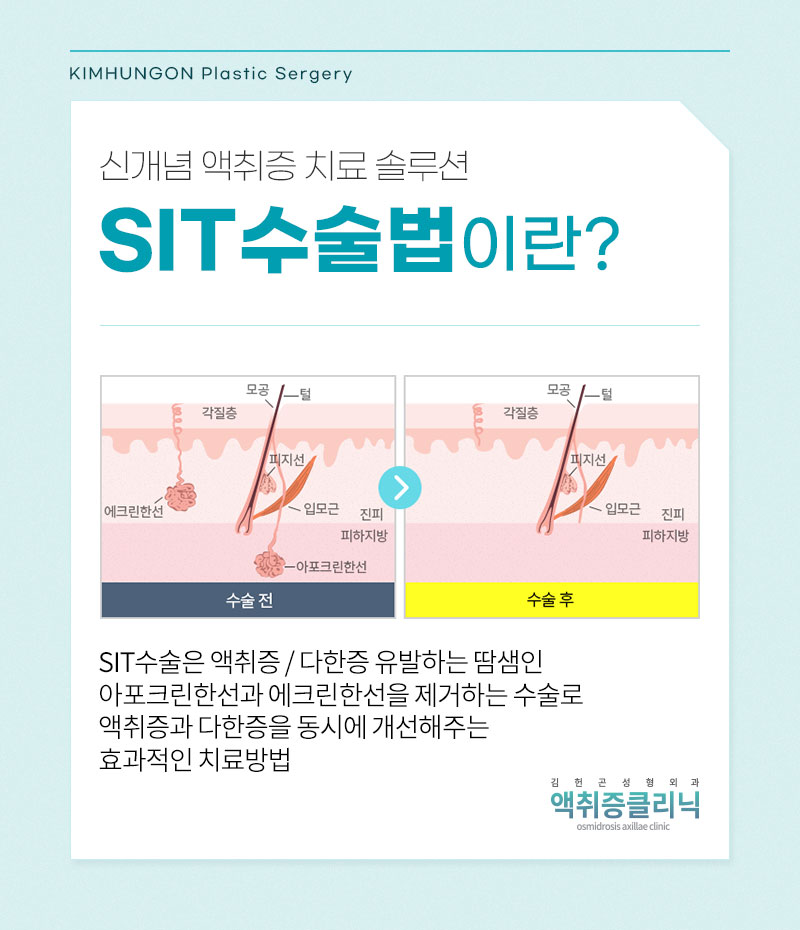
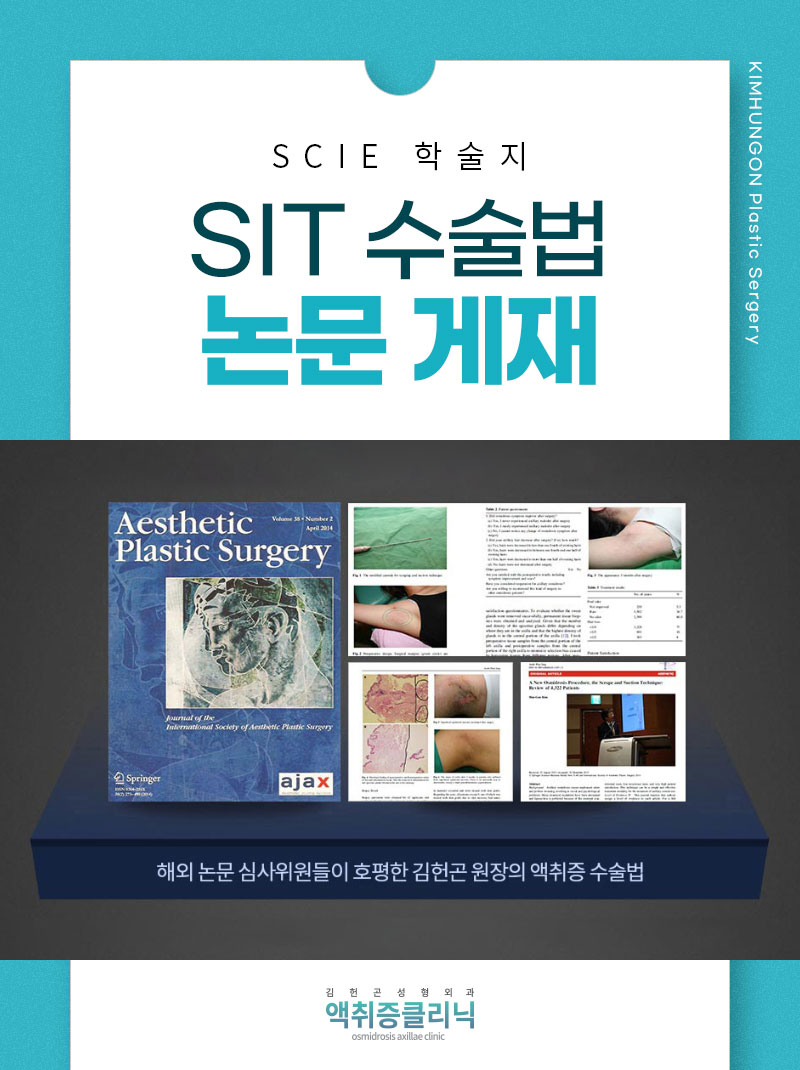
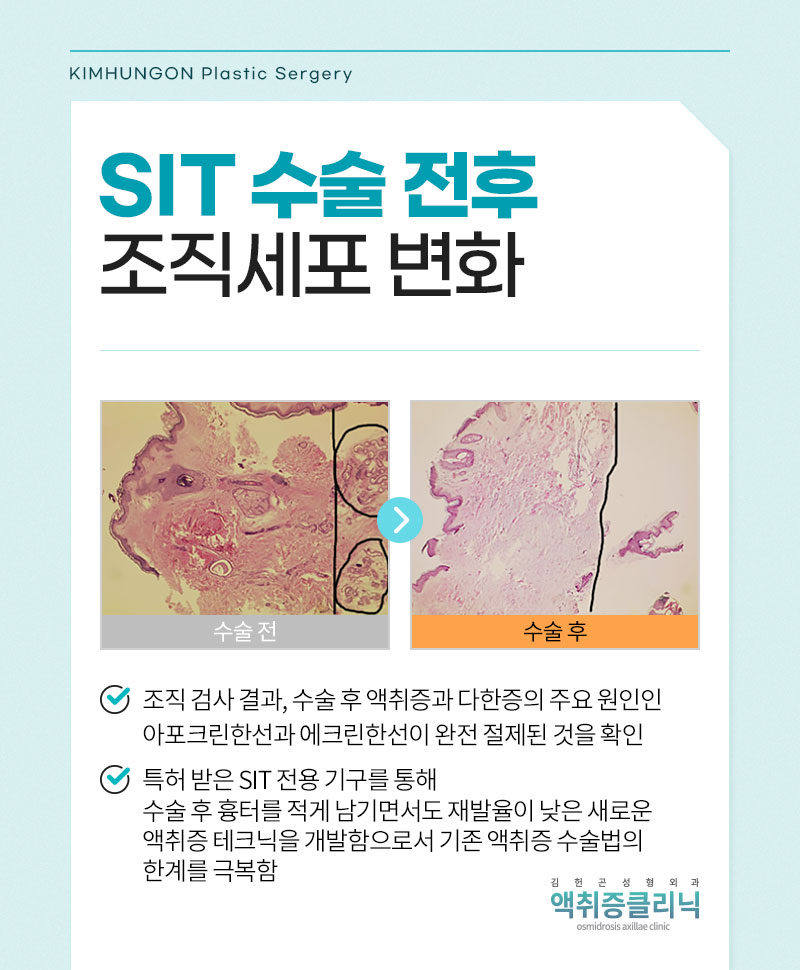
SIT surgery is sympathectomy, a procedure that uses an endoscope to block the secretion of acetylcholine, a neurotransmitter.
Unlike conventional hyperhidrosis surgery, it is characterized by almost no compensatory hyperhidrosis and has the advantages of a small incision area and a short recovery period.
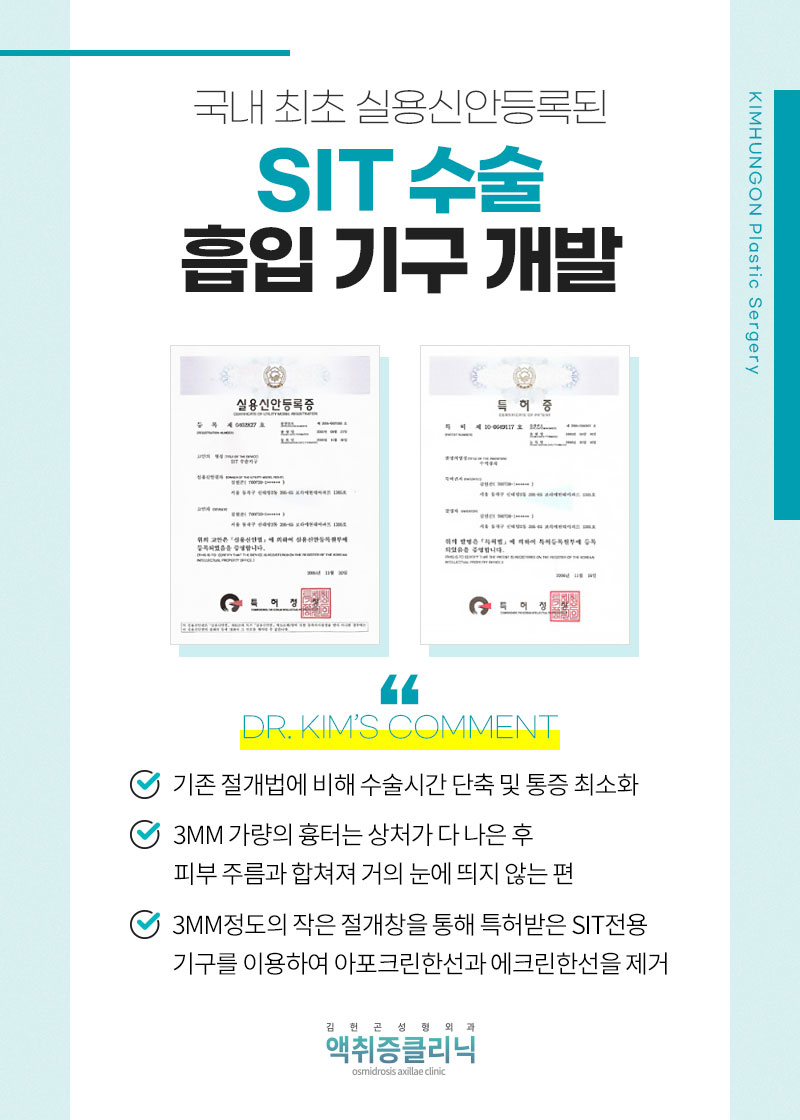
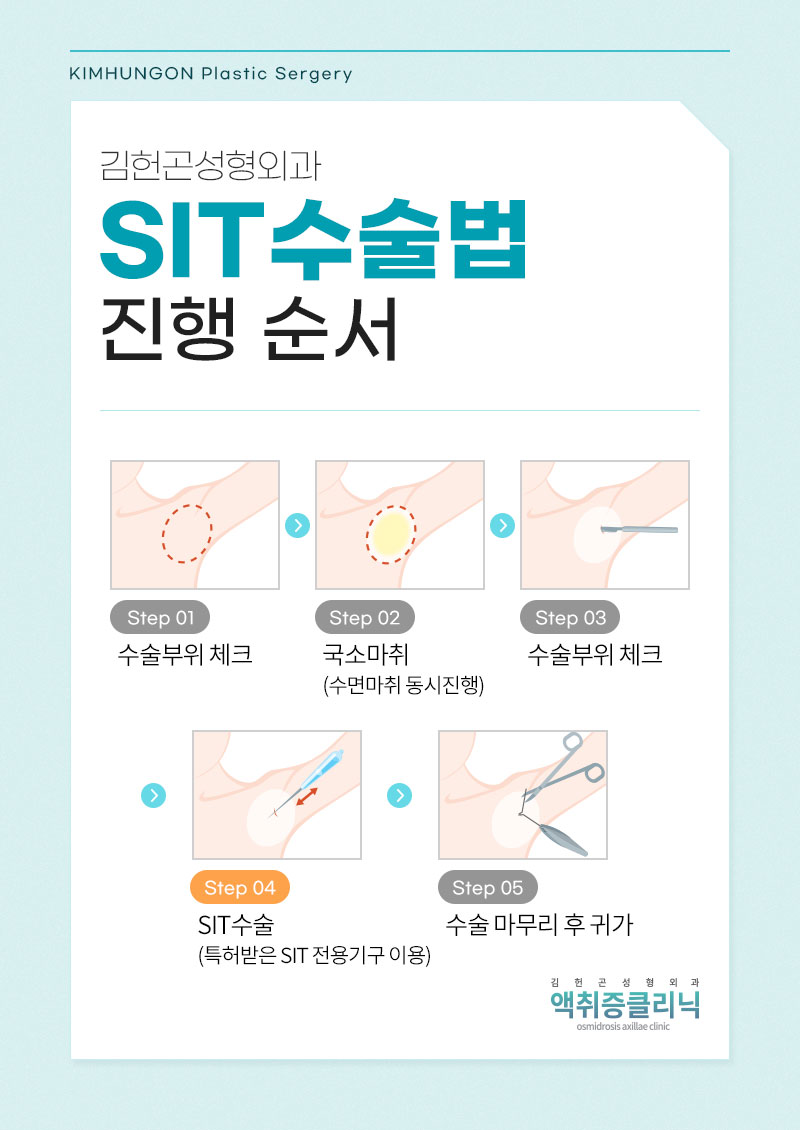
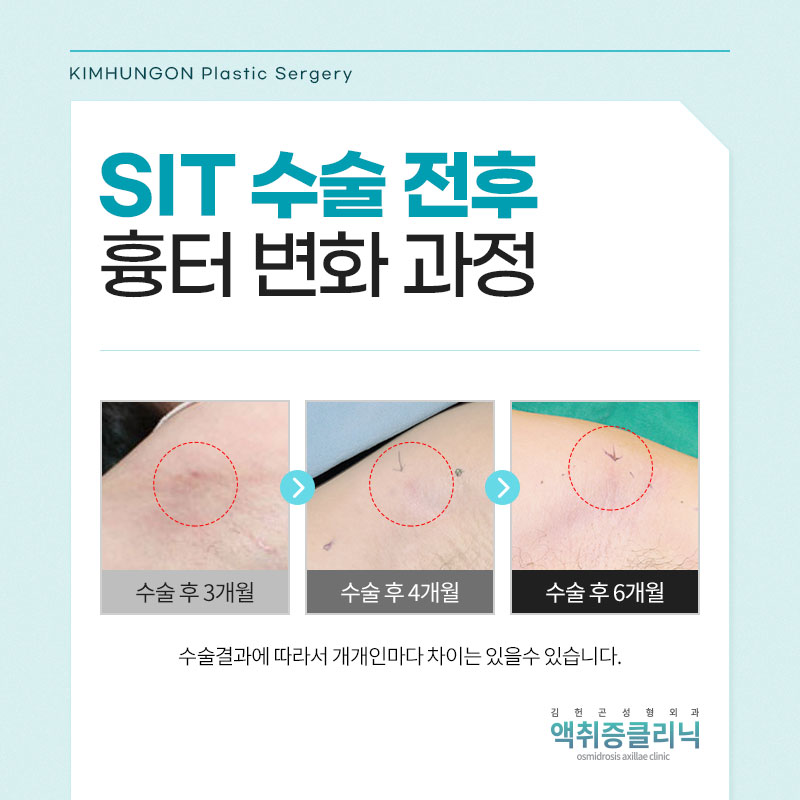
A small 3 mm opening is made in the patient’s chest, and an endoscope is inserted to locate and cut the sympathetic nerve. After that, the wound is closed and a compression bandage is applied, completing the surgery, and discharge on the same day is possible.
-
Pain may occur for 2 to 3 days after surgery, and it is recommended to take pain relievers or apply cold compresses.
-
Swelling or bruising may occur at the surgical site, but it will disappear naturally.
-
Showering is possible from 3 days after surgery, and care should be taken to keep water or soap from touching the wound until it has completely healed.
-
Drinking alcohol and smoking are prohibited for one week after surgery, and strenuous exercise or exposure to high temperatures such as saunas and steam rooms should be avoided.
-
Gustatory hyperhidrosis may occur temporarily after surgery, but it will improve naturally over time.
To help prevent recurrence of hyperhidrosis symptoms, a regular lifestyle, sufficient rest, and stress management are necessary, and it is advisable to visit the hospital regularly to monitor your progress.
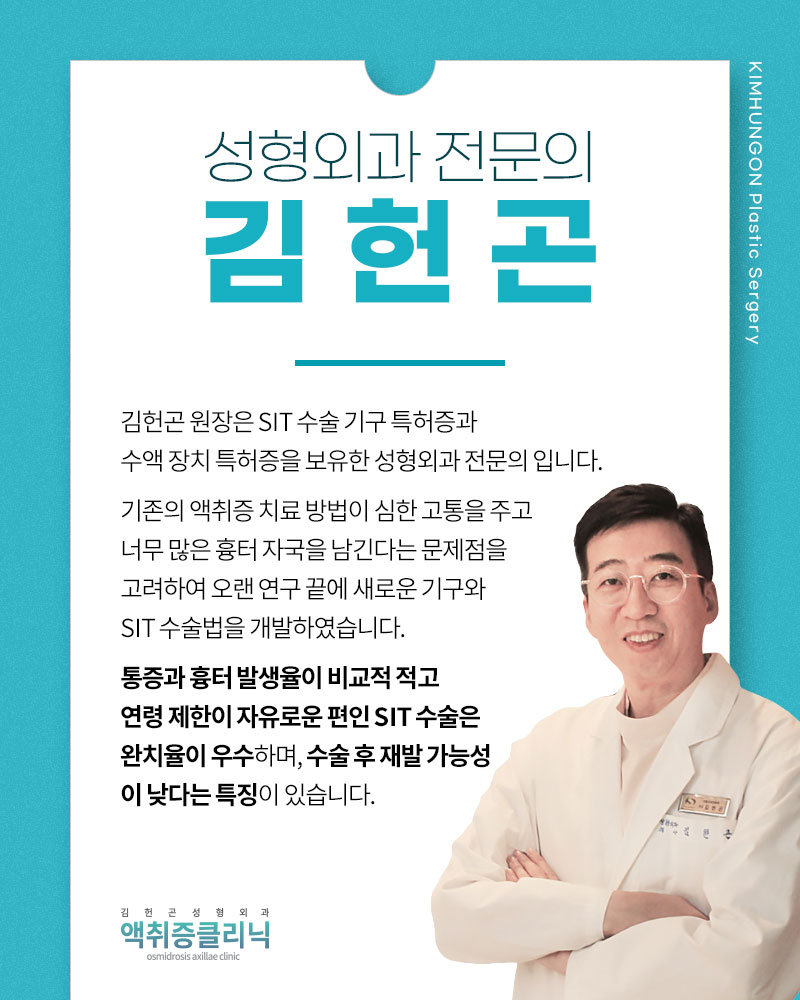
Many people may have experienced a great deal of discomfort due to hyperhidrosis symptoms. I hope that by using the SIT surgery introduced today, you can improve these symptoms and enhance your quality of life.
It is also important to choose the right treatment method through sufficient consultation, so please do not forget this and respond proactively.
If you have any questions, please feel free to contact us anytime.
Thank you!

- This post was written directly by Kim Heon-gon Plastic Surgery Axillary Odor Clinic as a medical advertisement in compliance with Article 56, Paragraph 1 of the Medical Service Act.
Depending on the individual, side effects may occur after surgery/procedure, so please be sure to fully understand the precautions before and after treatment through sufficient consultation with the attending medical staff. -










Previous image
Next image









Previous image
Next image