| * This article is an informational post created to provide accurate information * |
How to Remove Underarm Body Odor with Underarm Odor Removal Surgery
Kim Heon-gon Plastic Surgery Bromhidrosis Clinic
Hello, everyone^^
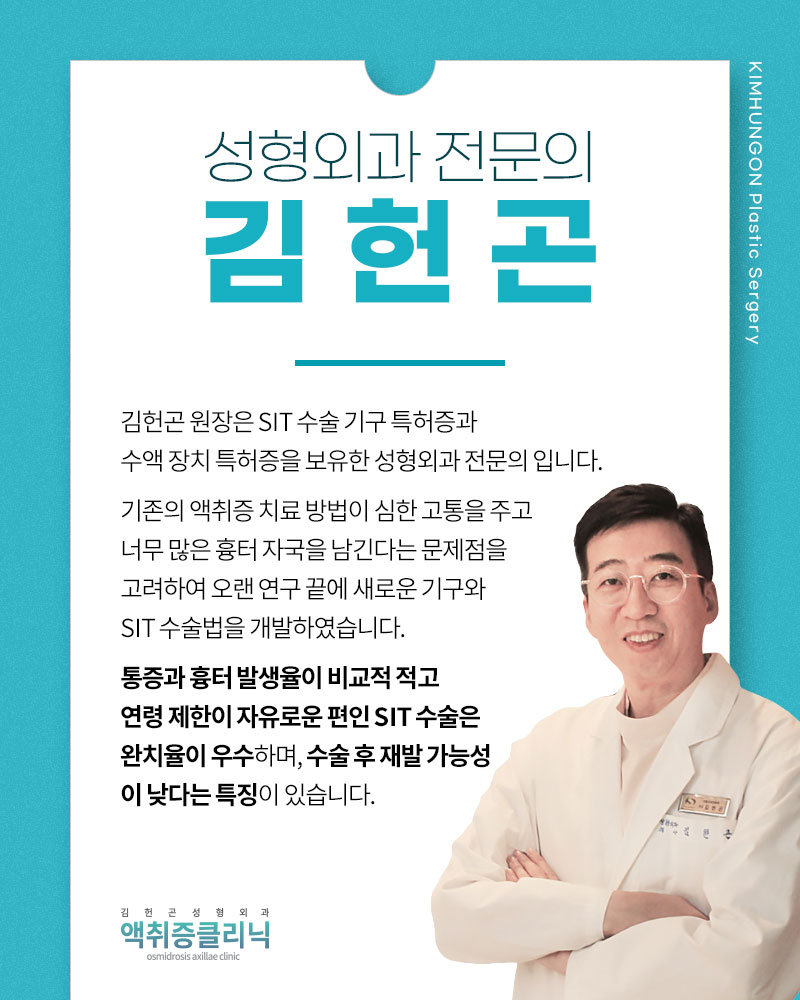
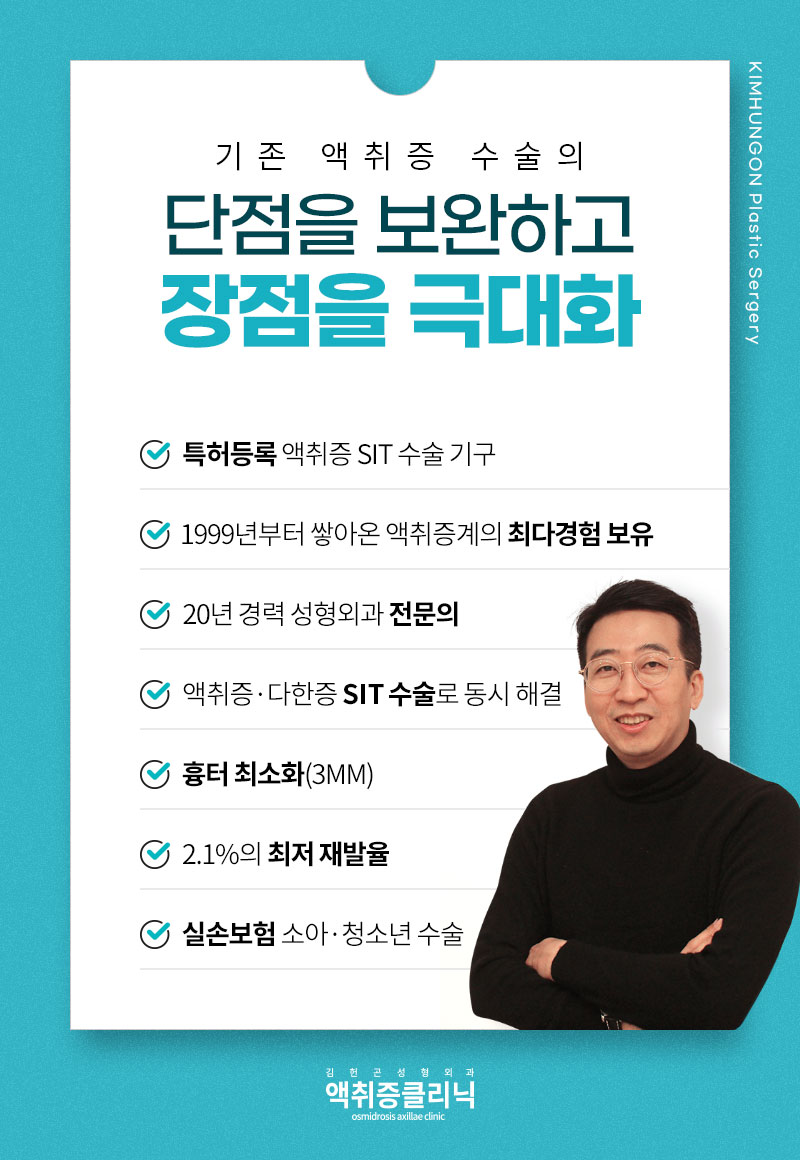
This is Kim Heon-gon Plastic Surgery Bromhidrosis Clinic, where a board-certified plastic surgeon with 20 years of experience treating bromhidrosis and hyperhidrosis is on staff.
There are many people around us who are stressed by underarm body odor. In severe cases, it can even lead to psychological issues such as social avoidance or depression.
So, why does this underarm body odor occur?
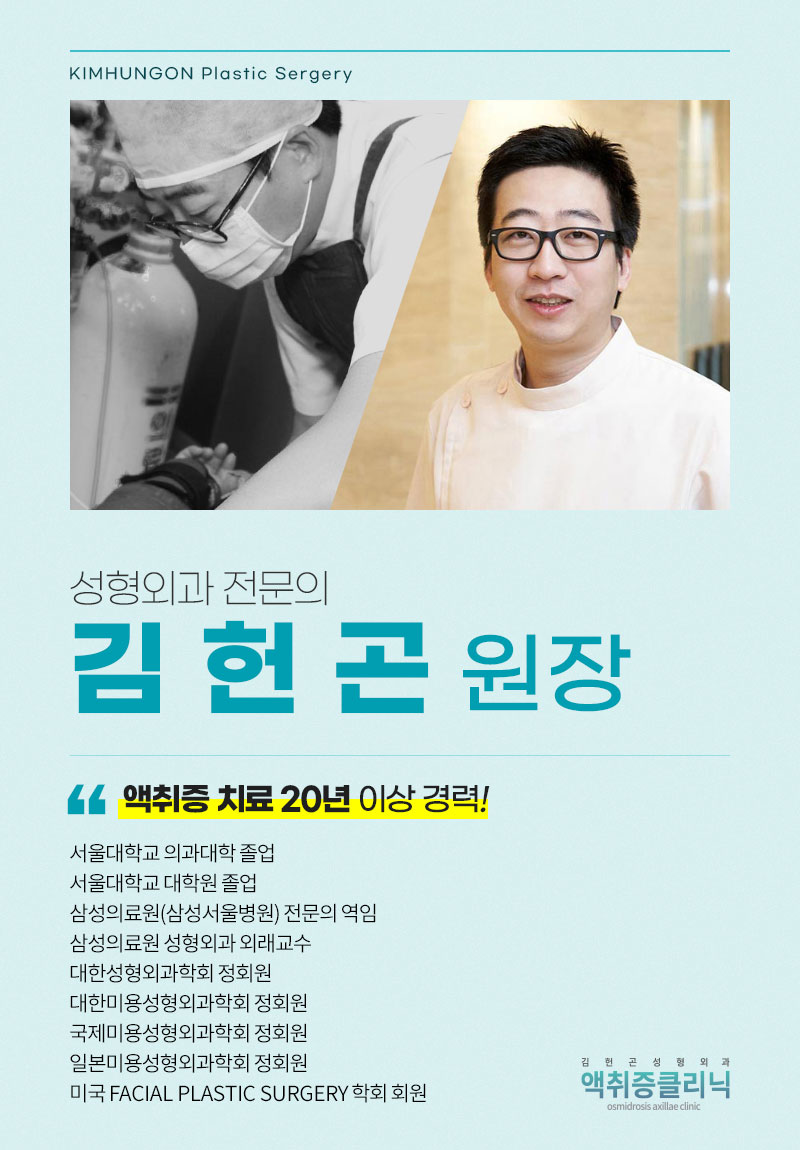
| Kim Heon-gon Plastic Surgery Bromhidrosis Clinic (bromhidrosis/hyperhidrosis treatment) |
|---|
| With years of treatment experience, our know-how and technical skill are not something anyone can ignore.From the first consultation to the final visit, we promise responsible care so that patients can feel comfortable throughout. |
| Board-certified plastic surgeonGraduate of Seoul National University College of MedicineGraduate of Seoul National University Graduate SchoolFormer specialist at Samsung Medical Center (Samsung Seoul Hospital)Adjunct professor of plastic surgery at Samsung Medical CenterMember of the Korean Society of Plastic and Reconstructive SurgeonsMember of the Korean Society for Aesthetic Plastic SurgeryMember of the International Society of Aesthetic Plastic SurgeryMember of the Japanese Society of Aesthetic Plastic SurgeryMember of the American Facial Plastic Surgery Association |
| ▶ Main phone: 080-080-3080▶ KakaoTalk ID: 김헌곤성형외과 액취증클리닉▶ Hospital address: Room 201, Boramae Nasan Suite, 24 Boramae-ro 5ga-gil, Dongjak-gu, Seoul |
Bromhidrosis refers to a condition in which an abnormal odor is caused by an issue with the sweat glands in the underarm area. This condition affects about 10% of Koreans and is a strongly hereditary genetic disorder.
The cause is excessive or abnormal secretion from the apocrine glands among the sweat glands, which produces an unpleasant odor. As sweat combines with bacteria and breaks down into fatty acids and ammonia, a foul smell is generated.
Apocrine glands are mostly present from the fetal stage, but after birth they have almost no secretory function. Around puberty, they become activated by sex hormones and begin secreting, which leads to bromhidrosis.
Bromhidrosis is inherited in an autosomal dominant pattern, so if one parent has it, the chance of a child developing bromhidrosis is 50%, and if both parents have bromhidrosis, about 80% of their children will have it. However, about 20% of patients with bromhidrosis develop it without any family history at all.
In East Asians, bromhidrosis occurs less often than in Westerners because the apocrine glands are smaller and fewer in number. However, due to the westernization of diets, the number of bromhidrosis patients in Korea has been increasing in recent years.
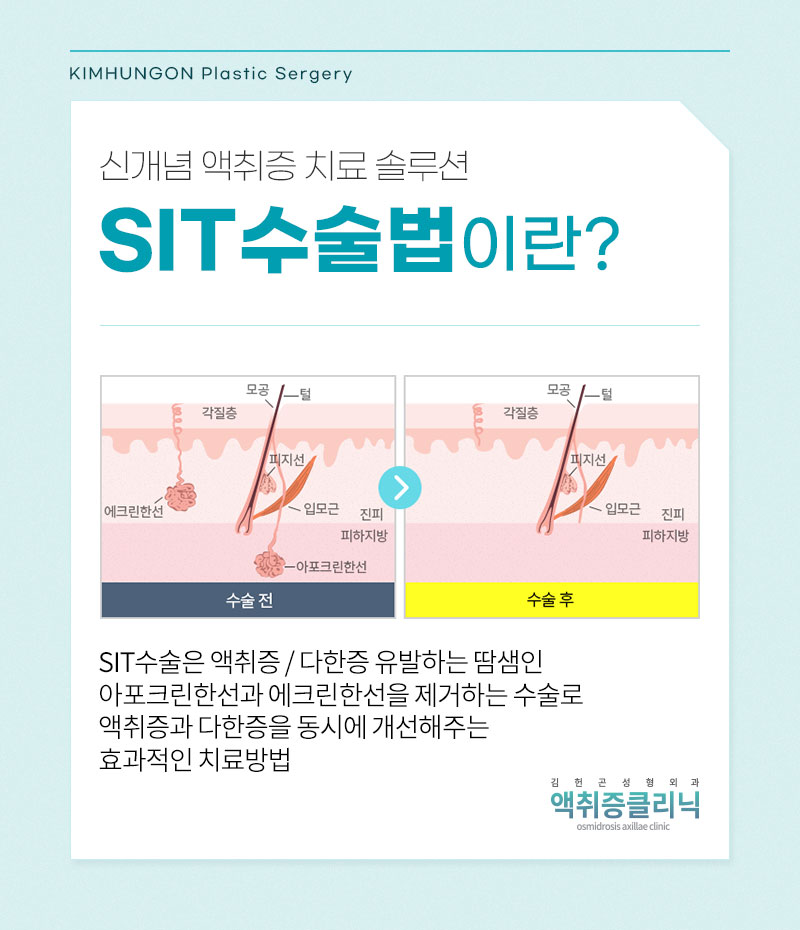
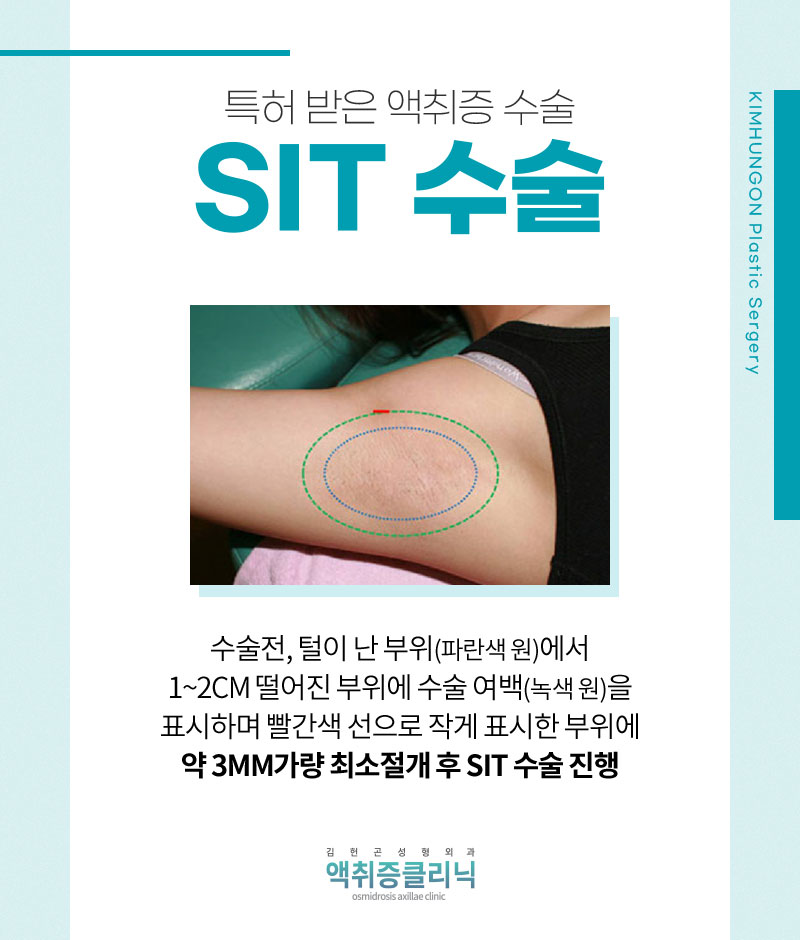
Underarm odor removal surgery, SIT surgery, is one of the representative surgical methods for removing the apocrine sweat glands that cause bromhidrosis.
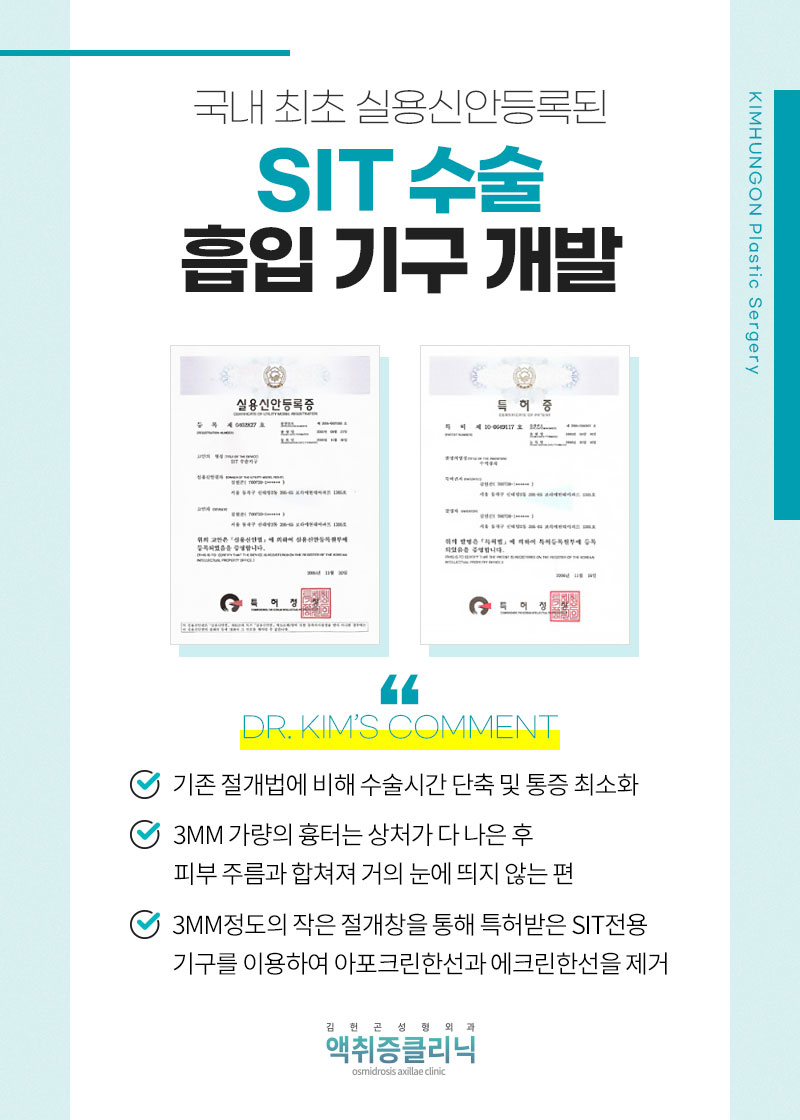
Unlike conventional surgery methods such as Liposet suction procedures, this operation is performed through a small incision, so there is almost no scarring. It also has the advantage of a short operation time and quick recovery.
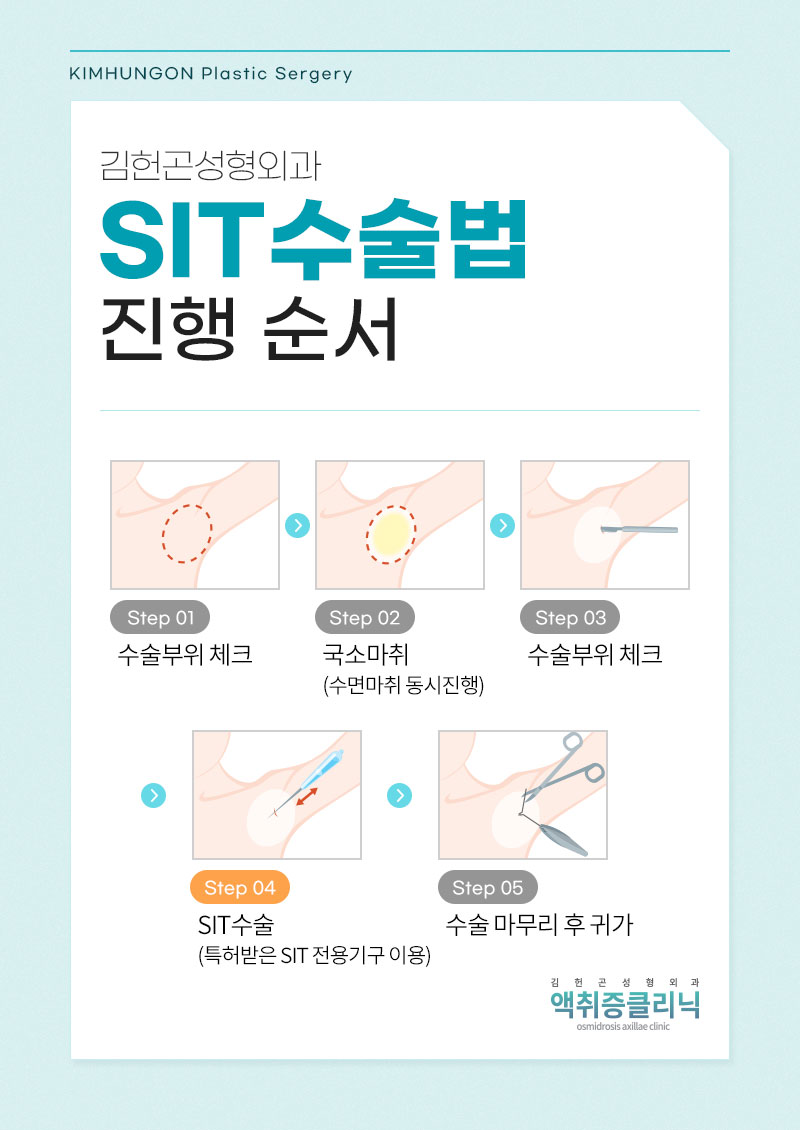
Unlike traditional incision surgery, underarm odor removal surgery, SIT surgery, is performed through a small incision of about 3 mm, so there is almost no scarring. In addition, because it is done under local anesthesia, same-day discharge is possible and the recovery period is short.
A low recurrence rate is another major advantage. Compared with other surgical methods, the recurrence rate is significantly lower at around 1.7%, which makes patients highly satisfied.
The short procedure time is also an advantage; about one hour is enough, so even office workers with little free time can undergo it without much burden.
- Anesthesia
Local anesthetic is injected into the underarm area.
- Incision
A small incision of less than 1 cm is made in the underarm area.
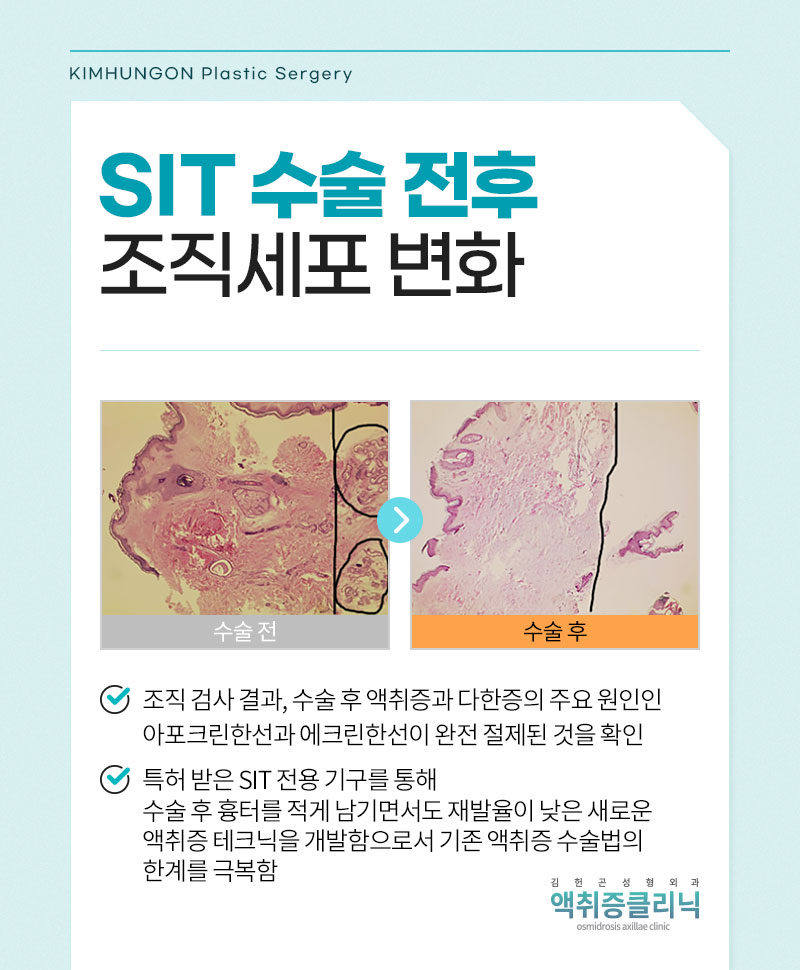
- Sweat gland removal
The apocrine sweat glands are removed using specially designed instruments.
- Suturing
The incision is closed with sutures.
- Recovery
Daily life is possible about 2 to 3 days after surgery, and recovery usually takes about one week.
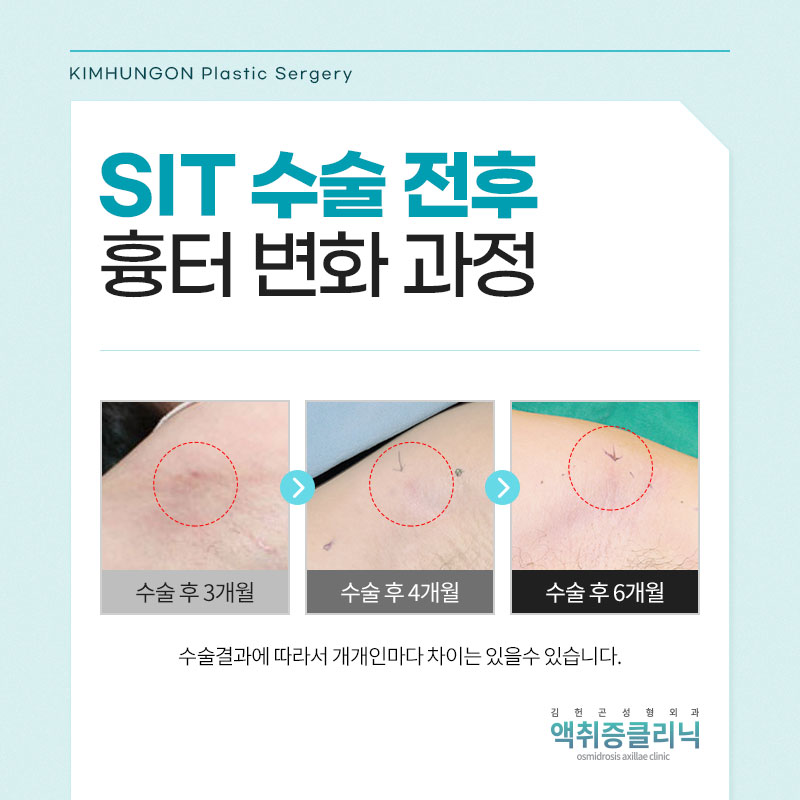
For about 2 to 3 days after underarm odor removal surgery, it is best to reduce arm movement.
Also, alcohol and smoking interfere with wound healing, so it is best to avoid them for about a week. Showering is possible from the day after surgery, but baths or swimming, which involve prolonged exposure to water, are recommended only after 2 weeks.
After underarm odor removal surgery, you may temporarily feel stiffness or heaviness, but in most cases it disappears within 2 weeks. However, because wearing compression garments can cause rubbing or stinging in the underarm area, care should be taken to prevent skin rashes.
Underarm odor removal surgery can be performed after the lower elementary school years, and it can be done at any time after becoming an adult. However, before surgery, it is important to fully understand the advantages, disadvantages, and side effects through sufficient consultation with a specialist, and to make the decision carefully.

Because it fundamentally removes the cause of bromhidrosis, the recurrence rate is low and the recovery period after surgery is short.
However, before surgery, it is important to choose the surgical method that suits you through consultation with a specialist. When choosing a hospital, it is a good idea to carefully consider the medical staff’s experience and know-how, as well as the surgical system.
If you have any questions, please feel free to contact us anytime.
Thank you.

- This post was written directly by our clinic in compliance with Article 56, Paragraph 1 of the Medical Advertising Act as a medical advertisement for Kim Heon-gon Plastic Surgery Bromhidrosis Clinic.
Depending on the individual, side effects may occur after surgery/procedure, so please be sure to fully review the precautions before and after treatment through sufficient consultation with the attending medical staff. -








 Previous image
Next image
Previous image
Next image








 Previous image
Next image
Previous image
Next image