| * This post is informational content intended to provide accurate information * |
Treatment Methods That Patients With Hyperhidrosis and Excessive Sweaty Hands and Feet Should Pay Attention To
Kim Heon-gon Plastic Surgery Body Odor Clinic
Hello, everyone^^
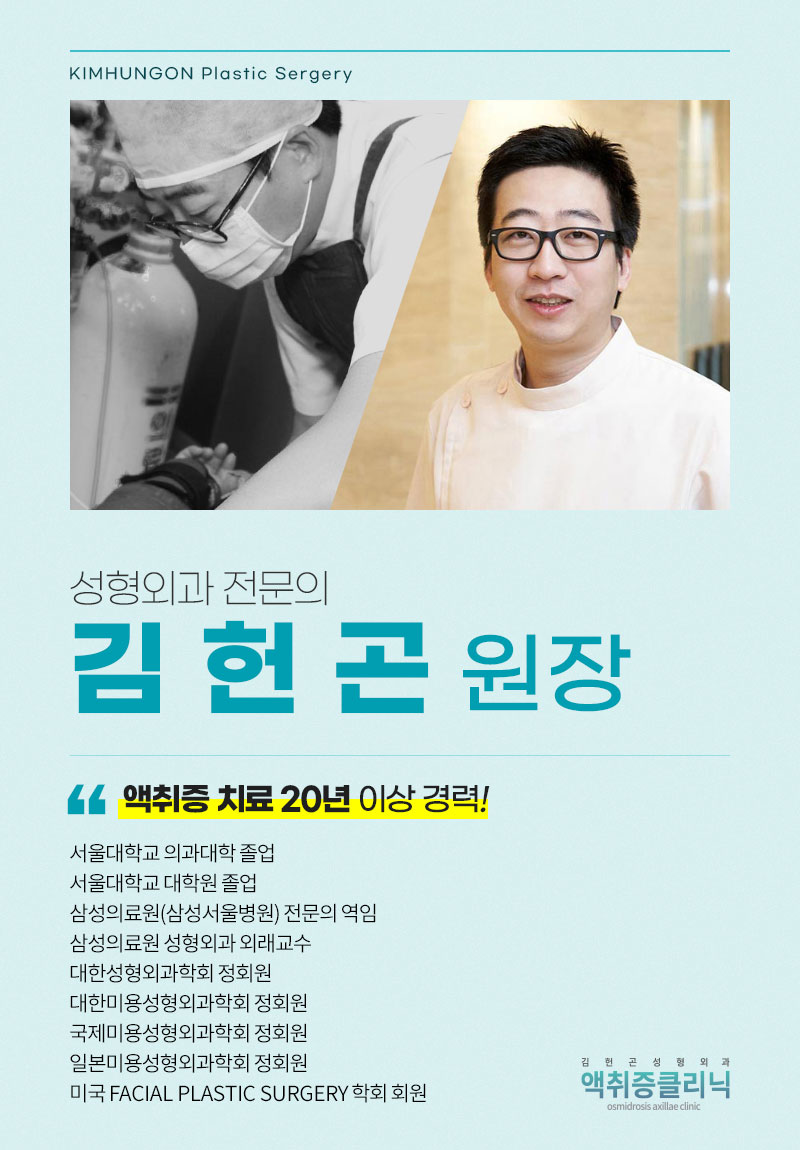
This is Kim Heon-gon Plastic Surgery Body Odor Clinic, where a board-certified plastic surgeon with 20 years of experience treating body odor and hyperhidrosis is on staff.
When the temperature rises, sweating naturally increases. However, if you sweat unusually heavily compared with other people even in cold winter weather, you may want to suspect hyperhidrosis.
In particular, patients with palmar and plantar hyperhidrosis, who sweat heavily on their hands and feet, can experience significant discomfort in daily life. Therefore, it is important to identify the cause of hyperhidrosis and receive appropriate treatment.
| Kim Heon-gon Plastic Surgery Body Odor Clinic (body odor/hyperhidrosis treatment) |
|---|
| No one can ignore the expertise and skill built over many years of practice.We promise responsible care so that our patients can feel comfortable from the first consultation to the final visit. |
| Board-certified plastic surgeonGraduated from Seoul National University College of MedicineGraduated from Seoul National University Graduate SchoolFormer specialist at Samsung Medical Center (Samsung Seoul Hospital)Visiting professor in plastic surgery at Samsung Medical CenterFull member of the Korean Society of Plastic and Reconstructive SurgeonsFull member of the Korean Society for Aesthetic Plastic SurgeryFull member of the International Society of Aesthetic Plastic SurgeryMember of the Japanese Society of Aesthetic Plastic SurgeryMember of the American Facial Plastic Surgery Society |
| ▶ Main phone: 080-080-3080▶ KakaoTalk ID: Kim Heon-gon Plastic Surgery Body Odor Clinic▶ Address: Room 201, Boramae Nasan Suite, 24 Boramae-ro 5ga-gil, Dongjak-gu, Seoul |
Hyperhidrosis is a condition in which excessive sweating occurs due to an overreaction of neurotransmission. Depending on the cause of hyperhidrosis and the amount of sweating, it can be classified as either localized or generalized hyperhidrosis.
If you sweat heavily in the armpits, bacteria or fungi may infect the keratinized layer, causing odor, or the secretions of the apocrine glands may be broken down by bacteria, leading to severe body odor.
Let's take a look at the causes of hyperhidrosis!
-
Increased excitability of the sympathetic nerves that control sweat secretion. This phenomenon appears in most cases of hyperhidrosis and is caused by factors that promote sweating.
-
Changes in the sweat glands can appear due to changes in sweat gland tissue according to sweat secretion, or due to changes in sympathetic nerve stimulation in the sweat glands.
-
Emotional factors include tension and stress. It mainly occurs on the hands, feet, and armpits, and is common among younger people.
-
Other factors include cases where nerve distribution changes due to trauma, and cases where hyperhidrosis occurs due to taste stimulation.
Palmar and plantar hyperhidrosis refers to excessive sweating on the palms and soles. It is characterized by sudden heavy sweating of the hands and feet due to psychological stress or emotional stimulation, or in hot environments, or when eating spicy or hot foods.
- Primary palmar and plantar hyperhidrosis
This is the most common type, occurring without a specific cause. It begins during puberty or in the early 20s and often lasts for life.
- Secondary palmar and plantar hyperhidrosis
This is hyperhidrosis caused by another disease, and the area and pattern of sweating may vary depending on the underlying condition. Representative diseases include tuberculosis, diabetes, heart disease, hyperthyroidism, Parkinson's disease, and spinal cord injury.

In general, sweating in areas that did not previously sweat after hyperhidrosis surgery is called “compensatory hyperhidrosis.” This side effect commonly occurs after procedures such as sympathectomy (T2) and is one of the main causes of patient dissatisfaction.
Why does this compensatory hyperhidrosis occur?
Our body has sympathetic nerves that regulate sweat secretion, and the sympathetic nervous system controls sweat glands to regulate body temperature and eliminate waste products.
Hyperhidrosis surgery is performed by cutting or blocking these sympathetic nerves, and this disrupts the balance of the nervous system, causing sweating in areas that did not previously sweat.
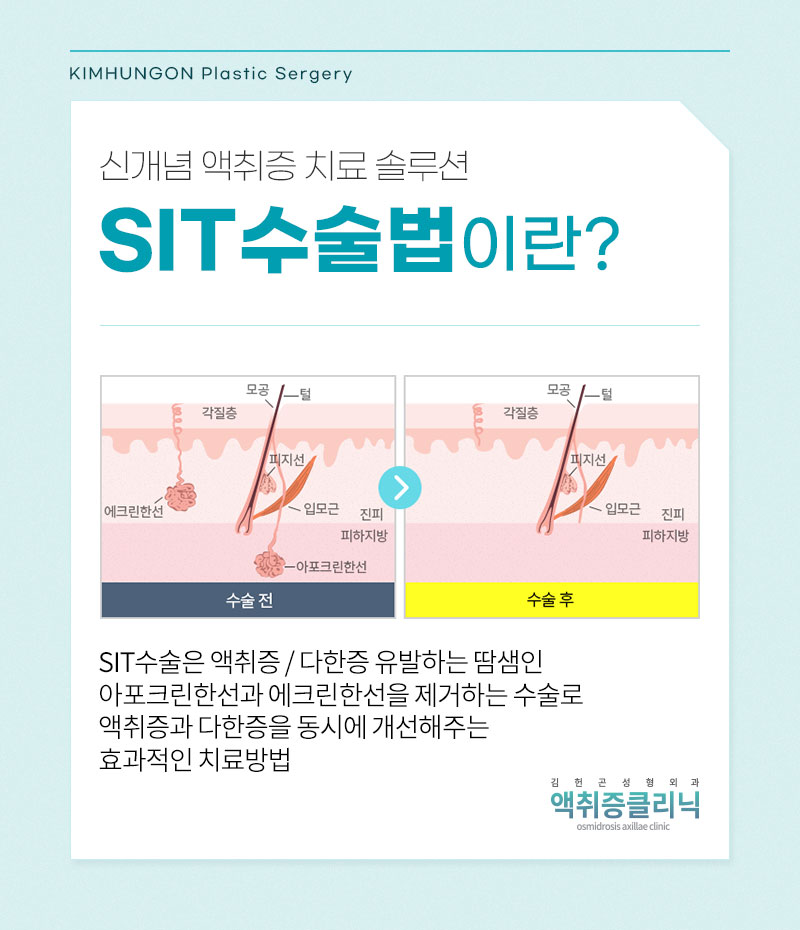
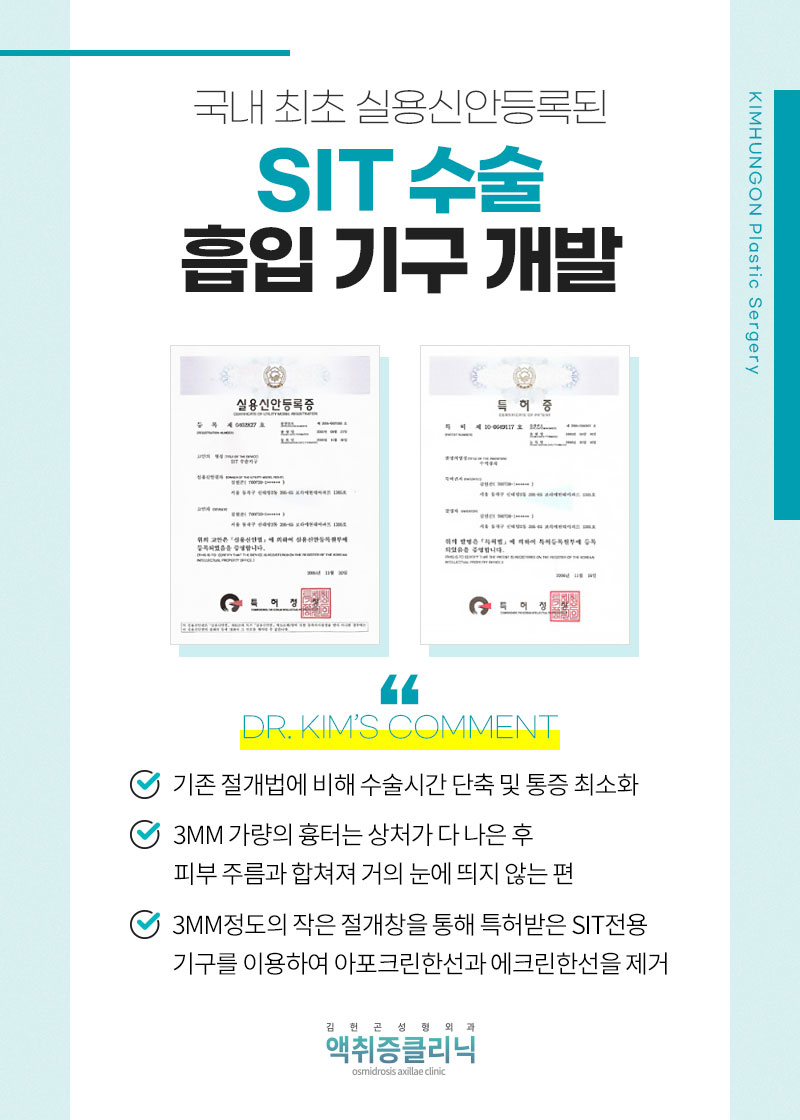
Unlike the conventional hyperhidrosis treatment of sympathectomy, SIT surgery does not cut or burn the sympathetic nerves. Instead, unlike Botox injections, which only temporarily suppress the secretion of neurotransmitters, it is a minimally invasive procedure that precisely targets and removes the sweat glands in question.
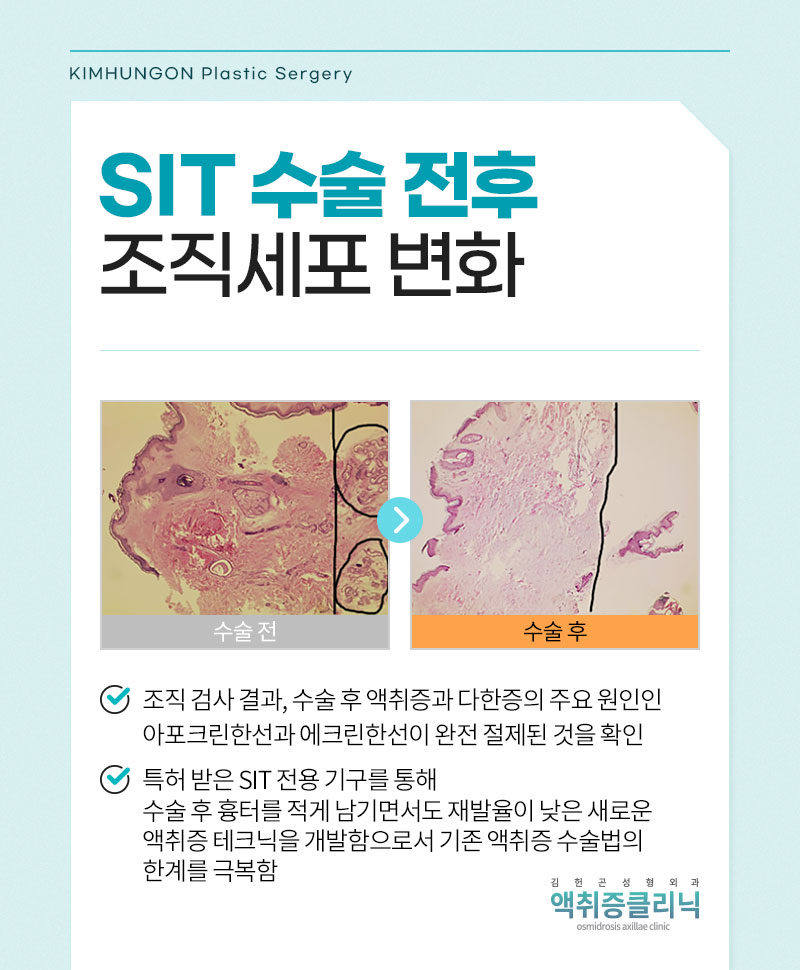
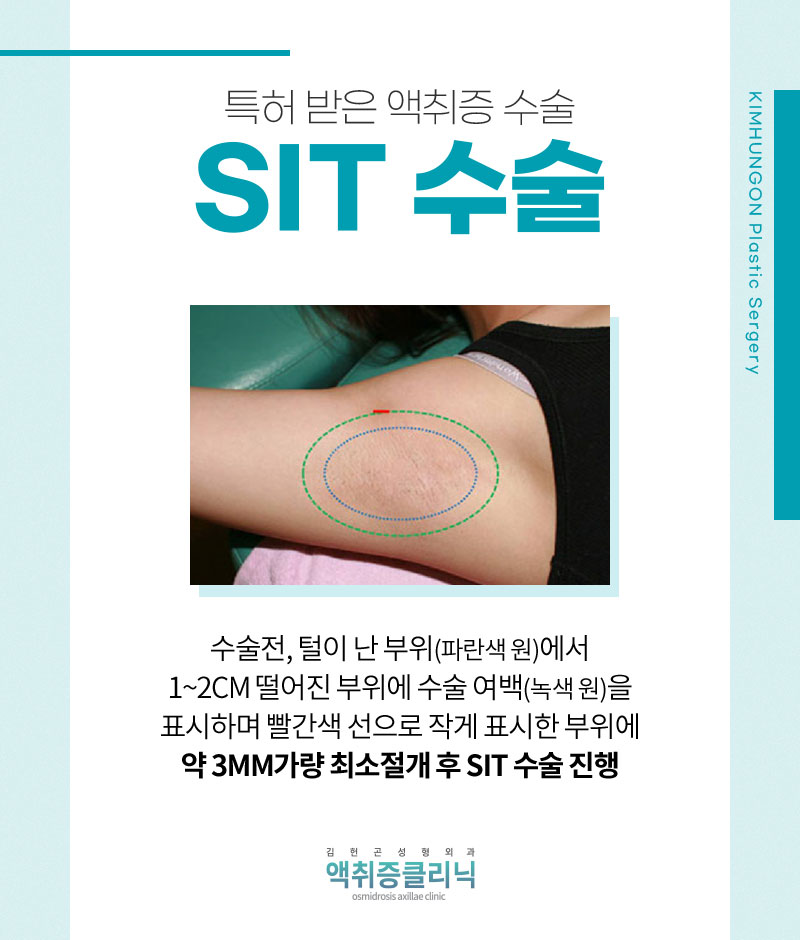
This treatment is performed while viewing through an endoscope, which has the advantage of being clear and safe, and the anesthesia method is local anesthesia, so there is no burden of general anesthesia.
It also features same-day discharge and a short recovery period, making it suitable for students or office workers who do not have much time.
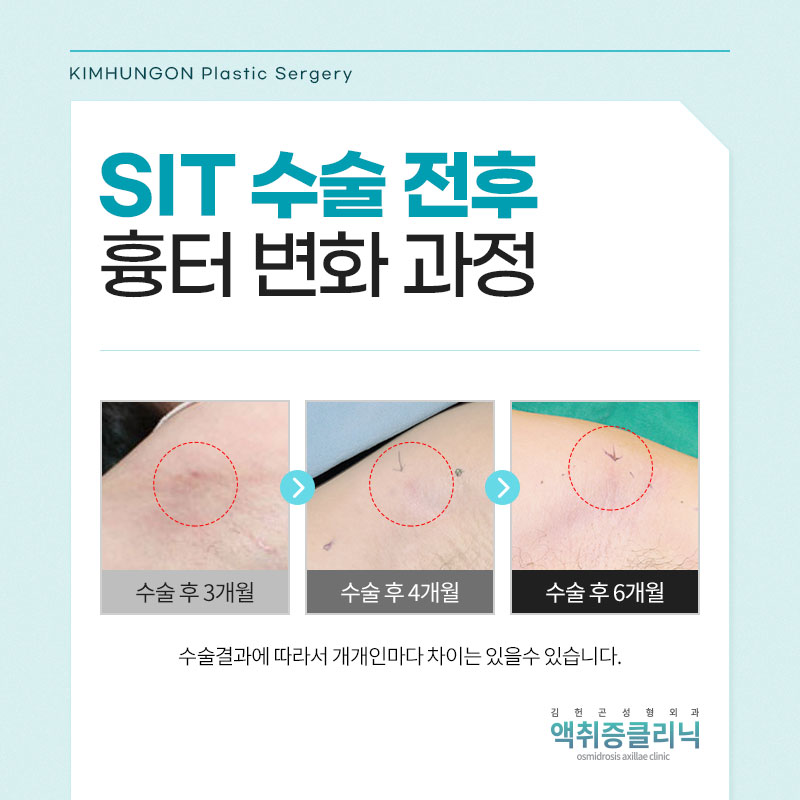
As mentioned above, SIT surgery treats hyperhidrosis by directly removing the sweat glands in the areas where sweating is excessive. At this time, a specially designed needle is used to destroy the sweat gland cells without affecting the surrounding tissue.
This treatment can also be applied to hyperhidrosis in various areas such as the hands, feet, and armpits. In particular, it can be a good option for severe hyperhidrosis that is difficult to improve with conventional treatments or for cases where compensatory hyperhidrosis has occurred.
The procedure takes about one hour, and 2 to 3 additional visits may be necessary to monitor progress. However, most patients are satisfied with the results after the procedure, and the recurrence rate is relatively low.

After the procedure, several care measures and lifestyle adjustments are necessary.
First, during the recovery period, it is important to avoid strenuous activity and rest. Also, you should avoid exposure to water or sweat until the wound has healed, and you must continue taking the prescribed medication consistently.
To prevent recurrence, it is advisable to maintain regular exercise and healthy eating habits, and stress management is essential. Through these efforts, you can maximize the changes brought about by treatment and help prevent recurrence.

Because hyperhidrosis can cause major inconvenience in daily life, it is better to receive active treatment. If you are concerned about the side effects of conventional treatments, considering SIT surgery may be a good option.
However, before surgery, you must identify the cause of hyperhidrosis with a specialist and choose the treatment method that is right for you through sufficient consultation and examination. We hope you overcome hyperhidrosis and maintain a healthy life through this process^^

If you have any questions, please feel free to contact us anytime.
Thank you.

If you want to know more, click the link below!
▼
- This post was written directly by Kim Heon-gon Plastic Surgery Body Odor Clinic as a medical advertisement, in compliance with Article 56, Paragraph 1 of the Medical Advertising Act.
Depending on the individual, side effects may occur after surgery/procedure, so
please make sure to fully understand the precautions before and after treatment
after sufficient consultation with the attending medical staff. -










Previous image
Next image










Previous image
Next image