Natural adhesion revision surgery is performed when a previous double eyelid fold has loosened or when you want to raise the line. So, let’s take a look at what is important.
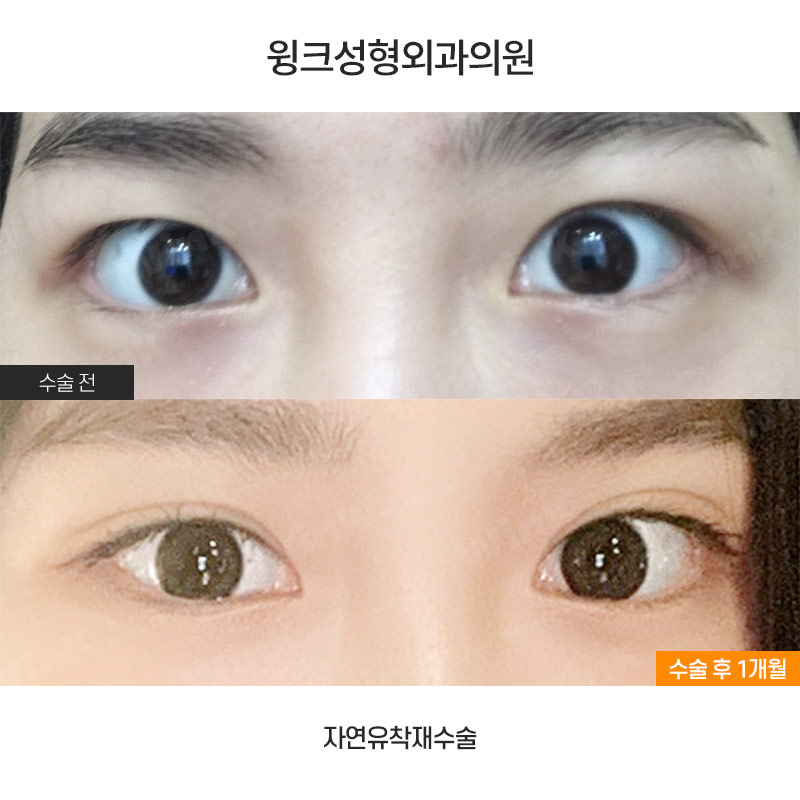
Hello, I’m Chief Director Choi Seung-hyeop of Wink Plastic Surgery. The topic I’d like to talk about today is natural adhesion revision surgery. Many people visit a plastic surgery clinic because a previous double eyelid made with the buried suture method or natural adhesion has loosened or become lower, and in such cases, some people want revision surgery again with the natural adhesion method.
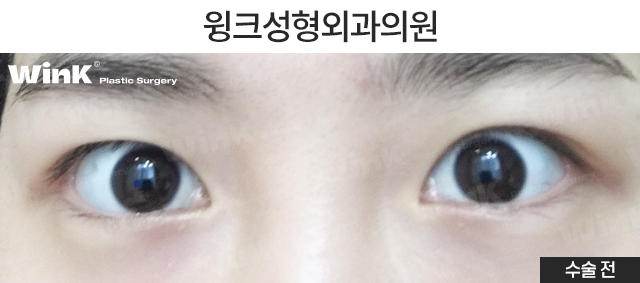
Natural adhesion revision surgery | Before surgery
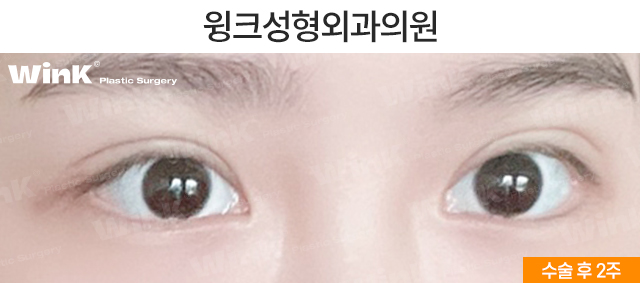
Natural adhesion revision surgery | 2 weeks after surgery
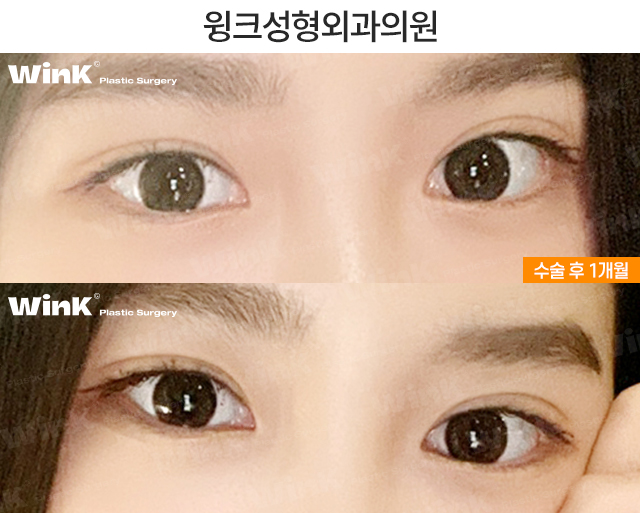
Natural adhesion revision surgery | 1 month after surgery
First, natural adhesion double eyelid surgery is a non-incisional method similar to the buried suture method, in which a small opening is made in the skin to secure the double eyelid fold. The difference is that part of the tissue is removed to create stronger adhesion. In general, it tends to be less likely to loosen than the buried suture method.
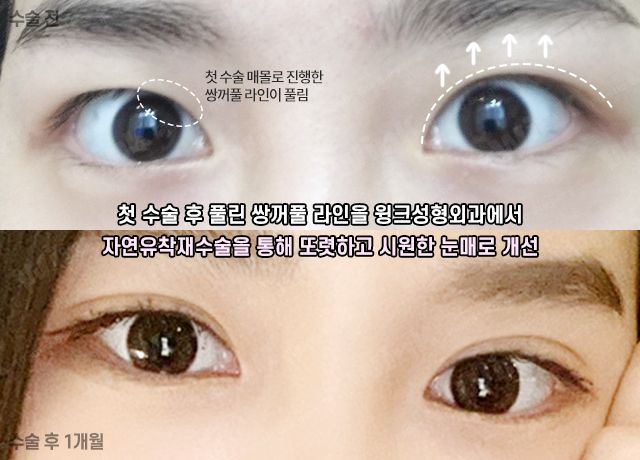
Natural adhesion revision surgery | Before-and-after comparison
However, if you are considering revision surgery because a previous double eyelid fold has loosened, and especially if you are considering the natural adhesion method, it is best to make the decision after consulting with a specialist. In some cases, to prevent loosening, the procedure may need to be performed using the incision method rather than natural adhesion revision surgery.
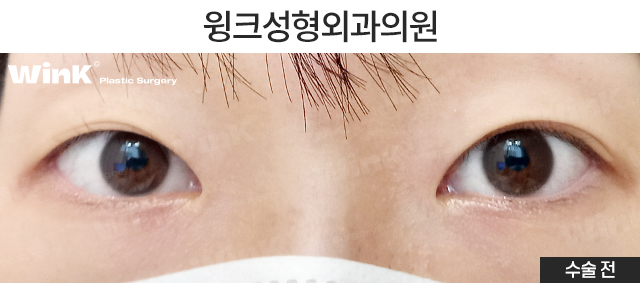
Natural adhesion revision surgery + epicanthoplasty | Before surgery
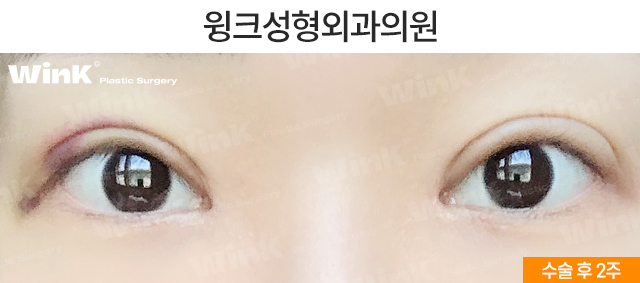
Natural adhesion revision surgery + epicanthoplasty | 2 weeks after surgery
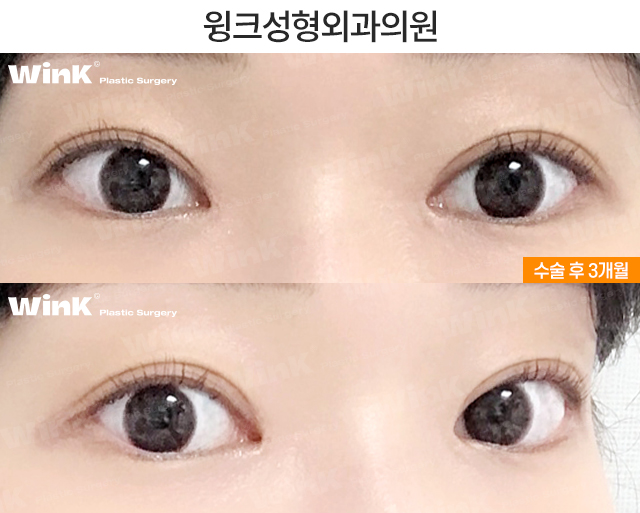
Natural adhesion revision surgery + epicanthoplasty | 3 months after surgery
Also, if the cause of the loosening is something else, such as an epicanthal fold, combining a crease-opening procedure with natural adhesion revision surgery can be an option. If the front part of the double eyelid line is naturally exposed through procedures such as front epicanthoplasty or upper epicanthoplasty, the double eyelid can look more natural and the likelihood of loosening can also be reduced.
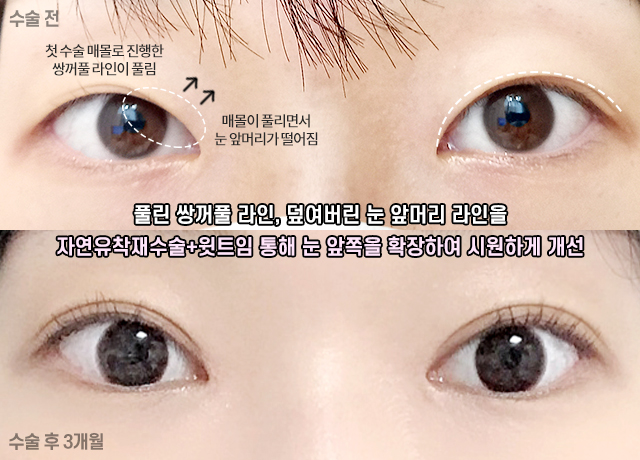
Natural adhesion revision surgery + epicanthoplasty | Before-and-after comparison
However, if the previous double eyelid fold has not loosened and you simply want to improve the shape or raise the line, natural adhesion revision surgery is generally possible. This is because it creates a double eyelid line higher than the previous one, allowing for a larger fold than before.
Wink Plastic Surgery complies with medical laws.
After plastic surgery, the degree of effects and recovery may vary from person to person, and side effects such as bleeding, inflammation, and infection may occur. It is important to be sure to check information about side effects and the surgery. All photos were taken with the patient’s direct prior consent.
That concludes today’s look at natural adhesion revision surgery.
If you have any questions, please leave a comment or contact us via the KakaoTalk channel, and we will answer sincerely. Thank you.