Let’s look at how to address ptosis when it occurs on only one side or is more severe on one side.
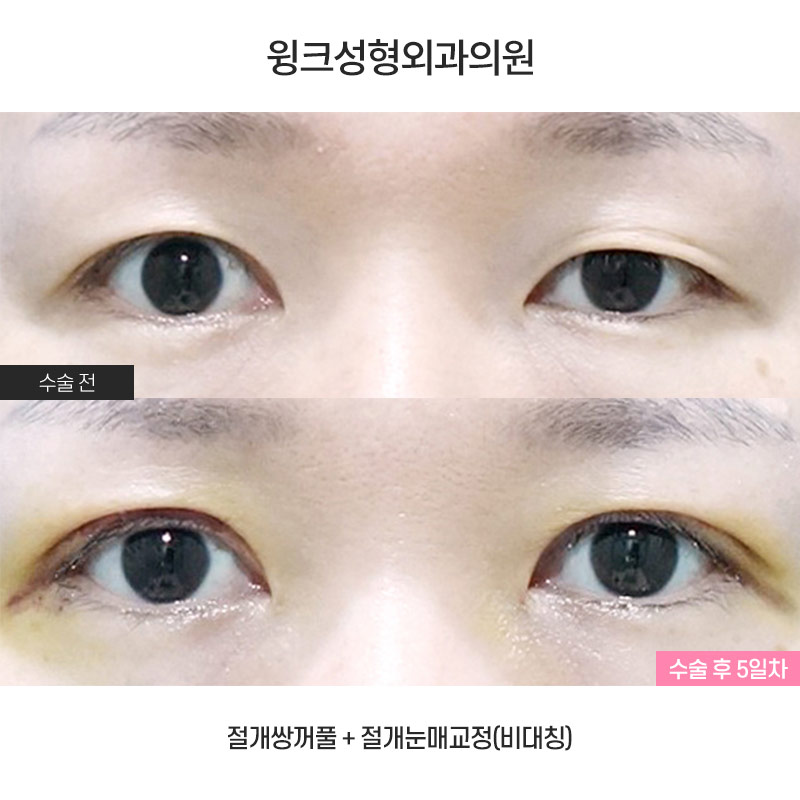
Hello, I’m Dr. Choi Seung-hyeop, the director of Wink Plastic Surgery. Today’s topic is asymmetric ptosis. It usually refers to a condition where one eye opens less than the other, and in such cases, the eyes may look even more uneven.
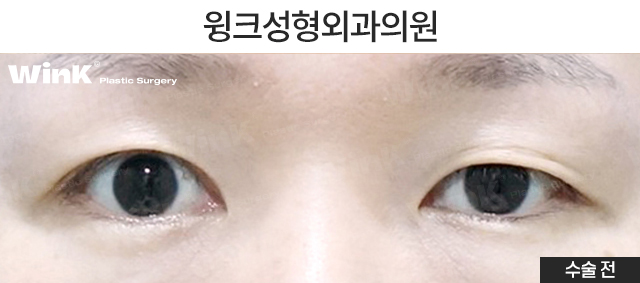
Incisional double eyelid surgery + incisional eyelid correction (asymmetry) | Before surgery
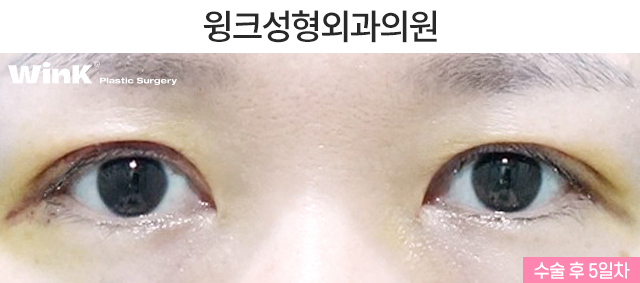
Incisional double eyelid surgery + incisional eyelid correction (asymmetry) | 5 days after surgery
To treat asymmetric ptosis or unilateral ptosis, surgical treatment is needed after an accurate diagnosis by a specialist; in other words, ptosis correction or eyelid correction is required.
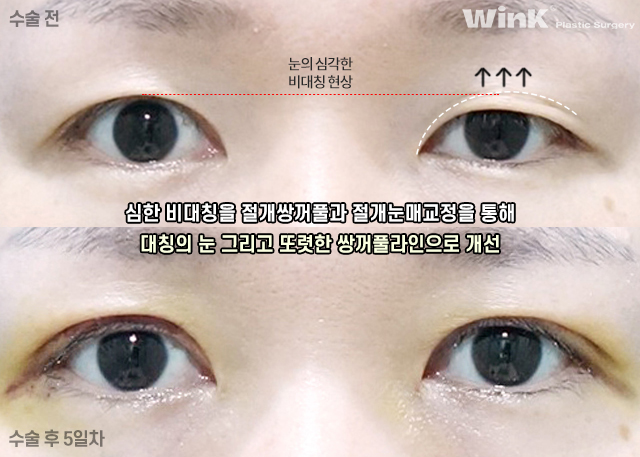
Incisional double eyelid surgery + incisional eyelid correction (asymmetry) | Before-and-after comparison
There are broadly two methods for ptosis correction: incisional and non-incisional. The non-incisional method can be considered for mild ptosis, while the incisional method is more suitable for more severe ptosis.
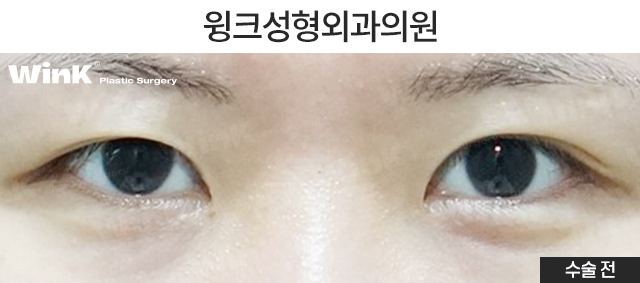
Revision eyelid surgery (incisional) + revision incisional eyelid correction | Before surgery
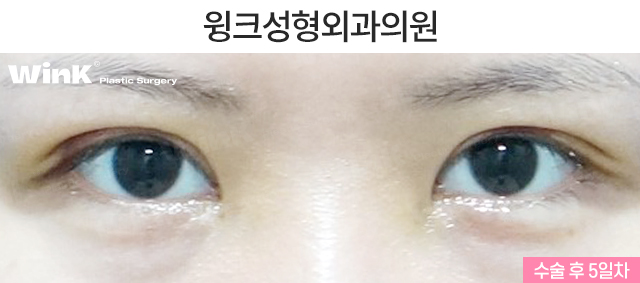
Revision eyelid surgery (incisional) + revision incisional eyelid correction | 5 days after surgery
There are several methods for ptosis correction. In general, for mild or moderate cases, levator advancement or suspension is the most commonly used, and this method is usually applied in most ptosis corrections. In some severe cases of ptosis, levator resection may be necessary.
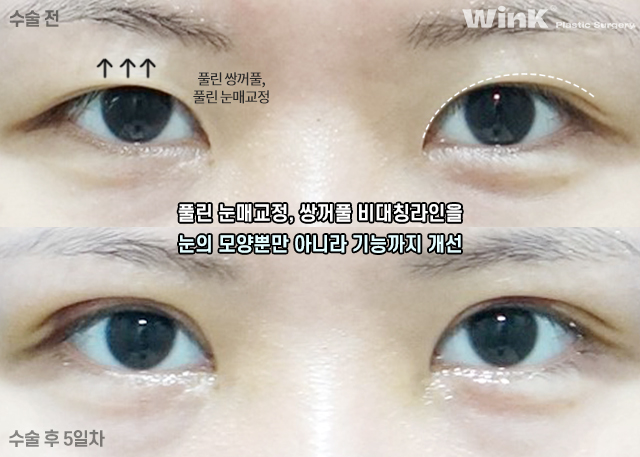
Revision eyelid surgery (incisional) + revision incisional eyelid correction | Before-and-after comparison
For unilateral or asymmetric ptosis, it is important to achieve good balance between both eyes. Usually, more correction is performed on the side with more severe ptosis, and it is important to also adjust the less affected side as much as needed.
That concludes our overview of unilateral or asymmetric ptosis.
If you have any questions, please leave a comment or contact us through the Kakao Channel.
Wink Plastic Surgery complies with the Medical Services Act.
After plastic surgery, results may vary depending on the individual, and side effects such as bleeding, inflammation, and infection may occur. It is important to make sure you review information about side effects and surgery, and all photos were taken with the patient’s direct prior consent.