Hello, I’m Dr. Choi Seung-hyeop, Director of Wink Plastic Surgery. Today’s topic is epicanthoplasty revision. After epicanthoplasty, if the inner corner of the eye is overly exposed or too widely opened, reconstruction or restoration of the epicanthal fold, the skin at the inner corner of the eye, may be considered.
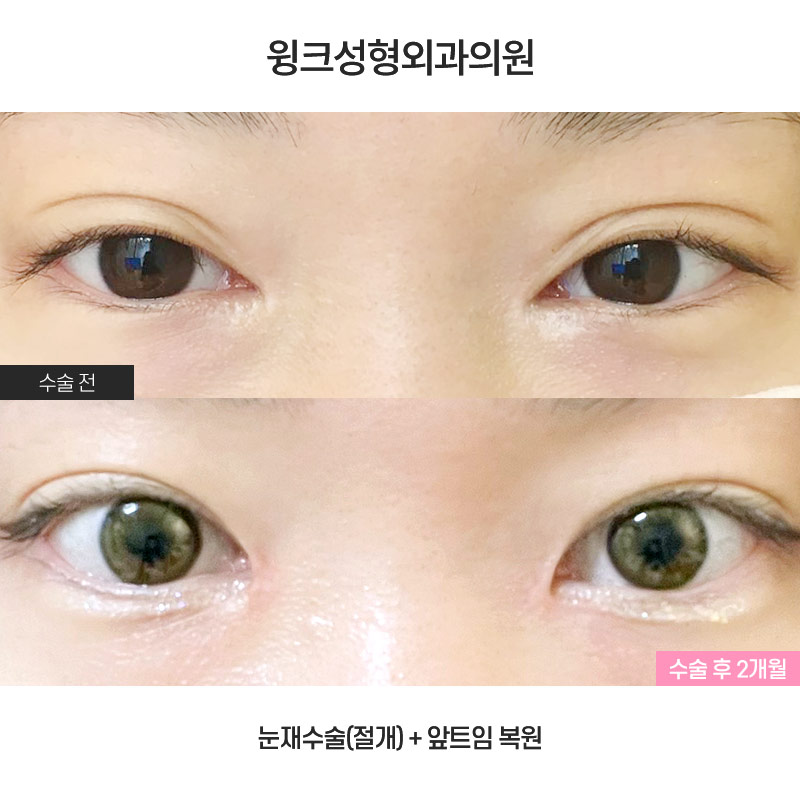
The ideal eye for East Asian people is one in which about half of the lacrimal caruncle is visible. Therefore, if the inner corner is too widely opened, the eyes may look sharp or overly striking.
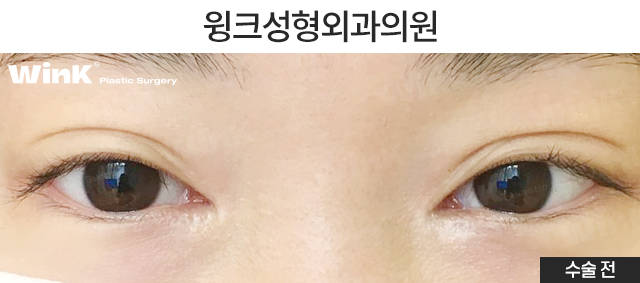
Revision eye surgery (incisional) + epicanthoplasty restoration | Before surgery
The method and principle of restoration involve bringing in and gathering the surrounding skin to recreate the epicanthal fold.
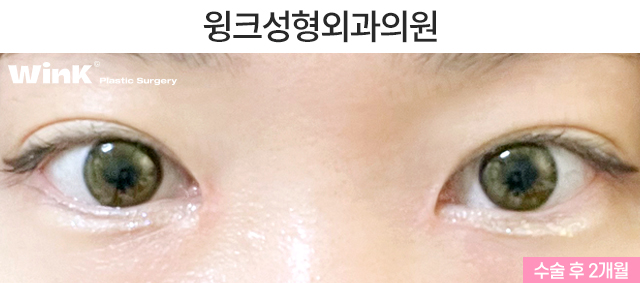
Revision eye surgery (incisional) + epicanthoplasty restoration | 2 months after surgery
By recreating the normal skin fold at the inner corner of the eye, a more natural appearance can be achieved.
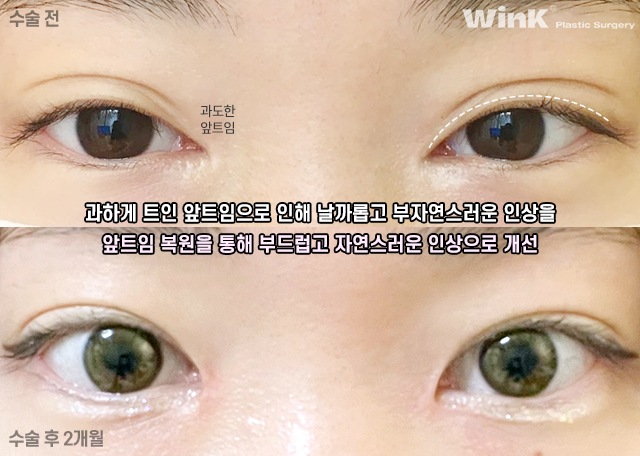
Revision eye surgery (incisional) + epicanthoplasty restoration | Before and after comparison
When performed together with double eyelid surgery, the effect can be further enhanced. In particular, when combined with surgery to lower the front line, the shape of the inner corner of the eye can be improved more effectively.
For epicanthoplasty restoration, there must be sufficient skin at the inner corner of the eye, and it is best to receive guidance on the surgical method through consultation and evaluation.
That concludes my explanation of epicanthoplasty restoration and reconstruction.
If you have any questions, please contact us in the comments or through our Kakao channel.
Wink Plastic Surgery complies with the Medical Service Act.
After plastic surgery, results and side effects may vary from person to person, and complications such as bleeding, inflammation, and infection may occur. It is important to carefully review information about the surgery and possible side effects. All photos were taken with direct prior consent from the patients.