Hello, this is Director Choi Seung-hyeop of WINK Plastic Surgery. These days, with the school vacation season approaching, many students are considering their first double eyelid surgery. Let’s briefly take a look at the natural adhesion non-incisional double eyelid surgery that many people choose as their first procedure.
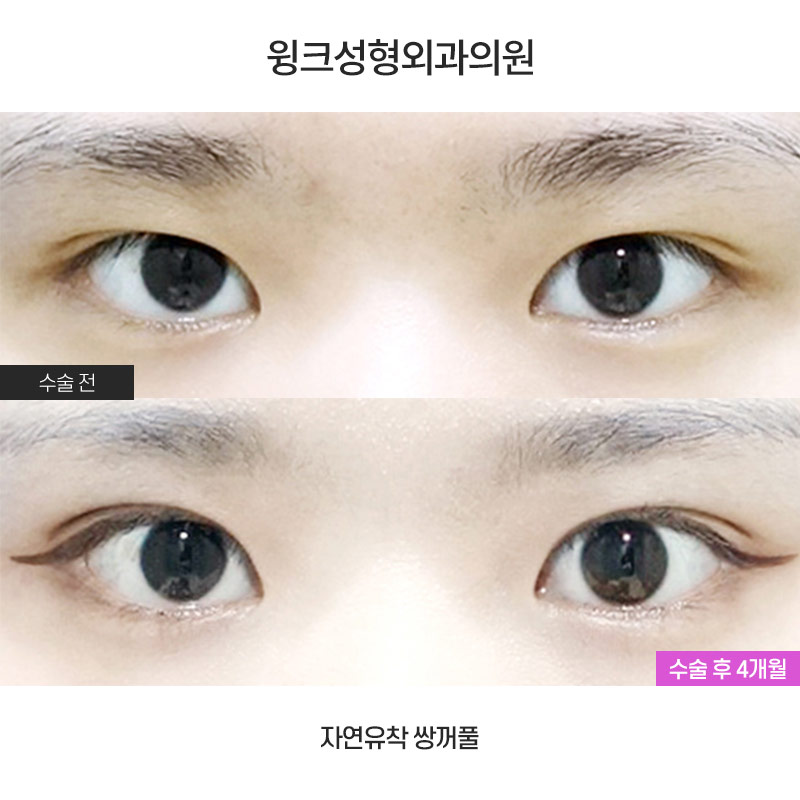
Natural adhesion surgery can be thought of as an upgraded version of the so-called buried suture method, also known as the procedure commonly referred to as “pinching.”
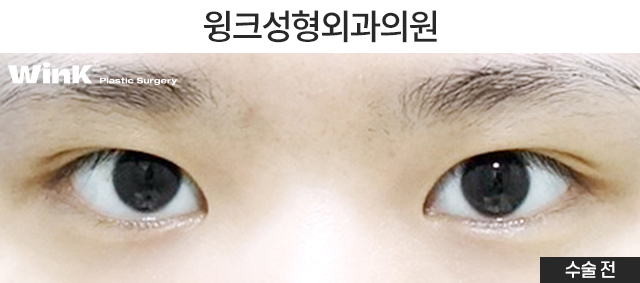 Natural adhesion double eyelid | Before surgery
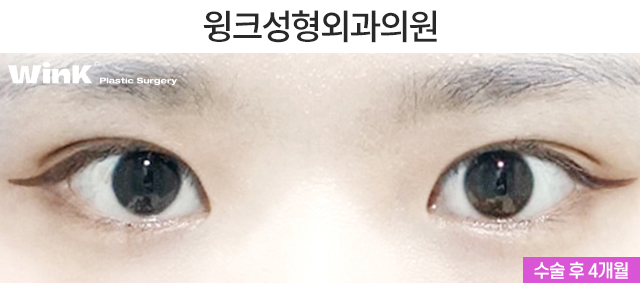 Natural adhesion double eyelid | 4 months after surgery
The common point is that a line is designed on the skin and the double eyelid is fixed through a small incision. The difference is that, compared to the buried suture method, some tissue is removed through the incision to create firmer adhesion. In this way, the prevention of loosening can be further strengthened.
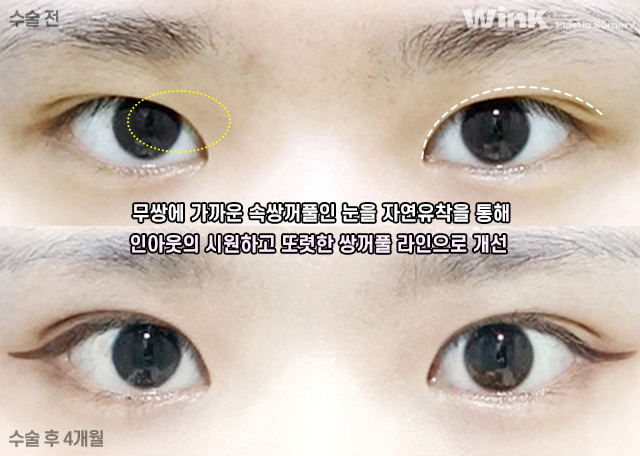 Natural adhesion double eyelid | Before-and-after comparison
The biggest advantage of natural adhesion is, of course, the fast recovery and minimal scarring. However, it is not a suitable surgery for everyone.
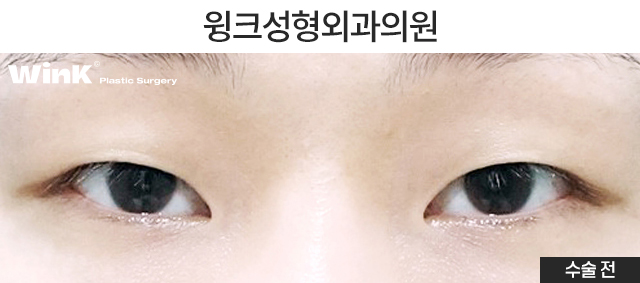 Natural adhesion double eyelid + epicanthoplasty | Before surgery
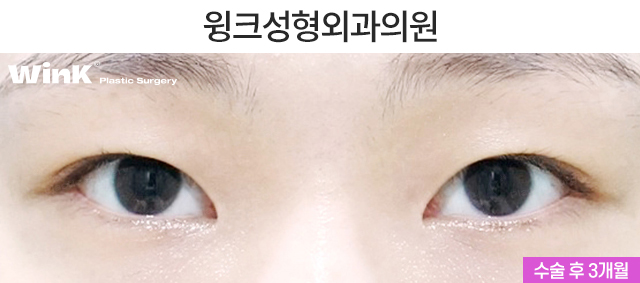 Natural adhesion double eyelid + epicanthoplasty | 3 months after surgery
Natural adhesion surgery is possible for eyes with thin skin, little sagging, and little eyelid fat, so they are not puffy. It also needs to be an eye without severe ptosis, because severe ptosis requires incisional ptosis correction.
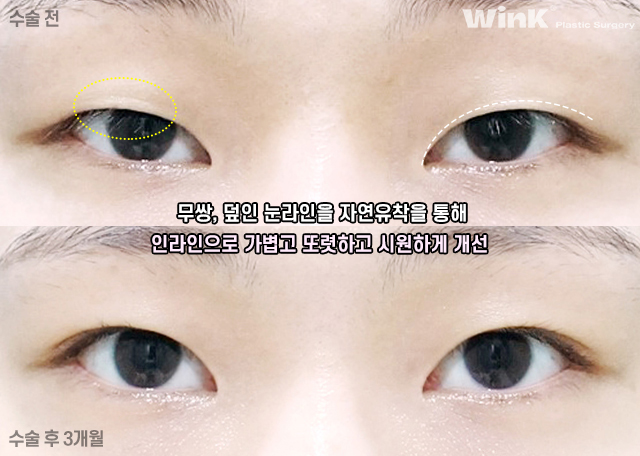 Natural adhesion double eyelid + epicanthoplasty | Before-and-after comparison
That concludes our look at natural adhesion double eyelid surgery.
If you have any further questions, please contact us through our Kakao Channel, and we will help you with fast and accurate consultation.
WINK Plastic Surgery complies with the Medical Service Act.
After plastic surgery, the degree of effects and side effects may vary by individual, and side effects such as bleeding, inflammation, and infection may occur. It is important to be sure to check the information about side effects and surgery, and all photos are images taken with direct prior consent from the patients.