Hello, this is Director Choi Seung-hyeop of Wink Plastic Surgery. Today, I’d like to talk about natural adhesion double eyelid surgery.
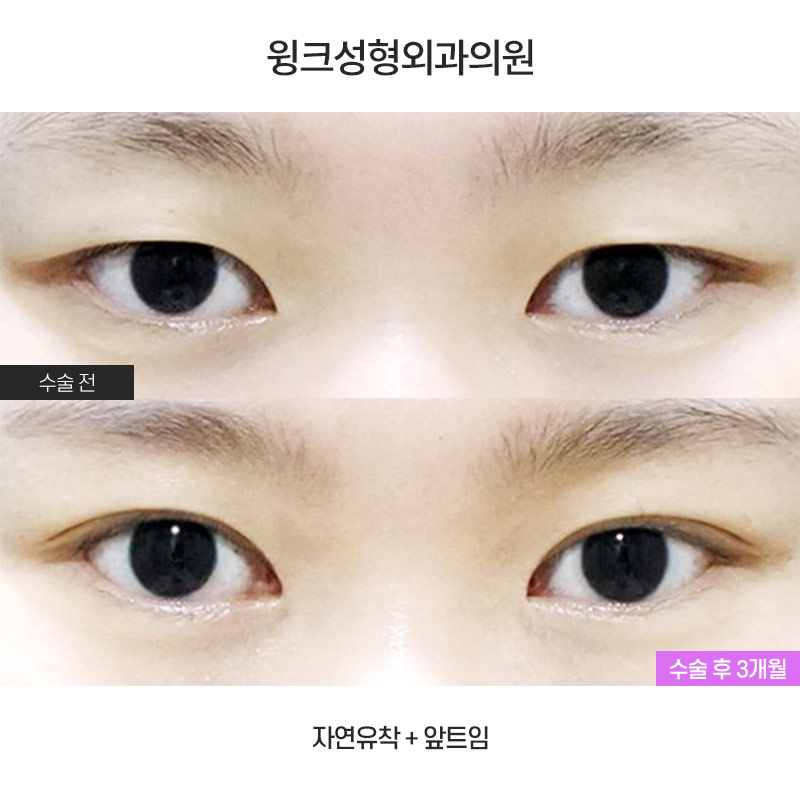
The simplest surgery for creating a double eyelid is the buried suture method. This method creates the crease by making a line through very small openings in the eyelid skin. However, because it can loosen over time, the natural adhesion method is a modified technique designed to reduce that risk while keeping a similar approach.
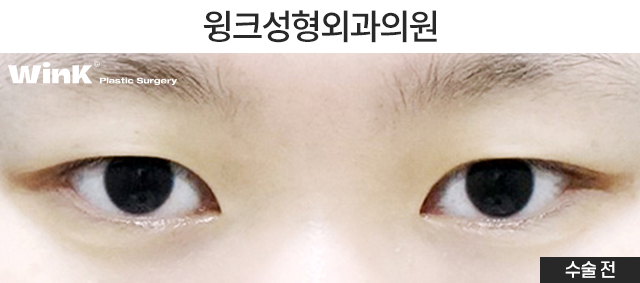
Natural adhesion + epicanthoplasty | Before surgery
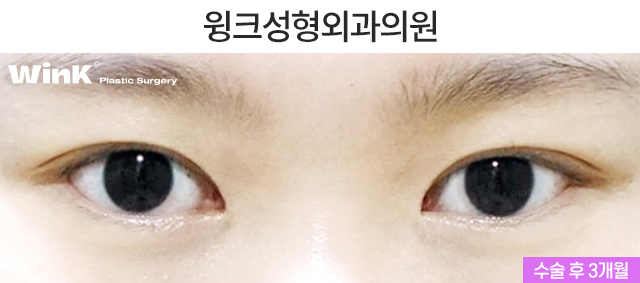
Natural adhesion + epicanthoplasty | 3 months after surgery
This is a non-incisional double eyelid method, and like the buried suture technique, it creates the crease through very small openings in the skin. As a result, scars become barely visible over time.
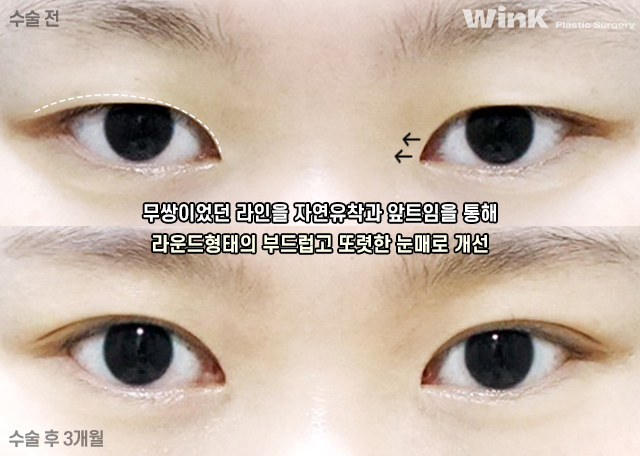
Natural adhesion + epicanthoplasty | Before and after comparison
However, natural adhesion is not possible in every case. It is suitable for eyes with thin skin, little sagging, and little fat.
Natural adhesion is often considered for a first double eyelid surgery. However, if the eyelids are significantly sagging and have a lot of fat, an incision may still be necessary even for the first surgery.
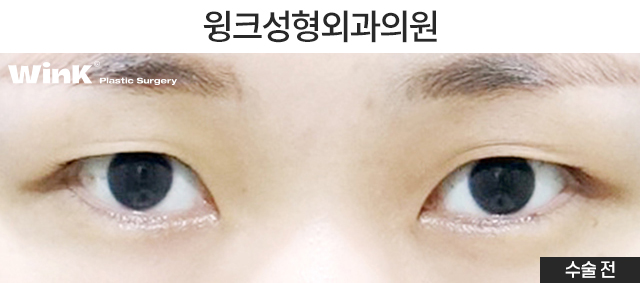
Natural adhesion + epicanthoplasty | Before surgery
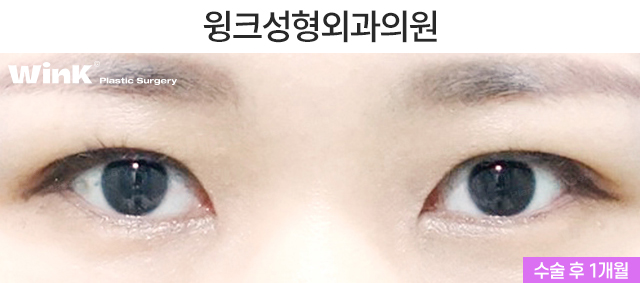
Natural adhesion + epicanthoplasty | 1 month after surgery
Natural adhesion double eyelid surgery creates a very natural-looking line when the eyes are open and closed. In addition, because there is less swelling and scarring, recovery in daily life is relatively fast.
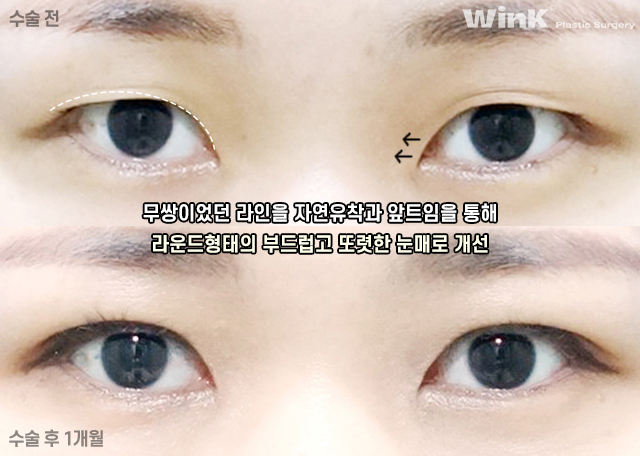
Natural adhesion + epicanthoplasty | Before and after comparison
That concludes our look at natural adhesion double eyelid surgery.
If you have any further questions, please contact us through Kakao Channel, and we will respond promptly. Thank you.
Wink Plastic Surgery complies with the Medical Service Act.
After plastic surgery, results may vary depending on the individual, and side effects such as bleeding, inflammation, and infection may occur. It is important to be sure to check the information about side effects and surgery, and all photos were taken with the patient’s prior consent.